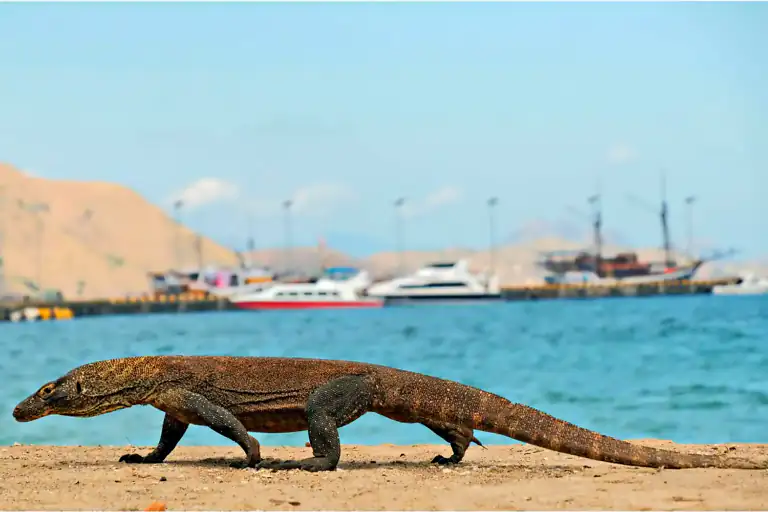
Gili Motang is one of the few places on Earth where Komodo dragons live in the wild, and one of the least known. While thousands of visitors walk with the rangers on Komodo and Rinca every year, this small island in the south-east of Komodo National Park stays quiet, off the tourist routes and almost unknown outside the world of research. Its dragons are fewer, smaller and more vulnerable than their famous neighbours. This guide explains where Gili Motang is, what is known about its dragons, why scientists watch them closely and where you can see Komodo dragons yourself.
Counts of wild animals on remote islands are always estimates, and the figures for Gili Motang come from different studies and years. We give the sources for each, so you can see where the numbers come from.
In short
- Gili Motang is a small island of about 30 km² in the south-east of Komodo National Park.
- The park counted 58 dragons there in 2019, compared with more than 1,700 on Komodo.
- Its dragons are smaller, and studies have recorded a decline linked to a shortage of prey.
- It is not on the visitor routes; you see the dragons on ranger walks on Komodo and Rinca.
Where is Gili Motang?
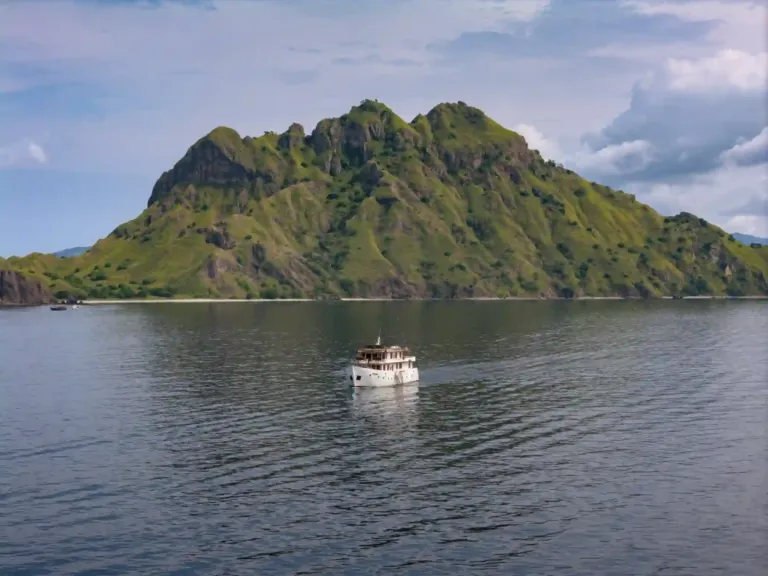
Gili Motang lies in the south-east of Komodo National Park, in eastern Indonesia, to the south-east of Rinca and towards the western end of Flores. Wikipedia describes it as a small island of volcanic origin, with an area of about 30 square kilometres, part of the national park and of the UNESCO World Heritage Site.
The park itself covers more than 1,800 square kilometres of land and sea. Besides the three large islands, Komodo, Rinca and Padar, it includes 26 smaller islands, according to a 2019 report by Antara, Indonesia’s national news agency. Only a handful of them have dragons, and Gili Motang is one.
UNESCO’s description of the World Heritage Site names the islands where the dragons live: Komodo, Rinca, Gili Motang and parts of the coast of western and northern Flores. That short list shows how small the range of the largest lizard on Earth really is, and why each island population matters.
Gili Motang at a glance
| Fact | Gili Motang |
|---|---|
| Location | South-east of Komodo National Park, south-east of Rinca |
| Size | About 30 km² |
| Origin | Volcanic |
| Dragons counted by the park, 2019 | 58 |
| Dragons on Komodo and Rinca, 2019 | 1,727 and 1,049 |
| Body size of the dragons | Smaller on average than on Komodo and Rinca |
| Visitor walks | None: the ranger walks take place on Komodo and Rinca |
The figures for 2019 come from the park’s monitoring, as reported by Antara. They change from year to year, and other counts use different methods, so read them as a picture of scale: Gili Motang holds a few dozen dragons, the large islands more than a thousand each.
How many dragons live on Gili Motang?
Only a few dozen. In February 2019, Antara reported the park’s monitoring figures by island: 1,727 dragons on Komodo, 1,049 on Rinca, 58 on Gili Motang, 57 on Nusa Kode and 6 on Padar, for a total of 2,897. The park’s monitoring officer described the population as stable overall.
Other estimates agree on the scale. The San Diego Zoo Wildlife Alliance’s fact sheet on the species puts the populations of Gili Motang and Nusa Kode at fewer than 100 dragons each, and Wikipedia describes a population of about 100 on Gili Motang. Whatever the exact number in a given year, it is a tiny population compared with those of the large islands.
Counting dragons is not easy. Researchers use baited traps, marking and recapture, and camera counts, and each method gives a slightly different figure. That is why the trend over many years tells researchers more than any single count.
The smaller dragons of Gili Motang
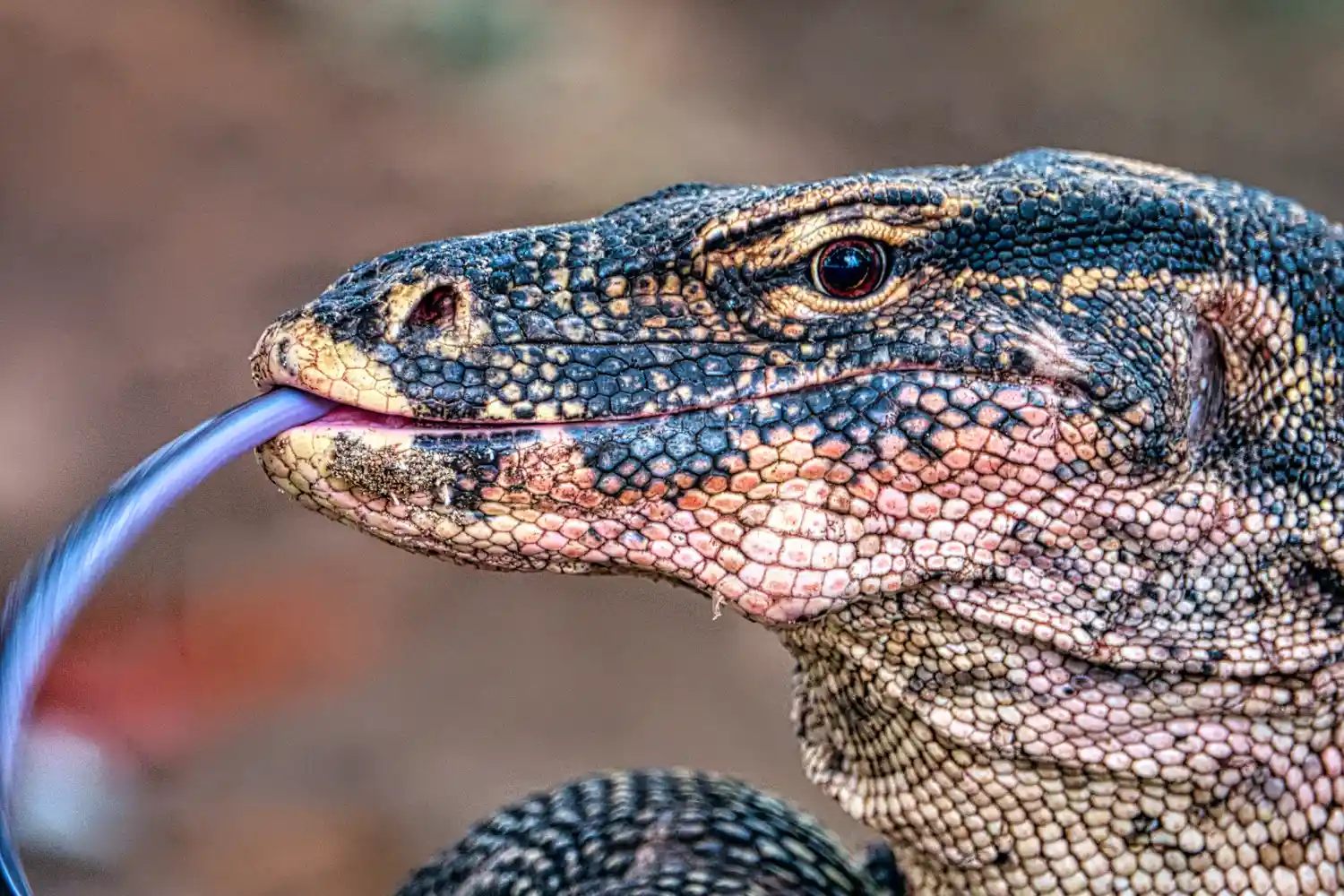
The dragons of Gili Motang are not only fewer, they are also smaller. Studies of the island populations found that the largest dragons on Gili Motang and Nusa Kode do not reach the size of the biggest males on Komodo and Rinca, and researchers linked the difference to the amount of large prey on each island.
On the large islands, adult dragons hunt Timor deer, wild boar and even water buffalo, and the biggest males grow to around three metres. On a small island with fewer deer, there is simply less food to grow on. The dragons of Gili Motang live on smaller prey, and their size reflects it. Our guide to what Komodo dragons eat explains their diet in detail.
It is a pattern seen in many island animals: the size an animal reaches depends on what the island can feed. For visitors, it is also a reminder that the giant dragons in the photos from Komodo and Rinca are the result of rich hunting grounds, not just of the species itself.
A population under pressure
Researchers have watched Gili Motang with concern for decades. A study that compared the dragons of Rinca and Gili Motang between 1994 and 2004 found that on Gili Motang the dragons had become lighter, in poorer condition and less abundant over that decade, while those on Rinca had not.
A larger study, published in the journal Biological Conservation in 2014, followed 925 marked dragons on four islands of the park between 2003 and 2012. It found that the populations of the large islands were stable or close to it, while the population of Gili Motang appeared to be in decline. The same study estimated about 2,450 dragons in the whole park.
In March 2016, The Jakarta Post reported that a researcher of the Komodo Survival Program, Achmad Ariefiandy, saw the decline concentrated on the smaller islands, including Nusa Kode, Gili Motang and Padar, while Komodo and Rinca were relatively stable. He linked it to a shortage of prey such as deer, called for measures against poaching and suggested considering moving deer from Padar to Gili Motang.
Gili Motang and Nusa Kode
Gili Motang has a twin in the research world: Nusa Kode, another small island in the south of the park with its own population of dragons. In the 2019 count, the two islands had almost the same number of dragons, 58 and 57, and studies often discuss them together because they share the same problems: small size, fewer prey animals and smaller dragons.
Both islands show how fragile a small dragon population can be. A few bad years, a fire, a drought that hits the deer or poaching of the prey can push the numbers down quickly, and on a small island there are few animals to make up the loss. That is why researchers keep a close eye on Gili Motang and Nusa Kode, even though few visitors have heard of either.
Padar, the island with the famous viewpoint, tells a related story. Its dragons almost disappeared, and only 6 were counted in 2019. Our guide to Padar Island covers the island and its climb.
Why small islands matter for the species
The Komodo dragon lives in the wild on only a few islands, and its total population is a few thousand animals. In 2021, the International Union for Conservation of Nature moved the species to the category Endangered, citing among other threats the effect of rising seas on its small range. Every island population, however small, is part of the species’ future.
Small populations matter for another reason too. Each island’s dragons have lived apart for a long time, adapted to their own conditions, and keeping them all alive keeps the species varied and resilient. Losing the dragons of Gili Motang would not end the species, but it would make it a little poorer and a little more fragile.
Komodo dragons can swim, and the islands of the park are not far apart on a map. But the channels between them are open sea with strong currents, and researchers treat the dragons of each island as a separate population, with its own numbers, its own prey and its own risks. A dragon from Rinca does not simply refill the gaps on Gili Motang, which is why the trend on each island is watched on its own.
That is why the park’s monitoring covers the small islands as well as the famous ones, and why researchers have argued that each island needs its own plan. Our guide to the Komodo dragons tells the wider story of the species and the park.
Life on a small dragon island
Like most of the park, Gili Motang has a long dry season and a short wet one. For much of the year the hills are brown and the grass is dry, and the island turns green only when the rains come between December and March. On islands like this, water and food are scarce for months at a time, for the dragons and for the animals they hunt.
A dragon on Gili Motang lives the same life as one on Komodo, on a smaller stage. It spends the cool hours of the morning warming in the sun, hunts by ambush, rests in the shade through the heat of the day and often shelters in a burrow at night. Young dragons climb trees to stay safe from the adults, as they do on every island, and grow slowly on a diet of insects, lizards and eggs. Our guide to the baby Komodo dragon explains those first years.
What makes Gili Motang different is the margin for error. On a large island, a bad year for the deer is softened by sheer numbers. On a small island with a few dozen dragons, every animal counts, and every change in the prey shows up quickly in the health of the population.
Watching over the dragons
Komodo National Park was founded in 1980 to protect the dragons, and it became a UNESCO World Heritage Site in 1991. Since at least the 1990s, researchers working with the park have followed the dragons island by island, including Gili Motang, with traps, markings and counts that show how each population changes over the years.
Much of that work has been done by the park’s own staff together with the Komodo Survival Program, an Indonesian conservation group, and scientists from partner institutions abroad. Their long-term data are what revealed the problems on the small islands in the first place: without years of counts, a slow decline on a remote island like Gili Motang would have gone unnoticed.
For visitors, that research is invisible, but it shapes the park you see: the rules on the ranger walks, the quotas on the busiest islands and the protection of the prey animals all rest on knowing how the dragons are doing.
Can you visit Gili Motang?
Not as a tourist stop. Gili Motang is not part of the visitor routes of the park: the ranger walks to see the dragons take place on Komodo and Rinca, and none of the boats on this site stop at Gili Motang. There is no beach stop, viewpoint or walk there on the itineraries we sell.
That is good news for the island. A small population of a few dozen dragons, already under pressure, is better left in peace, and the research that takes place there is carried out with the park’s permission. If you are curious about the island, the best way to support it is to see the dragons where the park wants visitors to see them, with a ranger, and to respect the rules.
From the deck of a boat in the south of the park, you may pass small islands on the horizon, and the guide can point out which is which. Ask on board; many guides know the park well and enjoy talking about its less famous corners.
Where to see Komodo dragons instead
Every trip on this site includes a ranger walk with the dragons, on Komodo Island, on Rinca or on both. On Komodo, the walks start at the ranger station of Loh Liang, with routes of different lengths through the dry forest and up to a low hill. On Rinca, the visitor area of Loh Buaya has a raised walkway from which you can look down on dragons resting below.
Both islands have large, stable populations, and seeing dragons there is almost certain, although never guaranteed with wild animals. Our guides to Komodo Island and Rinca Island explain each walk, and our guide to Komodo dragon attacks explains the safety rules.
How visitors can help
- See the dragons with a ranger, on the official walks on Komodo and Rinca.
- Keep your distance and never feed a dragon, which teaches it to link people with food.
- Stay on the trails and leave no rubbish on any island.
- Never buy wildlife products, including deer meat offered outside official places.
- Choose operators that follow the park’s rules on routes, quotas and anchoring.
Our guide to responsible travel in Komodo covers the reefs, the beaches and the villages as well as the dragons.
Our view
Gili Motang is the quiet side of the Komodo story: a small island with a few dozen smaller dragons, studied by scientists and left alone by the tourist boats. It shows how fragile the species can be on a small island, and why the large, stable populations on Komodo and Rinca, protected in a UNESCO World Heritage Site since 1991, are so precious. See the dragons with a ranger on the big islands, and let Gili Motang keep its peace.
Not every dragon island needs visitors. Some need only to be left alone.
Want to see the dragons for yourself? Compare the sharing trips on this site: every trip includes a ranger walk on Komodo or Rinca.
Questions
Where is Gili Motang?
In the south-east of Komodo National Park, south-east of Rinca, in eastern Indonesia. It is a small island of about 30 km².
Are there Komodo dragons on Gili Motang?
Yes. The park counted 58 dragons there in 2019, one of only a few island populations of the species.
Why are the dragons on Gili Motang smaller?
Researchers link their smaller size to the smaller amount of large prey, such as deer, on the island.
Is the population on Gili Motang declining?
Studies have recorded a decline in the past, linked to a shortage of prey. Researchers continue to monitor it closely.
Can tourists visit Gili Motang?
It is not part of the visitor routes, and none of the boats on this site stop there. The ranger walks take place on Komodo and Rinca.
Which islands have Komodo dragons?
Komodo, Rinca, Gili Motang, Nusa Kode and Padar in the park, and parts of the coast of western and northern Flores.
What is Nusa Kode?
Another small island in the south of the park with its own small population of dragons, 57 in the 2019 count.
How big is Gili Motang?
About 30 square kilometres, a small, volcanic island compared with Komodo and Rinca.
Where is the best place to see Komodo dragons?
On the ranger walks on Komodo Island and Rinca, which are part of every trip on this site.

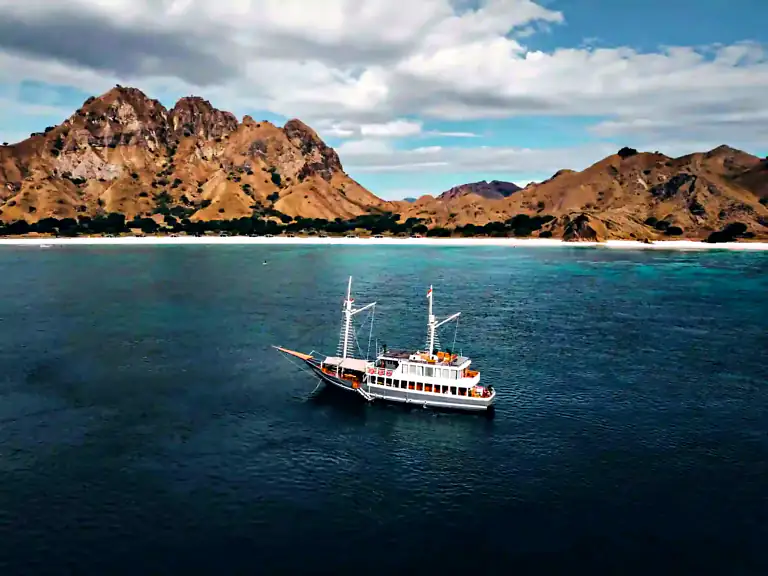
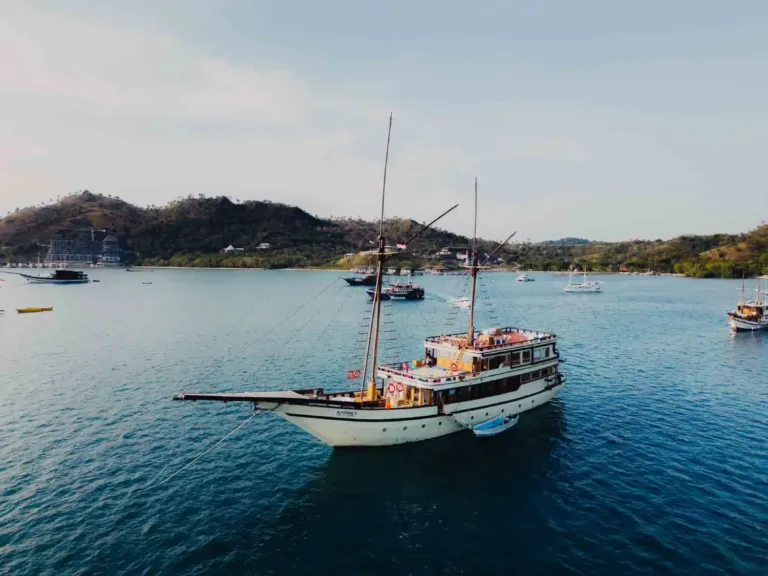
 Elbark Cruise
 Papiton Allo
 Semesta Voyages
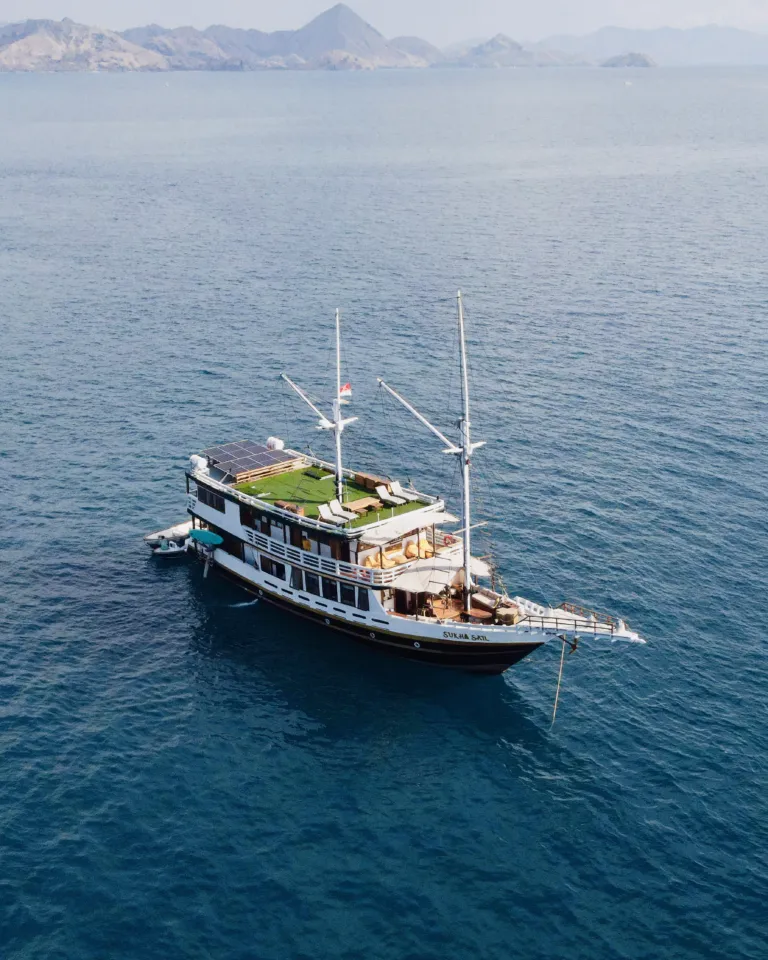
 Sukha Sail 1