Rinca Island is where many travellers meet their first Komodo dragon. Dry hills, mangrove shores and open savanna make it one of the most striking islands of Komodo National Park, and it lies closer to Labuan Bajo than Komodo Island itself. This guide explains where Rinca is, how the walk with the park rangers works at Loh Buaya, what else lives on the island, when to go and how to visit on a liveaboard.
In short
- Rinca is one of the three large islands of Komodo National Park, about 20,000 hectares of hills, savanna and mangroves.
- Wild Komodo dragons live on Rinca all year, and every visit is a walk led by park rangers from Loh Buaya.
- The visitor area at Loh Buaya was rebuilt between 2020 and 2022, with a raised walkway for viewing the dragons.
- Since April 2026, a daily visitor quota covers Rinca, Komodo and Padar, with tickets booked through SiOra.
Where is Rinca Island?
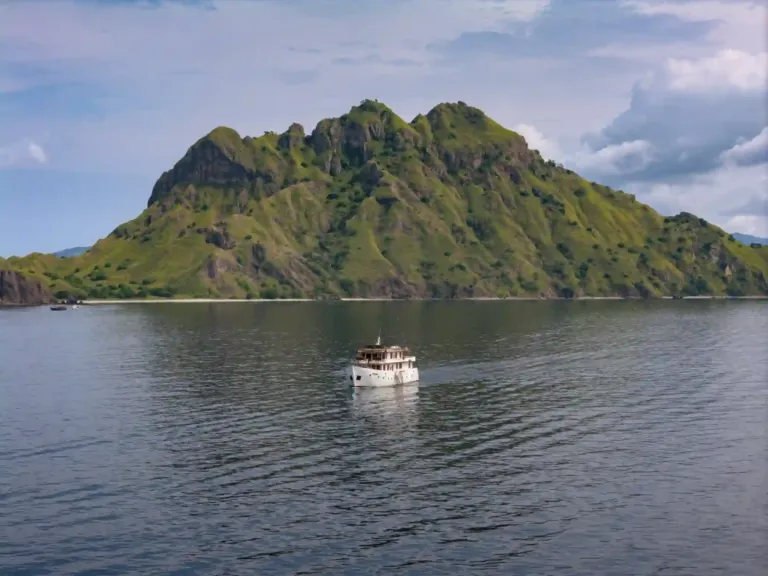
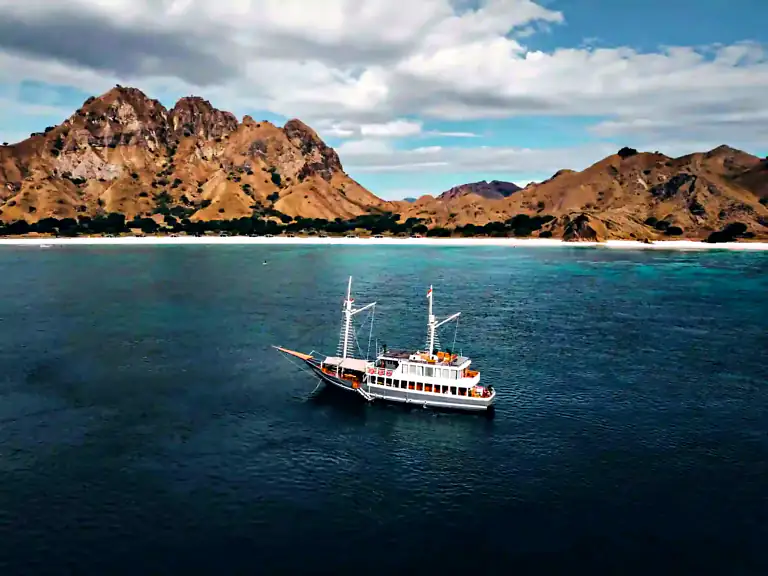
Rinca lies in the east of Komodo National Park, between Padar and the western coast of Flores. Together with Komodo and Padar, it is one of the three large islands of the park, which has been a UNESCO World Heritage Site since 1991. Officials put the size of Rinca at about 20,000 hectares, much of it rugged hills that turn green in the wet season and golden brown in the dry months.
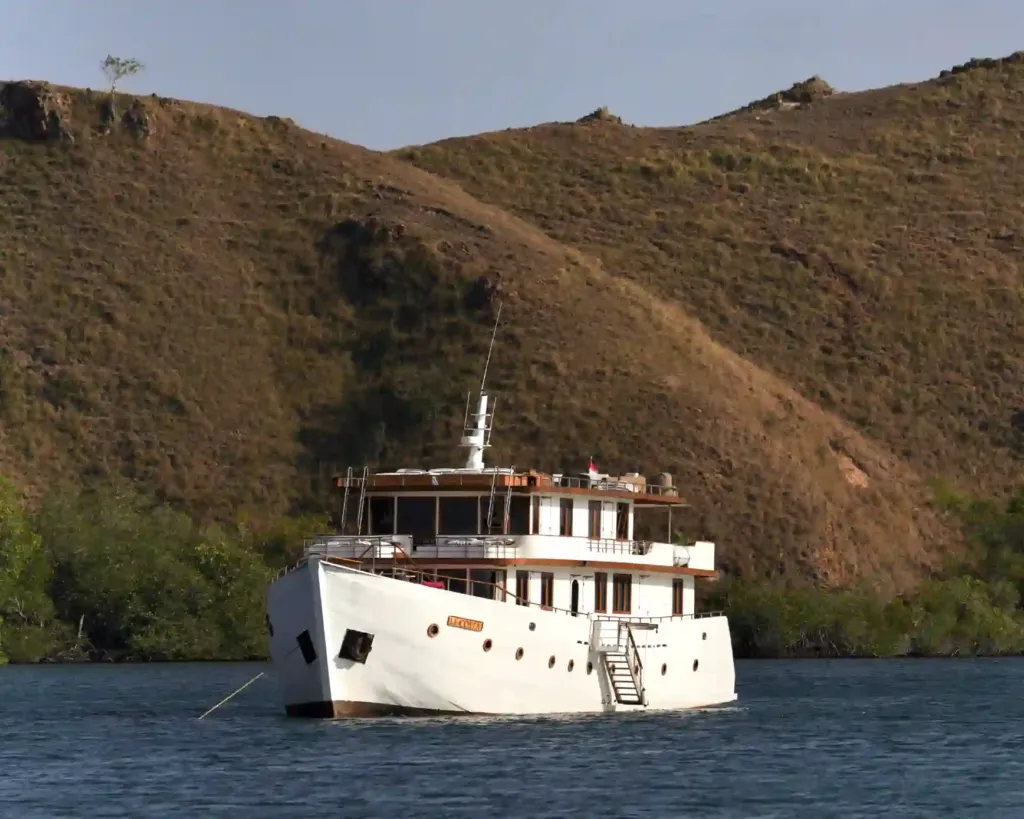
Because Rinca is closer to Labuan Bajo than Komodo Island, it is easier to fit into a short trip. Some liveaboards stop here on the first day, and others visit Rinca as well as, or instead of, Komodo Island. People live on the island too, in a fishing village on the coast, and they have shared Rinca with the dragons for generations.
The dragons of Rinca
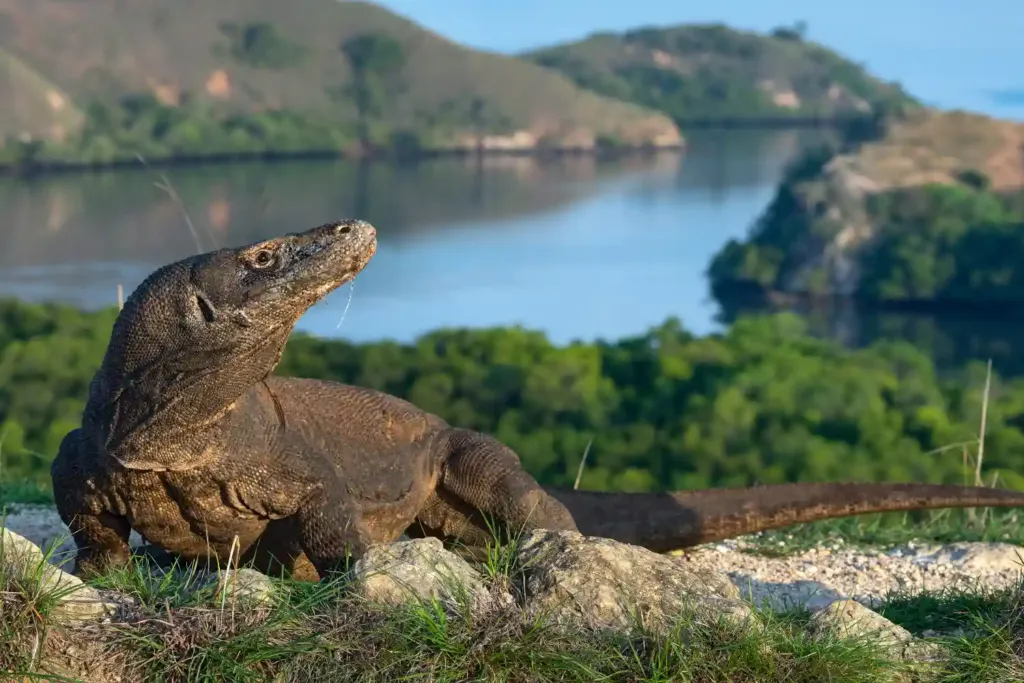
Rinca is one of the main homes of the Komodo dragon. UNESCO’s description of the park estimates the population at around 5,700 dragons, most of them on Rinca and Komodo, the two largest islands. The dragons live on Rinca all year, so you can see them in any season, and the chances on a walk with the rangers are good.
Many dragons rest near the ranger station and the water holes, where the ground is open and the shade is close. The best-known dragon photos of Rinca, with a heavy lizard lying on dry ground against golden hills, are often taken within a short walk of the jetty. Our guide to Komodo dragons covers their size, their behaviour and their story.
Komodo dragons hunt by ambush. An adult waits motionless along a trail, then strikes at deer, wild boar or even water buffalo, and after a big meal it rests for a long time while it digests. They smell with their long forked tongue, which collects scents from the air, and in the heat of the day they keep cool in the shade. That is why so many of the dragons you see are lying still, and why a dragon that suddenly gets up and walks is such a striking sight.
Loh Buaya: the ranger station on Rinca
Visits to Rinca start at Loh Buaya, the ranger station on the island. Between 2020 and 2022, the government rebuilt the visitor area there. The plans described a raised walkway for viewing the dragons, an information centre, lodging for staff and visitors and renovated docks, all within an area of about 500 hectares, a small part of the island.
The project drew debate when it began, but today it shapes how most visitors experience Rinca. From the jetty, a path leads to the visitor area, where the rangers meet each group, and the raised walkway lets you look down on dragons resting below. Facilities and routes can change, so the rangers decide on the day where your group walks.
From a liveaboard, the tender carries you from the anchorage to the docks, and the visit begins as soon as you step ashore. Keep your shoes on from the boat, carry a small bag with water, sun cream and your camera, and leave anything you do not need on board, because your hands are best kept free on the walk.

The walk with the rangers on Rinca Island
Every visit to the dragons is led by park rangers. The walk starts with a short briefing on the rules. Then the group sets off with a ranger at the front and often another at the back, each carrying a long forked stick used to keep a dragon at a distance if one comes too close.
The walk is gentle, over dry ground and along the raised walkway, and most visits last around an hour, depending on the route and the heat. On the way, the rangers point out dragons, nests, tracks and other animals, and explain how the dragons hunt and breed. Many rangers speak some English and are happy to answer questions, so ask about anything you see.
Wear closed shoes, light clothes and a hat, and bring a bottle of water: there is little shade on the open hills. Stay with the group, keep several metres from any dragon, and never feed or touch one. Tell the ranger about any open wound, and keep children close to you at all times.
Other wildlife on Rinca
The dragons share Rinca with the animals they hunt and with many others. Keep an eye out for these on the walk:
- Water buffalo, often near the water holes and the mangroves.
- Timor deer and wild boar, the main prey of the adult dragons.
- Long-tailed macaques, which move through the trees in small groups.
- Birds, such as the orange-footed scrubfowl, whose large nest mounds are sometimes used by dragons to lay their eggs.
Along the shore, the mangroves are home to crabs, birds and young fish, and they protect the coast from waves. None of these animals can be promised, which is part of the charm of every walk.
Bird lovers should bring binoculars. Besides the scrubfowl, the islands of the park are home to eagles, kingfishers and, with luck, the rare yellow-crested cockatoo, whose white feathers stand out against the dry hills. The early morning, when the birds are most active, is the best time to look and listen.
Rinca or Komodo Island?
Both islands are home to wild dragons, and the chances of seeing one are good on both. Rinca is smaller and closer to Labuan Bajo, which makes it easier to fit into a short trip, and its open hills give wide views of the dragons in their landscape. Komodo Island is the largest island of the park and lies further away, with longer walks into the hills and the forest.
The landscapes differ too. The open hills here give long views over the grass and the bays, and the dragons are often easy to spot against the dry ground. On Komodo Island, the walks pass through more forest and shade, and the island also has a village and the famous Pink Beach nearby.
Which island you visit usually depends on the route of your boat and the plans of the park, rather than on your chances of a sighting. Each boat page shows its itinerary, and if one island matters more to you, ask us before you book which departures include it.
Visitor quota, tickets and park fees
Since 1 April 2026, the Ministry of Forestry has applied a daily visitor quota to Komodo National Park that covers Padar, Rinca, Komodo and 23 dive sites, as RRI reported. Tickets are booked online through the reservation system of the park, called SiOra, and the details may still change.
If you book a liveaboard with us, the walk on Rinca or Komodo is part of the itinerary, and the Komodo National Park entrance fee is added to your invoice, IDR 650.000 for foreign guests on most boats. Our park fees guide explains how it works. If you plan a day trip on your own, check that your operator has tickets for your visit.
When to visit Rinca
Dragons live on Rinca all year, but the time of day matters. Like all reptiles, they warm up in the morning sun and are most active before the heat, and by midday most of them rest in the shade. An early walk is also easier for you, as the open hills get very hot by late morning.
The dry season, from April to November, brings calmer seas and dry trails, and the hills turn golden brown from September. Rinca has one more advantage in the windy months: in August and September 2026, when high waves closed sailing to Padar and Komodo for a few days, trips to Rinca were still allowed. See our guide to the best time for a Komodo liveaboard for each season.
In the wet season, from December to March, the hills turn green, the trails are quieter and there are fewer boats in the park. Rain and changing seas make the schedules less certain, and many boats on this site do not run sharing trips in January and February, so check the departure list of each boat if you plan to travel then.
Visiting Rinca on a liveaboard
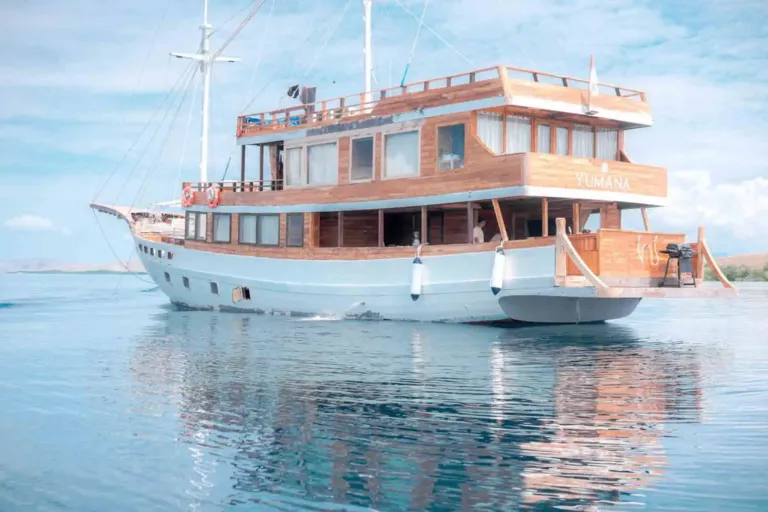
A liveaboard is an easy way to see Rinca at a good hour. On boats that stop here on the first day, the morning starts with a pick-up in Labuan Bajo, and the walk with the rangers comes in the late morning or early afternoon, followed by the flying foxes of Kalong Island at dusk. Other boats visit Komodo Island on the second day instead.
On itineraries that include it on the first day, the order often looks like this:
- Morning: pick-up from the airport or your hotel in Labuan Bajo, then a short climb on Kelor Island.
- Midday: lunch on board while the boat sails south into the park.
- Afternoon: the walk with the rangers, followed by a snack back on the boat.
- Dusk: the flying foxes of Kalong Island, then dinner at anchor.
Because a liveaboard spends the night inside the park, the crew can often plan the walk for the cooler hours. With a private charter, you can ask to include Rinca in your route. Read our comparison of a Komodo liveaboard and a day trip if you are still choosing.
Photographing the dragons
You will get close enough for good photos without breaking any rules. A phone works well, and a camera with a zoom lens lets you fill the frame from a safe distance. From the raised walkway you can shoot from above, which shows the full length of a dragon lying on the ground. On the path, crouch down if the ranger allows it, to get closer to the dragon’s eye level.
Look for the flick of the tongue, which makes for the most striking pictures, and for a dragon walking against the golden grass. Never step closer for a selfie, and never use food or noise to make a dragon move. The light is softest early in the morning, and dust and heat are the main challenges for cameras, so carry a soft cloth for your lens and keep your phone out of the direct sun between shots.

9 tips for seeing the dragons on Rinca
- Go early, when the dragons are more active and the air is cooler.
- Wear closed shoes with a good grip for the dry, dusty paths.
- Bring water and a hat, because there is little shade on the hills.
- Stay behind the ranger and with the group at all times.
- Keep several metres away, even from a dragon that looks asleep.
- Tell the ranger about any open wound before the walk begins.
- Use a zoom lens for close photos from a safe distance.
- Move calmly and quietly, and keep children close.
- Ask questions: the rangers know the dragons and the island well.
Rinca Island at a glance
| Rinca Island | |
|---|---|
| Where | East of Komodo National Park, between Padar and Flores |
| Size | About 20,000 hectares |
| Known for | Komodo dragons, dry hills and mangrove shores |
| Ranger station | Loh Buaya, with a raised walkway for viewing the dragons |
| How to visit | On a walk led by park rangers, usually around an hour |
| Best time of day | Early morning, when it is cooler |
| Tickets | Daily quota since April 2026, booked through SiOra |
Our view
Rinca is the island where Komodo’s wild side feels closest. The dragons are easy to find, the hills around them look much as they must have looked long before the first visitors, and the walk with the rangers is short enough for almost anyone. Go early, listen to the rangers, and take a moment to look beyond the dragons at the island itself.
Remember too that the park is a protected home for these animals, not a stage. Following the rules, keeping your distance and taking all your rubbish back to the boat are the simplest ways to help keep it wild for the next visitors and for the dragons themselves.
On Rinca, the first dragon often appears before you have even left the jetty behind: still, heavy and entirely unbothered by your arrival.
Ready to go? Browse the sharing trips with live cabin availability, and check each boat’s itinerary for the walk on Rinca or Komodo.
Questions
Are there Komodo dragons on Rinca Island?
Yes. Rinca is one of the main homes of the Komodo dragon, and the dragons live there all year.
Can I visit Rinca without a ranger?
No. Every walk to see the dragons is led by park rangers, who know where the dragons rest and how to keep the group safe.
How long is the walk on Rinca?
Most visits last around an hour, depending on the route the rangers choose and the heat. The walk is gentle and suits most people.
Is Rinca better than Komodo Island?
Neither is better for seeing dragons. Rinca is closer to Labuan Bajo and easier to fit into a short trip, while Komodo Island is larger, with longer walks.
Do I need a ticket for Rinca?
Yes. Since April 2026 a daily visitor quota covers Rinca, booked through SiOra. On a liveaboard booked with us, the park entrance fee is added to your invoice.
How far is Rinca from Labuan Bajo?
Rinca is the closest of the large islands to Labuan Bajo, which is why some boats visit it on the first day of a trip.
Can children join the walk on Rinca?
Yes, as long as they stay close to their parents and follow the rangers’ instructions. Bring water and a hat for them too.
Is it safe to see the dragons?
Yes, when you follow the rangers. Komodo dragons are wild predators, so every group walks with rangers who keep it at a safe distance, and attacks on visitors are very rare.
What should I wear for the walk?
Closed shoes with a good grip, light clothes that cover your shoulders against the sun, a hat and sunglasses. Bring a bottle of water as well.
What is the best time of day for the walk?
Early morning. The dragons are more active before the heat, and the walk is far more pleasant in the cooler hours.
What else can I see on Rinca?
Water buffalo, Timor deer, wild boar, macaques and birds such as the orange-footed scrubfowl, as well as wide views over the hills and the bays.

 Elbark Cruise
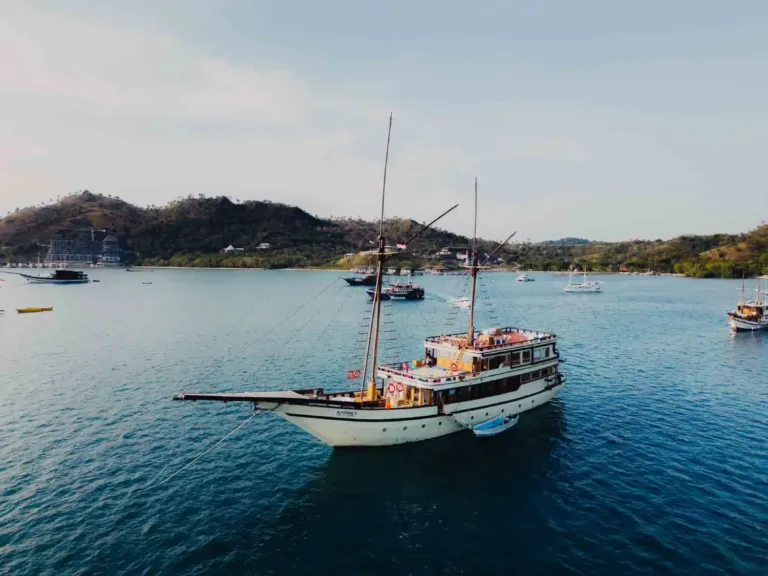
 Papiton Allo
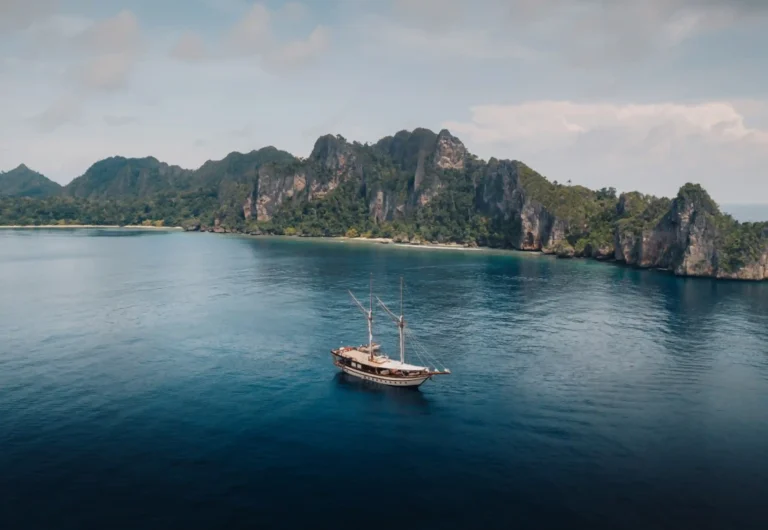
 Semesta Voyages
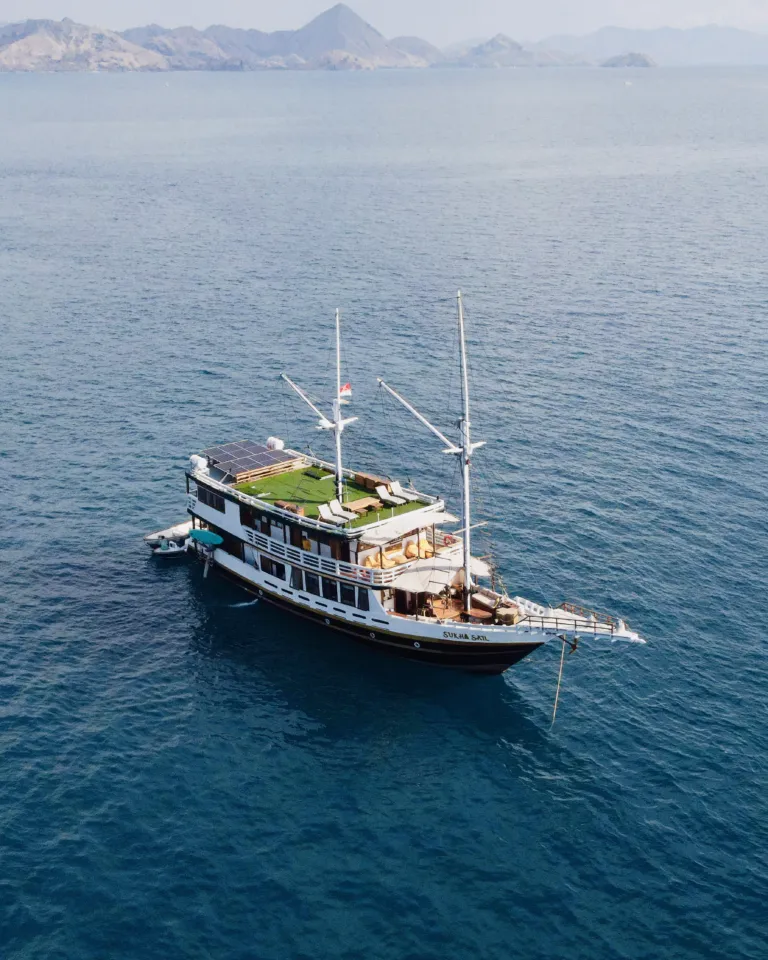
 Sukha Sail 1