Komodo dragons are the reason Komodo National Park exists, and for many travellers they are the reason to come. The largest lizards on Earth live in the wild only in this small corner of Indonesia, on a handful of dry, rugged islands between Sumbawa and Flores. This guide brings together twelve facts about Komodo dragons, where to see them, what the walk with the park rangers is like, and how to make the most of it on a liveaboard.
In short
- Komodo dragons live in the wild only on Komodo, Rinca, Gili Motang and parts of the coast of western Flores.
- You can only see them on a walk led by park rangers, usually on Komodo or Rinca.
- Mornings are the best time, as the dragons are more active before the heat of the day.
12 facts about Komodo dragons
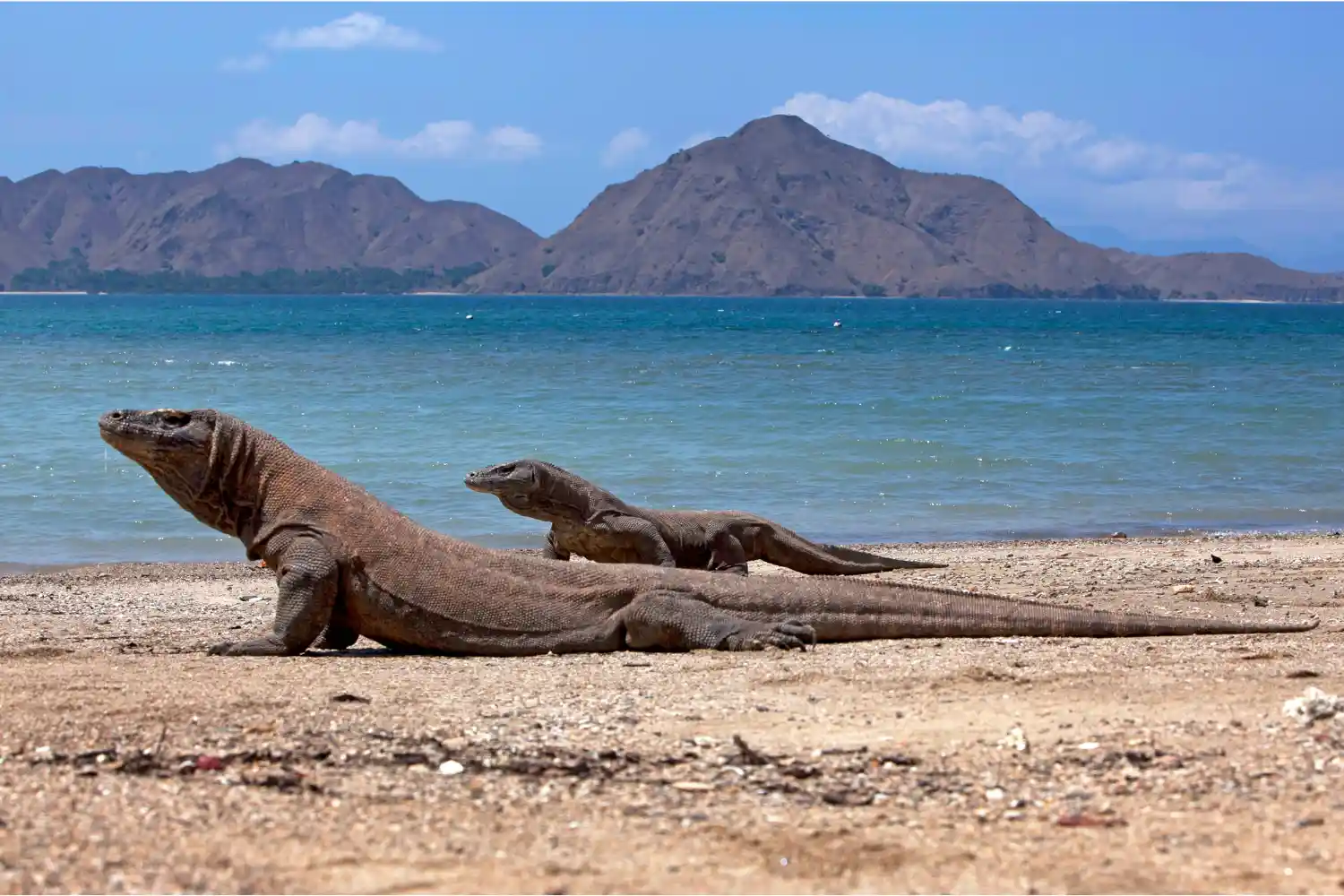
- They are the largest living lizards. Adults usually measure two to three metres from nose to tail, and a large adult can weigh around 70 kilograms.
- They live nowhere else in the wild. Their whole range is a few islands of Komodo National Park and parts of the coast of western Flores.
- They are survivors of an ancient group. According to UNESCO, they are the last representatives of a relic population of large lizards that once lived across Indonesia and Australia.
- Their scientific name is Varanus komodoensis. They belong to the monitor lizards, a family found across Asia, Africa and Australia.
- They hunt by ambush. A dragon waits motionless along a trail, then strikes at deer, wild boar and even water buffalo.
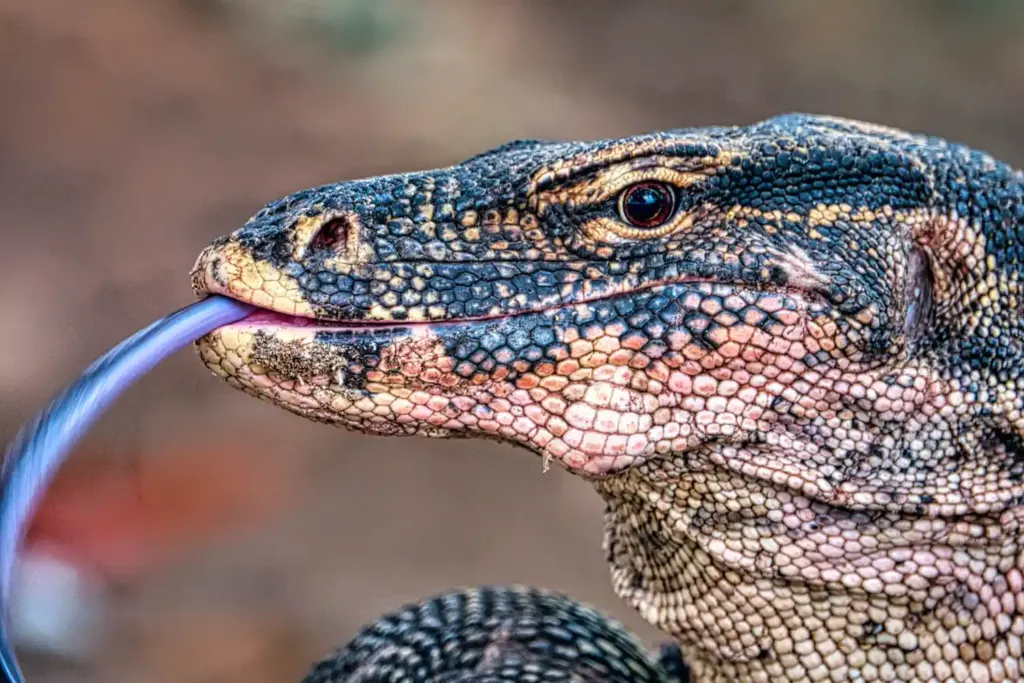
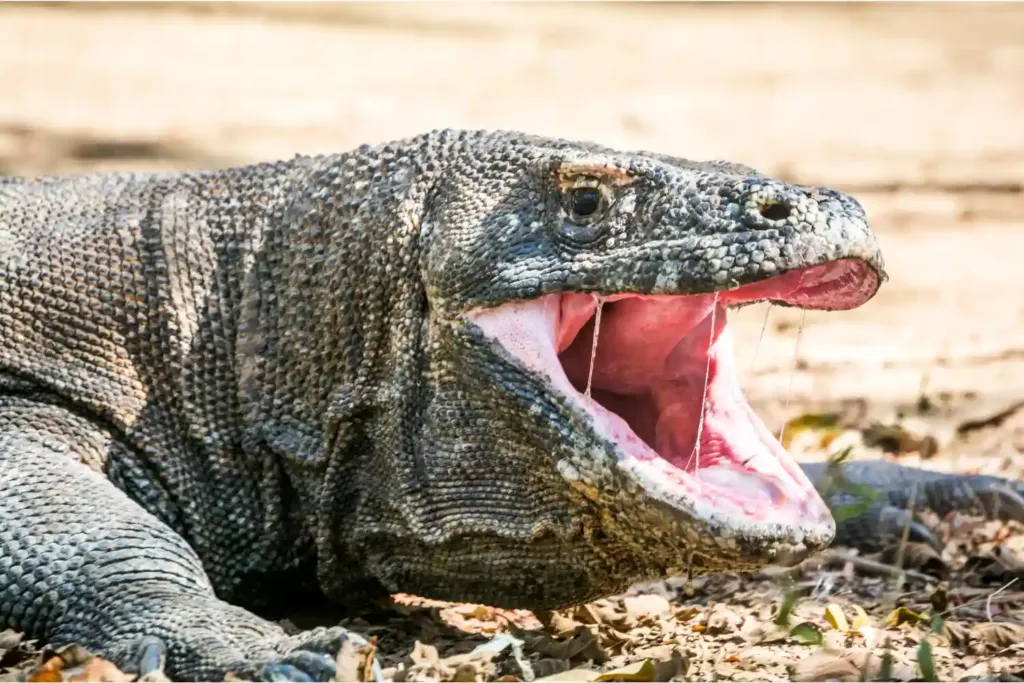
- They smell with their tongue. The long forked tongue collects scents from the air, which lets a dragon find food from far away.
- Their bite is venomous. Research has found venom glands in their lower jaw, which help them bring down prey much larger than themselves.
- They eat huge meals. After a large meal, a dragon can go for a long time without eating again, resting in the shade.
- They are fast over short distances. For all their size, they can run quickly in a short burst, which is why the rangers keep you at a safe distance.
- Young dragons live in trees. Hatchlings spend their first years climbing, where they are safe from adult dragons.
- Some females can reproduce without a male. This has been observed in zoos, where females laid eggs that hatched without any male present.
- They are endangered. In 2021, the IUCN Red List moved the Komodo dragon from vulnerable to endangered, mainly because rising sea levels threaten its small island home.
Where Komodo dragons live
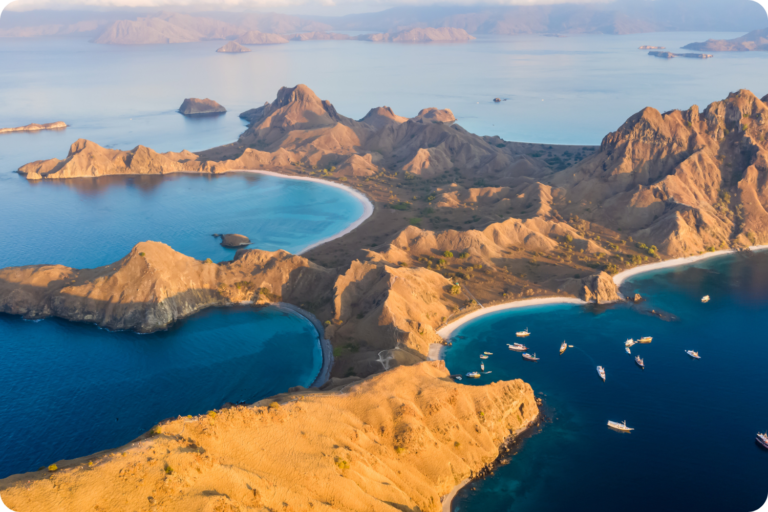
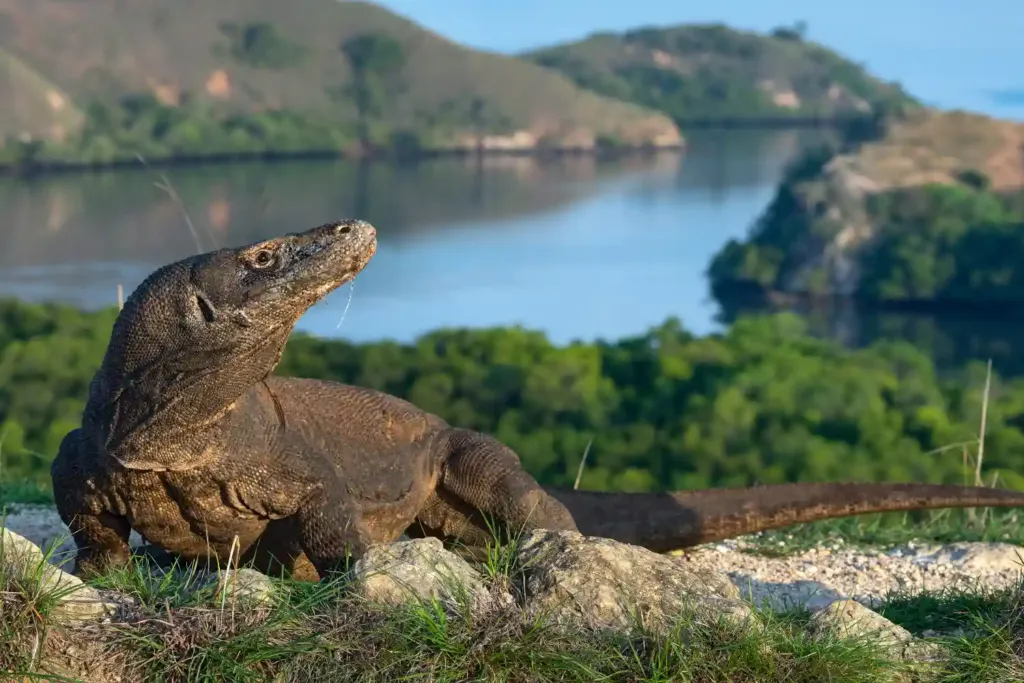
Komodo National Park, a UNESCO World Heritage Site, was created to protect the dragons and their habitat. Its three large islands are Komodo, Rinca and Padar, surrounded by many smaller ones, and the landscape is unlike most of Indonesia: dry savanna hills, pockets of forest, white and pink beaches and rich coral reefs.
The dragons live on Komodo, Rinca and Gili Motang, and in some coastal areas of western Flores. UNESCO’s description of the park estimates the population at around 5,700, most of them on the two largest islands. Padar, famous for its viewpoint, has no dragons today, so the walk with the rangers takes place on Komodo or Rinca.
The dragons share the islands with Timor deer, wild boar, water buffalo and birds such as the orange-footed scrubfowl, whose large nest mounds are sometimes used by female dragons to lay their eggs. People live here too: villages on Komodo and Rinca have lived alongside the dragons for generations.
A short history of the dragons and the park
The people of Komodo knew these animals long before scientists did. In the local language they are called ora, and a well-known legend tells of a princess who gave birth to twins: a boy, and a lizard that was raised in the forest. Ever since, the story goes, the islanders have treated the animals as their kin, and the two have shared the island side by side.
The wider world learned of them in the early twentieth century, and the species was described by scientists in 1912. As travellers and collectors began to arrive, the need to protect the islands grew, and Komodo National Park was established in 1980. In 1991, UNESCO added the park to its list of World Heritage Sites, recognising both the lizards and the remarkable landscape and reefs around them.
How Komodo dragons breed
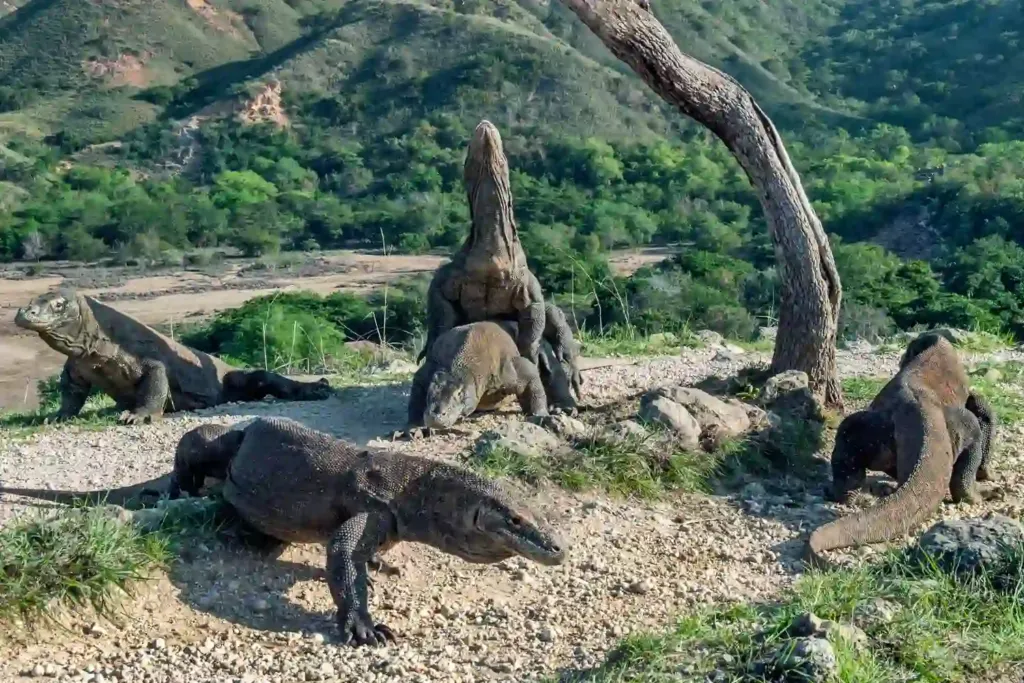
The breeding season falls around the middle of the year, when males compete for females, sometimes in dramatic wrestling matches standing on their hind legs. Later in the year, the female lays a clutch of eggs, often around twenty, in a hole in the ground or in a nest mound built by a scrubfowl, and she may guard the nest for some time.
The eggs hatch many months later, and the young are on their own from the start. They climb into the trees almost at once and live there for their first years, feeding on insects, geckos and small animals, until they are large enough to live on the ground. Only a small share of the hatchlings reach adulthood, which is one reason the species needs protection.
Komodo or Rinca: where to see the dragons
Both islands are home to wild dragons, and both have a ranger station where the walks begin: Loh Liang on Komodo and Loh Buaya on Rinca. Which one you visit usually depends on the route of your boat, the time you have and the plans of the park, rather than on your chances of seeing a dragon, which are good on both.
- Komodo Island is the largest island of the park and lies further from Labuan Bajo. It is often visited on a liveaboard, and it offers walks of different lengths through the hills and the forest.
- Rinca is smaller and closer to Labuan Bajo, which makes it easier to fit into a short trip. Its dry hills and mangrove coast are the backdrop to many of the best-known dragon photos.
On most liveaboards, the stop with the dragons is part of the itinerary, so there is nothing extra to plan. The boat page lists which island your trip visits. If one island matters more to you than the other, ask us before you book, and we will tell you which departures include it.
What to expect on the walk with the rangers
Every visit to the dragons is led by park rangers. The walk starts at the ranger station with a short briefing on the rules, and then the group sets off along a marked trail, with a ranger at the front and often another at the back. The rangers carry long forked sticks, used to keep a dragon at a distance if one comes too close.
The walk itself is gentle, over dry ground and through patches of shade. Many dragons rest near the ranger stations and the water holes, so you often see the first ones within minutes. On the way, the rangers point out deer, wild boar, nest mounds and birds, and explain how the dragons hunt and breed. Most walks last around an hour, depending on the route and the heat.
Many rangers speak some English and are happy to answer questions, so ask about anything you see along the way. Light clothes, closed shoes, a hat and a bottle of water are all you need, as there is little shade on the open hills.
Other wildlife on the walk
The lizards are the stars, but they are not alone. Keep an eye out for these animals on the walk:
- Timor deer, the main prey of the adults, often grazing in the open.
- Wild boar and water buffalo, especially near the water holes.
- Long-tailed macaques, which move through the trees in small groups.
- Birds, such as the orange-footed scrubfowl and its large nest mounds, and, with luck, the rare yellow-crested cockatoo.
Safety rules near the dragons
Komodo dragons are wild predators, and the rules are there for a reason. Follow the rangers’ instructions at all times:
- Stay with the group and behind the ranger, and never walk off on your own.
- Keep your distance. Stay several metres away, even when a dragon looks asleep.
- Never feed or touch a dragon, and do not leave food or rubbish behind.
- Tell the ranger about open wounds, and women who are menstruating are asked to let the ranger know, as the dragons have a keen sense of smell.
- Move calmly and quietly. Do not run, and keep children close to you.
- Wear closed shoes with a good grip, and bring water and a hat.
When to see Komodo dragons
Dragons can be seen all year, but the time of day matters. Like all reptiles, they warm up in the morning sun and are most active before the heat sets in. By midday, most of them rest in the shade, which still makes for good photos but less movement. An early walk is also more pleasant for you, as the islands get very hot by late morning.
Most trips to Komodo sail in the dry season, from April to November, when the seas are calmer and the trails are dry. The hills are golden and bare in these months, which makes the dragons easier to spot against the grass. Our guide to the best time for a Komodo liveaboard explains the seasons month by month.
Komodo dragons at a glance
| Komodo dragon | |
|---|---|
| Scientific name | Varanus komodoensis |
| Length | Usually 2 to 3 metres for adults |
| Weight | Around 70 kilograms for a large adult |
| Diet | Deer, wild boar, water buffalo and carrion |
| Where in the wild | Komodo, Rinca, Gili Motang and parts of western Flores |
| Status | Endangered on the IUCN Red List since 2021 |
| How to see them | On a walk led by park rangers, on Komodo or Rinca |
Photographing Komodo dragons
You will get close enough for good photos without breaking any rules. A phone works well, and a camera with a zoom lens lets you fill the frame from a safe distance. Crouch down, if the ranger allows it, to shoot at the dragon’s eye level, and look for the flick of the tongue, which makes for the most striking pictures.
Never step closer for a selfie, and do not use food or noise to make a dragon move. The rangers know where the dragons rest and will find you a good angle. Dust and heat are the main challenges for cameras on the islands, so carry a soft cloth for your lens and keep your phone out of the direct sun between shots.
Seeing Komodo dragons on a liveaboard
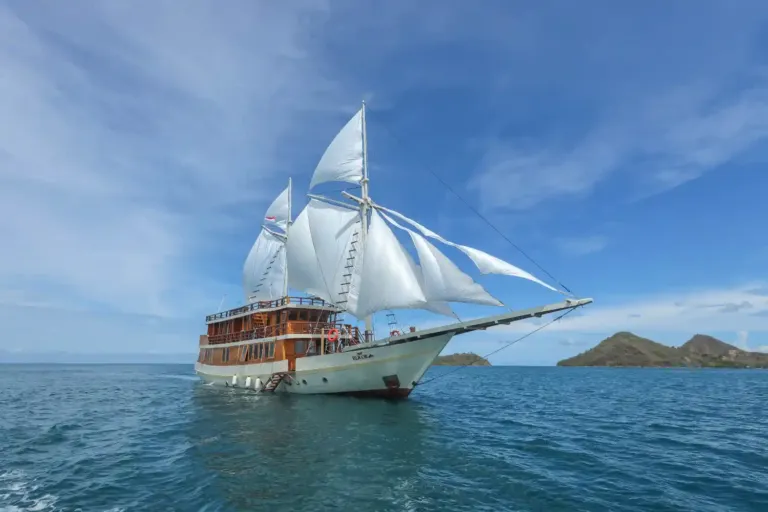
A liveaboard is one of the easiest ways to see the dragons. On a sharing trip of 3 days and 2 nights, the walk with the rangers usually comes on the second day, after the sunrise on Padar and a swim at Pink Beach. On the boat trips between Lombok and Labuan Bajo, a full day in the park includes Komodo Island and its dragons.
Because the boat spends the night inside the park, it can often reach the ranger station early, in the cooler hours when the dragons are more active. With a private charter, you can ask the crew to plan the walk at the time that suits you best. Read our comparison of a Komodo liveaboard and a day trip if you are still choosing.
Protecting the dragons
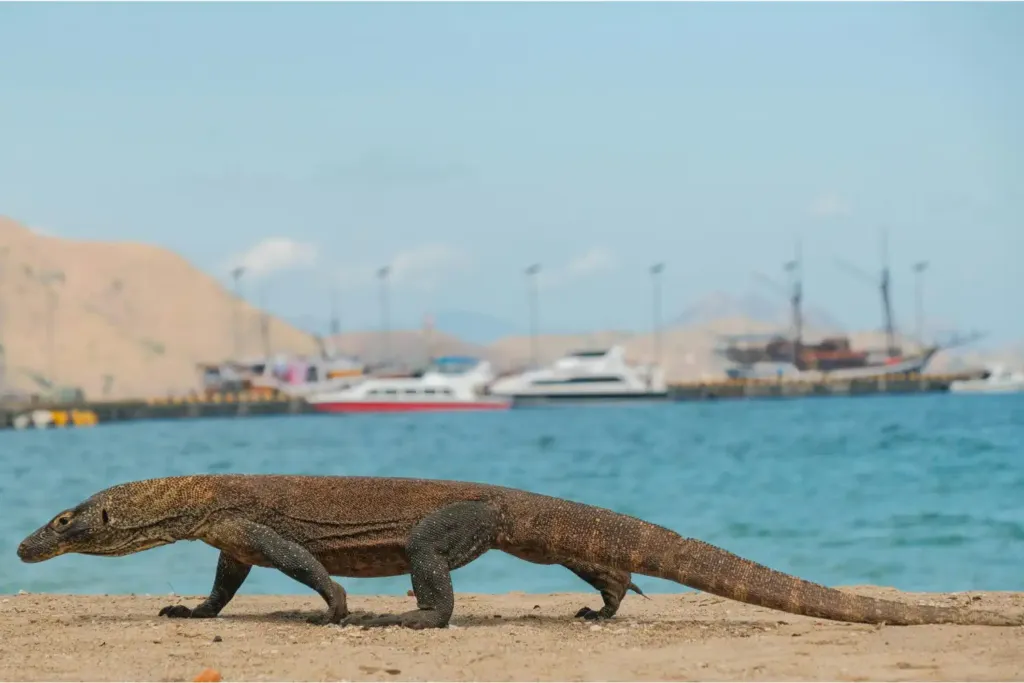
Every visitor to the park pays the Komodo National Park entrance fee. When you book a liveaboard with us, it is added to your invoice, and our park fees guide lists the amounts. Following the rangers’ rules, keeping your distance and taking all your rubbish back to the boat are the simplest ways to help. Never buy souvenirs made from shells, coral or protected animals, and leave everything you find on the islands where it is.
The dragons’ future depends on their small island habitat and on the deer and boar they hunt. Choosing a trip that respects the park, and sharing what you learn with others, helps keep Komodo wild for the next generations of dragons and travellers.
Our view
Seeing a Komodo dragon in the wild is one of the great wildlife moments of Indonesia. The walk is short and easy, the rangers make it safe, and the dragons are a living link to a time when giant lizards roamed across the region. Go early, listen to the rangers, and take a moment to simply watch. There are few places on Earth where you can walk among animals with such an ancient story.
Nothing quite prepares you for the first dragon you see: still as a stone, until the tongue flicks out and tastes the air.
Ready to go? Browse the sharing trips with live cabin availability, or read what to pack for a Komodo liveaboard.
Questions
Are Komodo dragons dangerous?
They are wild predators and can be dangerous, which is why every visit is led by park rangers. Attacks on visitors are very rare, and following the rangers’ rules keeps you safe.
Can I see the dragons without a ranger?
No. Walks on Komodo and Rinca are always led by park rangers, who know where the dragons rest and how to keep the group safe.
Are there dragons on Padar?
No. Padar is part of the park and famous for its viewpoint, but it has no dragons today. You see them on Komodo or Rinca.
How many Komodo dragons are there?
UNESCO’s description of the park estimates the population at around 5,700, spread over Komodo, Rinca, Gili Motang and parts of western Flores. Numbers change from year to year, and the species is listed as endangered.
Can children join the walk with the dragons?
Yes, children can join the walk, as long as they stay close to their parents and follow the rangers’ instructions. The walk is short and easy, but bring water and a hat.
What is the best time of day to see the dragons?
Early morning, when the dragons are warming up and more active, and the heat is easier for you too. A liveaboard that spends the night in the park can often be at the ranger station early.
How big do they get?
Adults usually measure two to three metres from nose to tail. Males are larger than females, and a big male can weigh around 70 kilograms, which makes them the heaviest lizards in the world.
What do they eat?
Adults hunt deer, wild boar and water buffalo, and they also eat carrion, which they can smell from far away. Young ones in the trees live on insects, geckos and small animals.
Can I see them anywhere else?
A few zoos around the world keep them, but in the wild they live only in this part of Indonesia. Seeing them on their own islands, in the dry hills where they hunt, is a very different experience from a zoo.
Do I need to be fit for the walk?
No. The shorter routes are gentle and suitable for most people, including children and older travellers. The longer routes on Komodo climb into the hills, so choose them only if you enjoy a walk in the heat, and bring plenty of water.
How close can I get?
The rangers decide, depending on the animal and its mood, but you always keep several metres away. That is close enough for good photos, especially with a zoom lens.