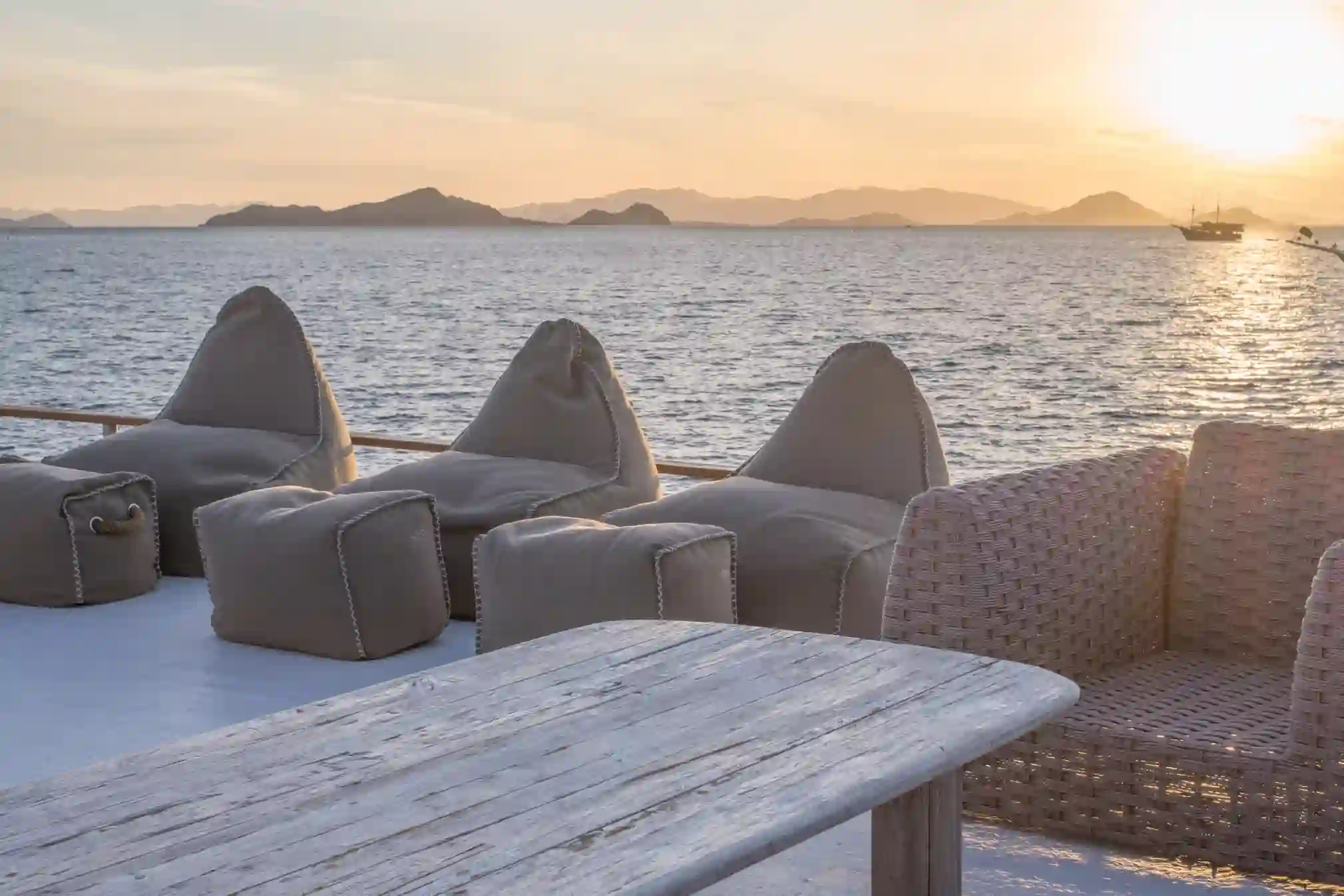
A good Komodo packing list is shorter than you might think. On a liveaboard, your cabin is small, the days are spent in a swimsuit, and the boat already takes care of the meals, the drinking water and the snorkelling gear. What matters is the right few things: protection from a strong sun, shoes for the walks on the islands, and a bag that fits in your cabin. This guide explains what to pack for a Komodo liveaboard, what the boat provides, and what you can happily leave at home.
In short
- Pack light and soft: a duffel or soft bag is far easier to store in a cabin than a hard suitcase.
- The essentials are sun protection, swimwear and shoes with a good grip for Padar and the walk with the rangers.
- Most boats provide meals, drinking water and snorkelling equipment, so you need to bring less than you think.
Before you pack: what the boat already provides
Start your packing list by crossing off what is already on board. On most Komodo liveaboards, the price of a trip includes your cabin and bedding, three meals a day with snacks in between, drinking water, coffee and tea, and the snorkelling equipment, including life jackets. Many boats also include the transfer from the airport, your hotel or the harbour in Labuan Bajo on the first morning.
Some things are usually not included: alcoholic drinks, tips for the crew, travel insurance, and your flights and hotels. The Komodo National Park fee is paid by every visitor, and when you book a liveaboard with us it is added to your invoice, so you do not need cash for it on the day. Every boat page on our site lists exactly what is included and what is not, so check it before you pack.
Towels are worth a quick check too. Bath towels are part of the cabin on most boats, while beach towels for the snorkelling stops vary from boat to boat. If the boat page does not mention them, ask us, or pack a light travel towel or a sarong, which also works as a cover-up on land.
Bags: pack soft and light
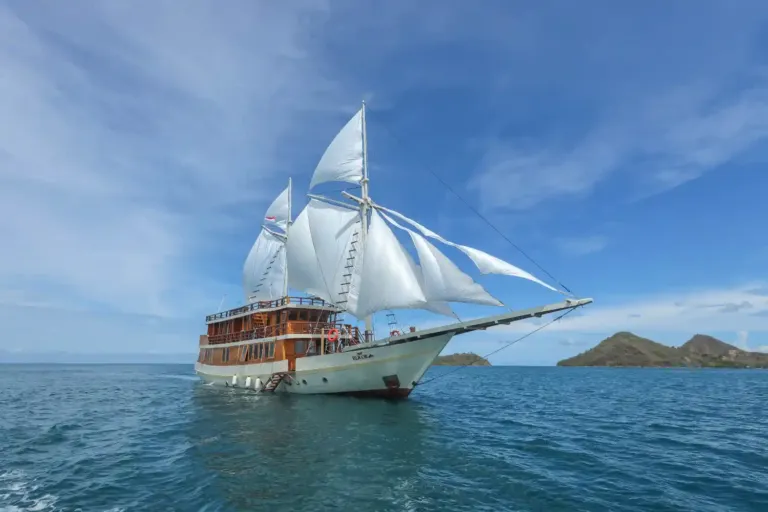
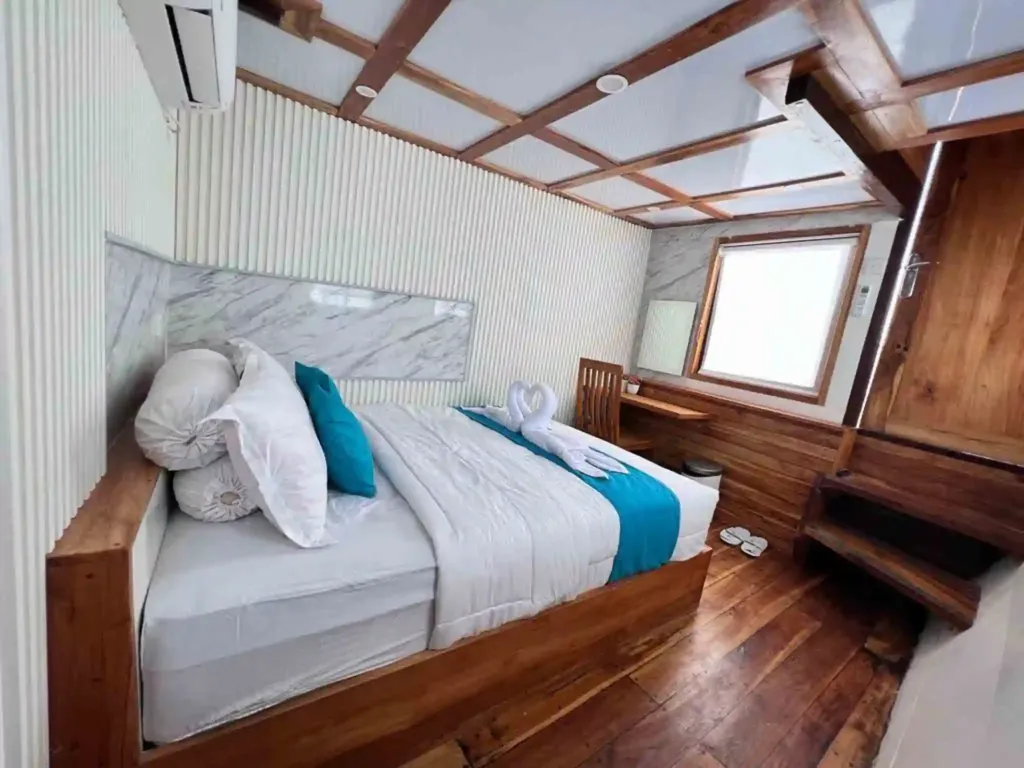
Cabins on a phinisi are comfortable but compact, and storage is usually a shelf, a few hooks and the space under the bed. A soft duffel bag or a backpack folds into those spaces easily, while a large hard-shell suitcase can take up half the floor. If you travel on with more luggage, ask your hotel in Labuan Bajo whether they can keep a suitcase until you return; many hotels are used to it.
Bring a small daypack or a dry bag as well. The tender, the small boat that takes you ashore and to the snorkelling spots, can be splashy, and a dry bag keeps your phone, your camera and a towel safe on the way to the beach.
How to pack your bag
A little order goes a long way in a small cabin. Roll your clothes rather than folding them, and use packing cubes or a few zip bags to keep swimwear, day clothes and electronics apart. A separate bag for wet swimwear keeps everything else dry, and a small pouch for the things you reach for all day, such as sunscreen, sunglasses and lip balm, saves you from searching the whole bag.
Keep your daypack ready for the stops, with a water bottle, a hat, your phone in its waterproof pouch and a light layer. Put your name on your bags, as several guests often board at the same time in Labuan Bajo, and the crew carries everyone’s luggage to the cabins.
Clothes for a few days on the water
Life on board is relaxed and informal, and you will spend much of the day in swimwear. A short list is enough for a trip of three days and two nights:
- Two swimsuits, so one can dry while you wear the other.
- Light, quick-drying clothes, such as T-shirts, shorts and a summer dress.
- A long-sleeved sun shirt or rash guard for the deck and for snorkelling in the middle of the day.
- A light jacket or sweater for the breeze on deck in the evening and the early start for Padar.
- A sarong or light trousers for visits to a village and for the walk with the rangers.
- Comfortable sleepwear, underwear and a pair of socks for your walking shoes.
There is no laundry on a short trip, but you will not need it. Pack for the number of days on board, with one spare set, and leave the rest of your holiday wardrobe at the hotel.
Sun protection comes first
Komodo lies in the tropics, and the sun is strong even on a cloudy day, both on deck and in the water. Pack a hat that stays on in the wind, good sunglasses and a lip balm with sun protection. After-sun lotion is welcome at the end of a long day on the water.
Choose your sunscreen with the reefs in mind. According to the US National Ocean Service (NOAA), some chemical UV filters in sunscreen can harm corals and other marine life, while mineral sunscreen is considered a better option. Covering up with a sun shirt is even better, and the shade on deck is the best place to be in the middle of the day. Reapply sunscreen after every swim, and remember that the reflection from the water makes the sun stronger than it feels.
Shoes for the walks
You will spend most of the trip barefoot, as on most boats shoes come off on deck. On land, the right shoes make a real difference:
- Trainers or light walking shoes with a good grip for the climb on Padar, which is steep and often dusty, and for the walk with the rangers on Komodo or Rinca.
- Sandals that slip on and off easily for the beaches and the short landings from the tender.
- Water shoes, if you have them, for rocky entries into the sea.
Snorkelling and swimming
You do not need to bring snorkelling gear, as most boats provide masks, snorkels and life jackets, and often fins too. If you have your own mask, or need one with prescription lenses, bring it, since a mask that fits well makes every snorkel more enjoyable.
The currents in Komodo can be strong, which is why the reefs are so rich, so always snorkel where and when the guide says. A waterproof pouch for your phone, or a small action camera, lets you take pictures on the reef and keeps your phone dry on the tender.
Gadgets and power
Indonesia uses plugs of type C and F, the round two-pin plugs common in Europe, at 230 volts, so bring an adapter if your chargers use another plug. Many boats have charging points, but power can be limited when the generator is off, so a power bank is useful for your phone and camera.
- A headlamp or small torch for the early climb on Padar, which often starts before sunrise.
- Earplugs, as the generator or the engine can hum through part of the night.
- Offline maps, music and books, because the phone signal is patchy between the islands.
- Spare batteries and memory cards for your camera, as there are no shops on the way.
Documents and money
Bring your passport or ID card, which you need for domestic flights and which shows your nationality for the park fee, and keep a copy of your travel insurance and your booking. Travel insurance is not included in the price of a liveaboard, so arrange it before you travel.
Carry some cash for tips for the crew, for drinks that are not included and for small purchases in the villages. Labuan Bajo has ATMs, but there are none on the islands, so take out what you need before you board.
Save your invoice, the pick-up time and the contact number of your boat on your phone and on paper. If a flight is delayed on the way to Komodo, you can let the crew know straight away.
Health and comfort
There is no pharmacy between the islands, so bring any medicine you take, with a little extra in case of delays. If you are prone to seasickness, pack tablets and take them before the boat leaves. A small first-aid kit with plasters and antiseptic cream is useful for scratches from rocks or coral.
Insect repellent is useful in Labuan Bajo and on land around dusk. A reusable water bottle saves plastic, as you can refill it on board, and a small towel or sarong is handy on the beaches.
Packing for your kind of trip
What to pack for the season
Most trips sail in the dry season, from April to November, when the days in Komodo are sunny and the seas are generally calm. The open water between the islands can still be breezy, and the evenings and the early mornings on deck feel cool after a hot day, so the light jacket on your packing list is not a luxury.
If you travel at the start or the end of the season, pack a light rain jacket and keep your electronics in a dry bag, as a passing shower is always possible. July and August are the busiest months in Komodo, which affects the cabins and the flights more than your packing. Our guide to the best time for a Komodo liveaboard explains the seasons month by month.
Packing for children
Families do well on a liveaboard, and children need only a few extra things. Pack sun suits or rash guards, a hat that ties under the chin, and their own sunscreen. Ask us about life jackets in children’s sizes before you book, so the boat can have the right ones ready.
Bring the snacks they love, a few small games or books for the long stretches between the stops, and any medicine they may need, including something for seasickness if your doctor recommends it. Children under 2 do not pay the Komodo National Park fee, and with a private charter the whole boat follows your family’s pace.
Packing for photographers
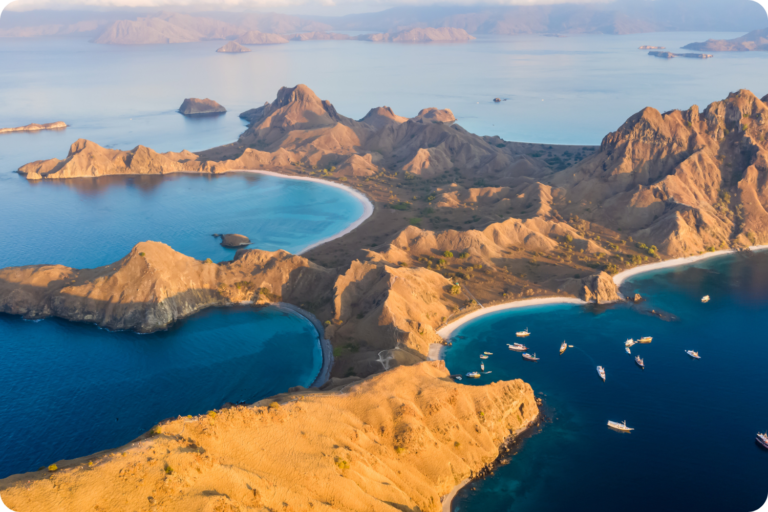
Komodo is a photographer’s dream, from the view over the bays of Padar to the flying foxes at dusk. Pack a wide lens for the landscapes and a longer lens for the dragons, which you photograph from a safe distance behind the rangers. A polarising filter brings out the colours of the water, and a dry bag protects your gear on the tender.
Charge everything whenever the boat’s power is on, and keep spare batteries in your daypack. If you plan to fly a drone, check the current rules of the park before you travel, as they can change.
What to leave at home
- A hard-shell suitcase, which is difficult to store in a cabin.
- Jewellery and valuables you would not want to lose at sea.
- A hair dryer or other power-hungry devices, as power on board is limited.
- Too many clothes. You will live in swimwear and one or two light outfits.
Your Komodo packing list at a glance
Here are the 30 things worth taking on a Komodo liveaboard, grouped so you can tick them off as you pack:
| What to pack | |
|---|---|
| Bags | A soft bag or duffel, a small daypack, a dry bag |
| Clothes | Two swimsuits, quick-drying T-shirts and shorts, a long-sleeved sun shirt or rash guard, a light jacket, a sarong or light trousers, sleepwear, underwear and socks |
| Sun | A hat, sunglasses, mineral sunscreen, a lip balm with sun protection, after-sun lotion |
| Shoes | Trainers or walking shoes with grip, sandals, water shoes |
| Water and gadgets | Your own mask (optional), a waterproof phone pouch, a camera or action camera, a power bank, a plug adapter, a headlamp, earplugs |
| Health and papers | Seasickness tablets, your own medicine, a small first-aid kit, your passport and travel insurance, some cash |
Our advice
Pack less than you think you need. A liveaboard takes care of the meals, the water and the snorkelling gear, so your bag only needs the things that keep you comfortable in the sun, on the walks and on deck in the evening. Everything else can wait at the hotel in Labuan Bajo. If you are unsure about anything on this list, send us a message before you travel, and we will tell you what your boat provides.
The best thing to pack for Komodo is a light bag. The islands, the reefs and the sunsets need no luggage at all.
Still choosing your trip? Compare a Komodo liveaboard and a day trip, read how to get from Bali to Komodo, or browse the sharing trips with live cabin availability. Our guide to the best time for a Komodo liveaboard helps you choose the season.
Questions
Do I need to bring my own snorkelling gear?
Not usually. Most boats provide masks, snorkels and life jackets, and often fins. Bring your own mask only if you prefer it or need prescription lenses.
Can I charge my phone on board?
Yes, most boats have charging points, but power can be limited when the generator is off. A power bank and a plug adapter for type C or F sockets make life easier.
Is there Wi-Fi on a Komodo liveaboard?
Some boats offer Wi-Fi, but it depends on the mobile signal, which is patchy between the islands. Download what you need before you board, and enjoy a few days offline.
What shoes do I need for Padar?
Trainers or light walking shoes with a good grip. The path to the viewpoint is steep, with steps and loose ground in places, and flip-flops are not a good idea.
How much cash should I bring?
Enough for tips for the crew, drinks that are not included and small purchases in the villages. Take it out at an ATM in Labuan Bajo, as there are none on the islands.
Can I leave my luggage in Labuan Bajo?
Many hotels in Labuan Bajo will keep a suitcase while you are at sea. Ask your hotel when you book, and take only a soft bag on board.
What should I wear for the walk with the dragons?
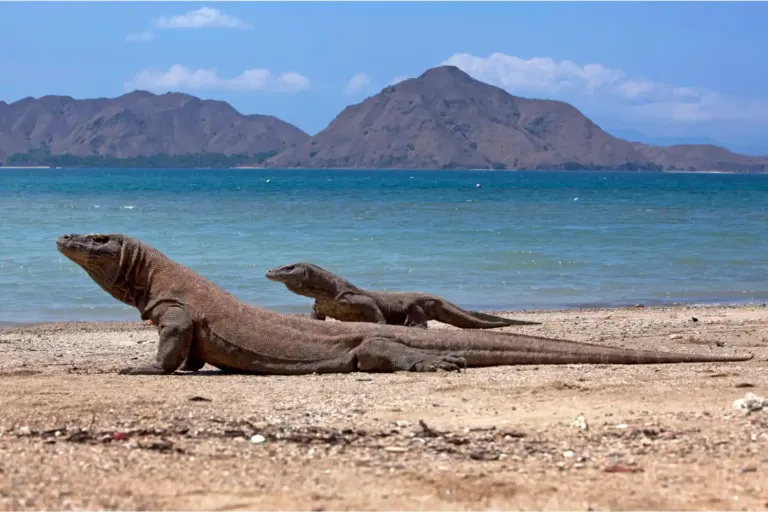
Closed shoes with a good grip, light trousers or shorts, a hat and sunscreen. The walk on Komodo or Rinca is led by park rangers, so follow their instructions and stay with the group.
Do I need a rain jacket in Komodo?
In the middle of the dry season, rarely. At the start or the end of the season, a light rain jacket and a dry bag for your electronics are worth the space in your bag.
Should I pack my own snacks?
You do not need to, as the meals and snacks on board are generous. Pack a few favourites if you have special tastes or dietary needs, and tell us about allergies when you book so the crew can plan ahead.
Can I buy what I forgot in Labuan Bajo?
Yes, most basics. Labuan Bajo has minimarkets, pharmacies and dive shops where you can find sunscreen, snacks, medicine and even a mask, so a forgotten item is easy to replace before you sail into Komodo.
Is there a dress code on board?
No. Life on a Komodo liveaboard is casual, and swimwear is normal on deck. Many guests put on a T-shirt or a cover-up for meals, and something that covers the shoulders and knees for a village visit.