Komodo liveaboard: what to see beyond the famous stops
Most Komodo liveaboard trips include Padar, the Pink Beach, the Komodo dragons and Manta Point, but the smaller stops are often the ones guests remember. Kelor Island has a short, steep climb with a wide view of the bay near Labuan Bajo, and Manjarite is a calm reef for a first snorkel.
At dusk many boats anchor off Kalong Island, where thousands of flying foxes leave the mangroves to feed. Taka Makassar is a sandbar that appears at low tide, Siaba is known for its green turtles, and on longer trips a boat may stop at Gili Lawa in the north of the park or at Kanawa for the sunset.
Trips between Lombok and Labuan Bajo add the coast of Sumbawa, with Kenawa Island and, in Saleh Bay, whale sharks around the fishing platforms, which are often seen but never guaranteed. Komodo National Park has been a UNESCO World Heritage Site since 1991.
The treks on Padar and Kelor are short but steep, so bring closed shoes, water and a hat, and expect an early start, when the air is cooler and the light is best for photos.
Each boat page shows its own itinerary day by day, with the stops, the times and a route map, so you can see what that Komodo liveaboard plans to visit before you book. See the best time to go and how to choose a boat.
Komodo National Park in a few words
Komodo National Park was founded in 1980 to protect the Komodo dragon, and it became a UNESCO World Heritage Site in 1991. It covers the three large islands of Komodo, Rinca and Padar, many smaller islands and the sea around them, which lies in the Coral Triangle, the part of the world with the richest coral reefs.
A Komodo liveaboard is the easiest way to see both sides of the park, the dry hills on land and the reefs under water, because you sleep on board between the stops.
Padar Island: the view of three bays
Padar is on the itinerary of every Komodo liveaboard on this site, and for many guests it is the highlight of the trip. A climb on steps and a steep path leads to the viewpoint over three bays, each with sand of a different colour. The walk is short but steep, so wear closed shoes and bring water.
Many boats climb Padar early in the morning, when it is cooler and the light is soft, and some go up for the sunset. Either way, the view is the classic photo of Komodo National Park.
Komodo Island and the Komodo dragons
Komodo Island is on the itinerary of every Komodo liveaboard on this site too. A park ranger leads the walk to see the Komodo dragons, the largest lizards in the world, in their natural home, and tells you about them on the way. The rangers choose the trail and keep the group at a safe distance, so stay close to them and follow their instructions.
The islands are also home to deer and wild buffalo, which the dragons hunt, and to many birds. Wear closed shoes and light clothes, and bring water and a hat for the walk.
Rinca Island
Rinca is the other large island where the dragons live, closer to Labuan Bajo, and a few boats visit it as well as or instead of Komodo Island. The walk is led by rangers in the same way. Whichever island your Komodo liveaboard visits, the dragons live there all year.
Pink Beach
Pink Beach takes its colour from tiny red organisms that live on the reef, mixed into the white sand. It is on every Komodo liveaboard itinerary on this site, and the shallow reef just off the beach is one of the easier snorkelling spots of the trip.
Please leave the sand and the coral where they are: the colour is part of the park.
Manta Point
Manta Point is a channel with a strong current where manta rays come to feed and to be cleaned by small fish. Every Komodo liveaboard on this site stops there, and the crew decides when to go in, based on the tide and the current. Snorkellers usually drift with the current, and the boat picks them up at the end.
Sightings depend on the season, the tide and the current, so they are never guaranteed, but on a good day several mantas pass below the snorkellers.
Taka Makassar, the sandbar
Taka Makassar is a sandbar in the middle of the sea that appears at low tide, with turquoise water all around it. It is on the itinerary of almost every Komodo liveaboard on this site and lies close to Manta Point. Bring sunscreen and a hat: there is no shade on the sand.
Kelor and Manjarite: the first stops
Many trips from Labuan Bajo start with Kelor Island, a short and steep climb to a wide view of the bay, and Manjarite, a calm reef that is good for a first snorkel. Both are on the itinerary of every Komodo liveaboard on this site and lie close to town, so they often come on the first day.
Kalong Island at dusk
At sunset many boats anchor near Kalong Island, a small mangrove island where thousands of flying foxes, large fruit bats, spend the day. As the light fades they leave the island together and fly across the sky to feed on the larger islands, one of the most memorable sights of a Komodo liveaboard. It is on the itinerary of most boats on this site.
Siaba, Sebayur and the turtles
Siaba is a calm bay known for its green turtles, which feed on the seagrass and the reef, and it is on the itinerary of most boats on this site. Sebayur is a small island with a beach and a reef, another easy snorkelling stop on a Komodo liveaboard. Keep a few metres from the turtles and never touch them.
Gili Lawa and Kanawa on a longer Komodo liveaboard
On longer trips some boats sail north to Gili Lawa, where a walk up the hill of Gili Lawa Darat gives a view over the north of the park, and to Kanawa, a small island with a reef and a beach for the sunset. These stops appear mostly on itineraries of 4 days or more.
The Lombok route: Kenawa, Saleh Bay, Satonda and Moyo
A Komodo liveaboard between Lombok and Labuan Bajo adds the north coast of Sumbawa. Kenawa Island has a savanna hill for the sunset or the sunrise, and in Saleh Bay the boats look for whale sharks early in the morning, although they are never guaranteed. Lady Grace also stops at Satonda, with its crater lake, and at Moyo Island for the Mata Jitu waterfall.
These trips spend more time at sea between the islands, so they suit guests who enjoy days of sailing as much as the stops.
Wildlife to look for on a Komodo liveaboard
Besides the Komodo dragons and the manta rays, look for green turtles at Siaba, reef sharks and colourful reef fish at the snorkelling stops, the flying foxes of Kalong Island and, on the Lombok route, whale sharks in Saleh Bay. On the walks you may see deer, wild buffalo, wild pigs and birds such as the yellow-crested cockatoo.
None of these animals can be promised, which is part of the charm: every Komodo liveaboard trip is a little different.
Snorkelling: what to expect
The reefs of Komodo are rich in coral and fish, and a Komodo liveaboard stops at several of them, such as Pink Beach, Manjarite, Siaba and Manta Point. The snorkelling equipment is included on most boats, with fins, a mask, a snorkel and a life jacket, and the guide chooses the spot and the time with the tide.
Some sites have strong currents, so listen to the guide, stay with the group and use the life jacket if you are not a confident swimmer. A rash guard protects you from the sun on long swims.
Diving in Komodo
Under water, Komodo is known for its strong currents, big fish and healthy reefs, and many of its dive sites suit experienced divers. Diving charters are on request: tell us your dates, your group and your certification, and we match your dive group with a Komodo liveaboard and an operator. See the diving charter page.
Treks and walks on shore
Most stops on land are short walks or climbs: Padar and Kelor for the views, the ranger-led walk on Komodo Island or Rinca, and on some trips the hills of Gili Lawa Darat or Kenawa. They are short but often steep and in the sun, so bring closed shoes, water and a hat, and walk at your own pace.
The crew plans the treks for the cooler hours of the morning or the late afternoon whenever the itinerary allows.
Beaches for swimming
Between the treks and the reefs, a Komodo liveaboard stops at beaches for swimming and a rest on the sand: Pink Beach, the sandbar of Taka Makassar, Sebayur and, on longer trips, Kanawa. The water is clear and warm, and most beaches have a reef close to shore for snorkelling.
What you see from the deck
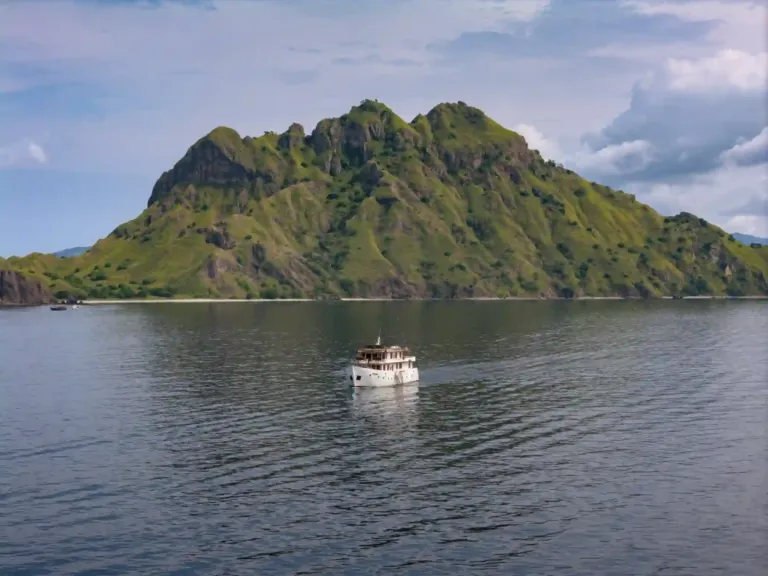
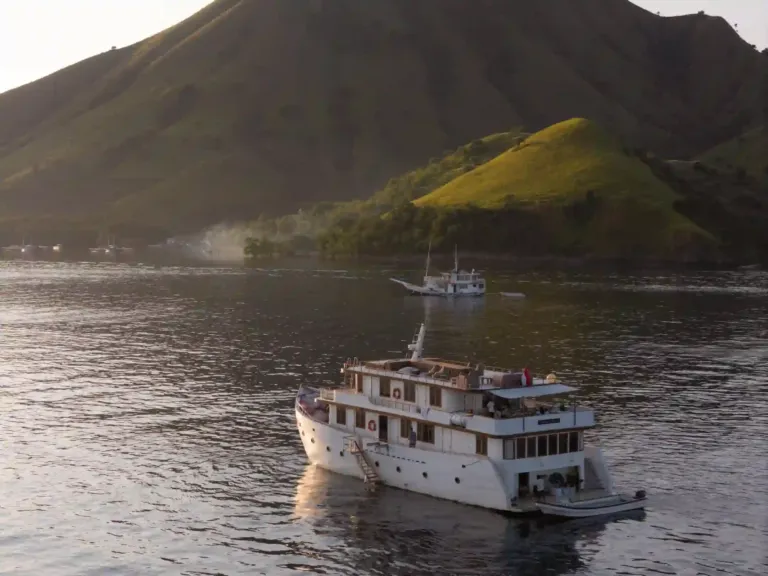
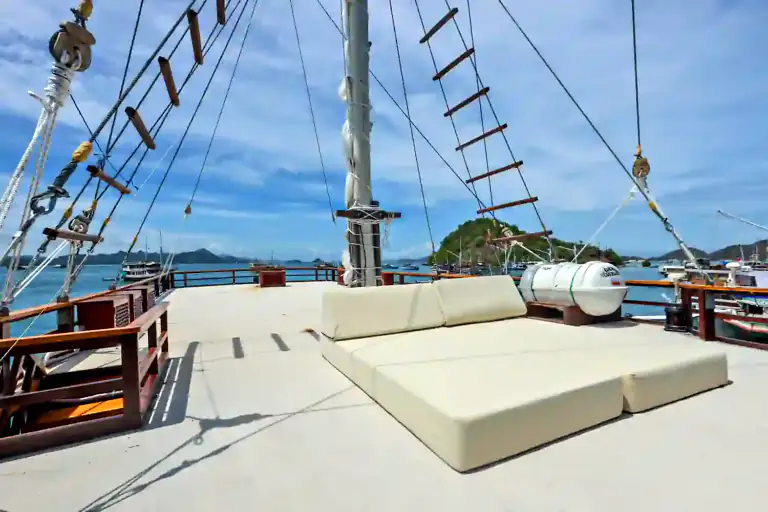
Much of the beauty of the park is seen from the boat: dry hills that turn green in the wet season and golden brown in the dry season, small islands, fishing boats and the sunsets over the sea. At night, far from the lights of town, the sky is full of stars.
Find a place on the sun deck for the sailing between the stops, and keep your camera close for the light in the evening.
Sunrise and sunset spots
The light at both ends of the day is part of every Komodo liveaboard. Many boats climb Padar early in the morning, and on the Lombok route Kenawa has a hill for the sunrise. In the evening, Kalong Island with its flying foxes is the classic sunset stop, and on longer trips Kanawa has a beach for the sunset. The itinerary on each boat page shows where that boat plans to be at sunset.
A day on a Komodo liveaboard
Days start early: many itineraries have a wake-up call at 4 or 5 in the morning for a walk or a climb before the heat. After breakfast the boat sails to the next stops for snorkelling, a beach or a short trek, with lunch on board and an afternoon snack and juice.
In the late afternoon the boat heads for a sunset spot, often Kalong Island, and dinner is served on board. At night the boat anchors in a quiet bay, ready for the next morning.
What a Komodo liveaboard sees in 3 days, and what longer trips add
On a trip of 3 days and 2 nights, the itineraries on this site usually include Kelor, Manjarite, Padar, Komodo Island, Pink Beach, Manta Point and Taka Makassar, most of them with Kalong Island at sunset and Siaba or Sebayur for snorkelling. That covers the famous stops of Komodo National Park.
A fourth or fifth day adds time at each stop and places further away, such as Gili Lawa and Kanawa, or, on the Lombok route, the islands of Sumbawa. See the pages for 3 days and 2 nights and 4 days and 3 nights.
Photo tips for a Komodo liveaboard
Bring a dry bag for your phone and camera on the tender rides and the beaches, and a spare battery or power bank. The soft light of the early morning on Padar and of the evening at Kalong Island gives the best photos. On sharing trips, photo and drone documentation by the crew is included on most boats.
Check with the crew before you fly your own drone, because the park has its own rules, and never fly close to the dragons or other animals.
Questions about what to see on a Komodo liveaboard
Will I see Komodo dragons? Komodo Island is on the itinerary of every boat on this site, and the dragons live there all year. A ranger leads the walk.
Will I see manta rays? Every boat stops at Manta Point, but sightings depend on the season, the tide and the current and are never guaranteed.
Is the Padar climb hard? It is short but steep, on steps and a path. Most guests manage it at their own pace with closed shoes and water.
Do I need to be a good swimmer to snorkel? No. Life jackets are part of the snorkelling equipment on most boats, and calm stops such as Manjarite suit beginners.
Can I see whale sharks? Only on the Lombok route, where the boats look for them in Saleh Bay. They are never guaranteed.
Are the stops the same on every Komodo liveaboard? The main stops are, but each boat has its own itinerary, shown day by day on its page.
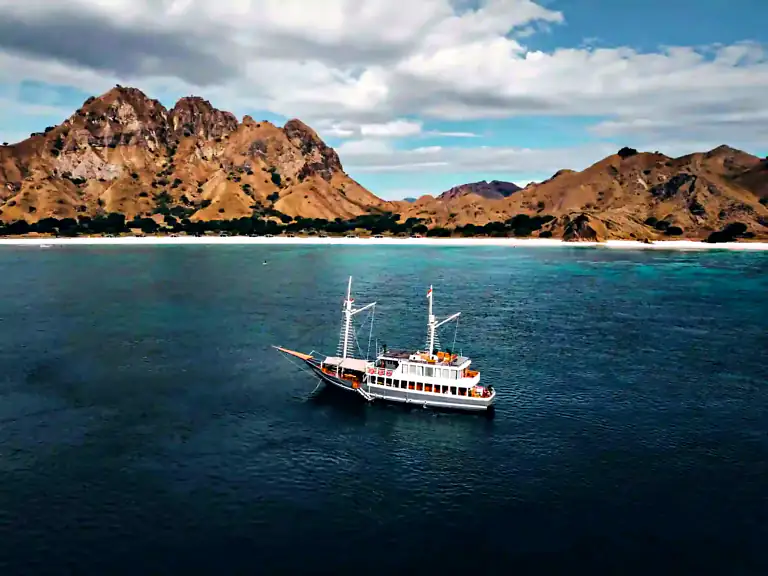
 Elbark Cruise
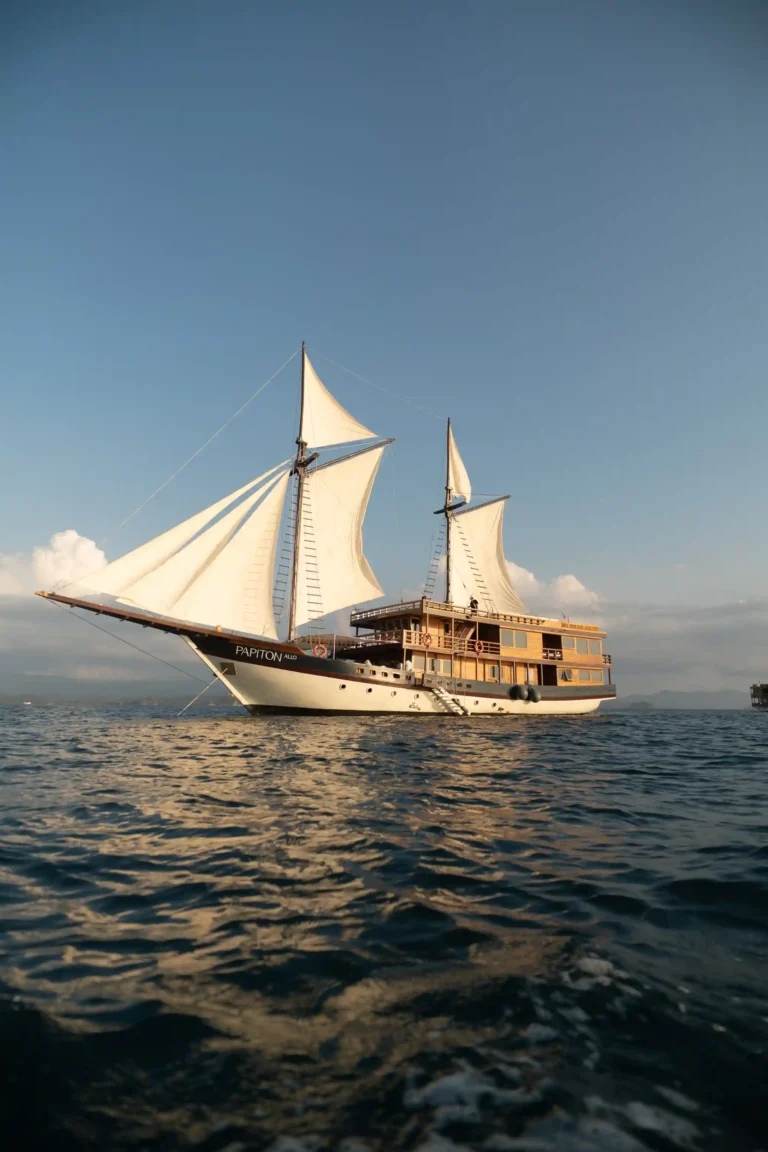
 Papiton Allo
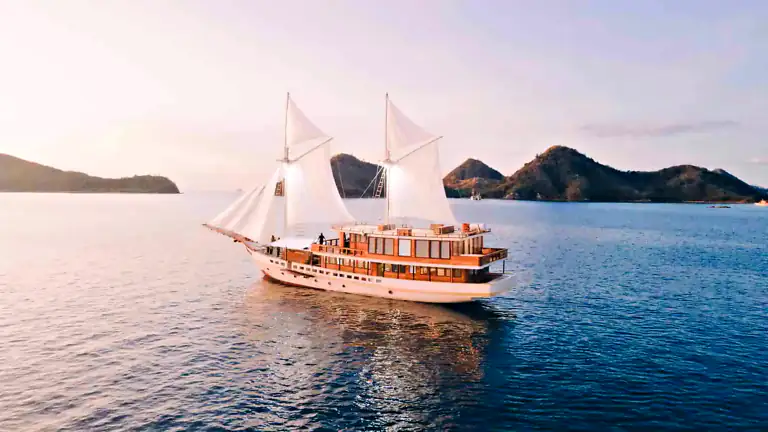
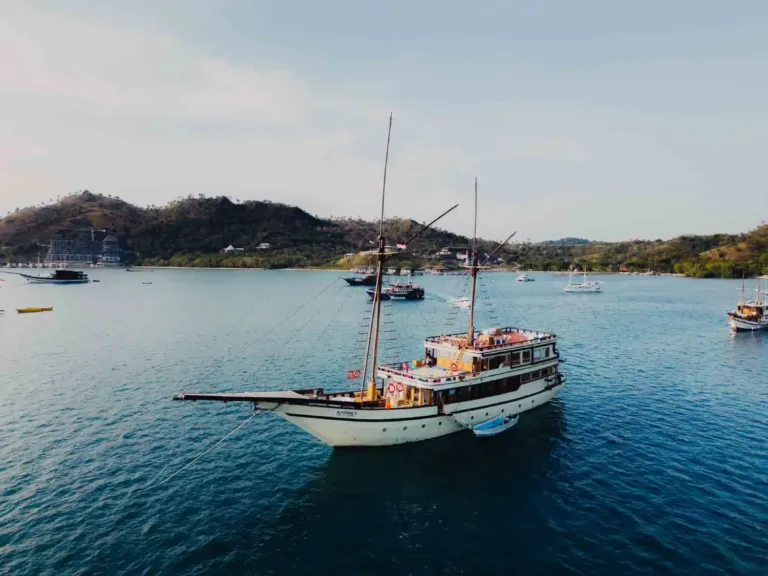
 Semesta Voyages
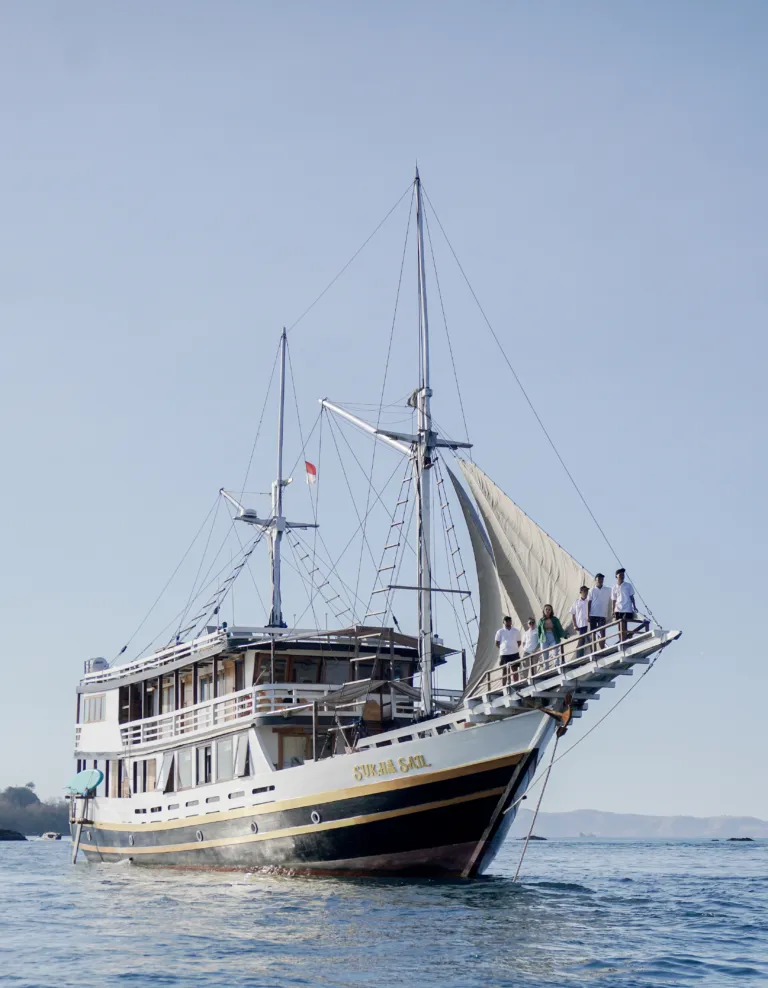
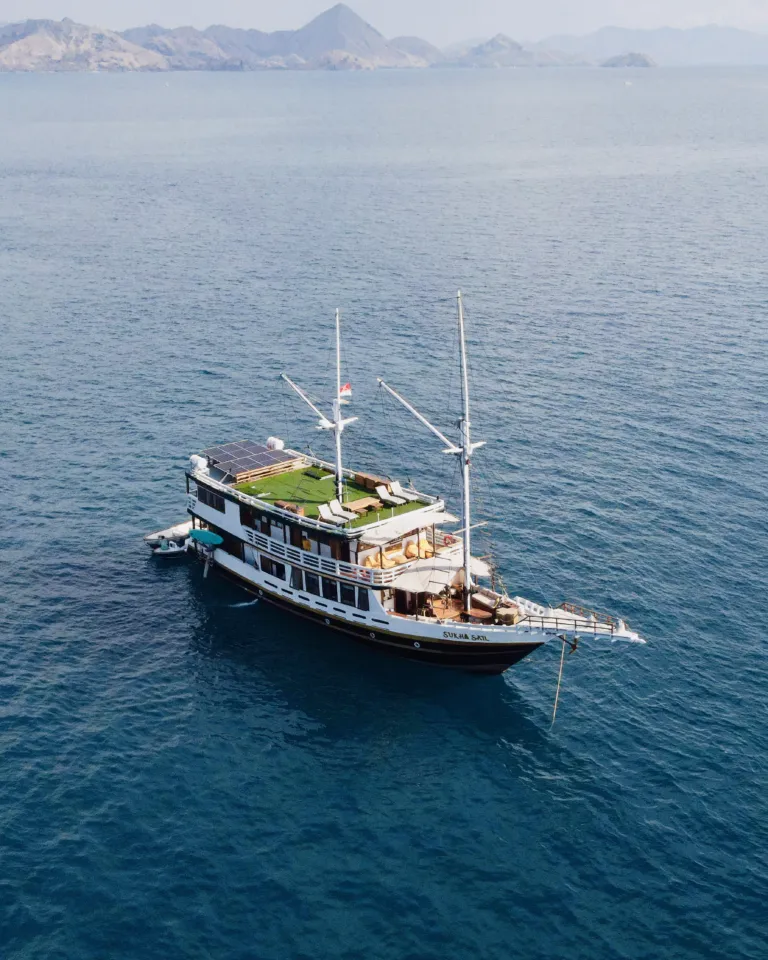
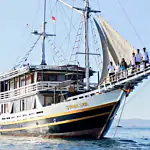 Sukha Sail 1