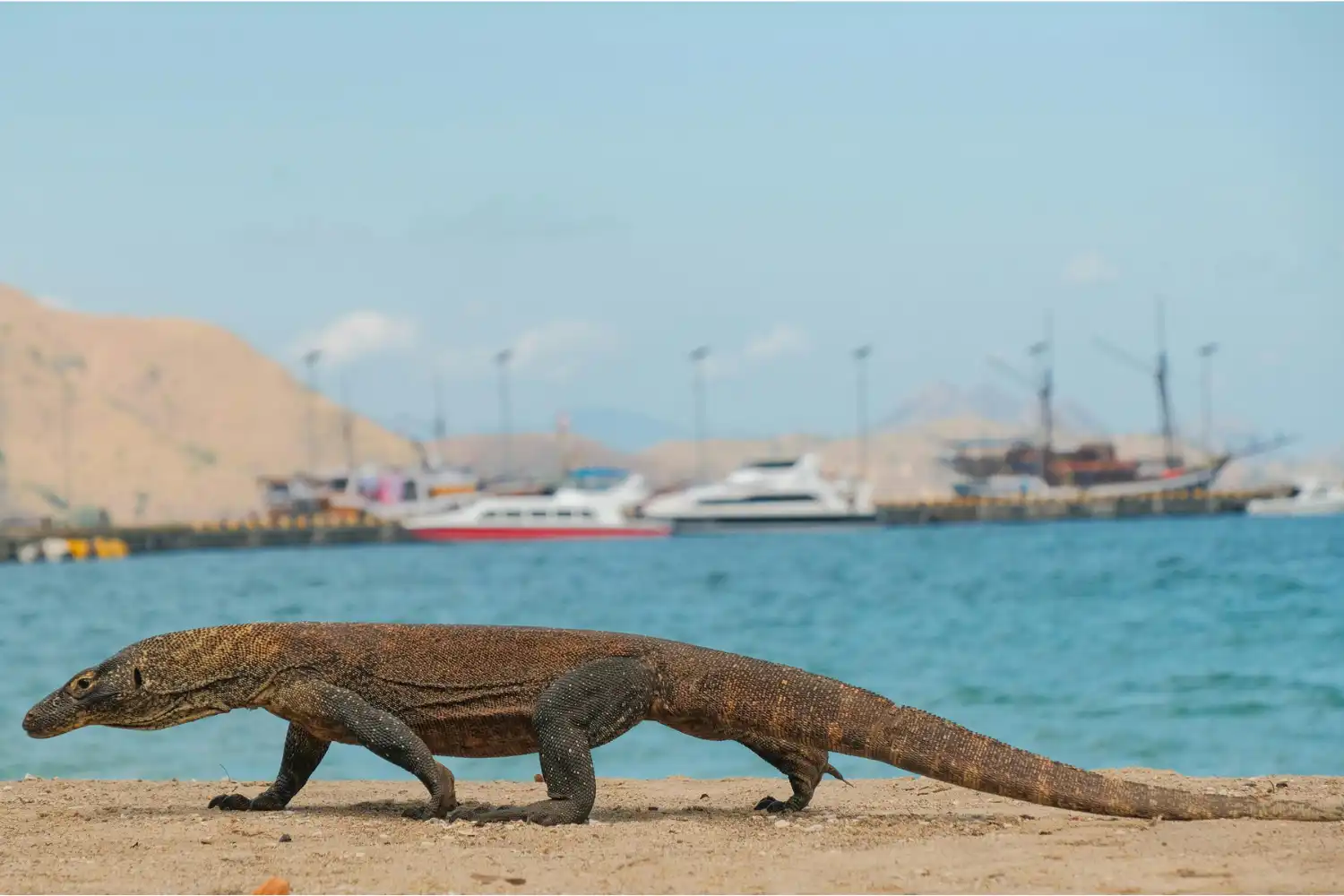
Komodo dragon vs crocodile is one of the great animal match-ups people love to argue about. Both are huge, ancient-looking reptiles, both hunt by ambush and both live in Indonesia. But they are very different animals: one is the largest lizard on Earth, a land hunter with a venomous bite, and the other, the saltwater crocodile, is the largest living reptile, a water hunter with the strongest bite ever measured. This guide compares them fact by fact, from size and bite to speed, hunting and danger to people, and explains where you can safely see a Komodo dragon.
When people say crocodile in Indonesia, they usually mean the saltwater crocodile, so that is the species we compare here. The figures come from museums, zoos and published research, and we give the source for each.
In short
- The saltwater crocodile is much bigger: adults average 3 to 5 metres, against 2 to 3 metres for a Komodo dragon.
- The crocodile has the strongest bite ever measured; the dragon relies on sharp teeth and venom.
- The dragon hunts on land; the crocodile hunts from the water.
- For people, crocodiles are far more dangerous: Indonesia recorded 179 crocodile attacks in 2024 alone.
Komodo dragon vs crocodile at a glance
The table puts the two side by side. The figures are typical values from the sources in this guide, rounded; individual animals vary a great deal.
| Komodo dragon | Saltwater crocodile | |
|---|---|---|
| Group | Monitor lizard, the largest lizard on Earth | Crocodilian, the largest living reptile |
| Typical length | 2 to 3 metres | 3 to 5 metres; big males larger |
| Typical weight | About 70 kg for a wild adult | Far heavier than a dragon of the same length |
| Weapon | Serrated teeth and venom | Crushing bite, then shaking or rolling |
| Hunts | On land, by ambush | From the water, by ambush |
| Range | A few islands in eastern Indonesia | From India to northern Australia, including Indonesia |
| Danger to people | Rare attacks | Many attacks every year |
The short version: the crocodile is bigger, heavier and has the stronger bite, while the Komodo dragon is the ruler of the land on its own small islands. They are not really rivals, because they hunt in different worlds.
Which is bigger?
The crocodile, by a wide margin. An adult Komodo dragon usually measures two to three metres from nose to tail, and the Smithsonian’s National Zoo puts the typical weight of a wild adult at about 70 kilograms. The largest verified dragon measured 3.13 metres and weighed 166 kilograms. Our guide to how big a Komodo dragon is explains the numbers.
Saltwater crocodiles play in a different league. According to the Australian Museum, adults average three to five metres in total length, and males are typically much larger than females; the largest reliably measured female was four metres long. The biggest males grow well beyond five metres, and their bulk makes them far heavier than a dragon of the same length.
So in a straight comparison of size, the crocodile wins easily. A large male saltwater crocodile can be twice the length of a big Komodo dragon and many times its weight.

Bite force: crushing jaws vs venom
This is where the two differ most. In 2012, National Geographic reported on a study by Gregory Erickson and colleagues, who measured the bite of all 23 living species of crocodilians. Saltwater crocodiles about 5.2 metres long closed their jaws with a force of about 16,460 newtons, or 3,700 pounds per square inch, the greatest bite force ever measured directly in a living animal.
The Komodo dragon’s bite is weak by comparison. A study published in 2009 measured a bite force of about 39 newtons for a dragon, against about 252 newtons for a saltwater crocodile in the same comparison. The dragon does not need power: its teeth are serrated and curved like a saw, and glands in its lower jaw deliver venom that slows clotting and lowers blood pressure. Our guide to whether Komodo dragons are venomous explains the research.
So the two have opposite strategies. The crocodile grips and crushes; the dragon slices and lets the venom and the wounds do the rest, sometimes following a bitten animal for hours or days.
How each one hunts
Both are ambush hunters, but in different places. A Komodo dragon waits beside a trail on land, often motionless for hours, and strikes when a deer, a wild boar or a water buffalo comes close, with a short burst of speed. If the prey escapes the first bite, the dragon follows its scent, and its long, forked tongue picks up the smell of carrion from kilometres away. Our guide to what Komodo dragons eat covers their diet.
A saltwater crocodile hunts from the water. The Australian Museum describes how larger crocodiles approach their prey stealthily underwater, then lunge and snap their jaws shut, a strike that alone may kill. Larger prey is dragged into deeper water, and large pieces are torn off by shaking or rolling. Young crocodiles eat insects and crustaceans; the largest take water birds, sea turtles and mammals as big as a water buffalo.
The water buffalo is the one prey animal they share, at least in theory. A dragon brings one down slowly on land; a crocodile drags one into a river. Each hunter is built for its own world, and neither would do well in the other’s.
Speed on land and in the water
On land, a Komodo dragon can reach about 16 to 20 kilometres per hour in a short burst, according to the Smithsonian, which is enough to catch a deer that wanders too close. Most of the time it walks slowly, saving energy in the heat. Our guide to how fast a Komodo dragon can run explains why the burst matters more than the top speed.
Komodo dragons can also swim, and they sometimes cross between nearby islands, but the water is not where they hunt. Crocodiles are the opposite: clumsy-looking on land, but powerful and fast in the water, where their tail drives them forward and their lunge from below the surface takes prey by surprise.
In the comparison of speed, the setting decides everything. On a dry trail, the dragon is the faster and more agile hunter; at the water’s edge, the crocodile is in its element.
Where they live
The Komodo dragon has one of the smallest ranges of any large predator. It lives in the wild only on Komodo, Rinca and a few smaller islands of Komodo National Park, such as Gili Motang and Nusa Kode, and on parts of the coast of western and northern Flores. Our guide to Gili Motang covers one of those small island populations. On Flores itself, dragons live only in a few coastal areas of the west and the north.
The saltwater crocodile has one of the largest. The Australian Museum lists a historic range from south-western India and Sri Lanka through South-East Asia, the Philippines and the Indonesian archipelago to northern Australia and the Solomon Islands. It lives in estuaries, rivers, swamps and along coasts, and it can travel long distances at sea.
Both live in Indonesia, but in different habitats. The dragons of Komodo are creatures of the dry hills, the savanna and the forest, while crocodiles favour river mouths, mangroves and the swampy coasts of the larger islands.

Which is more dangerous to people?
The crocodile, by far. In March 2025, the Associated Press, carried by Click On Detroit, reported that the independent CrocAttack database recorded 179 crocodile attacks in Indonesia in 2024, the highest number of any country, with 92 deaths. The report linked the rise in one region to changes in habitat that pushed crocodiles closer to people.
Komodo dragon attacks are rare in comparison. According to BBC Wildlife, park records counted 24 attacks on people between 1974 and 2012, five of them fatal, most of them on local people near the villages. Our guide to Komodo dragon attacks looks at those cases and at the rules that keep visitors safe.
The difference comes down to numbers and habits. Crocodiles live across a huge area where millions of people fish, wash and farm by the water, and the Australian Museum notes that a large crocodile is likely to see a person as potential prey. Komodo dragons live on a few islands, where every visitor walks with a ranger.
Who would win in a fight?
It is the question everyone asks, and the honest answer is that it almost never happens. The two live in different habitats, and there are no well-documented fights between them in the wild. Any answer is a guess, so treat this section as an informed thought experiment, not a fact.
In the water, or at the water’s edge, an adult saltwater crocodile would have every advantage: size, weight, a crushing bite and the ability to drag an opponent under. On dry land, far from water, a crocodile is slower and more exposed, and a dragon’s speed, claws and venomous bite would count for more. Even then, a large crocodile’s armour and size make it a formidable opponent for any land animal.
The more interesting answer is that each has won in its own way, by mastering a world the other does not want. That is why both have survived as top predators for so long.
Distant relatives
Komodo dragons and crocodiles are both reptiles, but they are not close relatives. The Komodo dragon is a monitor lizard, part of the same family as the smaller monitor lizards of Asia, Africa and Australia. Crocodiles belong to a separate group, the crocodilians, with 23 living species, including alligators and caimans, as the 2012 bite study showed.
Their similarities, such as scaly skin, a long tail and a habit of lying still in the sun to warm up, are the result of similar lifestyles, not of a close family tie. Both are cold-blooded and depend on the sun’s heat, which is why you often see a Komodo dragon basking in the early morning before it starts to move.
Protection and conservation
Both animals are protected in Indonesia. The Komodo dragon has been protected for decades, and Komodo National Park was founded in 1980 to safeguard it; in 2021, the International Union for Conservation of Nature listed the species as Endangered, citing the threat that rising seas pose to its small island range. The AP report notes that saltwater crocodiles have been protected in Indonesia since 1999.
Protection brings its own challenges. For crocodiles, it means learning to live alongside an animal that can kill people; for Komodo dragons, it means managing tourism, villages and the prey the dragons depend on. Our guide to responsible travel in Komodo explains how visitors can help.

A closer look at the dragon
Size and bite are only part of what makes the Komodo dragon remarkable. Wild dragons can live for about 30 years, growing slowly throughout their lives. By the age of five, a young dragon is about two metres long and weighs around 25 kilograms, and only then does it start to hunt large prey on the ground. Our guide to the Komodo dragon lifespan follows that growth.
Their early life is a story of survival. Females lay their eggs in nests, often in the large mounds built by megapode birds, and the hatchlings climb into the trees, where they live for their first years, safe from the adults, which are too heavy to follow. Females in zoos have even produced young without a male, a rare ability among reptiles. Our guide to the baby Komodo dragon tells the whole story.
For all their power, the dragons spend most of their day resting. They warm up in the morning sun, hunt or patrol when they need to, and lie in the shade during the heat. That is why visitors on a ranger walk often find them still, near the paths or the water holes, and why the rangers repeat that a still dragon is not necessarily asleep.
Seeing them safely
On a trip to Komodo, you meet the dragons on a ranger walk on Komodo Island or Rinca, in a group, keeping several metres away and following the ranger’s instructions. Every trip on this site includes at least one of these walks. Our guides to Komodo Island and Rinca Island explain how they work.
A zoom lens, or the zoom camera on your phone, lets you fill the frame from a safe distance, and the best photos often come from crouching low, if the ranger allows it, to get closer to the dragon’s eye level. Walk early in the day, when the air is cooler and the dragons are often warming in the sun, and carry water, because the walks are hot. Our Komodo photography guide has more tips.
Crocodiles are a different matter. Anywhere in Indonesia, follow local advice before you swim, and stay away from river mouths, mangrove channels and murky water where crocodiles may live. On a liveaboard, the crew chooses the swimming and snorkelling sites, and you swim where they tell you.
Our view
In the contest of Komodo dragon vs crocodile, the crocodile wins on size, weight, bite and danger to people, and the dragon wins on land, with speed, venom and a story found nowhere else on Earth. One rules the rivers and coasts of half a continent; the other rules a handful of islands in a UNESCO World Heritage Site protected since 1991. Only one of them can be met on a ranger walk, and that is the one worth travelling for.
The crocodile owns the water. The dragon owns its islands. Neither needs to prove anything to the other.
Ready to meet the dragons? Compare the sharing trips on this site: every trip includes a ranger walk with the dragons on Komodo or Rinca.
Questions
Which is bigger, a Komodo dragon or a crocodile?
The saltwater crocodile. Adults average 3 to 5 metres, while a Komodo dragon usually measures 2 to 3 metres.
Which has the stronger bite?
The saltwater crocodile, with the strongest bite ever measured in a living animal. The Komodo dragon’s bite is weaker, but it is venomous.
Are there crocodiles in Indonesia?
Yes. Saltwater crocodiles live in rivers, swamps and coasts across the Indonesian archipelago, and they are protected by law.
Which is more dangerous to humans?
Crocodiles, by far. Indonesia recorded 179 crocodile attacks in 2024, against 24 Komodo dragon attacks in the 38 years from 1974 to 2012.
Who would win a fight?
In or near water, almost certainly the crocodile. On dry land, the dragon would have more chance, but the two rarely, if ever, meet.
Can Komodo dragons swim?
Yes, and they sometimes cross between nearby islands, but they hunt on land, not in the water.
Are Komodo dragons related to crocodiles?
Only distantly. Both are reptiles, but the Komodo dragon is a monitor lizard, and crocodiles belong to a separate group, the crocodilians.
How long do Komodo dragons live?
About 30 years in the wild. They grow slowly all their lives, and by the age of five they are about two metres long.
Where can I see a Komodo dragon?
On a ranger walk on Komodo Island or Rinca, part of every trip on this site.

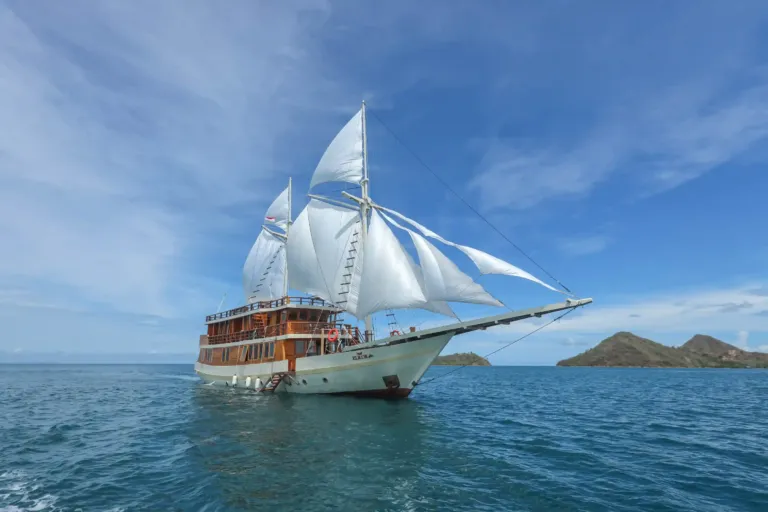

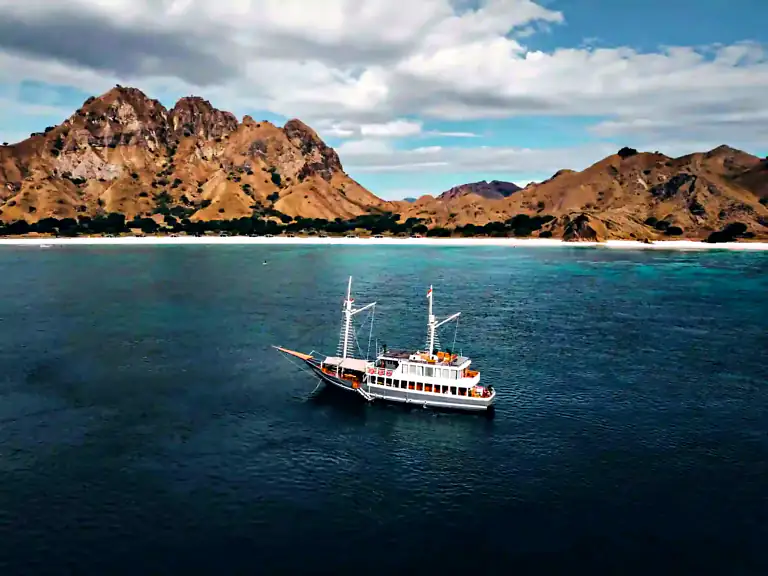
 Elbark Cruise
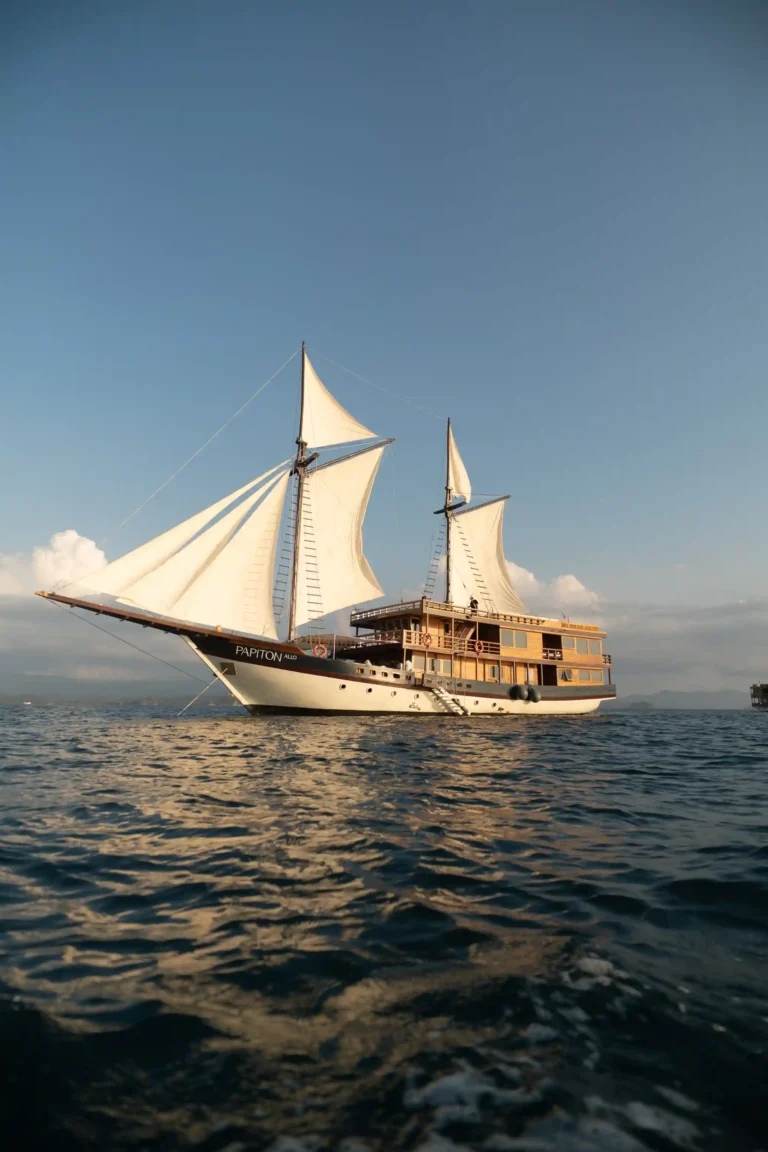
 Papiton Allo
 Semesta Voyages
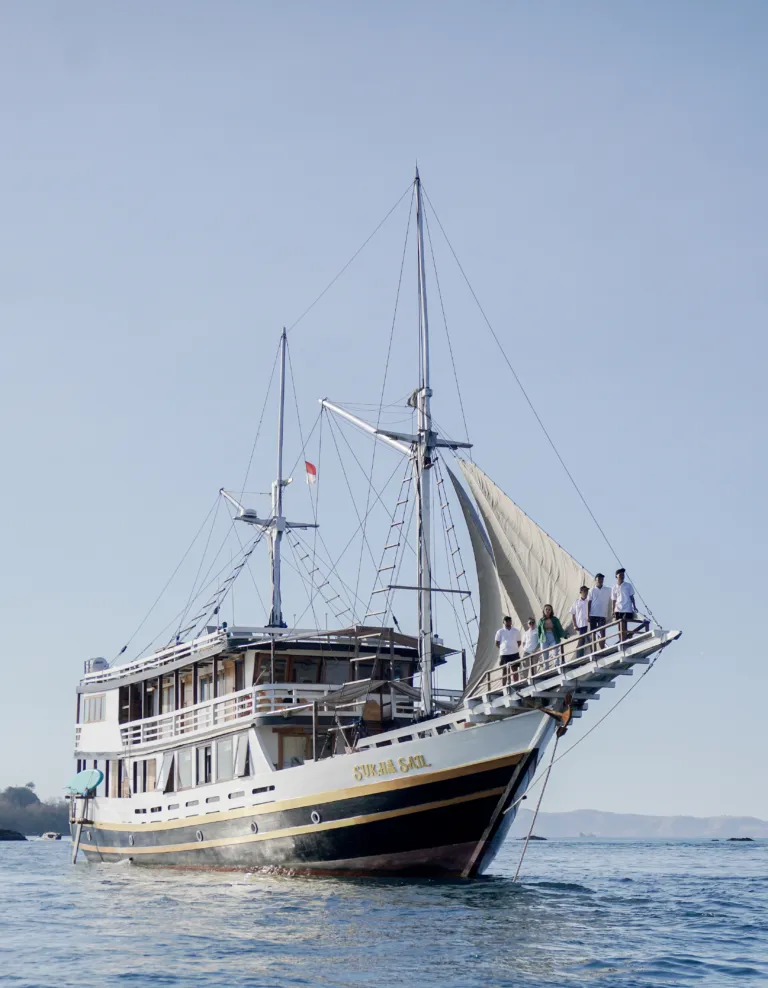
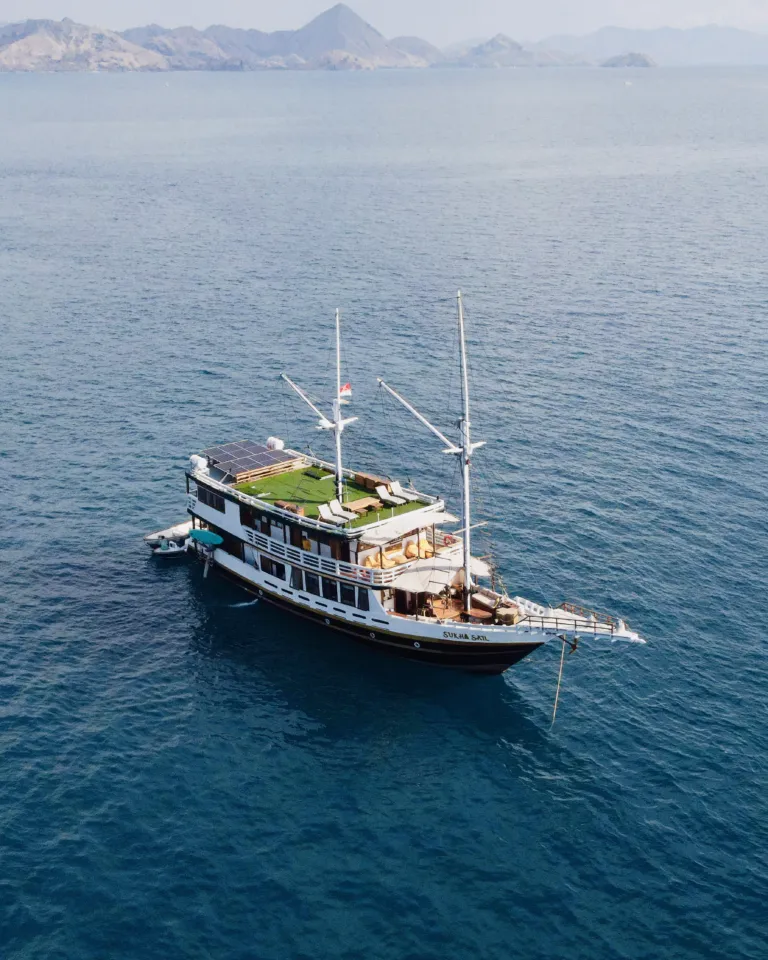
 Sukha Sail 1