How big is a Komodo dragon? Big enough to make you stop walking when you see the first one lying across the trail. The Komodo dragon is the largest lizard alive today, and its size is the first thing everyone asks about. This guide covers how long and how heavy Komodo dragons get, the largest one ever measured, how fast they grow from a small hatchling, why they became so large, and where you can see their size for yourself.
In short
- Adult Komodo dragons usually measure 2 to 3 metres from nose to tail.
- A typical wild adult weighs about 70 kilograms, which makes it the heaviest lizard on Earth.
- The largest verified Komodo dragon was 3.13 metres long and 166 kilograms.
- Hatchlings are only about 40 centimetres long and weigh less than 100 grams.
How big is a Komodo dragon? The short answer
An adult Komodo dragon is usually between two and three metres long, according to UNESCO’s description of Komodo National Park, and the Smithsonian’s National Zoo puts the typical weight of a wild adult at about 70 kilograms. That is roughly the weight of an adult person, carried low to the ground on four short, powerful legs.
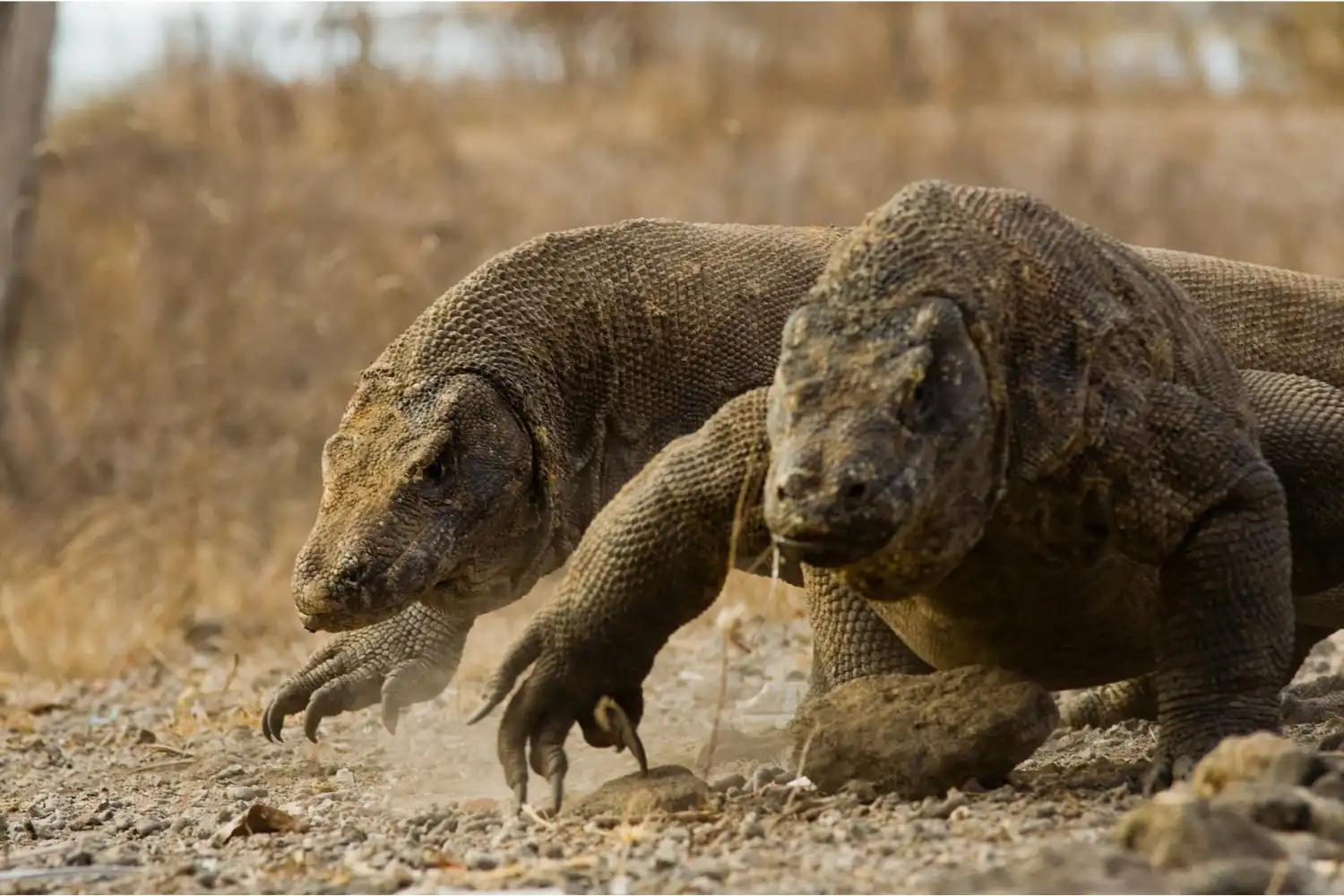
Other monitor lizards can be long and slender, but none comes close to the Komodo dragon in bulk. Its broad head, thick neck and heavy body are what make it the heaviest lizard alive, and what make the first sighting on a walk so memorable.

Length: measuring a Komodo dragon from nose to tail
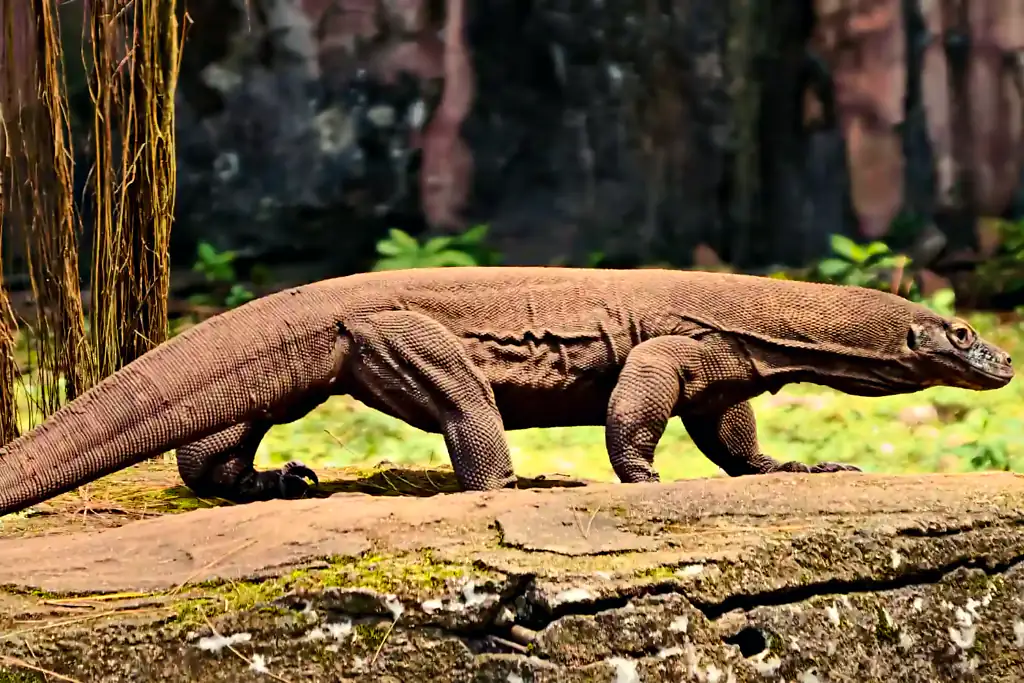
Scientists measure a Komodo dragon from the tip of the snout to the tip of the tail. The tail is long, thick and muscular, and it makes up a large share of the total length. That is why a dragon resting with its tail curled looks smaller than it is, while one walking in a straight line looks enormous.
Most adults you meet on a walk measure between two and three metres. Two metres is about the height of a doorway, and three metres is more than one and a half times the height of most adults. A large male crossing the path in front of the group takes a surprisingly long time to pass.
Photos often make dragons look smaller than they are. A wide lens pushes the animal into the distance, and a dragon lying flat in dry grass blends into the ground. Standing a few metres away on the walk, with the rangers beside you, the real length becomes obvious, especially when the dragon lifts its body and starts to move.
Weight: the heaviest lizard on Earth
A typical wild Komodo dragon weighs about 70 kilograms. Weight changes a lot with age, with the season and with the last meal, because a Komodo dragon can eat up to 80 percent of its own body weight in one sitting, according to the Smithsonian’s National Zoo. A dragon that has just fed can weigh much more than it did the day before.
That appetite matches their prey. Adults hunt deer, wild boar and even water buffalo, animals far larger than themselves, and they also eat carrion. After a big meal, a dragon rests in the shade for a long time, digesting slowly, which is why so many of the dragons you see on a walk are lying still.

The largest Komodo dragon ever measured
The largest verified Komodo dragon on record measured 3.13 metres and weighed 166 kilograms, according to the Smithsonian’s National Zoo. That is more than twice the weight of a typical adult, and a reminder of how much a big, well-fed male can grow.
You will hear stories of much larger dragons, but most of those claims were never properly measured. The verified figures are impressive enough: a lizard longer than a tall man is high and heavier than two average adults.
Males and females: who is bigger?
Males tend to be larger and bulkier than females, so the biggest dragons you see are usually males. Beyond size, the two sexes look very much alike, and the Smithsonian notes that there are no obvious physical differences that tell them apart. Even experienced rangers often cannot say from a distance whether a dragon is male or female.
Size matters in the breeding season, when males compete for females. Rivals wrestle standing on their hind legs, using their tails for support, and a bigger, heavier male has the advantage in these contests.
From hatchling to adult: how Komodo dragons grow
Every giant starts small. A female lays a clutch of eggs, often around twenty, in a hole in the ground or in a nest mound built by a bird, the orange-footed scrubfowl, and the eggs hatch many months later. A Komodo dragon hatches at about 40 centimetres long and weighs less than 100 grams, light enough to sit in the palm of your hand. The young climb into the trees almost at once and live there for their first years, safe from larger dragons, eating insects, geckos and other small animals.
By the age of five, a dragon is about two metres long and weighs around 25 kilograms, and this is when it starts to hunt larger prey on the ground. After that the growth slows down, but it never quite stops: Komodo dragons keep growing slowly throughout their lives, which in the wild can last about 30 years.
Why are Komodo dragons so big?
For a long time, many people thought Komodo dragons grew large because they live on islands, a process known as island gigantism, or because they once hunted pygmy elephants that lived on Flores. A study of fossils published in 2009 by Hocknull and colleagues in the journal PLoS ONE told a different story.
The researchers found fossils of Komodo dragons in Australia that were more than 3.8 million years old, and concluded that the species first evolved on the Australian mainland and later spread west to the islands of Indonesia. In other words, Komodo dragons were already giants when they arrived. UNESCO describes today’s dragons as the last of a relic population of large lizards that once lived across Indonesia and Australia.
Fossils also show that Australia was once home to even larger monitor lizards, which have long since died out. Of all the giant lizards that once walked the region, the Komodo dragon is the one that survived, which makes a sighting on the islands feel like a glimpse of a much older world.
The same study found that the size of Komodo dragons on Flores has stayed stable for hundreds of thousands of years. Their range, on the other hand, has shrunk to a few islands in and around Komodo National Park, and the species is listed as endangered today.
Big lizards on small islands
A large predator needs room and prey, and the Komodo dragon has very little of either to spare. UNESCO’s description of the park estimates the population at around 5,700 dragons, most of them on the two largest islands, Komodo and Rinca. Smaller groups live on Gili Motang and along parts of the coast of western Flores, and none live on Padar today.
Their size depends on the deer, wild boar and water buffalo that share the islands with them. That is one reason the park protects the whole landscape, not only the dragons. In 2021, the IUCN Red List moved the Komodo dragon from vulnerable to endangered, mainly because rising sea levels threaten its small island home.
Big but fast: how a large lizard moves
For all their weight, Komodo dragons are not slow. They usually walk with a heavy, swaying gait, but in a short burst they can reach about 16 to 20 kilometres per hour, according to the Smithsonian. That is faster than most people expect, and it is the reason the park rangers keep every group at a safe distance.
Most of the time, though, a dragon saves its energy. It waits along a trail for prey to pass, rests in the shade during the heat of the day and moves only when it has to. Seeing a large dragon suddenly lift its body off the ground and walk is a good way to understand its real size.
Komodo dragon size at a glance
| Komodo dragon | |
|---|---|
| Typical adult length | 2 to 3 metres |
| Typical weight in the wild | About 70 kilograms |
| Largest verified | 3.13 metres and 166 kilograms |
| At hatching | About 40 centimetres and under 100 grams |
| At five years | About 2 metres and 25 kilograms |
| Largest meal | Up to 80 percent of its body weight |
| Top speed | About 16 to 20 km/h in a short burst |
| Lifespan in the wild | About 30 years |
| Where they live | Komodo, Rinca, Gili Motang and parts of western Flores |
| Status | Endangered on the IUCN Red List since 2021 |
How big is a Komodo dragon compared with you?
Numbers are hard to picture, so here are a few comparisons. A typical adult Komodo dragon weighs about as much as an adult person. Laid out in a line, it is longer than a tall man is high, and a large male can be well over one and a half times the height of an average person. A hatchling, by contrast, is only a little longer than a school ruler.
Their real size is easiest to judge from the side. On the walk, the rangers often find a dragon lying along the path, and seeing it from a safe distance next to a familiar object, such as a tree trunk or a ranger’s forked stick, helps you take in just how large it is.
For photos, a zoom lens is your friend. It lets you fill the frame from a safe distance and avoids the wide-angle effect that shrinks the animal. Shoot from the side to show the full length, and crouch down, if the ranger allows it, to get closer to the dragon’s eye level.
Where to see the size of a Komodo dragon for yourself
Wild Komodo dragons live only on a few islands in this part of Indonesia: Komodo, Rinca, Gili Motang and parts of the coast of western Flores. Visitors see them on a walk led by park rangers on Komodo or Rinca, and on most liveaboards the walk is part of the itinerary. Our guide to Komodo dragons explains what to expect on the walk and the safety rules.
On a sharing trip of 3 days and 2 nights, the walk with the rangers usually comes on the second day, after the sunrise climb on Padar and a swim at Pink Beach. Each boat page shows its own itinerary, so you can see which island your trip visits.
Go early if you can. In the cooler morning hours the dragons are more active, and you are more likely to see a large adult walking rather than resting in the shade. A liveaboard that spends the night inside the park can often be at the ranger station early in the morning.
Their size is also why the rules matter. Stay with the group and behind the ranger, keep several metres away even from a dragon that looks asleep, and never feed or touch one. Tell the ranger about any open wound, keep children close, and move calmly. The rangers carry long forked sticks to keep a dragon at a distance if it comes too close, and they decide how near the group can go.

Our view
Photos do not prepare you for the size of a Komodo dragon. Standing a few metres from an animal that weighs as much as you do, and that has walked these islands in much the same form for hundreds of thousands of years, is one of the great wildlife moments in Indonesia. See them early, listen to the rangers, and give yourself time to simply watch.
Size is also a reason to respect them. A Komodo dragon is a wild predator built to bring down deer and buffalo, not an animal in a show. Seen from a safe distance, at its own pace, it is far more impressive than any photo, and the walk with the rangers is the right way to meet one.
From the side, a large male seems to go on and on: head, body and a tail that is still passing long after the head has gone.
Ready to go? Every Komodo liveaboard on this site visits Komodo National Park. Browse the sharing trips with live cabin availability, or read about a trip of 3 days and 2 nights.
Questions
How big is a Komodo dragon on average?
Adults usually measure two to three metres from nose to tail, and a typical wild adult weighs about 70 kilograms.
What is the biggest Komodo dragon ever recorded?
The largest verified Komodo dragon measured 3.13 metres and weighed 166 kilograms. Claims of larger animals exist, but they were not properly measured.
Is the Komodo dragon the biggest lizard in the world?
Yes. It is the largest and heaviest living lizard. Some other monitor lizards are long and slender, but none matches its weight.
Are male Komodo dragons bigger than females?
Yes, males tend to be larger and bulkier. Otherwise the two sexes look very similar, and they are hard to tell apart from a distance.
How big is a baby Komodo dragon?
About 40 centimetres long and less than 100 grams at hatching. The young live in the trees for their first years, away from larger dragons.
How long does it take a Komodo dragon to grow?
By five years old, a dragon is about two metres long and 25 kilograms. After that it keeps growing slowly for the rest of its life.
Why are Komodo dragons so large?
Fossil research suggests they evolved in Australia as giants and later spread to the Indonesian islands, rather than growing large because they live on islands.
Is a Komodo dragon bigger than a crocodile?
No. Large crocodiles, such as the saltwater crocodile, grow much longer and heavier. The Komodo dragon is the giant among lizards, not among all reptiles.
Can you tell a dragon’s age from its size?
Only roughly. A dragon of about two metres is likely to be at least five years old, but adults keep growing slowly, so size alone cannot tell you the exact age of a large dragon.
Are Komodo dragons getting smaller?
There is no sign of it. Fossil research found that their body size on Flores has stayed stable for hundreds of thousands of years, although the area where they live has shrunk.
How tall is a Komodo dragon?
Most of the time a dragon stays low to the ground on its short legs. Males can rear up on their hind legs when they wrestle in the breeding season, which makes them look much taller for a moment.
How much can a Komodo dragon eat at once?
Up to 80 percent of its own body weight in one meal. After eating that much, a dragon rests for a long time while it digests.
How long do Komodo dragons live?
About 30 years in the wild, and they keep growing slowly for most of their lives.
Where can I see a large Komodo dragon?
On a walk with the park rangers on Komodo or Rinca, inside Komodo National Park. Most liveaboards from Labuan Bajo include the walk in their itinerary.
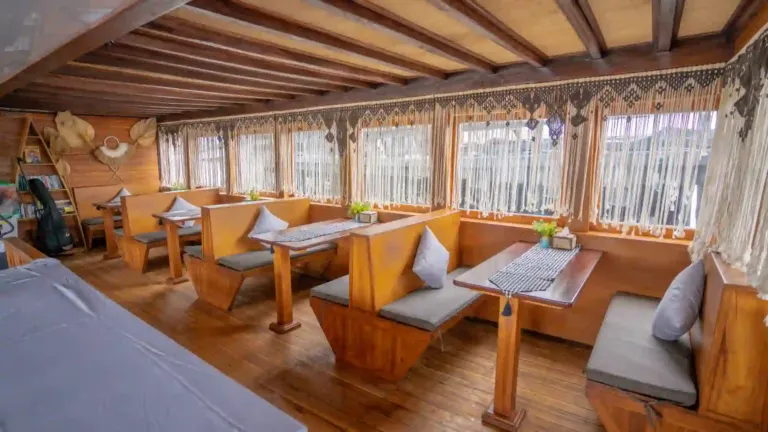



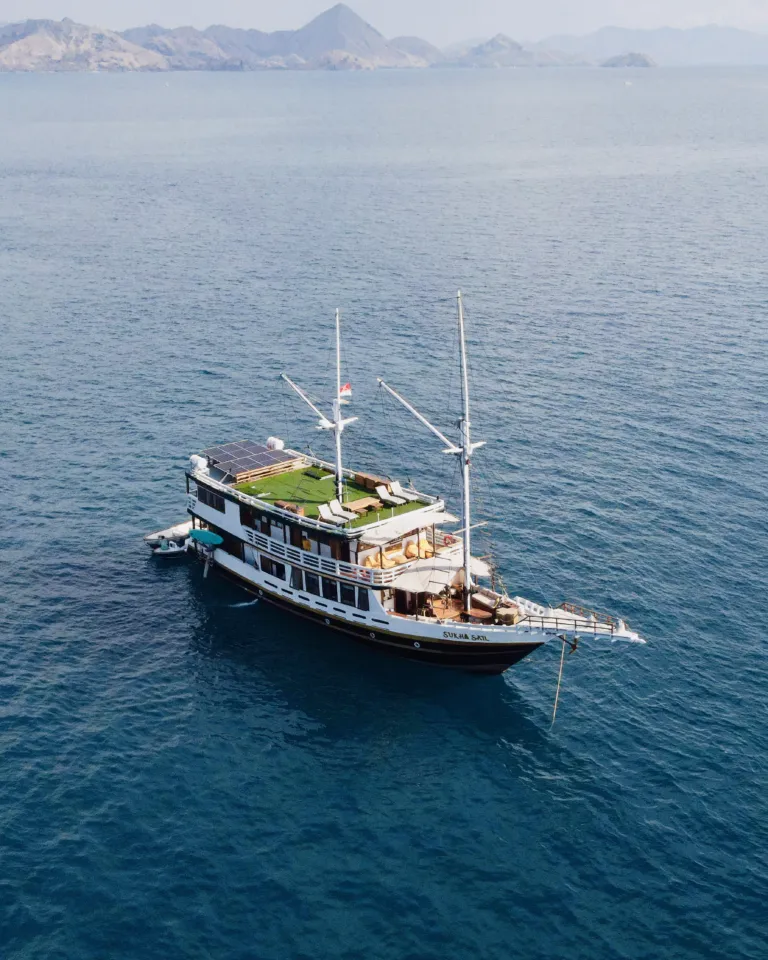
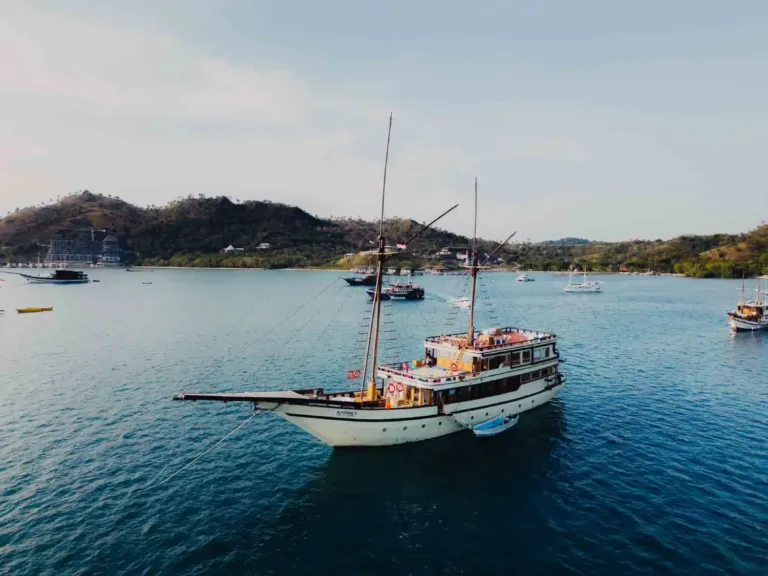
 Elbark Cruise
 Papiton Allo
 Semesta Voyages
 Sukha Sail 1