
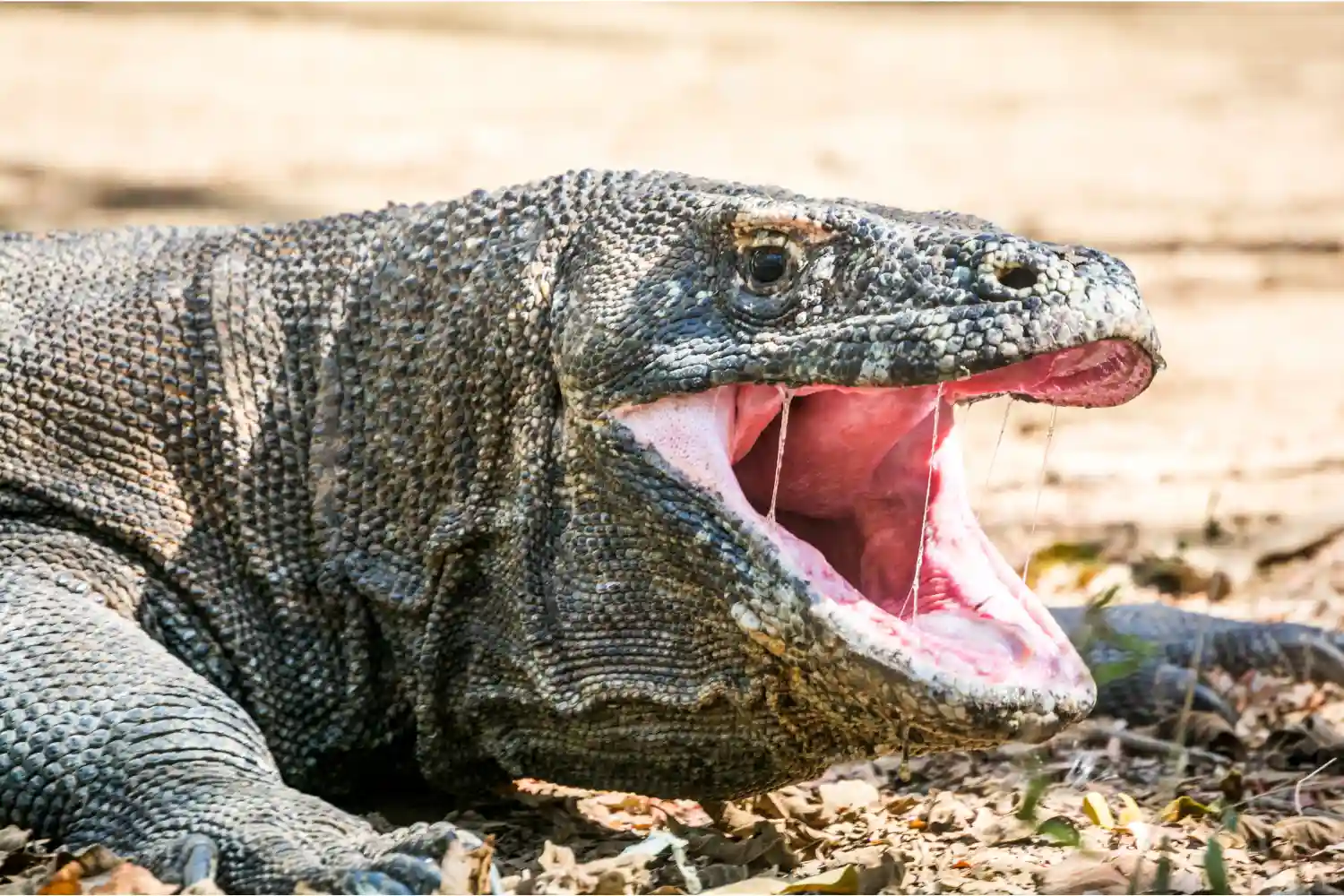
Komodo dragon attacks make headlines around the world, and it is easy to see why: the largest lizard on Earth, a venomous bite and a wild island setting. The reality is calmer. Attacks on people are rare, most of them have happened in or near the villages of the park rather than on the visitor trails, and the rules that rangers follow are designed to keep it that way. This guide looks at the facts behind the stories, the myths that surround them and the simple rules that keep visitors safe.
The figures below come from park records reported by the press and from news reports of individual cases. Records from remote islands are never complete, so treat the numbers as the best available picture, not an exact count.
In short
- Park records counted 24 attacks on people from 1974 to 2012, five of them fatal.
- Most victims were local people, attacked near villages, not visitors on a ranger walk.
- Every visit to the dragons is led by park rangers with long forked sticks.
- Keep several metres away, stay with the group and never feed or touch a dragon.
How common are Komodo dragon attacks?
Not common at all. According to BBC Wildlife, a report by Komodo National Park officials in 2012 counted 24 attacks on people since 1974, five of which were fatal. That is fewer than one attack a year, in a park where thousands of dragons live alongside several villages.
Other counts are a little higher. In a later article for the same magazine, the research director of the Komodo Survival Program, Achmad Ariefiandy, put the total at 31 attacks since records began in 1974, with five fatalities. The two figures cover different periods, and both tell the same story: attacks happen, but rarely, and deaths are rarer still.
Many thousands of visitors walk with the rangers on Komodo and Rinca every year. Against that number, attacks on visitors who follow the rules are extremely unlikely. Our guide to whether Komodo National Park is safe covers the other risks of a trip, from the sun to the sea.
The cases that made the news
A handful of cases have shaped how the world sees Komodo dragon attacks. The table lists the best-documented ones, as reported at the time.
| Year | Place | What happened |
|---|---|---|
| 1974 | The park | A traveller was killed, the last fatal attack on a tourist on record |
| 2007 | Komodo | An 8-year-old boy was killed near his village |
| 2009 | A ranger’s hut | A ranger was bitten on the hands and legs when a dragon entered his hut, and survived |
| 2009 | Komodo | A fruit-picker was killed after falling from a tree |
| 2017 | Komodo | A tourist from Singapore was bitten on the leg while taking photos, and survived |
In June 2007, the Associated Press, carried by NBC News, reported that a dragon had killed an 8-year-old boy who had gone behind a bush near his village on Komodo. His uncle threw rocks until the animal let go, but the boy died of his injuries. A park spokesman described it as the first fatal attack on a human in 33 years.
In March 2009, NBC News reported that two dragons had attacked a 31-year-old fruit-picker after he fell from a sugar-apple tree on Komodo; he died soon after at a clinic on Flores. The same report mentioned a ranger who had narrowly survived the month before, when a dragon entered his hut. In May 2017, CBS News reported that a tourist from Singapore was bitten on the leg while photographing a dragon; he was taken to hospital in Labuan Bajo.

Who gets attacked, and why
Most victims are not tourists. BBC Wildlife notes that most of the people attacked were Indonesians, bitten while going to the toilet outdoors, playing or hunting. Ariefiandy told the magazine that most attacks happen near villages or tourist sites, where the dragons are used to people.
Life in the villages of the park brings people and dragons close together every day. Dragons are drawn by the smell of drying fish and by goats, and a child or an adult alone near the edge of a village can be mistaken for an easy meal. The ecologist Tim Jessop, an adviser to the Komodo Survival Program, put it simply: dragons probably are not actively hunting humans. Attacks tend to be opportunistic, when a person is alone, low to the ground or in the wrong place.
Visitors on a ranger walk are in a very different situation: in a group, upright, moving with a ranger and staying on the paths at the busiest times of the day. That is why the rules for visitors work so well.
Are attacks on the rise?
Several reports suggest that attacks have become more frequent since the turn of the century. In 2009, the Associated Press described attacks on humans as rare, but said they seemed to have increased in recent years. The Dragon Islands article in BBC Wildlife reported that half of the recorded attacks, including two deaths, had happened in the decade before it was written.
Researchers link the trend to habituation. Dragons that live near villages and ranger stations get used to people, lose their fear and learn that people can mean food, from drying fish to goats and kitchen waste. More visitors and more people living in the park also mean more chances for an encounter, and CBS News noted in 2017 that attacks could increase as Indonesia promotes the park to tourists.
None of this changes the picture for a visitor on a ranger walk, where the group is large and the rules are strict. It does explain why the park keeps those rules tight, and why rangers repeat them at every briefing, however many times they have given it.
How a dragon attacks
Komodo dragons are ambush hunters. They wait, often motionless beside a trail, and strike when prey comes close, with a short burst of speed of about 16 to 20 kilometres per hour. Our guide to how fast a Komodo dragon can run explains why that burst matters more than any top speed.
The bite itself is the weapon. A dragon’s teeth are serrated and curved, and research has shown that glands in its lower jaw produce venom that stops blood from clotting and lowers blood pressure. Large prey that escapes the first attack weakens and is followed by scent. Our guide to whether Komodo dragons are venomous explains the science.
For people, the danger lies in the wounds and the bleeding, which is why every bite needs urgent medical care. In the cases above, it was the loss of blood that proved fatal, not a slow infection.
Myths about Komodo dragon attacks
Myth: their mouths are full of deadly bacteria. For decades, books claimed that bacteria in a dragon’s saliva killed its prey. Research published in 2009 found venom glands, and no single species of bacteria in all the dragons studied, so venom and wounds are now seen as the main weapons in their attacks.
Myth: dragons hunt people. People are not part of a dragon’s normal diet, and most attacks are opportunistic. That said, a hungry dragon will not distinguish between a goat and a child alone in the bush, which is why the rules exist.
Myth: a sleeping dragon is harmless. A dragon lying still is often awake and watching, and it can move fast over a short distance. Keep the same distance from a resting dragon as from a moving one.
Myth: you can outrun one. On a flat track, a fit person might. On rough ground, in the heat, from a few metres away, nobody should try. The answer is never to get that close.

Are tourists at risk?
The risk for a tourist who follows the rules is very small. The Dragon Islands article in BBC Wildlife describes the bite in 2017 as the first attack on a tourist since a traveller was killed in 1974. In 2017, park officials told the press that the tourist had moved away from the safe areas and had not taken a ranger with him; visitors are required to walk with one. The few attacks on visitors share the same pattern: a person alone, off the path and without a ranger.
Park staff face more risk than visitors, because they live and work among the dragons every day. The cases of rangers bitten in their huts or at the ranger stations are a reminder that the animals are wild, even in the places where they see people every day.
On a liveaboard, you see the dragons only on the ranger walks on Komodo and Rinca. The boat anchors in the bays, and the beaches you visit for swimming and snorkelling are not dragon walks. Our guides to Komodo Island and Rinca Island explain how the walks work.
How rangers keep visitors safe
Every visit to the dragons starts at a ranger station, with a short briefing on the rules. The group then walks with at least one ranger, often with another at the back, each carrying a long forked stick. If a dragon comes too close, the ranger uses the stick to keep its head away and guides the group back calmly.
The rangers know the animals, the routes and the places where the dragons rest. They choose the path, decide how close the group goes and when it moves on, and they watch the dragons while you watch the view. On Rinca, a raised walkway in the visitor area lets you look down on the dragons from a safe height.

Rules for visitors
The rules are short, and the rangers repeat them before every walk. Each one answers a lesson from past attacks.
- Always walk with a ranger, and never go onto Komodo or Rinca alone.
- Stay with the group and behind the ranger, on the path.
- Keep several metres away, even from a dragon that looks asleep.
- Never feed, touch or tease a dragon, and never throw anything.
- Move calmly, without running or sudden movements.
- Tell the ranger discreetly about an open wound or menstruation, because the dragons have a keen sense of smell.
- Keep children close, holding their hands near the animals.
- Use a zoom lens instead of stepping closer for a photo.
Our Komodo photography guide explains how to get good dragon photos from a safe distance, and our guide to Komodo with kids covers the walk with children.
What to do if a dragon comes close
Listen to the ranger and do exactly what they say. In most cases, that means stopping, staying together and moving back slowly while the ranger keeps the dragon at a distance with the forked stick. Do not turn your back and run off on your own, and do not step towards the animal for a photo.
If anyone is bitten, the bite needs urgent medical care, because the wounds bleed heavily and the venom slows clotting. The rangers and the crew will arrange the fastest route to a clinic or hospital in Labuan Bajo. That is one more reason to travel with insurance that covers medical evacuation.
While help is on the way, press firmly on the wound with a clean cloth to slow the bleeding, keep the injured person lying down and calm, and do not try to clean or close a deep wound yourself. Leave that to the doctors, and tell them it was a dragon bite, so they can treat it accordingly.
Attacks outside the park
Komodo dragons live in zoos around the world, and attacks there are rare too. BBC Wildlife notes at least two serious, non-fatal attacks by dragons kept in zoos. In each case, the animals were handled or approached by people working with them, a reminder that even a dragon raised in captivity remains a powerful predator.
In the wild, Komodo dragons live only on a few islands in eastern Indonesia: Komodo, Rinca and smaller islands of the park, and parts of the coast of Flores. If you see a large monitor lizard elsewhere in Southeast Asia, it is a different species, usually much smaller and shy of people. Treat it with the same respect, but do not expect a Komodo dragon.
Living with dragons
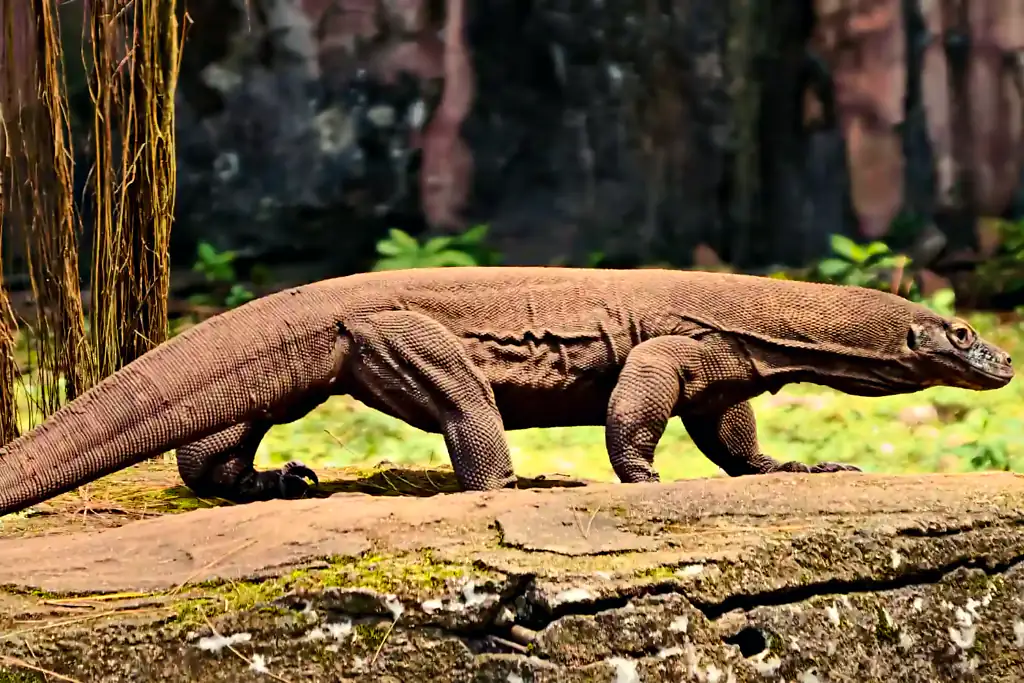
For the people of Komodo and Rinca, the dragons are neighbours, not a tourist attraction. Villagers keep their goats close, avoid the hills unless they have to go there, and teach their children to watch for the animals. The relationship is old and complicated: the dragons are protected, the people depend on fishing and tourism, and both share small islands with little space to spare.
As a visitor, you can respect that by following the rules, buying from local sellers and listening to the rangers, many of whom grew up in the villages. Our guide to the Komodo dragons tells their story, from their size to their place in the park.
Our view
Komodo dragon attacks are real, but they are rare, and they mostly happen far from the ranger walks that visitors join. Follow the ranger, keep your distance, never feed or touch a dragon and keep children close, and the walk is one of the safest great wildlife encounters on Earth, in a UNESCO World Heritage Site that has protected these animals since 1991.
Respect the dragon, trust the ranger, and the only thing that bites is the midday sun.
Ready to see them for yourself? Compare the sharing trips on this site: every trip includes a ranger walk with the dragons on Komodo or Rinca.
Questions
How many people have been killed by Komodo dragons?
Park records reported by BBC Wildlife counted five fatal attacks out of 24 attacks between 1974 and 2012.
Where do most attacks happen?
In or near the villages of the park and around ranger stations, where the dragons are used to people. Most victims have been local people, not visitors on a ranger walk.
Have tourists been attacked?
Very rarely. A traveller was killed in 1974, and a tourist was bitten in 2017 after leaving the safe areas without a ranger.
Is it safe to visit Komodo dragons?
Yes, when you follow the rangers. Every walk is led by rangers who keep the group at a safe distance.
Why do rangers carry forked sticks?
To keep a dragon’s head away if it comes too close, while the group moves back calmly.
Is a Komodo dragon bite venomous?
Yes. Research has shown that the dragons have venom glands, and the venom slows clotting. Any bite needs urgent medical care.
Should I tell the ranger if I have my period?
Yes, discreetly, as you would for an open wound. It is a normal question for the rangers, and they will keep an eye out.
Are children at risk?
Children are safe on a ranger walk when they stay close to an adult. Hold their hands near the animals and never let them wander.
What should I do if someone is bitten?
Press firmly on the wound with a clean cloth to slow the bleeding and get medical help at once. The rangers and the crew will arrange transport to Labuan Bajo.
Can a dragon attack the boat?
No. The boats anchor in the bays, and you meet the dragons only on the ranger walks on land.





 Elbark Cruise
 Papiton Allo
 Semesta Voyages
 Sukha Sail 1