Is Komodo National Park safe? For the great majority of visitors, yes. Wild dragons, strong currents and the tropical sun all sound alarming, but each comes with simple rules that keep a trip relaxed. This honest guide looks at the real risks one by one, from the dragon walk and the sea to the boats, your health and Labuan Bajo, and explains what you can do to stay safe without worrying about it.
In short
- The dragons are wild predators, but every visit is a walk led by park rangers, and attacks on visitors are very rare.
- The most common problems are sun, heat and dehydration, not dragons.
- At sea, the captain and the harbour authority decide when and where boats can sail, and routes change in bad weather.
- Travel insurance is not included in the trip price, and it is worth having on a remote trip.
Is Komodo National Park safe? The short answer
Komodo National Park welcomes a large number of visitors every year, and the vast majority come home with nothing worse than a sunburn. The park has rangers, rules and well-worn routines for visiting the dragons, and the boats that sail here follow the instructions of the harbour authority in Labuan Bajo.
That does not mean there are no risks. You are in a remote marine park, far from a hospital, among wild animals and strong currents. The point of this guide is not to scare you, but to show where the real risks lie, so you can enjoy the trip with the right habits.
What keeps a visit safe is a set of simple layers. The rangers decide how you meet the dragons, the guide decides where and when you swim, the captain decides where the boat goes, and the harbour authority decides whether boats can sail at all. Your part is to follow those decisions, look after yourself in the sun and travel with insurance. Together, these layers make Komodo a safe place for a careful traveller.
The dragons: how safe is the walk?
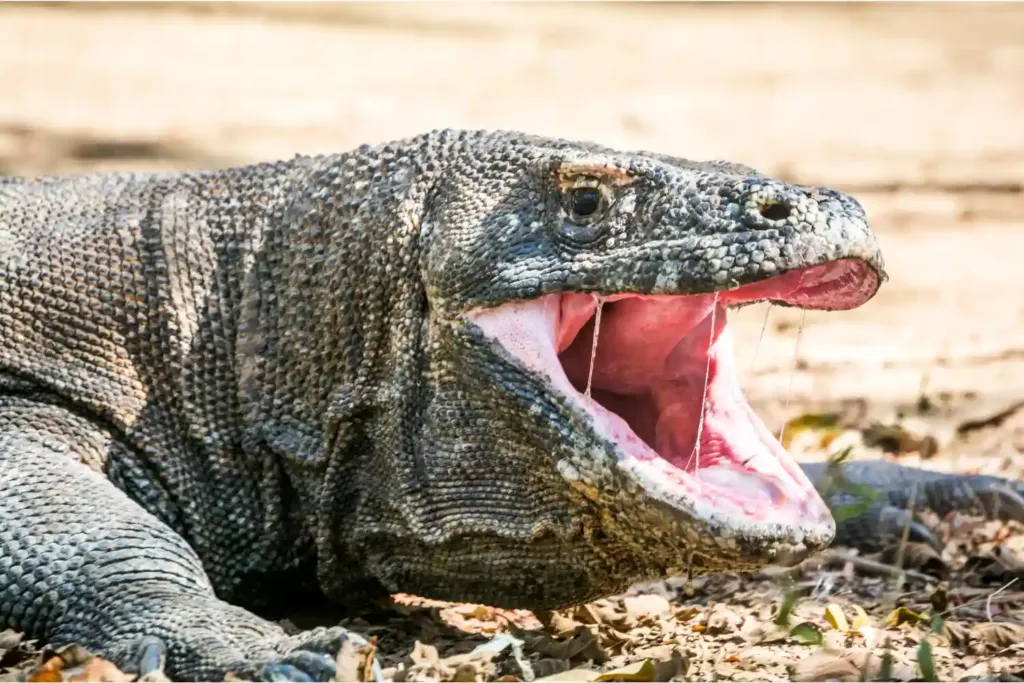
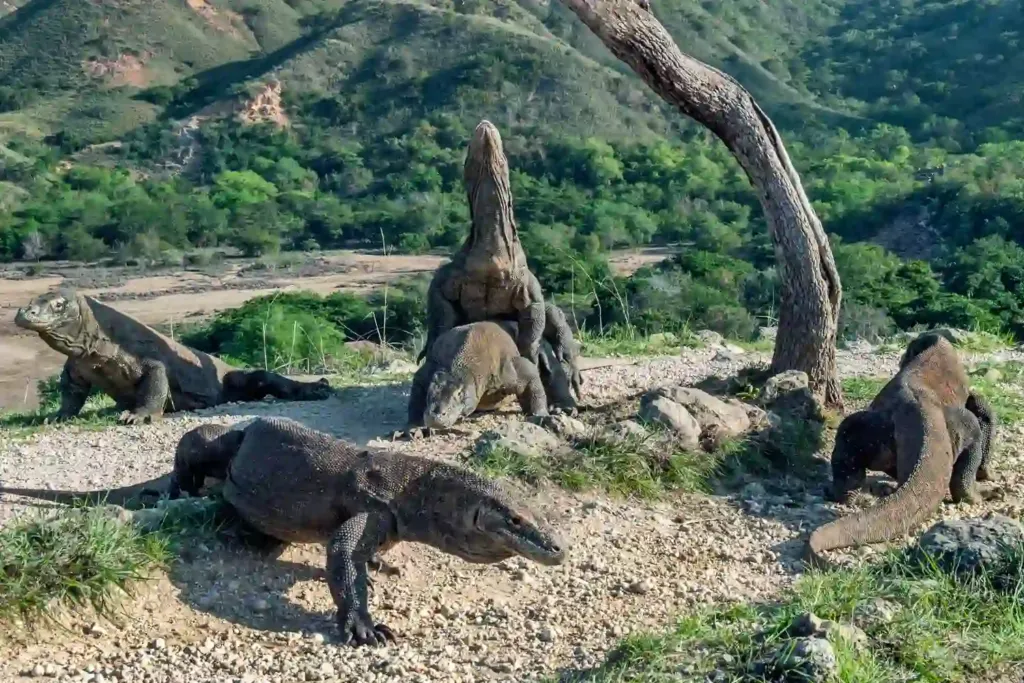
Komodo dragons are the largest lizards on Earth and wild predators that hunt deer, boar and water buffalo. That is why you can only see them on a walk led by park rangers, on Komodo or Rinca. The rangers know where the dragons rest, choose the route and keep every group at a safe distance, carrying long forked sticks to keep a dragon away if one comes too close.
Attacks on visitors are very rare, and the rules are designed to keep it that way. Stay with the group and behind the ranger, keep several metres away even from a dragon that looks asleep, never feed or touch one, and move calmly. Tell the ranger about any open wound, and women who are menstruating are asked to let the ranger know, because the dragons have a keen sense of smell. Keep children close at all times.
A dragon lying still is not necessarily asleep, and a dragon that seems slow can move fast over a short distance. That is why a safe distance means several metres, even for a photo. Use a zoom lens rather than stepping closer, and let the ranger decide when the group moves on. If a dragon starts to walk towards the path, the ranger will guide you away calmly.
The sea: currents, weather and boats
The sea is the part of a Komodo trip that deserves the most respect. The park lies between two oceans, and the tides push strong currents through the channels between the islands. Most of the time your boat lies at anchor in sheltered bays, but some crossings can be choppy, and conditions change with the wind.
The captain decides the route each day and can change it for safety or weather. In periods of high waves, the harbour authority in Labuan Bajo can close sailing to parts of the park: in August and September 2026, it closed sailing to Padar and Komodo for a few days, while trips to Rinca were still allowed. If a boat cannot sail at all because of bad weather or government rules, the booking terms let you reschedule or take a partial refund.
The tender rides between the boat and the shore are part of every day. Sit down while the tender moves, keep your hands inside the boat when it comes alongside, and step on and off only when the crew tells you. Keep your phone and camera in a dry bag, because spray is common even on a calm day. These small habits make the transfers safe and easy.
Choosing a safe boat
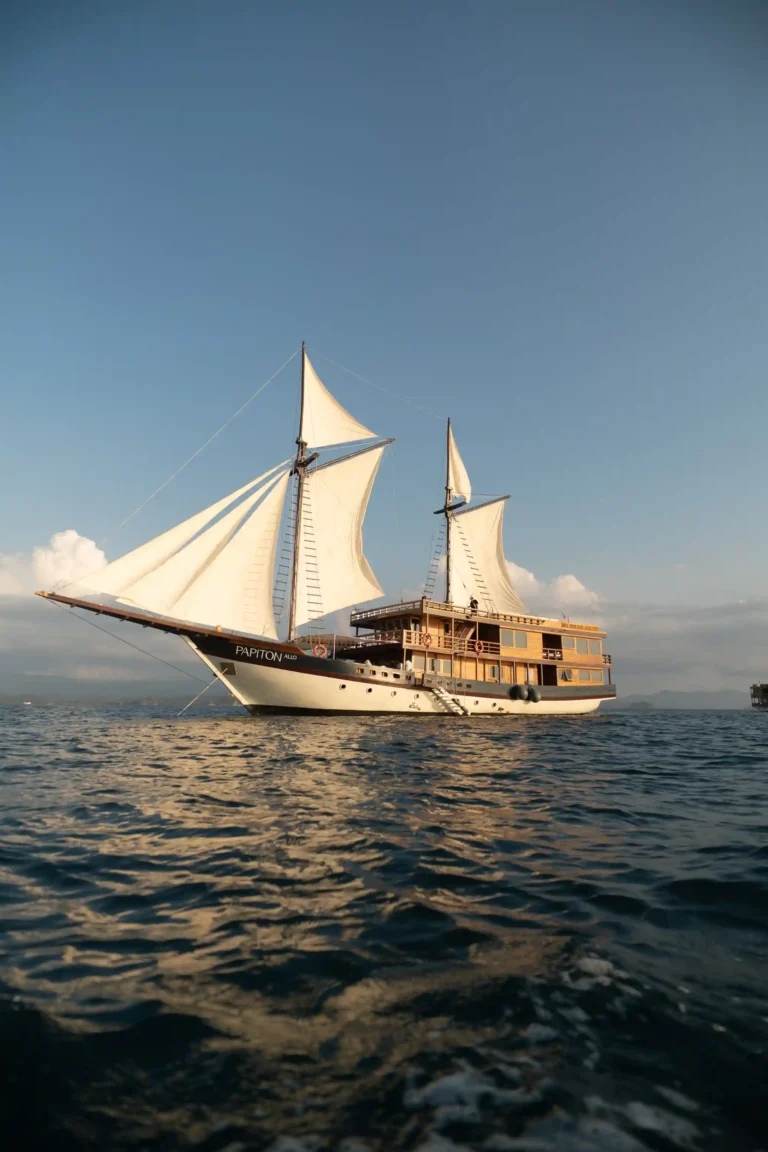
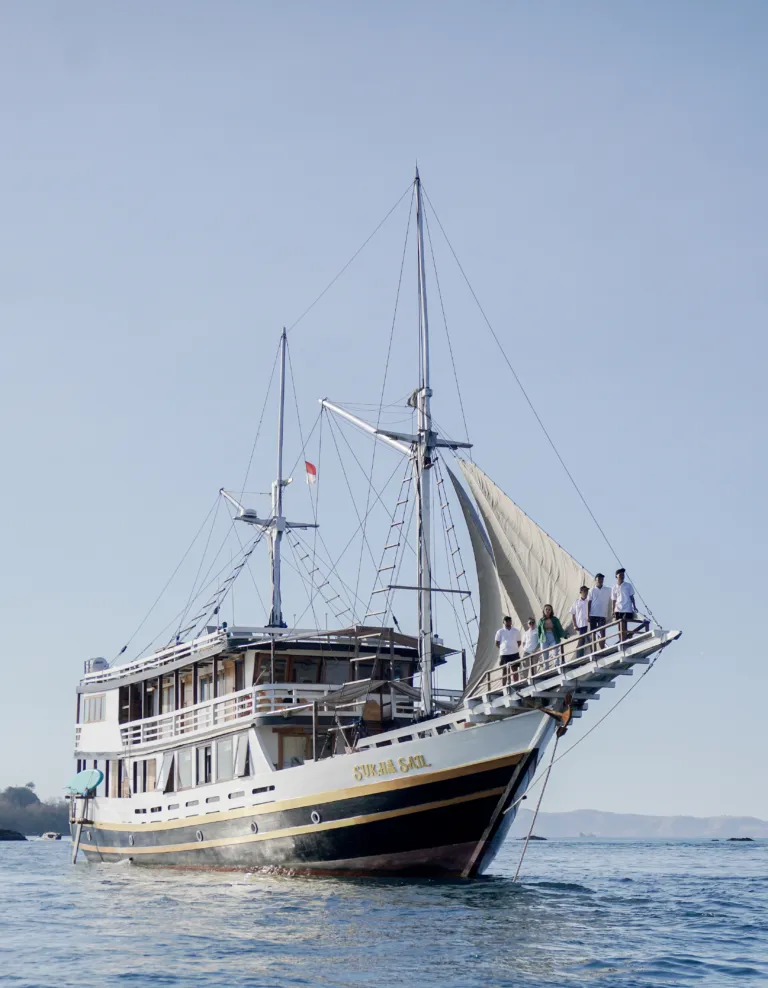
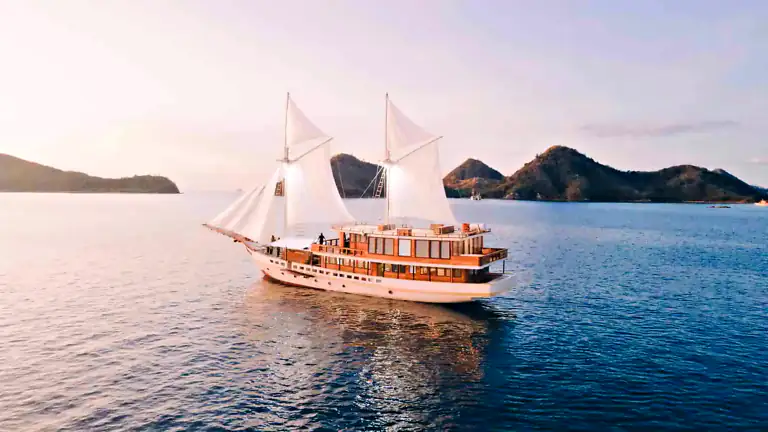
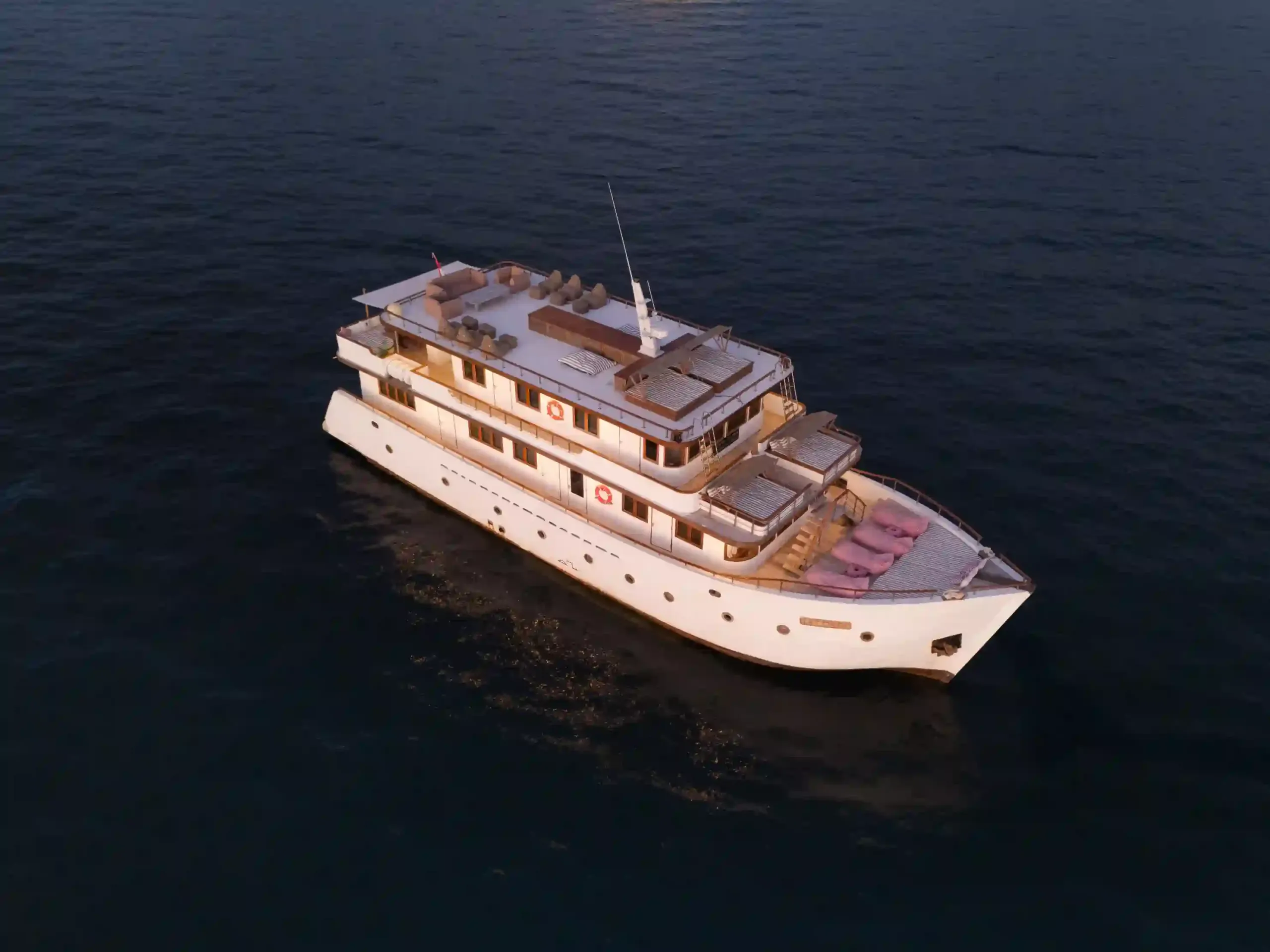
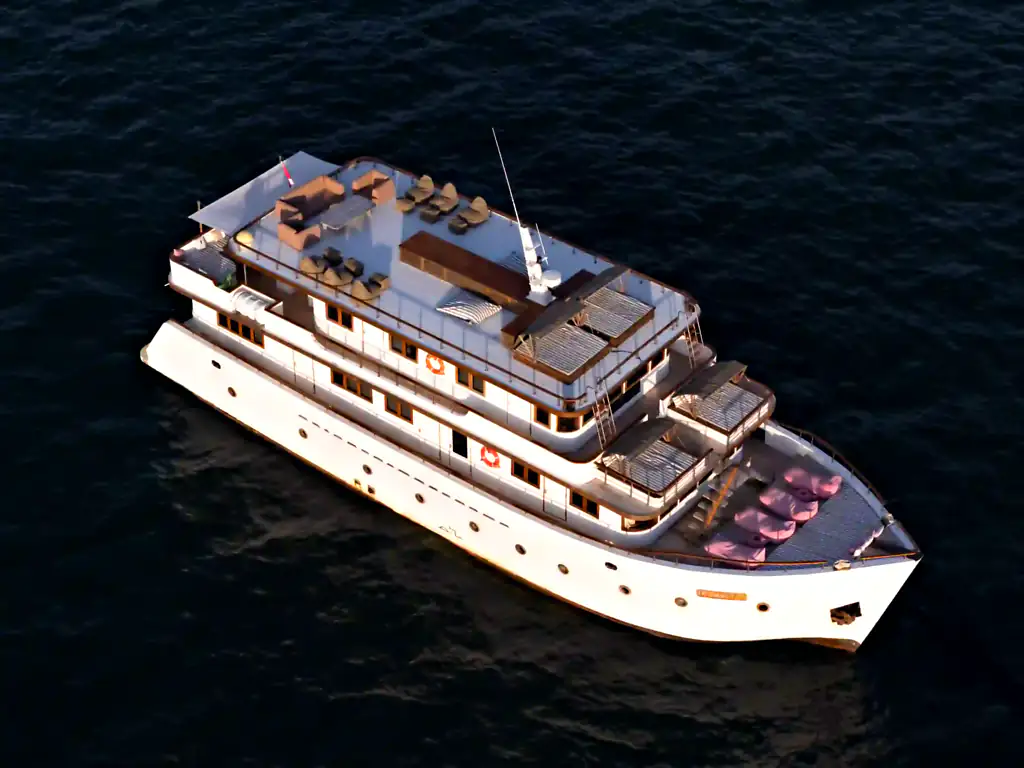
Every liveaboard on this site is a phinisi with its own captain and crew, and the crews on every boat speak English and Indonesian. Life jackets are on board and part of the snorkelling equipment on most boats, and the crew explains the basics at the start of the trip. Some boats list more safety equipment on their page, such as life rafts, an emergency beacon, radar, ship tracking and a satellite phone.
Before you book, read the boat page: the facts, the facilities, the safety equipment where it is listed and the itinerary. On board, listen to the briefing, learn where the life jackets are, and follow the crew’s instructions when you board and leave the tender, which is when most slips and bumps happen. Our guide to what a liveaboard is explains how life on board works.
If safety matters most to you, a few questions help you compare boats. Which safety equipment does the boat carry? How many crew are on board? Does the guide join the group in the water? What happens if the weather turns? A good operator answers these clearly, and we are happy to ask on your behalf before you book.
Snorkelling safety
The guide picks each snorkelling spot and the time with the tide, briefs the group about the current and stays in the water with you. At sites such as Manta Point, the current can be strong, and snorkellers usually drift with it while the tender follows and picks them up at the end. If you are not a confident swimmer, wear a life jacket, and nobody will think twice about it.
Never touch the coral or stand on the reef: it damages the reef and can cut your feet and hands. Keep a few metres from turtles and other animals, and stay with the group and within sight of the tender. A long-sleeved swim top protects you from the sun on long swims, which is a bigger risk than anything in the water.
Know your limits. If you feel tired, cold or uneasy in the current, raise a hand to the guide and swim back to the tender, which is never far away. There is no need to finish every snorkel, and a safe swimmer is one who stops in good time. Snorkel with a buddy, and agree on a simple signal before you get in.
Sun, heat and dehydration
The tropical sun causes more problems in Komodo than any animal. The islands have little shade, the light reflects off the water, and the heat builds quickly from mid-morning. Sunburn, dehydration and heat exhaustion are the most common reasons visitors feel unwell.
Drink plenty of water, which is always available on board, and carry a bottle on every walk. Wear a hat, sunglasses and light clothes that cover your shoulders, and use a mineral sunscreen that is kinder to the reef. Plan the walks and climbs for the early morning or the late afternoon, and rest in the shade on deck in the middle of the day.
Health and medical care
A liveaboard is a remote place to fall ill, so a safe trip starts at home. Boats do not normally carry a doctor, and there are no pharmacies at sea, so bring any medicine you take regularly, enough for the whole trip, and a small first-aid kit with plasters, antiseptic and something for an upset stomach. If you are prone to seasickness, bring a remedy and take it before the longer crossings.
Ask a travel clinic about vaccinations and any other health advice for Indonesia a few weeks before you travel. Travel insurance is not included in the trip price, so choose a policy that covers a liveaboard trip, snorkelling or diving if you plan to do them, and medical evacuation from a remote area.
For food and water, drinking water is included on board, so there is no need to drink anything else at sea. In town, choose bottled or filtered water and busy places to eat. Wash or sanitise your hands before meals, especially after the walks and the beaches, and you will avoid most upset stomachs.
The climbs on Padar and Kelor
The viewpoints on Padar and Kelor are reached by short, steep climbs on steps and dusty paths, and most slips happen on the way down. Wear closed shoes with a good grip, not flip-flops, carry water and go at your own pace. Stay on the trail, because the edges are steep and the ground is loose.
The Padar climb usually starts before sunrise, so bring a torch or headlamp for the steps in the dark. There is no need to reach the top: the first viewpoints already show the bays. Our Padar Island guide explains the hike in detail.
Is Labuan Bajo safe?
Labuan Bajo is a small, friendly harbour town that has grown quickly with tourism. Normal travel sense applies: keep your valuables out of sight, use ATMs inside banks or shops, and agree on a taxi price before you set off if there is no meter. The roads can be busy with scooters, so take care when you walk at night.
Most visitors spend a night in town before the boat, and the morning pick-up from your hotel or the airport takes you straight to the harbour. Respect local customs, especially in the villages of the park, where light clothes that cover your shoulders and knees are appreciated.
Safety for women and solo travellers
Komodo is a popular trip for solo travellers and for women travelling alone or together. On a sharing trip, you travel with other guests and a crew, and every walk to see the dragons is led by rangers, so you are rarely on your own in a remote place. Cabins marked “Solo OK” can be booked by one guest, and some boats have shared cabins booked per person.
The usual safe travel habits apply: share your plans with someone at home, keep your phone charged, and trust your instincts in town at night. Dress in light clothes that cover your shoulders and knees when you visit villages, and keep swimwear for the boat and the beaches.
When is Komodo safest to visit?
The dry season, from April to November, brings the calmest seas on most days, dry trails and clear skies, and it is when most boats sail. Even then, the wind can rise and the current between the islands can be strong, which is why the crew plans the stops around the tides and the captain can change the route.
The wet season, from December to March, brings more rain and changing seas, and fewer boats sail. Some schedules change with the weather, so a longer trip gives the crew more room to move a stop to another day. Our guide to the best time for a Komodo liveaboard explains each month.
10 rules for a safe trip to Komodo
- Follow the rangers on every walk to see the dragons.
- Keep your distance from dragons and all other wildlife.
- Listen to the briefings on board and before every snorkel.
- Wear a life jacket in the water if you are not a confident swimmer.
- Drink water and cover up against the sun all day.
- Wear closed shoes for the climbs and the walks.
- Bring your medicine and a small first-aid kit.
- Travel with insurance that covers the boat trip and the water.
- Arrive the day before so a delay never rushes you.
- Accept changes to the route: the captain makes them for your safety.
| Risk | How to stay safe |
|---|---|
| Komodo dragons | Walk only with the rangers and keep several metres away |
| Currents | Snorkel with the guide, near the tender, in a life jacket if needed |
| Sun and heat | Drink water, cover up and rest in the shade at midday |
| Steep climbs | Wear closed shoes and take your time on the way down |
| Weather | Let the captain decide the route on the day |
| Illness or injury | Bring medicine and a first-aid kit, and travel with insurance |
Our view
Komodo is a wild place, and that is exactly why it is worth visiting. With rangers on the walks, a crew that knows the sea and a few good habits of your own, the risks are small and well understood. Komodo National Park has been a UNESCO World Heritage Site since 1991, and respecting its animals, its sea and its rules is the best way to stay safe and to keep it wild.
The dragons get the headlines, but the sun, the sea and a missed bottle of water are the things to really plan for.
Ready to go? Read how to choose a Komodo liveaboard, or browse the sharing trips with live cabin availability.
Questions
Are Komodo dragons dangerous to tourists?
They are wild predators and can be dangerous, which is why every visit is led by park rangers. Attacks on visitors are very rare, and following the rules keeps you safe.
Is it safe to swim and snorkel in Komodo?
Yes, with the guide. The guide chooses the spot and the time with the tide, and life jackets are part of the snorkelling equipment on most boats. Some sites have strong currents, so listen to the briefing.
Is Komodo safe for families?
Yes, with sensible rules. Keep children close on the walks and on deck, choose calm snorkelling sites, and plan for shade and water through the day.
Is Komodo safe for solo travellers?
Yes. On a sharing trip you travel with other guests and a crew, and every walk with the dragons is led by rangers. Normal travel sense applies in Labuan Bajo.
What happens if the weather is bad?
The captain changes the route, and in high waves the harbour authority can close sailing to parts of the park for a few days. If the boat cannot sail at all, you can reschedule or take a partial refund under the booking terms.
Is there a doctor on the boats?
Boats do not normally carry a doctor. Bring your own medicine and a small first-aid kit, and travel with insurance that covers medical evacuation.
Are there sharks in Komodo?
Yes, reef sharks are often seen at the snorkelling and diving sites. They are usually shy and keep their distance, and seeing one is a highlight for most guests. Watch them calmly and never try to touch or chase them.
Is the drinking water on board safe?
Drinking water is included on board and is always available. Bring a reusable bottle to refill, and drink often in the heat.
What is the biggest risk on a Komodo trip?
For most visitors, the sun and the heat. Drink plenty of water, cover up and plan the walks for the cooler hours.
Is it safe on the boat at night?
Yes. The boat lies at anchor and the crew lives on board. Use a torch on deck after dark, stay away from the edges and take care on the stairs between decks.
Do I need travel insurance?
It is not included in the trip price, but it is strongly recommended. Choose a policy that covers a liveaboard trip and the water activities you plan to do.
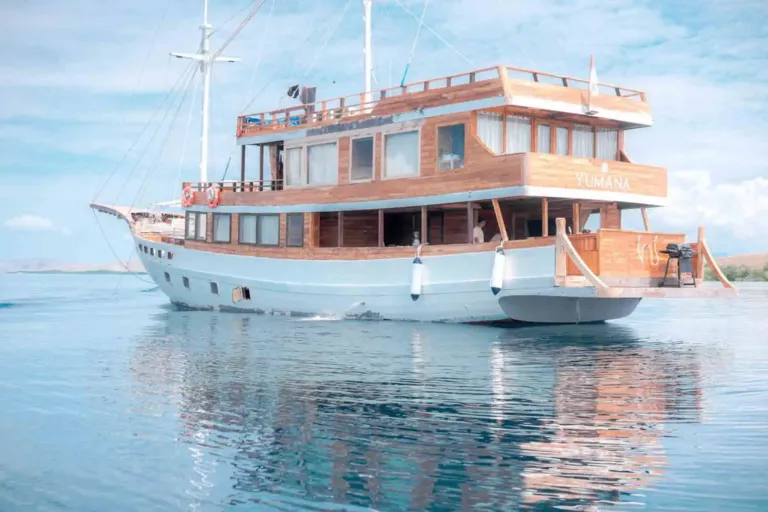
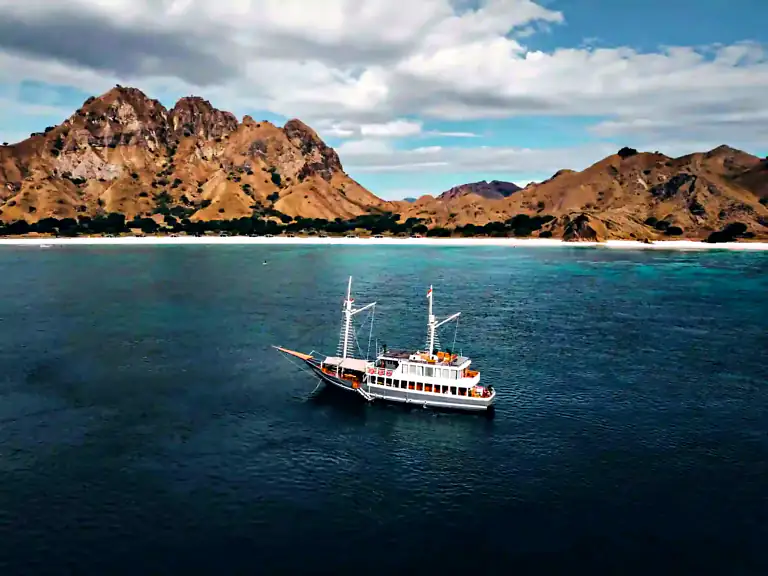
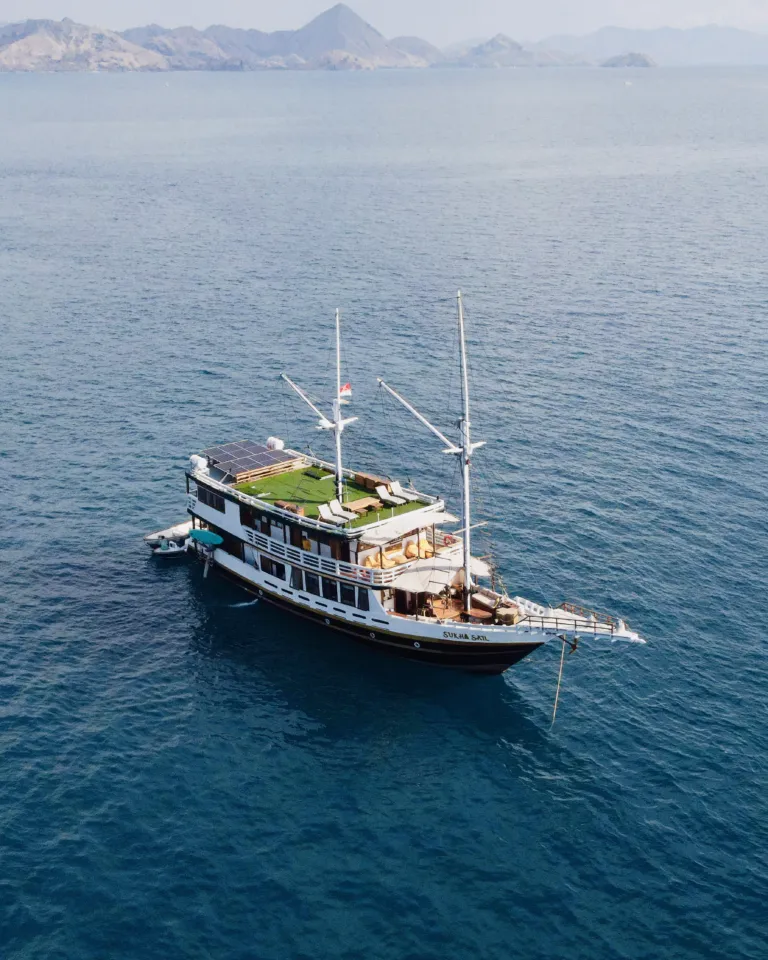
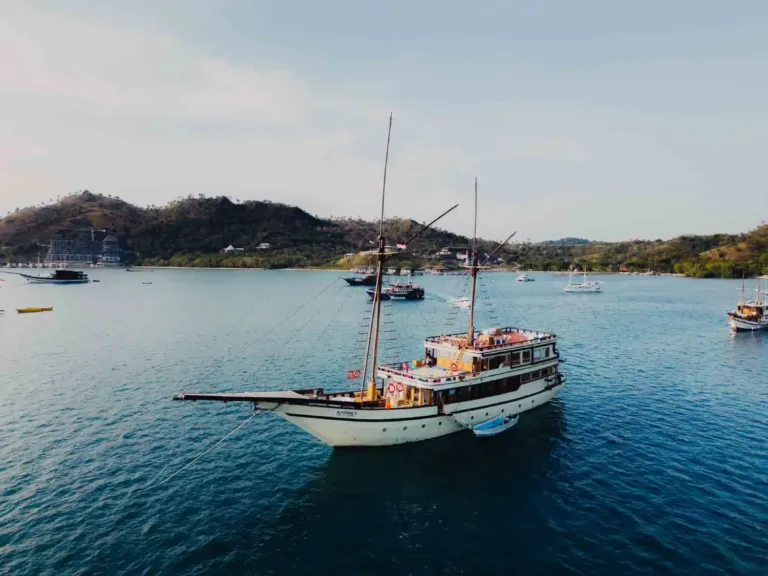
 Elbark Cruise
 Papiton Allo
 Semesta Voyages
 Sukha Sail 1