What is a liveaboard? Simply put, it is a boat you live on for a few days while it carries you from one island, reef or beach to the next. You sleep in a cabin, eat meals cooked by the crew and wake up somewhere new each morning. This guide explains how a liveaboard works in Komodo National Park, from the boats and the cabins to the crew, a typical day, safety and what it costs, so you know what to expect before your first trip.
In short
- A liveaboard is a boat with cabins, a crew and a kitchen, so you sleep, eat and travel on board.
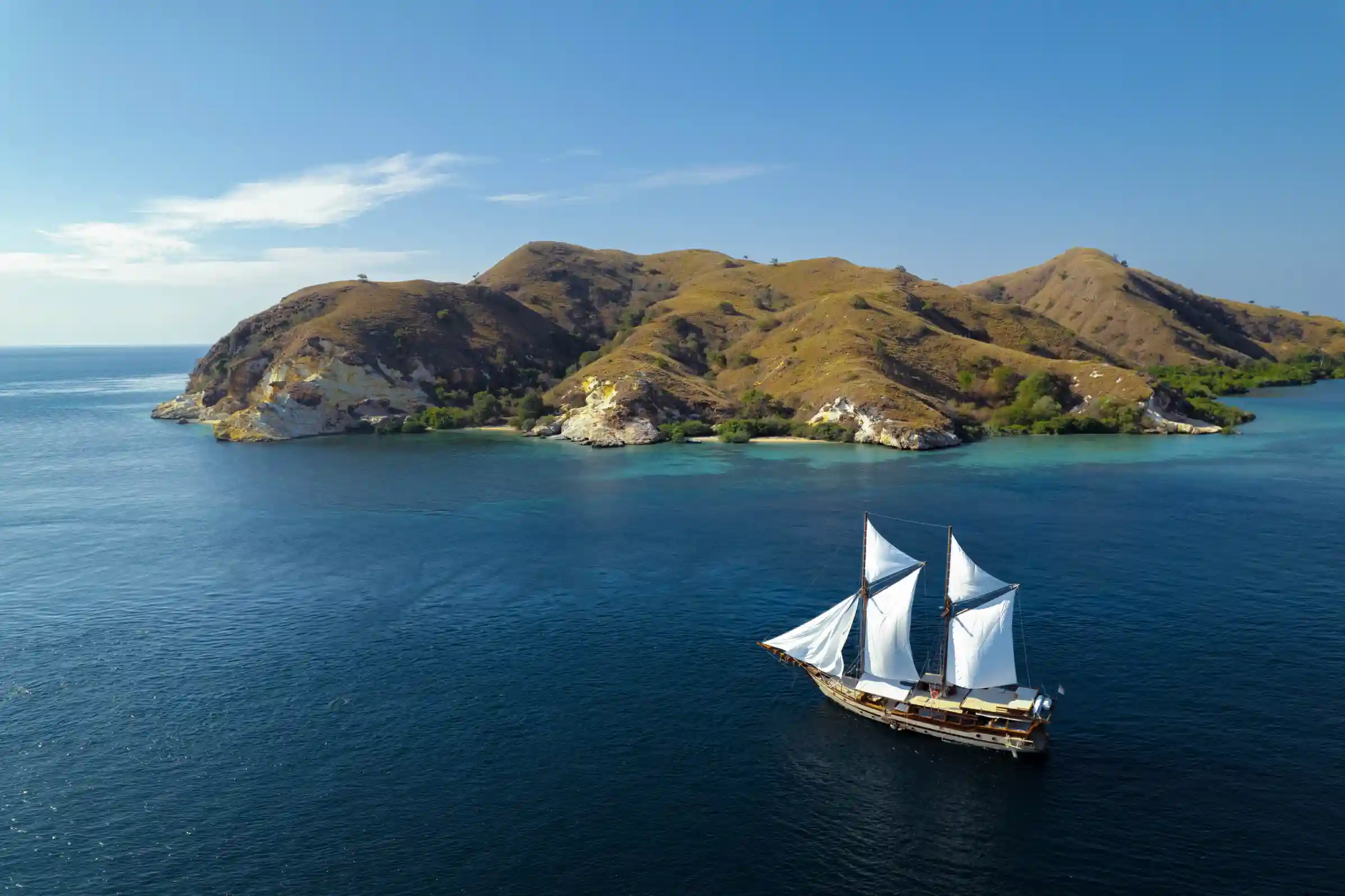
- In Komodo, every boat on this site is a phinisi, a traditional wooden sailing boat of 22 to 40 metres.
- Most trips last 3 days and 2 nights, with meals, drinking water, snorkelling gear, a guide and transfers included on most boats.
- You book a cabin on a sharing trip or the whole boat as a private charter.
What is a liveaboard, exactly?
A liveaboard is a boat built or fitted out for guests to stay on for several days. Unlike a day boat, which takes you out in the morning and back to the harbour in the evening, a liveaboard is your hotel, your restaurant and your transport at the same time. While you eat or sleep, it can move to the next stop, so you wake up close to where you want to be.
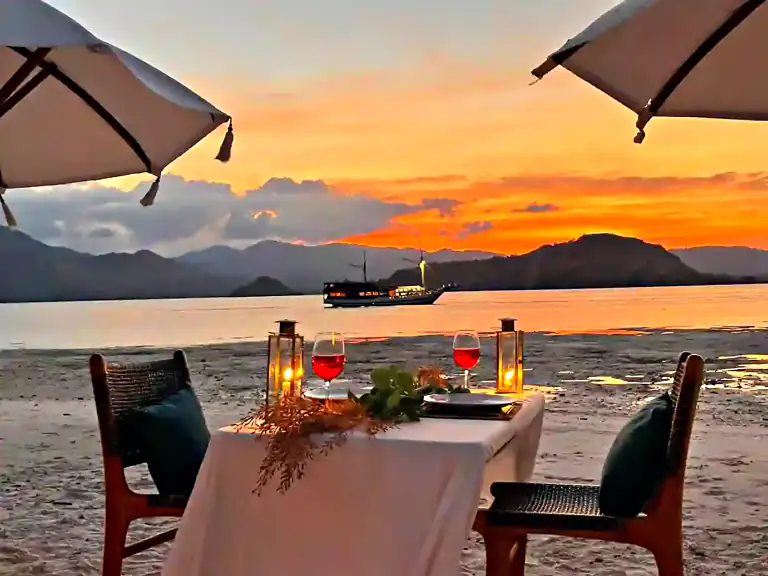
Liveaboards sail in many of the great marine areas of the world, and they are especially popular where the best places are spread over a wide area of sea. Komodo National Park is a good example: the islands, beaches and reefs lie far apart, and the most famous moments happen at sunrise and at dusk, when day boats from town are rarely there.
That is why so many visitors choose a liveaboard here. If you are still deciding, our comparison of a Komodo liveaboard and a day trip sets out the differences side by side.
The boats: what a liveaboard looks like in Komodo
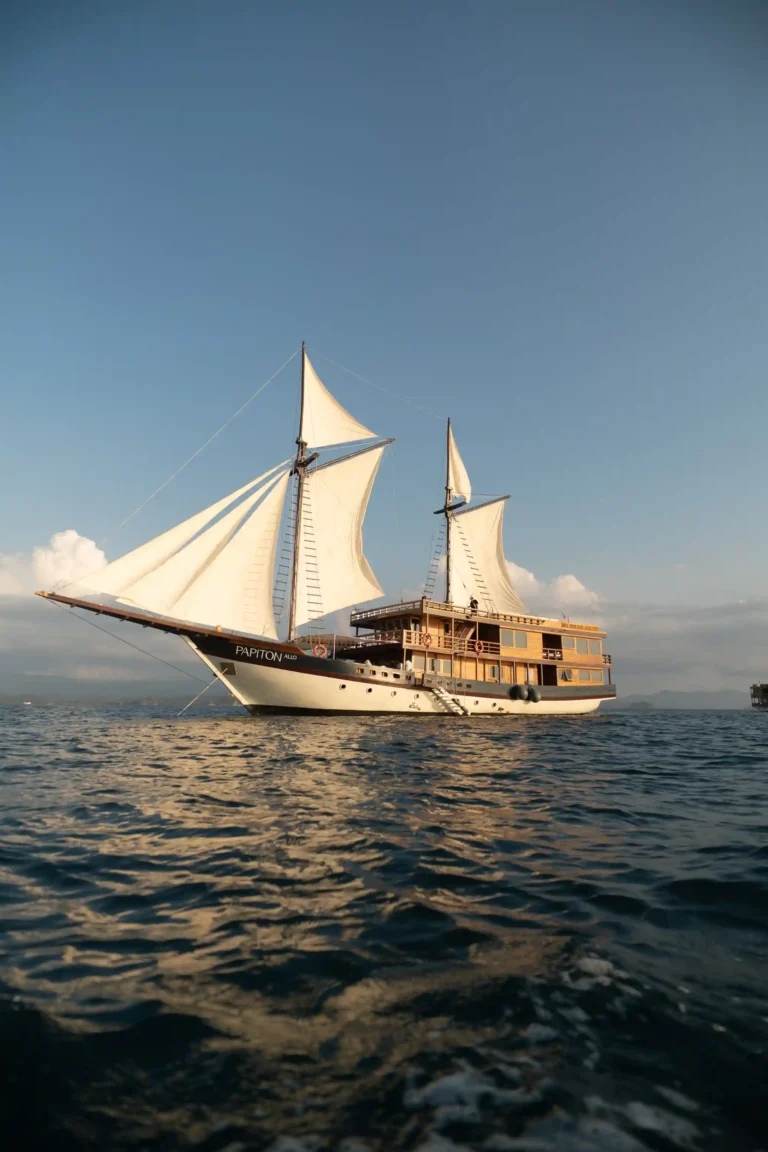
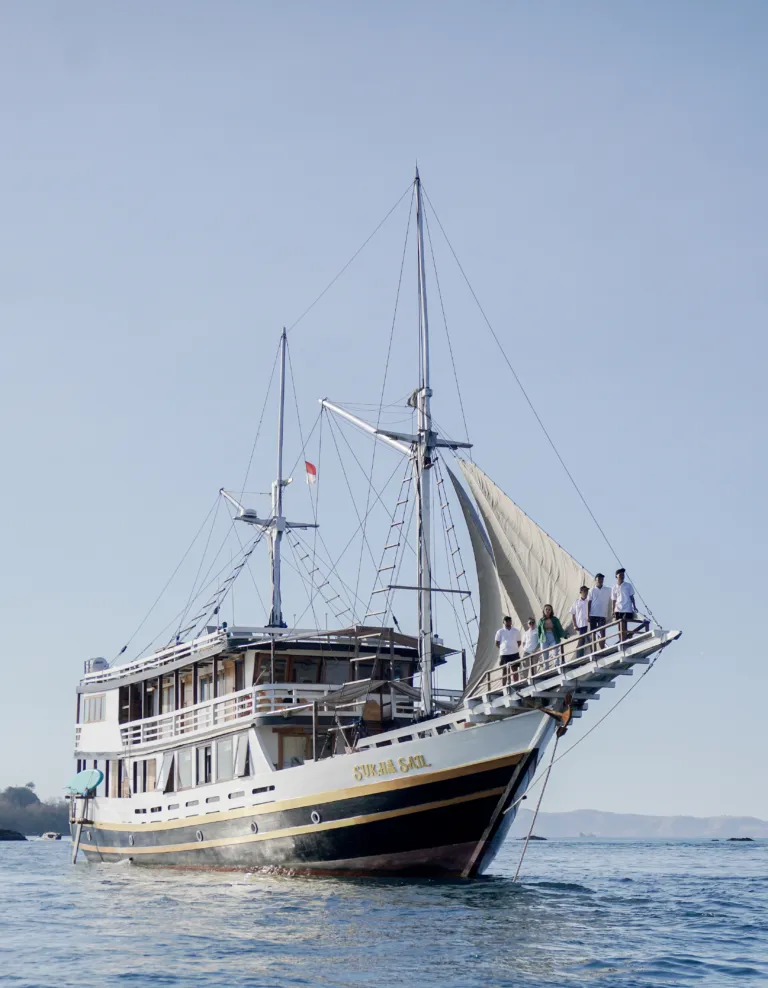
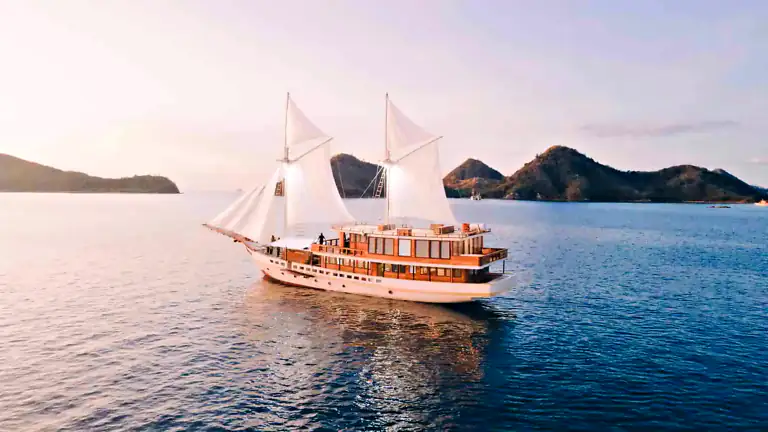
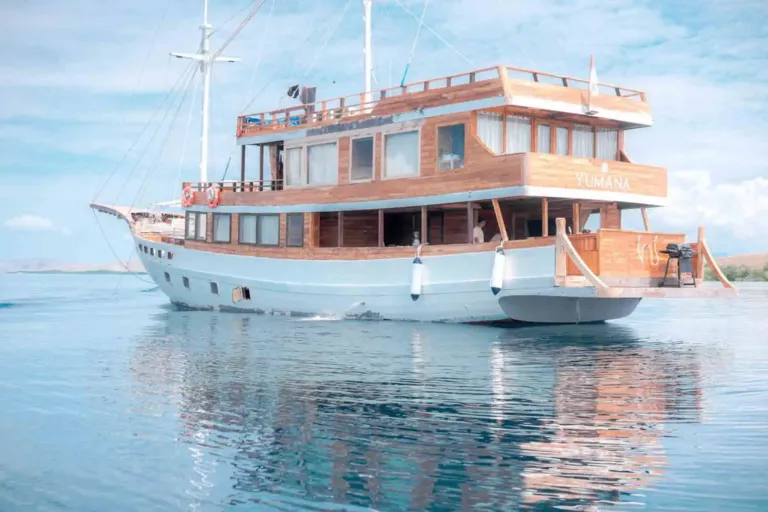
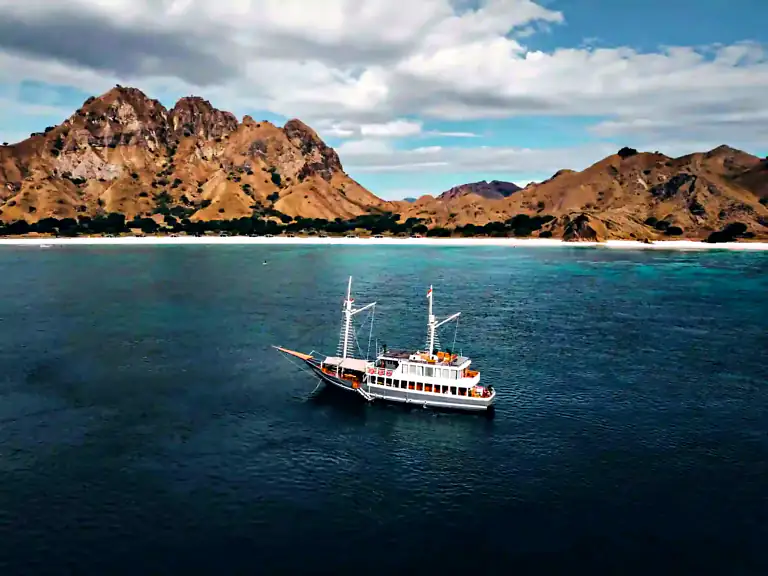
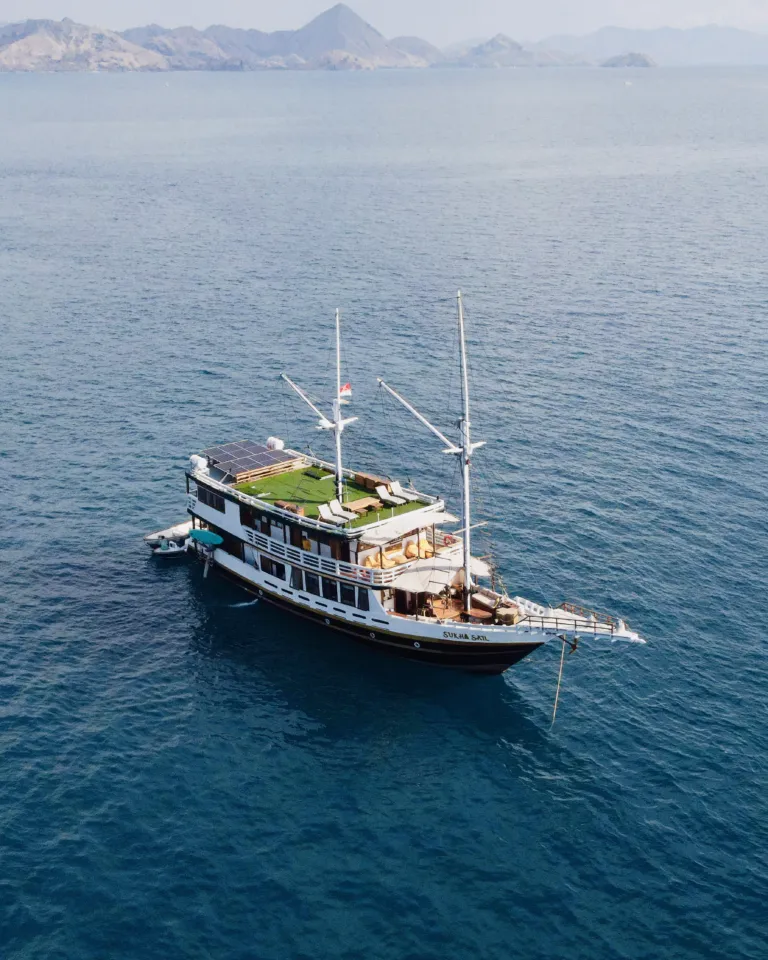
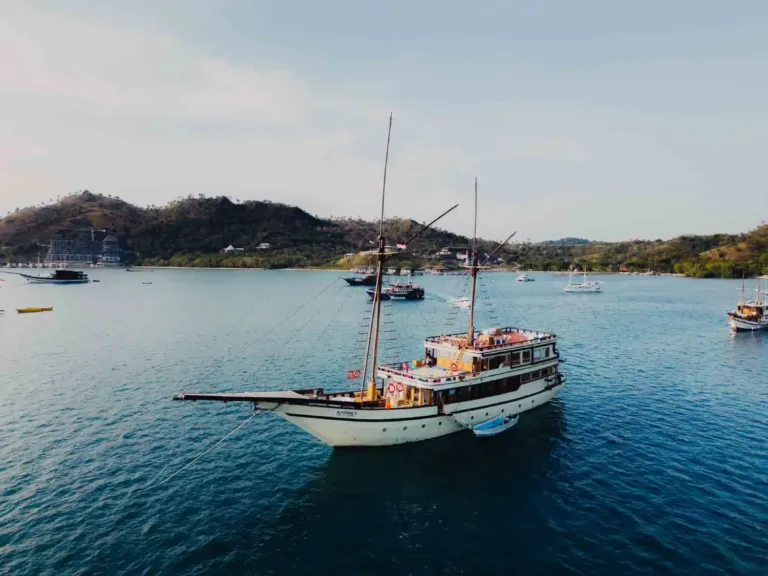
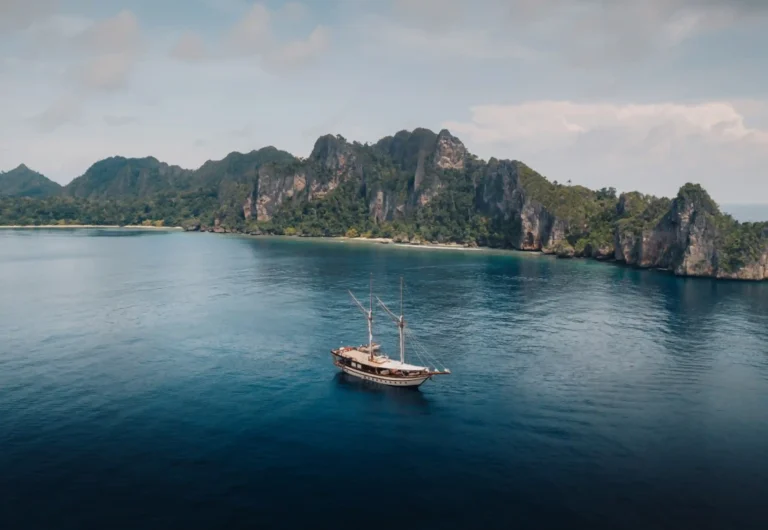
Every liveaboard on this site is a phinisi, the traditional wooden sailing boat of Indonesia. Read our guide to what a phinisi is for its history. The boats range from about 22 to 40 metres in length, with 3 to 12 cabins, and take from 10 to 40 guests, so a trip can feel like a small house party or a small hotel at sea.
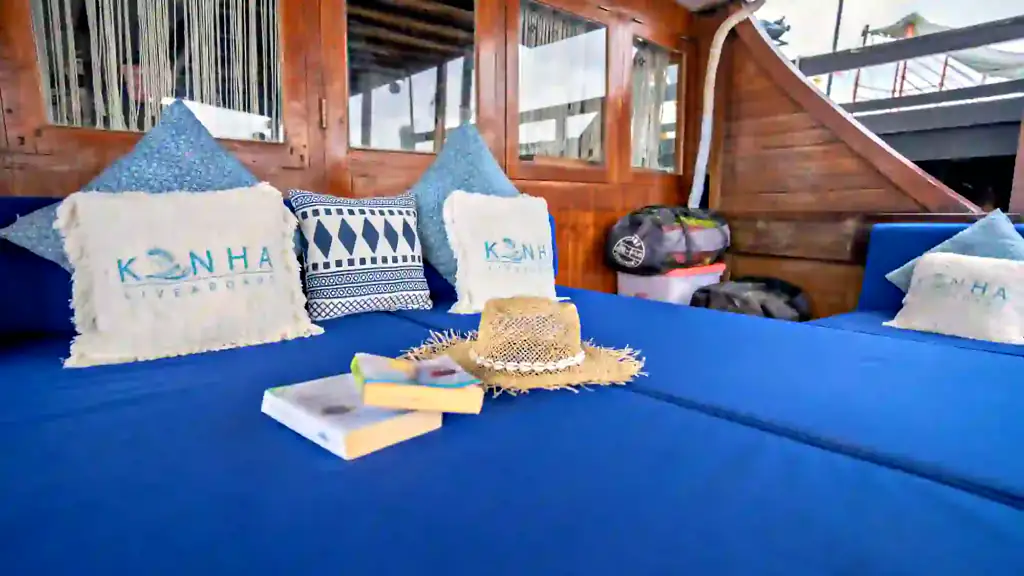
Most boats follow a similar layout. The cabins sit on the lower and main decks, there is a dining area and a lounge, and the top deck is an open sun deck with cushions and shade. A small boat called a tender carries guests between the liveaboard and the beaches, the reefs and the jetties, because the big boat anchors offshore.
Some stops have a jetty, where you step straight onto land. At others the tender runs up to the beach, and you hop off into shallow water, so keep your phone in a dry bag and wear sandals or water shoes. The crew helps everyone on and off, and it quickly becomes routine.

Cabins and bathrooms on a liveaboard
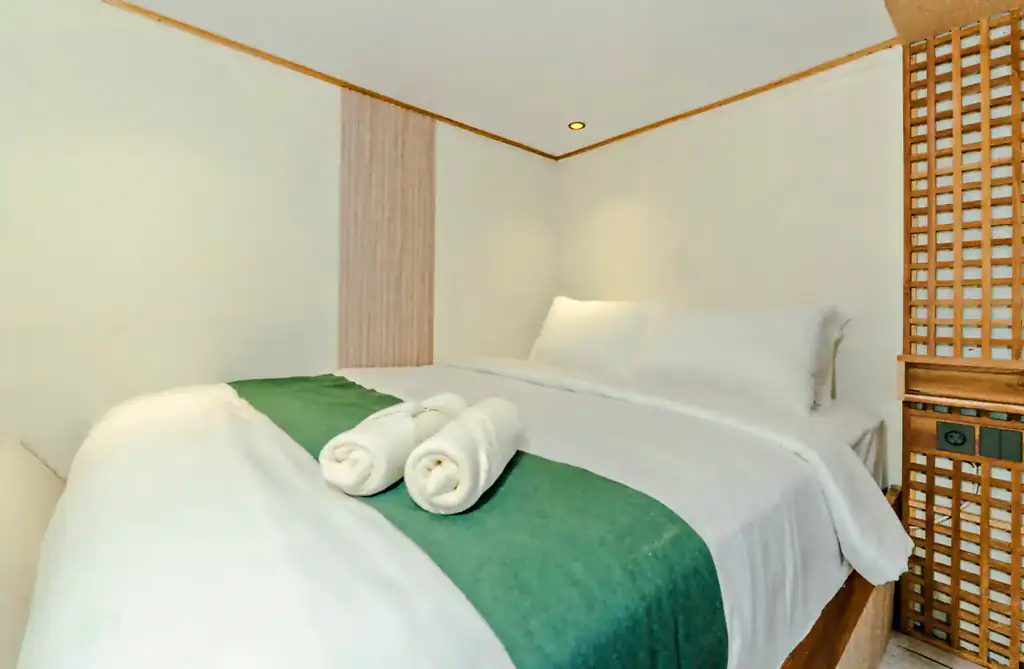
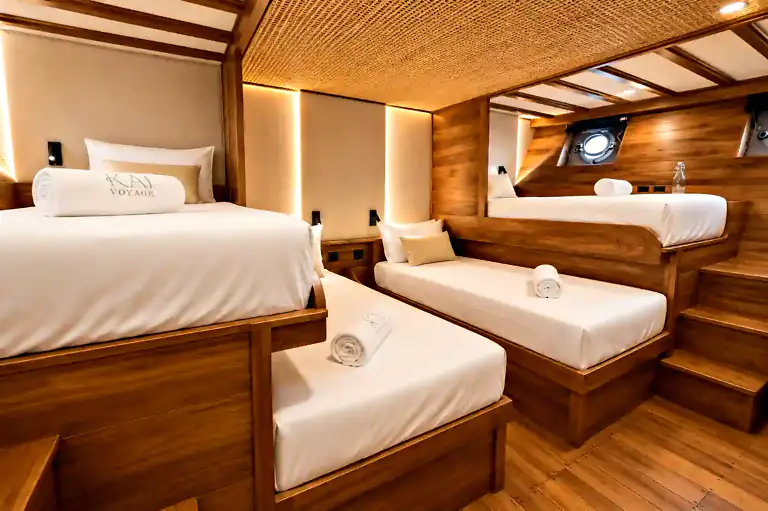
Cabin names differ from boat to boat: master, deluxe, superior, standard, family, twin or single. The name tells you less than the details, so compare the bed, the size, how many guests the cabin takes and the deck it is on. Almost every cabin on the boats on this site has its own bathroom, and every boat lists air conditioning.
A few boats also have shared cabins, booked per person, which keep the cost down for solo travellers. Cabins marked “Solo OK” can be booked by one guest, and many cabins take a third guest on an extra bed at a lower price. Each boat page has a deck plan and photos of every cabin, so you can see exactly where you will sleep.
Remember that a cabin on a boat is smaller than a hotel room, even on the largest liveaboard. Most of your waking hours are spent on deck, on the beaches and in the water, so for a short trip the cabin matters less than you might think.
Who is on board: the crew
A liveaboard comes with its own crew, and the facts at the top of each boat page show how many people work on board. The captain sails the boat and decides the route with the weather and the tides, the deckhands handle the anchor and the tender, and the cook prepares every meal in the galley. A guide briefs you before each stop and leads the snorkelling.
Part of the charm of a liveaboard is how quickly the crew becomes familiar. By the second day they know how you take your coffee and who wants to be first in the water. On land, the walk to see the Komodo dragons is led by park rangers, not by the crew, because every visit to the dragons must be.
Food and drinks on a liveaboard
On most boats the price includes three meals a day, drinking water, coffee and tea, and on most boats there is an afternoon snack as well. Meals are usually served at a shared table, on deck or in the dining room, and the food is cooked fresh on board. Fruit, rice, noodles, vegetables and fish are common, and many cooks mix Indonesian dishes with simpler international ones.
Mealtimes follow the stops rather than the clock. Breakfast often comes after an early walk or swim, lunch is served while the boat moves between two stops, and dinner is eaten at anchor as it gets dark. Bring a reusable bottle, because drinking water is always available to refill it.
Alcoholic drinks are not included and are paid separately. If you have a food allergy or a special diet, tell us when you book, so the crew can plan for it before the trip begins.

A typical day on a Komodo liveaboard
Days on a liveaboard follow the light. On the most common trip of 3 days and 2 nights, the crew picks you up in Labuan Bajo between about 8:00 and 10:00, and the first afternoon brings a short climb on Kelor, a first snorkel at Manjarite and the flying foxes of Kalong Island at dusk.
The second day is the longest. It starts before sunrise with the climb up Padar, then breakfast on board, a swim at Pink Beach and the walk with the rangers on Komodo Island. In the afternoon come Taka Makassar, a sandbar that appears at low tide, and Manta Point, where manta rays often feed in the current. On the third morning there is one last snorkel before the boat is back in town around midday.
Between the stops, you read, nap, watch the islands go by or chat with the other guests on the sun deck. The captain can change the order for the tides, the weather or the rules of the park, and each boat page shows its own itinerary. Our page on the 3 days and 2 nights trip describes it day by day.
Sharing trip or private charter
There are two ways to book a liveaboard in Komodo. On a sharing trip, you book one or more cabins on a scheduled departure, pay per person and share the boat with other travellers. It is the simplest choice for couples, friends and solo travellers, and most sharing trips last 3 days and 2 nights.
On a private charter, your group has the whole boat and crew. You choose the dates, the price is per boat, and the route can be adjusted with the operator. For a family or a group that would fill most of the cabins anyway, a charter can cost less per person than separate cabins, so it is worth comparing both.
Certified divers have a third option: a diving charter, which is a private charter planned around the dives. Tell us your certification level and how many dives you would like, and we match your group with a suitable boat and operator.
Is a liveaboard right for you?
Most people who try a liveaboard love it, but it suits some travellers better than others. A liveaboard is a good fit if you:
- enjoy the sea, swimming and snorkelling, and do not mind getting wet several times a day;
- like early starts, because the best light and the coolest hours come at dawn;
- are happy to share meals and deck space with other guests on a sharing trip;
- can enjoy a few days with little or no phone signal.
It may be less suited to you if you are very prone to seasickness, need a lot of private space or dislike early mornings. Even then, a short trip in the calmer months, a larger boat or a private charter at your own pace can make a big difference.
10 tips for your first liveaboard
- Arrive the day before. Fly into Labuan Bajo the day before the trip, so a late flight does not make you miss the boat.
- Pack light, in a soft bag. Storage in a cabin is limited, and a soft bag fits where a hard suitcase does not.
- Bring something for seasickness if you are prone to it, and take it before the longer crossings.
- Tell us about your diet. Allergies and special diets are easier to plan before the trip than on board.
- Read the boat page. It lists what is included, the cabins, the facilities and the itinerary.
- Carry some cash. Tips for the crew and drinks are not included, and there are ATMs in Labuan Bajo.
- Bring a power bank. Charging points on a boat are shared, and you will take a lot of photos.
- Expect to be offline. Even on boats with Wi-Fi, the signal can drop in the remote parts of the park.
- Listen to the briefings. The guide explains every stop, the current and the rules before you go in.
- Respect the shared spaces. Keep the deck tidy and keep the noise down at night, so everyone sleeps well.
For everything to bring, see our Komodo packing list.
Safety on a liveaboard
Life jackets are on board, and the crew explains where they are and how the day works at the start of the trip. Before each snorkel, the guide picks the spot and the time with the tide and tells you about the current, and the tender stays close to the swimmers. If you are not a confident swimmer, wear a life jacket in the water, and nobody will think twice about it.
The weather has the final word at sea. In strong winds, the harbour authority in Labuan Bajo can close sailing to parts of the park for a few days, and the captain then changes the route. If a boat cannot sail at all because of bad weather or government rules, the booking terms let you reschedule or take a partial refund.

How long a liveaboard trip lasts and what it costs
Most sharing trips in Komodo last 3 days and 2 nights, enough for the famous stops. Longer trips of 4 days and 3 nights add time at each stop, and boats that sail between Lombok and Labuan Bajo take 4 days and 3 nights, or 5 days and 4 nights on some return routes.
On a sharing trip the price is per person and depends on the boat and the cabin; on a private charter it is per boat. On most boats the price includes the cabin, the meals, drinking water, coffee and tea, the snorkelling equipment, the guide, the stops and the transfers in Labuan Bajo. Flights, hotels, insurance, alcoholic drinks and tips are paid separately.
The Komodo National Park entrance fee is added to your invoice, IDR 650.000 for foreign guests on most boats. See our guides to Komodo liveaboard prices and park fees for the details.
For a sharing trip you pay a 50% deposit within 72 hours of receiving the invoice and the balance at least 60 days before the trip, or the full amount at once if you book less than 60 days ahead. Our guide on how to book a Komodo liveaboard walks through each step.
A Komodo liveaboard at a glance
| Komodo liveaboard | |
|---|---|
| What it is | A boat with cabins, a crew and a kitchen that you live on for a few days |
| Boats | Wooden phinisi of about 22 to 40 metres, with 3 to 12 cabins |
| Typical trip | 3 days and 2 nights from Labuan Bajo |
| Included on most boats | Cabin, meals, water, coffee and tea, snorkelling gear, guide, transfers |
| Not included | Flights, hotels, insurance, alcoholic drinks, tips, park fee (on your invoice) |
| Ways to book | A cabin on a sharing trip, or the whole boat as a private charter |
| Best time | The dry season, from April to November |
Our view
A liveaboard is the most relaxed way to see a place like Komodo. You unpack once, the boat does the travelling, and the famous stops come at their best hours, from sunrise on Padar to the flying foxes at dusk. Komodo National Park has been a UNESCO World Heritage Site since 1991, and seeing it from the water, at anchor among its islands, is a fitting way to experience it.
You go to sleep in one bay and wake up in another, with nothing to pack and nowhere else you need to be.
Ready to choose? Read how to choose a Komodo liveaboard, or browse the sharing trips with live cabin availability.
Questions
Is a liveaboard only for divers?
No. In Komodo most guests snorkel, swim and walk on the islands, and the snorkelling equipment is included on most boats. Certified divers can book a diving charter, which is planned around the dives.
Do I need to be able to swim?
Not to enjoy the trip. You can stay on board or on the beach during the snorkelling stops, and if you want to try, a life jacket keeps you afloat while you look at the reef.
Will I get seasick?
Most guests feel fine, because the boat spends much of the time at anchor in sheltered bays. If you are prone to seasickness, travel in the dry season, take something before the longer crossings and stay on deck in the fresh air.
Can I go on a liveaboard alone?
Yes. Look for cabins marked “Solo OK” or a bed in a shared cabin on a sharing trip, so you pay for one person and meet other travellers on board.
Do I share a bathroom?
Usually not. Almost every cabin on the boats on this site has its own bathroom. Each boat page shows the details of every cabin.
Is there Wi-Fi on board?
Many boats list Wi-Fi, a few of them with Starlink, but the signal can still drop in the remote parts of the park. Plan to be offline for part of the trip.
What happens if the weather is bad?
The captain changes the route to keep you safe. If the boat cannot sail at all because of bad weather or government rules, you can reschedule or take a partial refund under the booking terms.
How far ahead should I book?
For July and August, the busiest months, book as early as you can. In the other months, a few weeks ahead is often enough, and the boat pages show which departures still have free cabins.
Can children come on a liveaboard?
Yes, and many families travel this way. Children under 2 do not pay the park fee, and some boats have family cabins with extra beds.
 Elbark Cruise
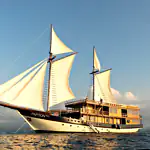 Papiton Allo
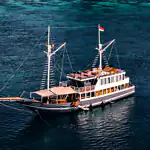 Semesta Voyages
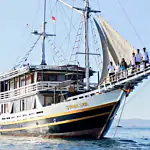 Sukha Sail 1