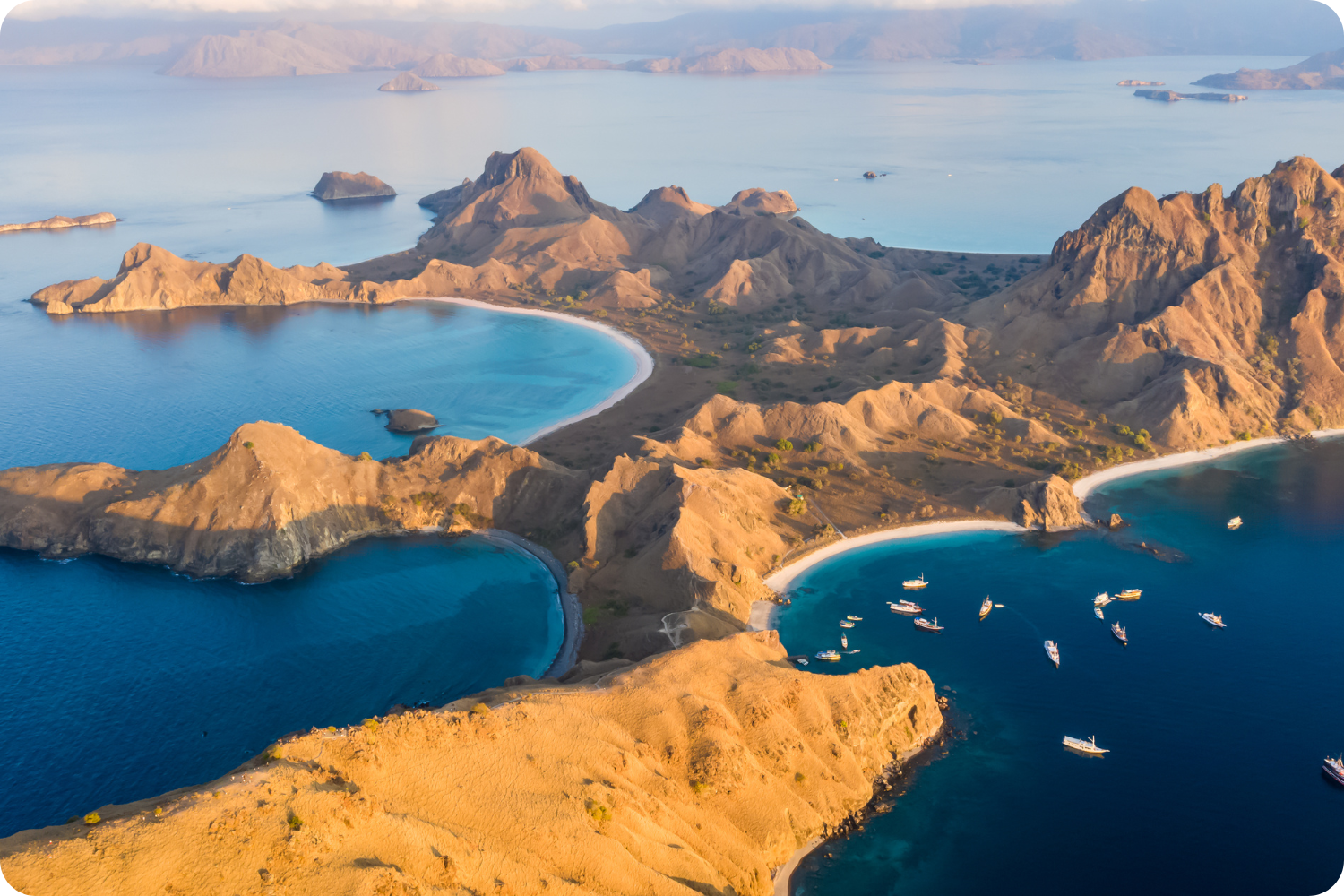
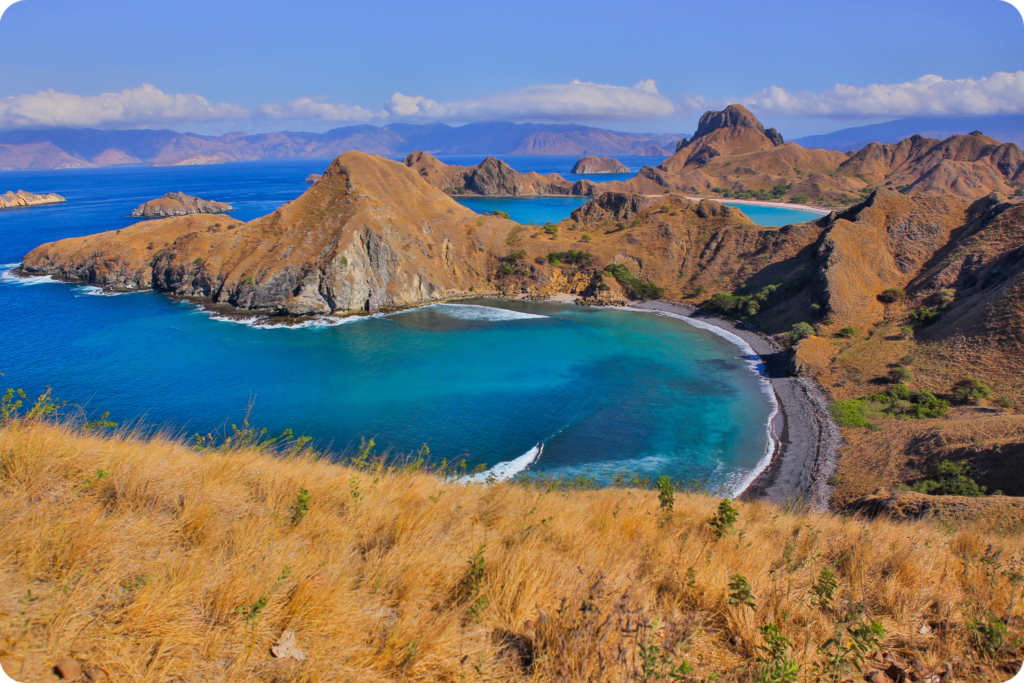
Padar Island is the view that sums up Komodo: a ridge of golden hills between curved bays, each with sand of a different colour, and blue water all around. It is on the itinerary of every Komodo liveaboard on this site, and for many guests the climb to the top is the highlight of the trip. This guide explains where Padar is, how the hike works, when to go, what the new visitor rules of 2026 mean for you, and how to make the most of the climb on a boat trip.
In short
- Padar is one of the three large islands of Komodo National Park, between Komodo and Rinca, famous for its view over three bays.
- The climb on Padar is short but steep: most people reach the main viewpoint in 20 to 45 minutes.
- Since April 2026 the park allows 1,000 visitors a day, in sessions, with tickets booked through its SiOra system.
- Liveaboards usually climb at sunrise, when the air is cooler and the light is soft.
Where is Padar Island?
Padar lies in the middle of Komodo National Park, between Komodo Island to the west and Rinca to the east, in the Indonesian province of East Nusa Tenggara. Together with Komodo and Rinca, it is one of the three large islands of the park, which has been a UNESCO World Heritage Site since 1991.
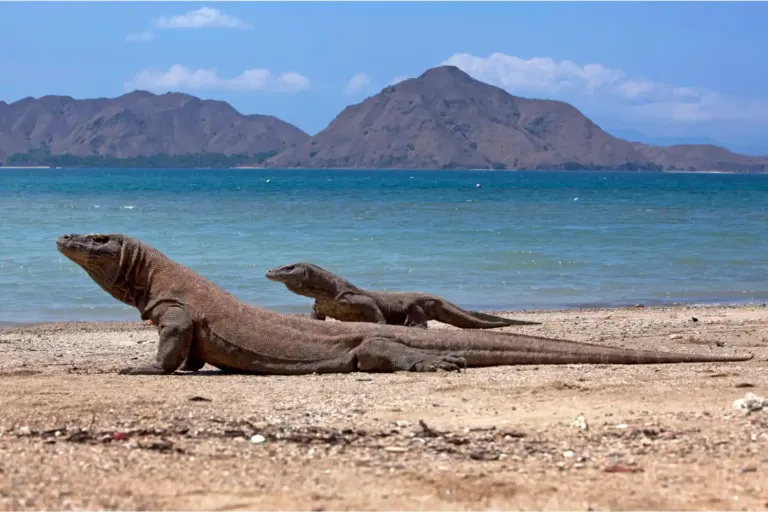
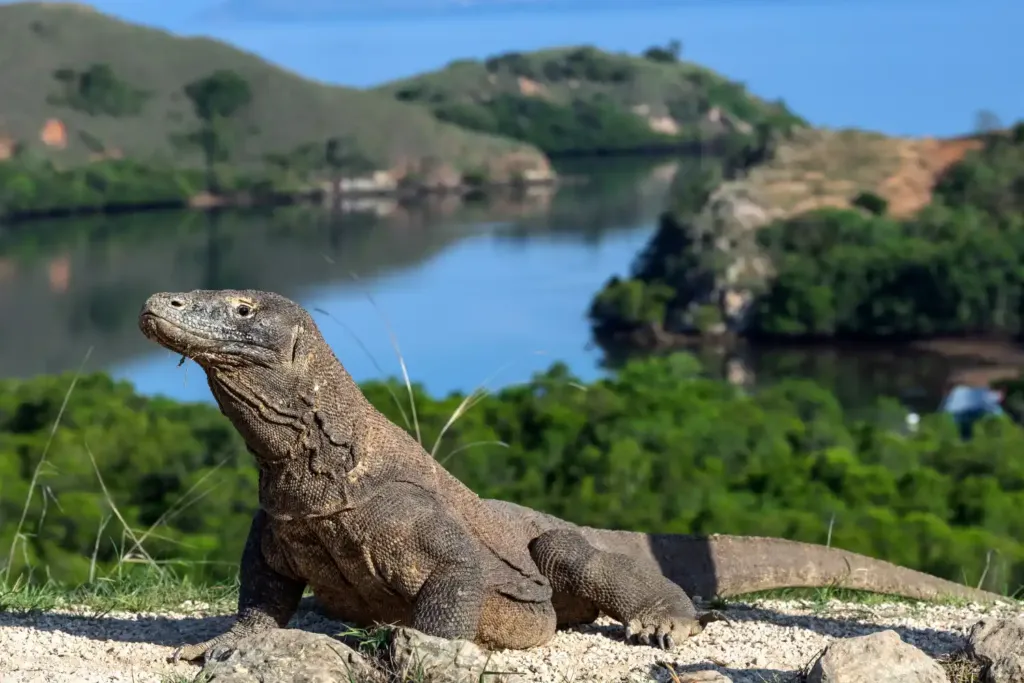
Padar is all steep hills, savanna grass and rocky headlands, with deep bays cutting into its coast. There are no Komodo dragons on Padar today, so people come for the views and the beaches. The dragons are a short sail away on Komodo or Rinca, and most itineraries visit both on the same day.
Almost every trip starts in Labuan Bajo, the harbour town on the western tip of Flores. From town it is a long boat ride, so liveaboards usually spend the night at anchor inside the park and reach Padar in time for the sunrise. If you are still planning the journey to Labuan Bajo, read our guide on how to get from Bali to Komodo.
The view: three bays and three colours of sand
The famous view of Padar opens up from the viewpoints along the ridge. Below you, the land narrows into thin necks between three bays, each with a beach of a different colour: white, a dark grey that looks almost black, and a soft pink. Around them, the hills drop steeply into the sea, and on a clear day the islands of the park spread out to the horizon.
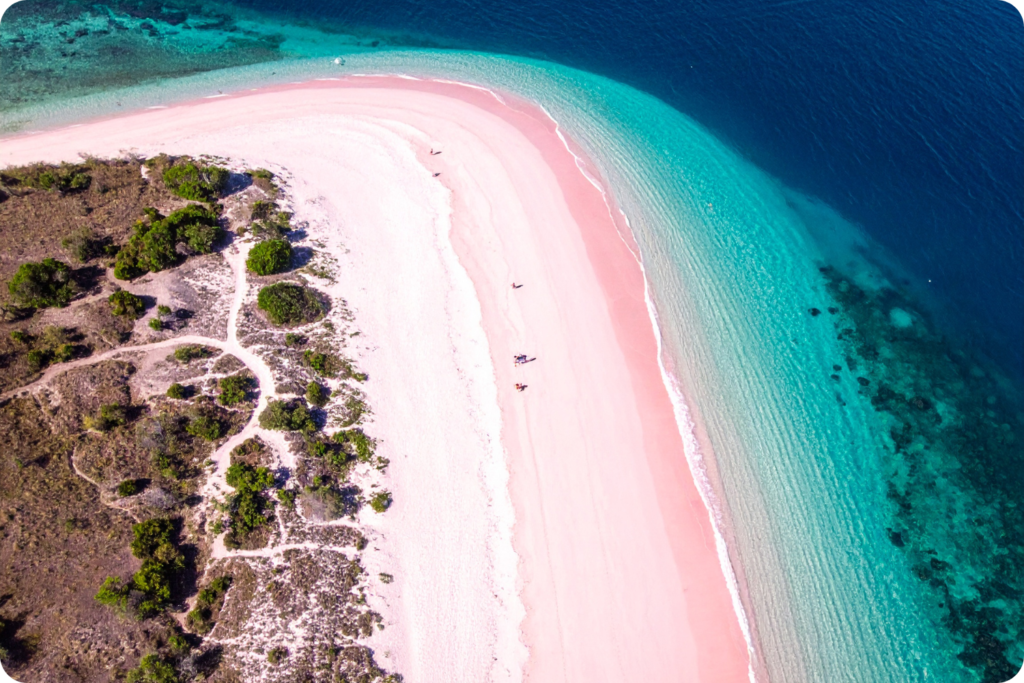
The pink sand gets its colour from tiny red organisms that live on the reef, mixed into the white sand. It is the same thing that colours the Pink Beach that many boats visit after the climb, and it is one reason why visitors are asked to leave the sand where it is.
The colour of the hills changes with the seasons. After the rains they are green, and in the dry season the grass turns golden brown, which is the look of most classic photos of Padar Island. Both are beautiful in their own way.
The Padar Island hike, step by step
The walk on Padar starts at the jetty, where the park staff check the tickets. From there, a trail of stone and wooden steps climbs the slope, with steeper stretches of dusty path in between. There is little shade on the way, so the early morning and the late afternoon are the most pleasant times to climb.
Most people reach the main viewpoint in 20 to 45 minutes, depending on their pace and how often they stop for photos. The trail passes several viewpoints on the way up, and the view gets wider with each one, so you can turn back at any point and still see the bays. The way down is quicker, but take care on the steps, where the dust can be slippery.
How hard is the climb on Padar?
The climb is short but steep, and most guests with an average level of fitness manage it at their own pace. If you can walk up several flights of stairs, you can climb Padar: take breaks, drink water and let faster walkers pass. Children who are used to walking usually do well, with a hand to hold on the steep sections.
If the heat or your knees trouble you, there is no need to reach the top. The first viewpoints already show the bays, and many guests enjoy the view from there while the others climb on.
Sunrise or sunset on Padar?
On most boats on this site, the climb comes early on the second morning, before breakfast. The wake-up call is before dawn, on some boats as early as 4 am, and the tender takes you to the jetty while it is still dark. You climb by torchlight and reach the viewpoint as the first light touches the bays.
A few itineraries climb Padar in the late afternoon instead, for the sunset. Each boat page shows its itinerary day by day, so you can see when your boat plans the climb.
- Sunrise: cooler air, soft light and fewer people, as the day trip boats from Labuan Bajo usually arrive later in the morning.
- Sunset: warm colours over the bays and no early alarm, but the climb is warmer and the way down is in the dusk.
Either way, the crew plans the time, so all you need to do is be ready with your shoes on.
Visitor quota and rules on Padar
Padar has become one of the busiest places in the park, and since 1 April 2026 the Komodo National Park authority has limited visits to 1,000 people a day. The visits are split into sessions through the day, and tickets are booked online through the reservation system of the park, called SiOra.
The quota started as a trial, and the details may still change. The park has asked tour operators to make sure that every visitor they bring has a ticket, and not to bring visitors when the quota is full. If you book a liveaboard with us, the climb is part of the itinerary and the park entrance fee is added to your invoice, as our park fees guide explains. If you plan a day trip on your own, check that your operator has tickets for your session.
On Padar, a few simple rules keep the hills and the beaches beautiful:
- Stay on the trail and the steps. The slopes are steep, and the soil erodes easily.
- Take all your rubbish back to the boat, including bottles and wrappers.
- Leave the sand, shells and plants where they are, including the pink sand on the beaches.
- Follow the instructions of the park staff and your guide.
The best time of year to visit Padar
The dry season, from April to November, is the most popular time for Padar, with clear skies, dry trails and generally calmer seas. July and August are the busiest months in the park, so book your trip early, especially now that the number of visitors is limited.
The landscape depends on the month. Come between March and June for green hills after the rain, or between September and November for the golden brown grass of the classic photos. In the wet season, from December to March, there is more rain, the seas change more often and fewer boats sail. Our guide to the best time for a Komodo liveaboard explains each season.
Even in the dry season, strong winds can raise big waves in the straits around Padar. In August and September 2026, the harbour authority in Labuan Bajo closed sailing to Padar and Komodo for a few days because of high waves, while trips to Rinca were still allowed. On days like these, the captain changes the route, and your safety always comes first.
9 tips for the Padar Island hike
These tips make the climb on Padar Island easier and more enjoyable, whatever your level of fitness.
- Wear closed shoes with a good grip. Trainers or light walking shoes are ideal, while flip-flops slip on the dusty steps.
- Carry water. Even at sunrise you will be thirsty at the top, so take a bottle from the boat.
- Bring a torch for a sunrise climb. A headlamp keeps your hands free on the steps in the dark.
- Protect yourself from the sun. A hat, sunglasses and a mineral sunscreen make the way down much more pleasant.
- Dress in light layers. The tender ride before dawn can be cool, and you warm up quickly on the climb.
- Pack light. A small backpack keeps your hands free for the steeper parts.
- Go at your own pace. Use the viewpoints along the way as rest stops; there is no prize for reaching the top first.
- Stay on the trail. It protects the hills and keeps you away from the loose ground at the edges.
- Stop and look. Sit down for a few minutes before you take your photos, and watch the light change on the bays.
For a complete list of what to bring on the trip, see our Komodo packing list.
Photographing Padar
The view is wide, so use the wide lens of your phone or camera, or the panorama mode, to fit all the bays into one frame. The light is best in the first hour after sunrise and in the late afternoon, when the shadows bring out the shape of the hills. A person standing on the ridge, small against the landscape, gives the photo a sense of scale.
The most popular viewpoints on Padar get busy at sunrise, so be patient and take turns. Never step off the trail for a better angle: the edges are steep and the ground is loose. Dust is the main enemy of cameras here, so keep a soft cloth for your lens and put your phone away between shots. If you want to fly a drone, check the current rules of the park before your trip.
After the climb: Pink Beach and the dragons
On most itineraries on this site, breakfast is served on board after the climb, and the boat sails on to Pink Beach. The shallow reef just off the beach is one of the easier snorkelling spots of the trip. Please leave the sand where it is: the colour is part of the park.
The next stop is often Komodo Island, where park rangers lead the walk to see the Komodo dragons in the wild. Later in the day, many boats stop at Taka Makassar, a sandbar that appears at low tide, and at Manta Point, where manta rays come to feed in the current, although sightings are never guaranteed.
Read our guides to Komodo dragons and to what you will see on a Komodo liveaboard for more about each stop.
Kelor: the warm-up climb near Labuan Bajo
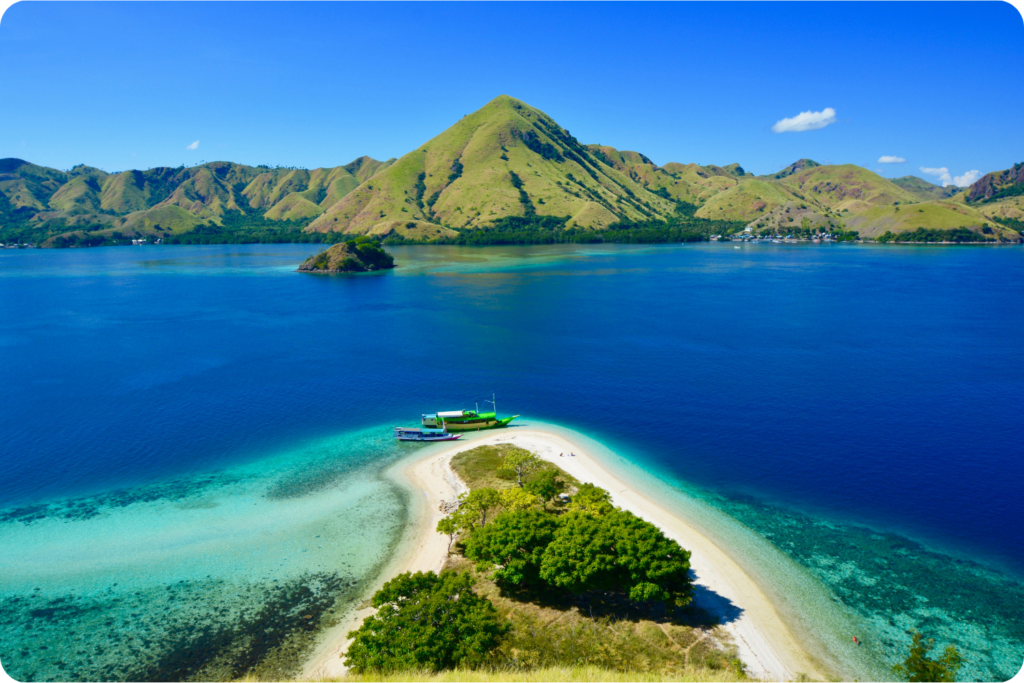
Many trips from Labuan Bajo begin with Kelor Island, a small island close to town with a short and steep climb to a wide view of the bay. It usually comes on the first day, the day before Padar, which makes it a good warm-up: the climb is shorter, and it shows you how your legs and your shoes cope with a steep and dusty path.
From the top, you look down on the white sand of Kelor and the boats at anchor, with the islands all around you. After Kelor, many boats stop at Manjarite, a calm reef for a first snorkel, and end the day at Kalong Island, where thousands of flying foxes leave the mangroves at dusk.
Padar on a liveaboard or a day trip
You can visit Padar on a day trip by speedboat from Labuan Bajo, which leaves early and packs the climb, the dragons, Pink Beach and Manta Point into one long day. The ride is long, so most day trip groups reach the top after sunrise, when the sun is already high and the trail is busier.
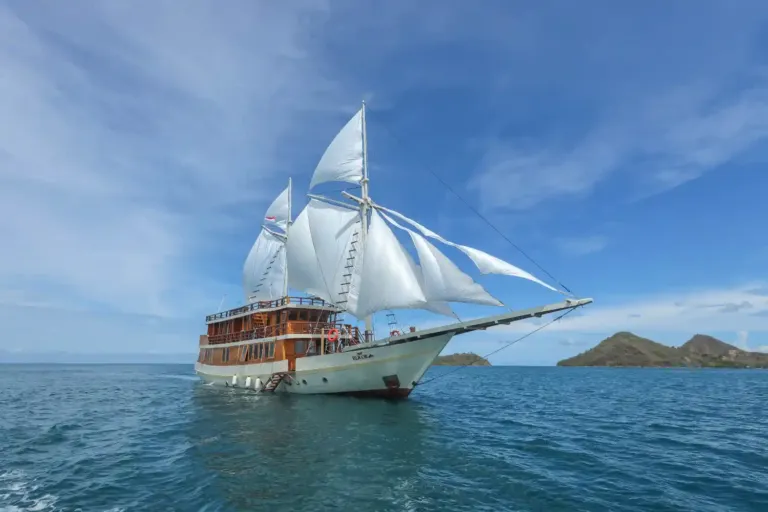
On a liveaboard, you sleep on board inside the park, so the boat can be at Padar for the first light and at each stop at the best hour. A trip of 3 days and 2 nights covers Padar, Pink Beach, the dragons and Manta Point at an easy pace, with the nights at anchor between the islands. Our comparison of a Komodo liveaboard and a day trip sets out the differences in detail.
Padar on the Lombok route
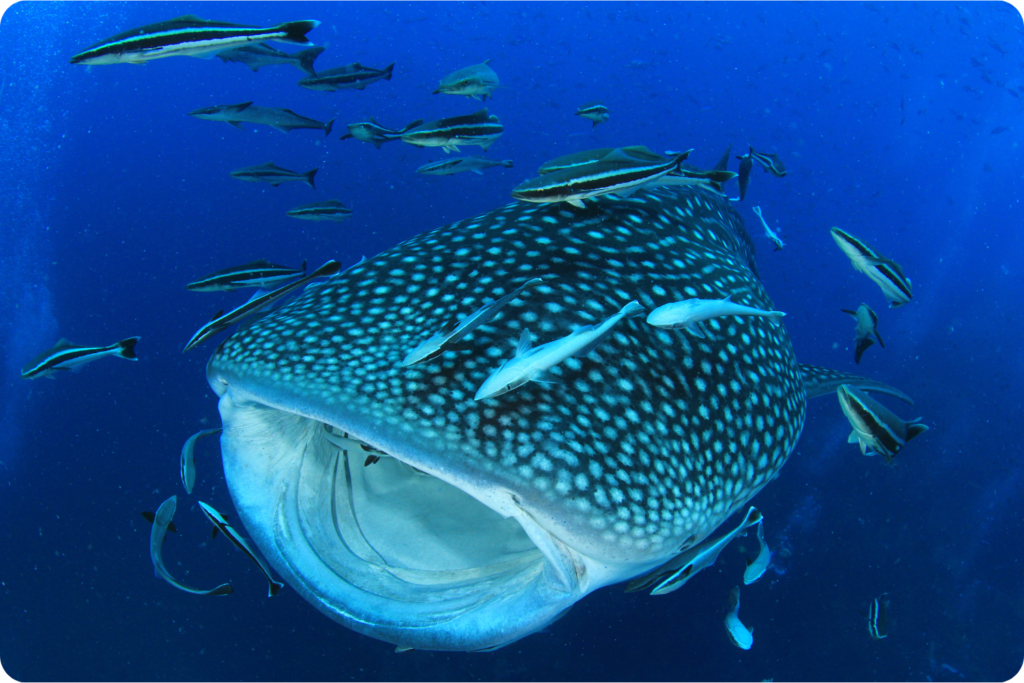
Boats that sail between Lombok and Labuan Bajo also stop at Padar, for the sunrise or the sunset. Before or after the park, they follow the coast of Sumbawa, with stops such as Kenawa Island and Saleh Bay, where the boats look for whale sharks early in the morning. Sightings are never guaranteed, but on a lucky day they are one of the great moments of the route.
Padar Island at a glance
| Padar Island | |
|---|---|
| Where | Komodo National Park, between Komodo and Rinca |
| Known for | The view over three bays with white, dark and pink sand |
| The climb | Steps and a steep path, 20 to 45 minutes to the main viewpoint |
| Best light | Sunrise and late afternoon |
| Komodo dragons | None today; see them on Komodo or Rinca |
| Visitor limit | 1,000 people a day since April 2026, in sessions |
| Tickets | Booked through the SiOra system of the park |
| What to wear | Closed shoes, light clothes and a hat |
Our view
Padar is worth the early alarm. The climb is short, the view is one of the finest in Indonesia, and watching the first light reach the three bays of Padar is a moment most guests never forget. Go early, wear good shoes, take your time on the steps, and leave the island as you found it.
From the top, the whole park lies at your feet: three bays, three colours of sand, and the morning light moving slowly over the hills.
Ready to go? Every Komodo liveaboard on this site has Padar on its itinerary. Browse the sharing trips with live cabin availability, or plan a private charter around your own dates.
Questions
How long does the Padar Island hike take?
Most people reach the main viewpoint in 20 to 45 minutes, and the way down is a little quicker. Allow extra time for photos and a rest at the top.
Is the climb on Padar difficult?
It is short but steep, on steps and a dusty path. Most guests manage it at their own pace, and the viewpoints along the way make good places to rest.
Are there Komodo dragons on Padar?
No. Padar has no dragons today. You see them on Komodo or Rinca, often on the same day as the climb.
Do I need a ticket for Padar?
Yes. Since April 2026, visits are limited to 1,000 people a day, in sessions booked through the SiOra system of the park. On a liveaboard booked with us, the park entrance fee is added to your invoice.
Can Padar be closed?
Sometimes. In bad weather, the harbour authority in Labuan Bajo can close sailing to Padar, as it did for a few days in August and September 2026. The captain then changes the route for your safety.
Can children do the climb?
Yes, children who are used to walking usually manage well. Keep them close on the steep sections, and bring extra water.
What should I wear?
Closed shoes with a good grip, light clothes, a hat and sunglasses. Add a light layer for a sunrise climb, as the boat ride before dawn can be cool.
Is sunrise or sunset better?
Most guests prefer sunrise, for the cooler air, the soft light and the quieter trail. Sunset brings warm colours, but the climb is warmer.
Can I visit Padar on a day trip?
Yes, speedboats from Labuan Bajo include Padar on their day trips. Most reach the top after sunrise, when it is hotter and busier than on an early climb from a liveaboard.
When is the best time of year to go?
The dry season, from April to November. Choose March to June for green hills, or September to November for the golden grass of the classic photos.
Can I fly a drone?
Drones are subject to the rules of the national park, which can change, so check the current rules before your trip, and keep clear of other visitors at the viewpoints.