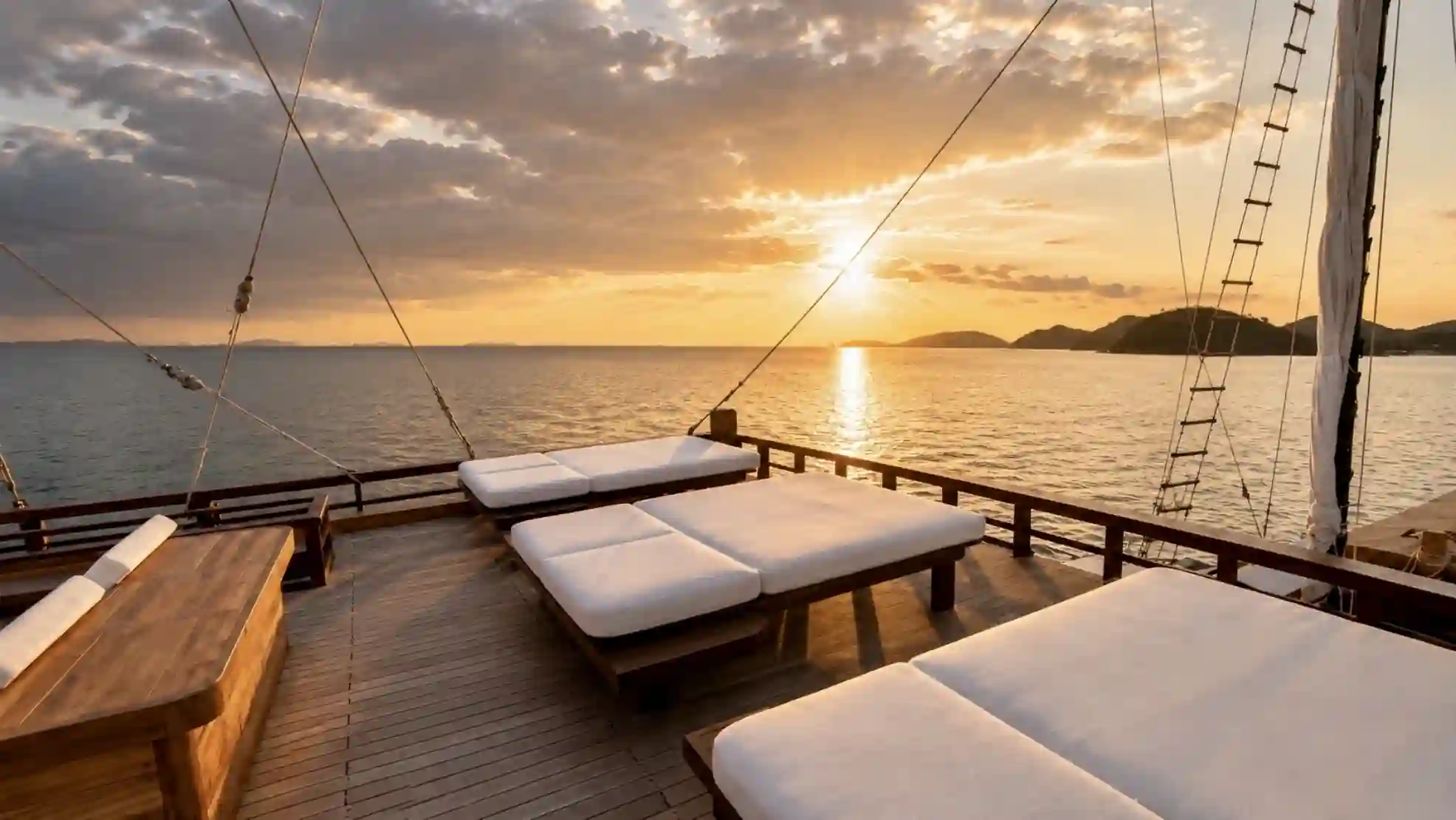
Sleeping on deck is one of the simplest pleasures of a Komodo liveaboard: a soft cushion under your back, the warm night air, the boat rocking gently at anchor and more stars above you than most of us ever see at home. Every boat on this site has air-conditioned cabins, so a night outside is a choice, not a necessity, but it is a choice many guests remember long after the trip. This guide explains when sleeping on deck is possible, which boats have the best decks, what the night sky looks like, what to bring and how to stay safe and comfortable until sunrise.
In short
- Every boat on this site has air-conditioned cabins, so a night on deck is an extra, not the only option.
- Ask the crew first: whether you can sleep outside depends on the boat, the weather and the anchorage.
- The dry season, from April to November, brings the clearest skies, and nights around the new moon are the darkest.
- Bring a light layer, insect repellent and a small red light, and stay away from the edges of the deck.
Can you sleep on deck on a Komodo liveaboard?
Often, yes, but it is always the crew’s call. On a sharing trip, the decks are shared spaces, and the crew decides how they are used at night. Many boats have sun decks with daybeds, sunbeds or bean bags, and on a calm, dry night the crew may be happy for you to stay out there. On other nights, a change in the wind, a passing shower or a busy anchorage can make your cabin the better choice.
The easiest way is to ask on the first afternoon, before the crew tidies the deck for the night. Say that you would like to try sleeping on deck, ask where the best spot is and whether you need to move anything, and agree on what happens if it rains. Crews on the boats on this site speak English and Indonesian, and they are used to guests who want a night under the stars.
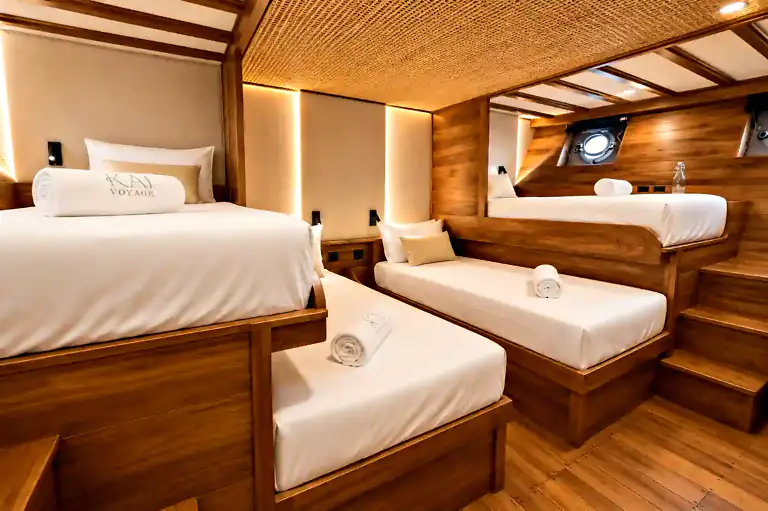
Remember that your cabin is always there. Every boat on this site has air conditioning and an ensuite bathroom, so you can start the night outside and move inside if you get cold, if the dew settles or if a shower passes over. Many guests do exactly that: a few hours of stars, then the comfort of a proper bed.
What a night on deck is like
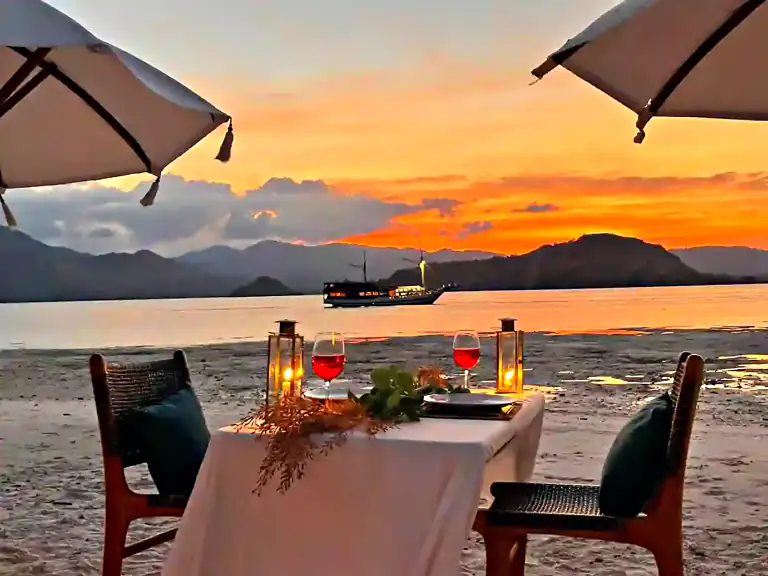
Most nights of a liveaboard trip are spent at anchor in a quiet bay, sheltered from the open sea. After dinner, the deck slowly empties as guests go to their cabins, the lights go down and the sounds of the boat take over: water against the hull, the creak of wood, the low hum of the machinery and, now and then, a bird calling from the shore.
The air stays warm for most of the night, but a breeze often picks up after midnight, and in the small hours it can feel cool after a long day in the sun. Towards dawn, dew settles on the cushions and the rails. The first light comes early in the tropics, and when you are sleeping on deck, the sunrise wakes you before any alarm, with the islands turning from black to grey to gold around you.
It is not always perfectly quiet. Other boats may share the anchorage, the crew starts preparing breakfast early, and on the morning of the Padar climb the day begins in the dark. That is part of the charm: you are not in a hotel, you are on a working wooden boat, and the night is shared with the sea, the sky and the people who sail her.
The best decks for sleeping on deck
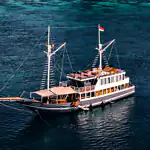
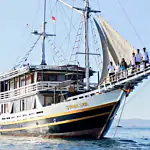
On this site, 24 boats list a sun deck among their facilities, and the decks vary a lot, from wide rooftops with sunbeds to cosy corners full of bean bags. A few examples from the boats’ own pages:
| Boat | What the deck offers |
|---|---|
| Kai Voyage | A large sun deck with sunbeds on the rooftop |
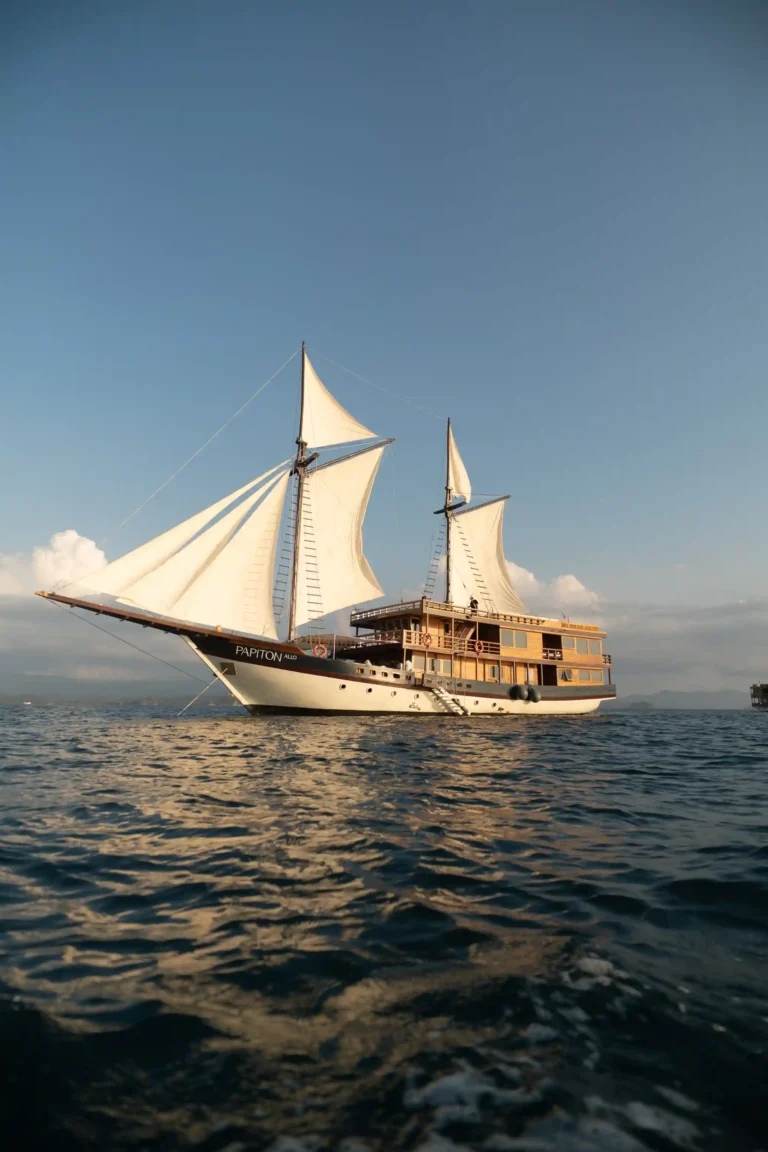
| Papiton Allo | Panoramic sun decks with daybeds and sofas |
| Le Costa | A sun deck on the roof, sofa beds on every deck and cushioned sunbeds at the bow |
| Sora | A sun deck with daybeds and lounge sofas |
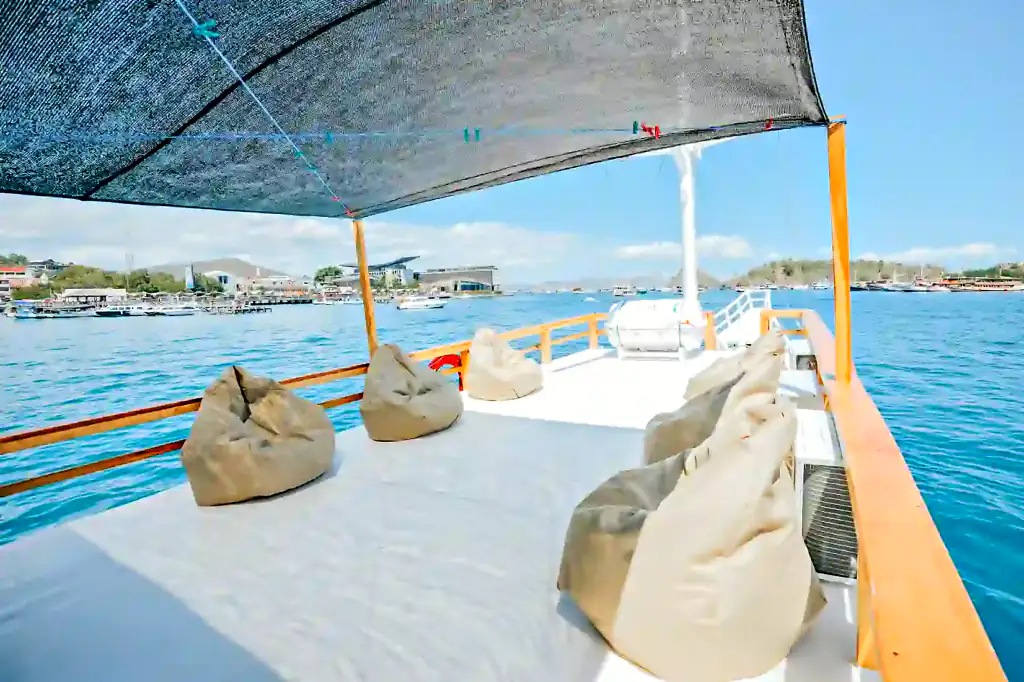
| Mosalaki | A lounge with bean bags and a sun deck |
| Gandiva | Three sun decks for watching the stars |
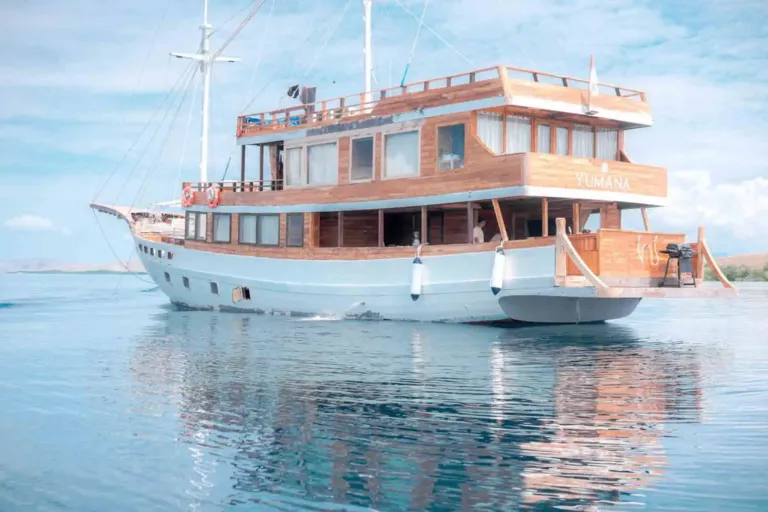
| Vinca Voyages, Raffles Cruise, Yumana | Bean bags under the stars after dinner |
When you compare boats, look at the photos of the upper decks as well as the cabins. A flat, open deck with a canopy that can be rolled back, plenty of cushions and some distance from the stairs and the bow is ideal. Each boat page on this site shows the decks and the facilities, and you can ask us about any boat before you book.
Shelter matters as much as space. A canopy or a shade sail keeps off the dew and the first sun of the morning, and a corner of the deck partly enclosed by the cabin walls feels calmer when the breeze picks up. If you are travelling as a couple or with friends, ask whether a quiet corner of the deck can be yours for the night, so you can talk softly under the stars without disturbing anyone.

When the nights are best
The dry season, from April to November, is the best time for a night outside. The skies are usually clear, the air is dry and showers are rare. July and August are the busiest months on the water, so April to June and September to October often combine good weather with quieter anchorages.
From December to March, the wet season brings more cloud and sudden showers, often in the afternoon and at night. A few hours on deck between the showers are still possible, but plan on sleeping in your cabin and treat any clear night as a bonus. Our guide to the best time for a Komodo liveaboard covers the seasons month by month.
The moon matters as much as the season. Around the new moon, the sky is at its darkest and the stars are at their brightest. Around the full moon, the islands glow silver and you can see the outline of every hill, but far fewer stars show. A free astronomy app or a moon calendar tells you in advance which kind of nights your trip will have.
Stargazing from the deck
Komodo National Park is far from big cities, and on a clear night at anchor the sky is very dark. Semesta Voyages puts it simply on its own page: on a cloudless night in Komodo, the Milky Way is easy to see from the deck. Give your eyes about twenty minutes in the dark, turn off phone screens or switch them to a red night mode, and the sky slowly fills with stars.
Komodo lies about eight degrees south of the equator, so you can see stars from both halves of the sky. The Southern Cross, which cannot be seen from most of Europe and North America, is easy to find for much of the year, and in the middle of the year the bright centre of the Milky Way climbs high in the evening sky. Planets shine steadily without twinkling, and satellites drift slowly across the stars in a straight line.
Photographing the stars from a boat is harder than it looks, because even a gentle roll blurs a long exposure. Keep your exposures short, brace the camera on a cushion, or save the night shots for a beach stop. Our Komodo photography guide has more tips for the light and the best spots, by day and by night.

What to bring for a night outside
Most decks already have cushions, daybeds or bean bags, so you need very little. A small kit makes the night far more comfortable:
- A light layer, such as a sarong, a thin blanket or a fleece, for the cooler hours before dawn.
- Long sleeves and light trousers against the breeze and the occasional mosquito.
- Insect repellent, especially if the boat anchors close to the shore.
- A small torch or headlamp with a red light, which lets you move around without blinding anyone.
- Earplugs and an eye mask, if you would rather sleep through the first light.
- A bottle of water and a zip pocket for your phone, glasses and anything that could roll away.
Ask the crew before you carry pillows or bedding out of your cabin, and bring them back inside in the morning so they can dry. Our Komodo packing list covers everything else to bring on board.
Staying safe on deck at night
A deck at night is a different place from a deck by day. The light is low, the surface can be wet and the boat moves, so a few simple rules keep everyone safe:
- Sleep in the middle of the deck, well away from the edges and the open stairs.
- Keep off the bow and the anchor gear; ropes and chains can move without warning.
- Never sit on the rails, and use the handholds when you walk at night.
- Go easy on drinks if you plan to sleep outside; a clear head matters on a moving deck.
- Keep children with an adult, and tell the crew where you are sleeping.
If the wind rises or the crew asks you to move inside, do so without fuss: they know the weather and the anchorage far better than any guest. Our guide to whether Komodo National Park is safe covers the safety of the boats in more detail.
Wind, rain and dew
Even in the dry season, the weather at night is not always the weather at sunset. The wind can pick up after midnight, and an anchorage that felt still at dinner may become breezy by two in the morning. Choose a spot in the lee of the cabins or under a canopy, and keep your layer within reach.
Rain is the main reason to give up on a night outside, especially in the wet season. A tropical shower arrives fast, so keep your phone and camera in a dry place and know the quickest way back to your cabin. Many crews move the cushions under cover when rain is coming, and they will tell you if a shower looks likely.
Dew is the quiet surprise. On clear, calm nights it settles on everything left in the open, and by sunrise your blanket may feel damp. A thin waterproof layer under you, or a spot under the edge of a canopy, keeps you drier until morning.

Mosquitoes and comfort
Out on the water, there are usually fewer insects than on land, and a breeze keeps most of them away. Mosquitoes are more common close to the shore and near mangroves, especially around dusk, so the first evening after the flying foxes of Kalong Island is a good time for repellent and long sleeves.
Health advice for this part of Indonesia includes avoiding mosquito bites, and our guide to what happens if you get sick on a liveaboard explains why. If bites worry you, a few hours on deck after dinner and the rest of the night in your cabin, with the door closed and the air conditioning on, is the most comfortable compromise.
Comfort also means a little consideration. Other guests may be awake late or rise early, so keep voices low, use a red light rather than a bright torch, and leave the music for the evening hours. A quiet deck is part of what makes sleeping on deck special for everyone.
Sunrise from the deck
The best reward for a night outside comes at the end. On most trips of three days and two nights, the first evening ends near Kalong Island, where thousands of flying foxes leave the mangroves at sunset, and the boat then anchors for the night. The second day starts before breakfast with the climb up Padar, so if you are already outside, you are the first to see the sky turn pink.
On the route between Lombok and Labuan Bajo, the early start has another reason. On Lady Grace, for example, the wake-up call comes at 5:00, and by about 6:00 the boat is in Saleh Bay, where whale sharks gather around the fishing platforms. Our guides to Padar Island and the whale sharks in Saleh Bay explain both mornings.
Sleeping on deck on a private charter
On a private charter, the whole boat is yours, and that makes a night outside much easier to plan. You can ask the crew to prepare the deck with mattresses and cushions, choose an anchorage away from other boats and agree on a later start if you want to watch the stars until late.
It is a lovely idea for families, groups of friends and couples. Children often remember the night they slept outside on a boat more than any other part of the trip, and a sky full of stars is hard to beat for a special evening. Talk to us about your plans when you book a private charter, and we will pass them on to the crew.
Our view
Sleeping on deck is not something you need to plan your whole trip around, but on a clear night in the dry season it can be the moment you remember most. Ask the crew, choose a safe spot in the middle of the deck, bring a light layer and some repellent, and let the stars do the rest. Komodo National Park has been a UNESCO World Heritage Site since 1991, and its night sky is part of that heritage.
Dragons by day, stars by night: a few hours on deck turns a boat trip into a journey.
Ready for your own night under the stars? Compare the decks, cabins and live prices of the sharing trips on this site, and ask us which boats have the best sun decks for your dates.
Questions
Can I sleep on deck on a Komodo liveaboard?
Often, yes, if the crew agrees and the weather is calm. Ask on the first afternoon, and keep your cabin as a back-up for the rest of the night.
Is it cold sleeping on deck?
The nights are warm, but the breeze and the dew can make the hours before dawn feel cool. A sarong, a thin blanket or a fleece is enough.
When is the best time to see the stars?
In the dry season, from April to November, on nights around the new moon. The Milky Way is brightest in the evening sky in the middle of the year.
Are there mosquitoes on deck at night?
Usually fewer than on land, but some come out near the shore and the mangroves. Use repellent and wear long sleeves in the evening.
Is sleeping on deck safe for children?
Yes, with an adult beside them, in the middle of the deck and away from the edges, the stairs and the bow. Tell the crew where you are.
What if it rains during the night?
Move to your cabin. Every boat on this site has air-conditioned cabins with ensuite bathrooms, so you always have a dry bed to go back to.
Which boats have the best decks for a night outside?
Boats with wide sun decks and daybeds, such as Kai Voyage, Papiton Allo, Le Costa and Sora. Ask us about the decks of any boat before you book.
 Elbark Cruise
 Papiton Allo
 Semesta Voyages
 Sukha Sail 1