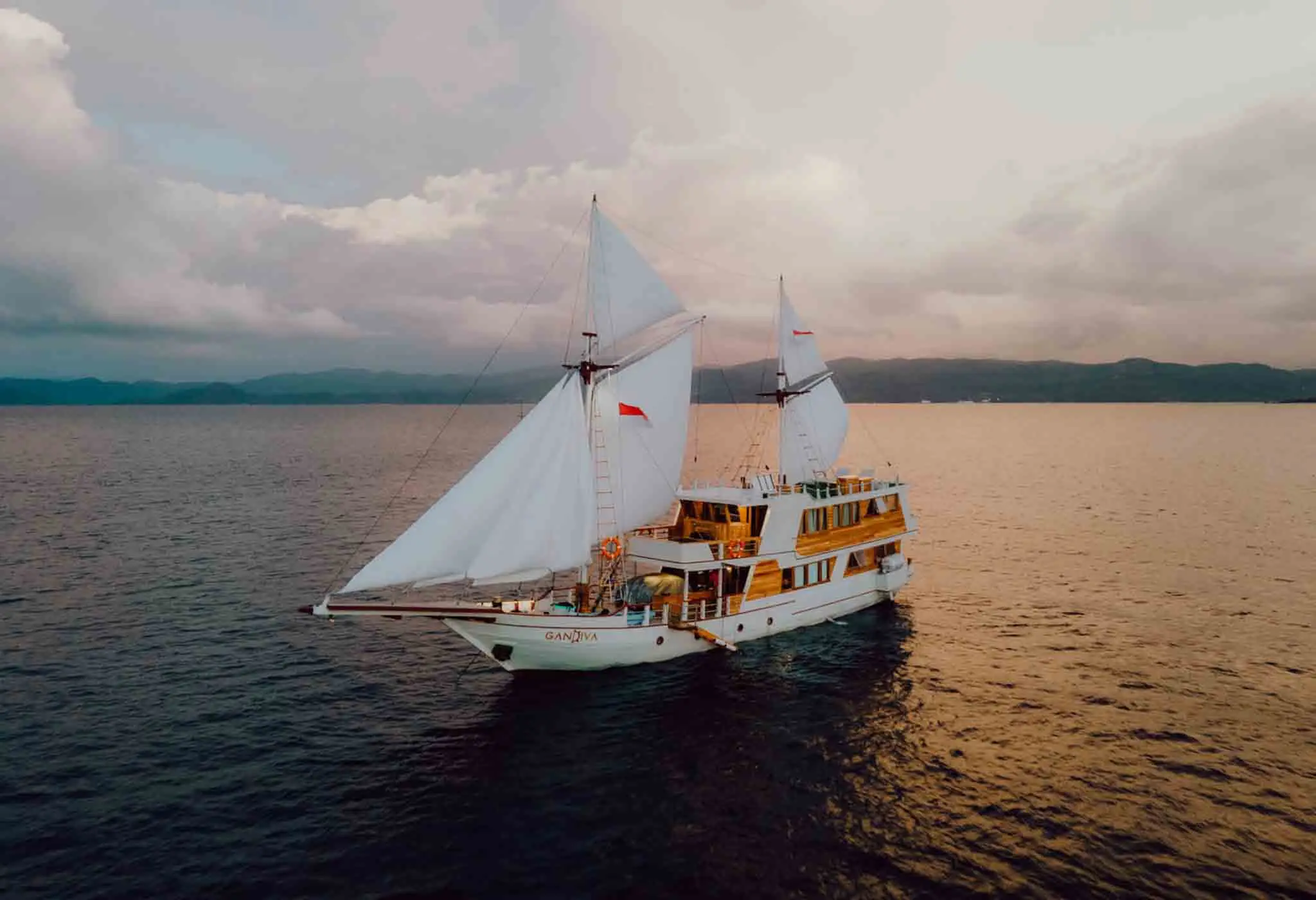
Kalong Island is where many Komodo trips end their first day, and for a good reason. As the sun goes down, thousands of flying foxes rise from the mangroves of this small island and stream across the evening sky towards their feeding grounds. You watch from the deck of your boat, with a drink in your hand and the light fading over the water. This guide explains where Kalong Island is, why the flying foxes leave at dusk, how to see and photograph them, and how to watch without disturbing them.
Kalong is the Indonesian word for flying fox, the large fruit bats of Asia and Australia. They are wild animals, so no two evenings are the same, but on most nights the show is one of the quiet highlights of a Komodo liveaboard.
In short
- Kalong Island is a small mangrove island in Komodo National Park, home to a colony of flying foxes.
- At dusk, thousands of them leave the trees to feed through the night.
- You watch from the deck of your boat; there is no landing.
- Most three-day trips on this site end their first day here.
Where is Kalong Island?
Kalong Island lies inside Komodo National Park, among the islands that the boats from Labuan Bajo visit on the first day of a trip. It is small and low, covered in mangroves, with no beach to speak of and no trail. Its fame comes entirely from the animals that roost in its trees.
On the classic three-day route, the first day starts with a short, steep climb on Kelor Island and a snorkel at Manjarite, and ends at Kalong Island for the sunset. Some boats anchor nearby for the night, ready for an early start on Padar the next morning. Our guide to Kelor Island covers the first stop of the day.
Because it has no landing, Kalong Island is not a place you walk on. The boats stop at a distance from the mangroves, turn off the music and let the guests watch from the deck. That is part of its charm: no tickets, no crowds on a path, just the boat, the water and the sky.
What happens at dusk
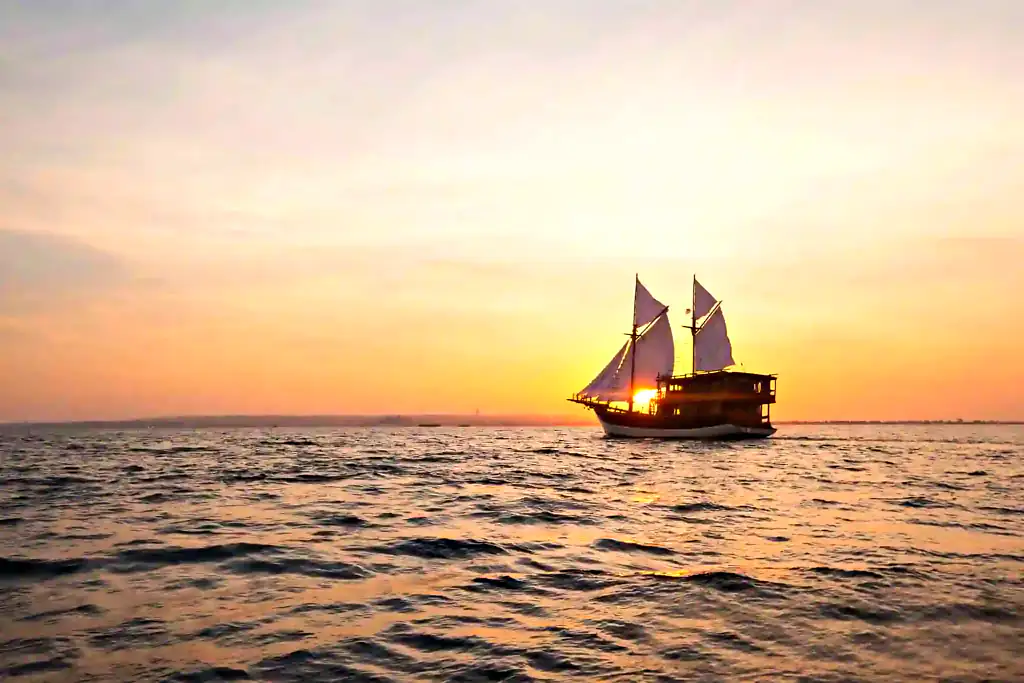
For most of the day, the flying foxes hang in the trees, resting in the shade of the mangroves. As the sun sets, they start to stir. A few leave first, then more, and within minutes a steady stream of dark shapes crosses the sky, flying low over the water and away from the island.
On a good evening the stream lasts a long time, with thousands of animals passing against the orange and pink of the sunset. Their wings beat slowly, and they look much larger than the small bats most visitors know from home. The flight continues into the twilight, until only the last stragglers are left against the darkening sky.
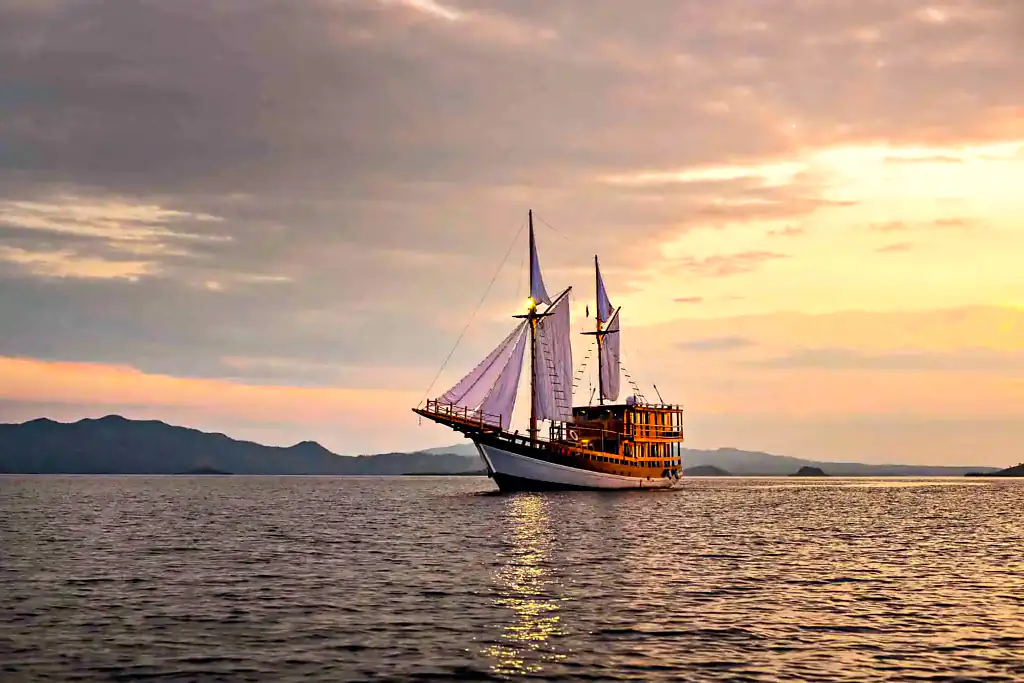
On board, the first evening has its own rhythm. After the snorkel at Manjarite, the boat sails on while the guests shower and change, and the crew brings out coffee, tea or a cold drink as the boat slows near the island. Everyone drifts to the sun deck, the conversation drops as the first animals appear, and dinner is served once the show is over and the boat has settled at anchor.
Indonesia’s official tourism site, Indonesia Travel, describes the island as a habitat of fruit bats that leave their roost around dusk to feed at night, and notes that the timing is not the same every day, because the weather and the animals’ behaviour vary. Some evenings start early, others late, and that unpredictability is part of watching wildlife.
Why the flying foxes leave at sunset
Flying foxes are night feeders. They spend the day roosting in trees, often in large colonies, and leave at dusk to find fruit, flowers and nectar. Unlike the small insect-eating bats, they find their food with their eyes and their nose: the New South Wales government describes their excellent night vision and acute sense of smell.
A small island surrounded by water is a safe place to rest during the day, away from most predators and people. At night, the animals fly out to the larger islands and the coast to feed, and they return to the roost before dawn. The evening flight you see from the boat is the daily commute of the whole colony.
Which species roost on Kalong Island, and exactly how many, is not something the sources agree on, so we will not guess. What matters for visitors is simple: these are large, harmless fruit bats, and the best way to enjoy them is from a distance, at the moment they choose to fly.
Flying foxes and the forest
Flying foxes are more than a spectacle. As they feed, pollen sticks to their fur and is carried from flower to flower, and the seeds of the fruit they eat are dropped far from the parent tree. The New South Wales government notes that they help to pollinate plants and spread seeds over much larger distances than birds or insects.
On islands with dry hills and patchy forest, like those of the Komodo region, animals that move seeds and pollen between islands matter for the health of the whole landscape. Protecting a roost like Kalong Island protects a link in that chain. It is one more reason why the park, best known for its dragons and its reefs, is worth protecting as a whole.
The mangroves of Kalong Island
The trees the flying foxes sleep in are mangroves, the salt-tolerant trees and shrubs that grow where the land meets the sea. Their tangled roots stand in the water at high tide and in the mud at low tide, and from the boat the island looks like a low, dense green mound rising straight out of the sea.
Mangroves do far more than give the bats a place to rest. According to NOAA, mangrove forests stabilise the coastline and reduce erosion from storms, waves and tides, and their roots offer food and shelter to fish and other animals. Small mangrove islands like this one are part of the web of habitats that keeps the waters of the park so rich in life.
That is why the boats keep their distance and never send guests into the trees. A roost that is left in peace stays a roost, and the evening flight that thousands of visitors enjoy every year depends on it.
Kalong Island on a Komodo trip
On most boats on this site, the sunset at Kalong Island is part of the first day of the three-day sharing trip. The boat page of each boat shows its own day-by-day itinerary, so you can check before you book. The table sums up what to expect.
| Question | What to expect |
|---|---|
| When | Around sunset, usually at the end of the first day |
| Where you watch | From the deck of your boat, at a distance from the mangroves |
| Landing | None: the island has no trail and no beach for visitors |
| How long | The flight can go on until twilight |
| Season | All year, in the dry and the wet season |
| Extra cost | None: it is part of the route |
| Guaranteed? | No: the timing and numbers vary with the weather and the animals |
Some routes are different. The boats on the longer trips between Labuan Bajo and Lombok follow their own itineraries, and a private charter can plan the evening stops as the group wishes. If the sunset at Kalong Island matters to you, check the itinerary on the boat page or ask us before you book.

When to see them
The flying foxes leave around sunset all year. Komodo is close to the equator, so sunset hardly moves: according to Weather Spark, the sun sets in Labuan Bajo between about 17:50 in June and about 18:30 in late January. The crew times the arrival at Kalong Island so that the boat is in place before the first animals fly.
The dry season, from April to November, brings the clearest skies and the most colourful sunsets, which make the best backdrop for the flight. In the wet season, from December to March, the flying foxes still leave every evening, but clouds can hide the sunset and a shower may pass over the boat. Our guide to the Komodo wet season explains what changes on the water.
Nothing about wildlife is guaranteed. On some evenings the flight starts while the sky is still bright, on others only as darkness falls, and the numbers vary. Be on deck early, and you will rarely be disappointed.
How to photograph the flying foxes
Photographing flying foxes at dusk is a challenge: the animals move, the light is fading and the boat may be rocking gently. A few simple settings make a big difference.
- Shoot silhouettes. Put the bright sky behind the animals and expose for the sky.
- Use a fast shutter speed, such as 1/500 second or faster, to freeze the wings.
- Raise the ISO as the light fades, and accept some grain.
- Shoot in bursts and pick the best frame later.
- Try video. A phone video of the stream across the sky often tells the story better than a photo.
- Turn off the flash. It will not reach the animals, and it spoils the evening for others.
Then put the camera down for a few minutes and just watch. Our Komodo photography guide has more tips for sunsets, dragons and the reefs.
Watching responsibly
Indonesia Travel advises watching from a boat at a safe distance and not disturbing the vegetation or getting too close to the habitat. In practice, that means a few simple habits on deck.
- Keep your voice down and the music off while the colony is leaving.
- No bright lights or flash pointed at the trees.
- Keep drones away from the colony. A drone near the trees can disturb the animals.
- Never touch a bat, alive or dead, and never try to feed one.
That last point is also about your health. Like other wild animals, bats can carry diseases, and the New South Wales government advises anyone bitten or scratched by a flying fox to wash the wound thoroughly and see a doctor immediately. From the deck of a boat, that will never happen, and that is exactly the point. Our guide to responsible travel in Komodo covers the rest of the park.
Kalong Island with children
Children love the evening at Kalong Island. There is no walk, no heat and no waiting in line, just a sky that suddenly fills with animals, and it is easy to turn into a game: who sees the first one, who can count ten, which way are they flying? For many families, it is the moment the children remember best after the dragons.
Dusk on a boat calls for a little care. Keep young children seated or close to you on the sun deck, away from the edges and the ladders, and bring a light jacket for the breeze. Put insect repellent on them before sunset, and keep the camera work short so they can simply enjoy it. Our guide to Komodo with kids covers the rest of a family trip.
What to bring on deck
- Insect repellent. Mangroves and dusk mean mosquitoes, so put it on before sunset.
- A light layer for the breeze on deck after dark.
- Binoculars, if you have them, to see the animals in the trees before they leave.
- A camera or phone with a charged battery and space for a burst of photos.
- A drink from the boat and a comfortable seat on the sun deck.
Mosquitoes are part of any evening near mangroves, and they matter for your health too. Our guide to malaria in Flores explains how to avoid bites. The Komodo packing list covers everything else for the trip.
Other evenings on a Komodo trip
Kalong Island is usually the first sunset of the trip, but not the only one. On the second evening, many boats watch the sun go down from another anchorage, and on longer trips Gili Lawa, in the north of the park, is famous for its hills glowing at sunset and sunrise. After dark, the stars take over, bright and clear on calm nights far from the lights of town.
If you love the night sky, read our guide to sleeping on deck, which covers the stars over Komodo and the boats with the best decks. And if you want more time for evenings like these, a longer trip adds more sunsets, more anchorages and more quiet hours on deck. Our guide to how many days in Komodo helps you choose the length.
Our view
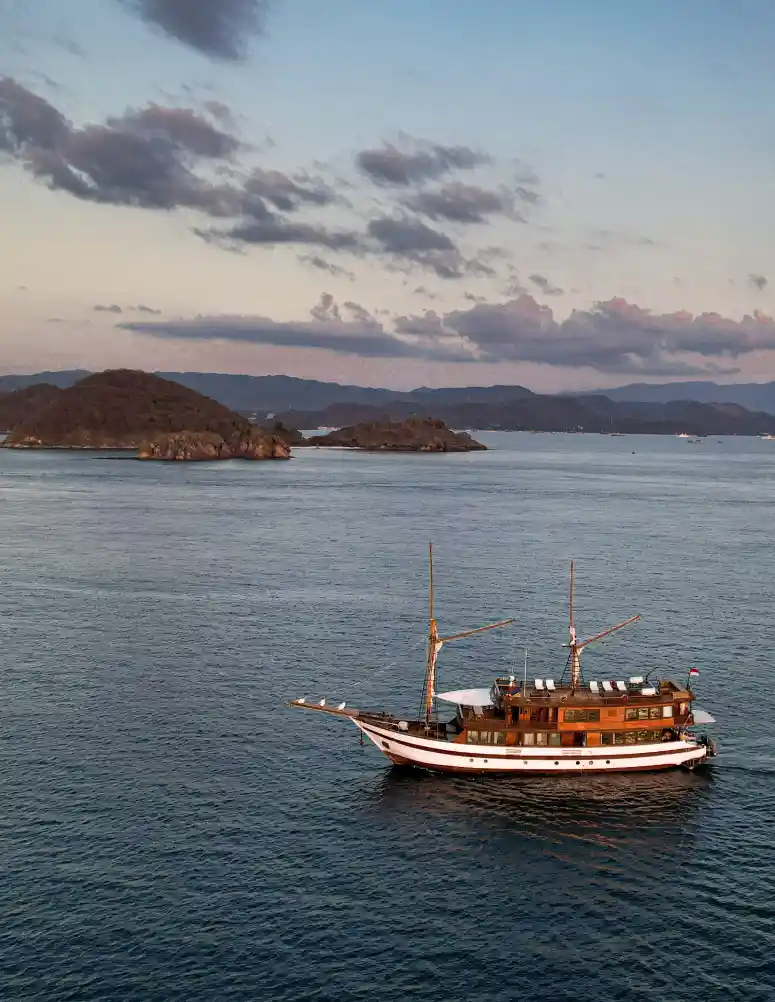
The evening at Kalong Island is one of the simplest pleasures of a Komodo trip: no climb, no queue, just a deck, a sunset and thousands of flying foxes crossing the sky. Arrive early, keep quiet, watch from a distance and let the animals set the pace. It is a reminder that the park is far more than its famous dragons, in a UNESCO World Heritage Site that has been protected since 1991.
The sun goes down, the mangroves wake up, and the whole sky starts to move.
Want to see it for yourself? Compare the sharing trips on this site, check the day-by-day itinerary on each boat page, and choose the departure that ends its first day at Kalong Island.
Questions
What is Kalong Island famous for?
Its colony of flying foxes, large fruit bats that leave the mangroves in their thousands at sunset to feed through the night.
What does kalong mean?
Kalong is the Indonesian word for flying fox.
Can you land on Kalong Island?
No. The island is covered in mangroves, with no trail for visitors, and you watch the flying foxes from the deck of your boat.
What time do the flying foxes leave?
Around sunset, which in Labuan Bajo is between about 17:50 and 18:30 depending on the time of year. The exact timing varies from evening to evening.
How close does the boat go?
Close enough to see the animals clearly against the sky, but at a distance from the mangroves, so the colony is not disturbed. Binoculars help you see them in the trees.
Is there an extra fee to see the flying foxes?
No. On the boats on this site, the evening stop is part of the route, and the park fee is already on your invoice.
Are flying foxes dangerous?
Not when you watch from a boat. Like all wild animals, they should never be touched, and anyone bitten or scratched should wash the wound and see a doctor.
Do all trips stop at Kalong Island?
Most three-day trips on this site end their first day there, but routes differ. Check the itinerary on the boat page.
Can I see them in the wet season?
Yes. The flying foxes leave every evening all year, but clouds can hide the sunset in the wet season.
Can I fly a drone at Kalong Island?
Keep drones well away from the colony so you do not disturb the animals, and follow the park’s drone rules. Our guide to flying a drone in Komodo explains them.
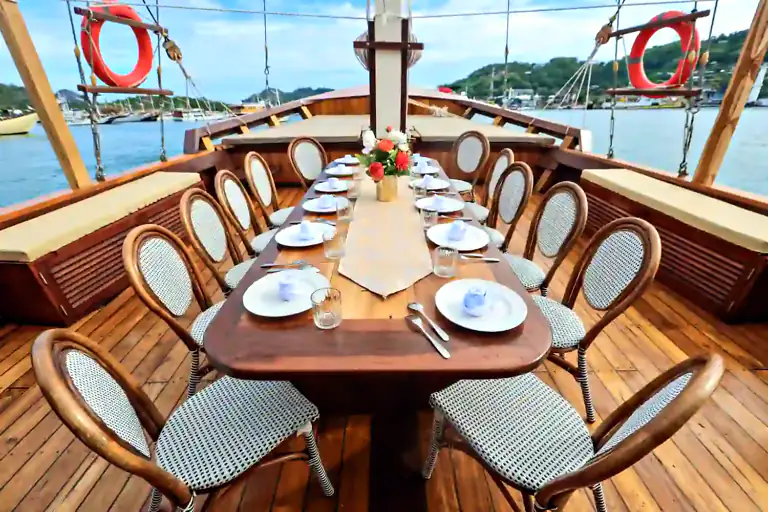
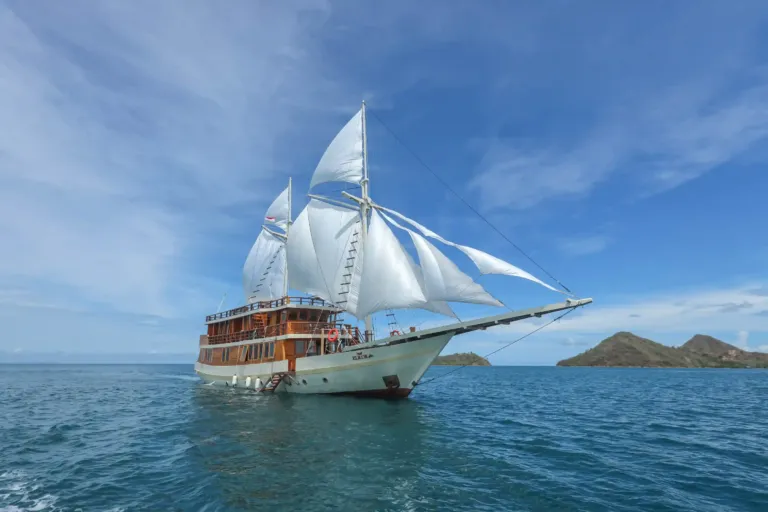
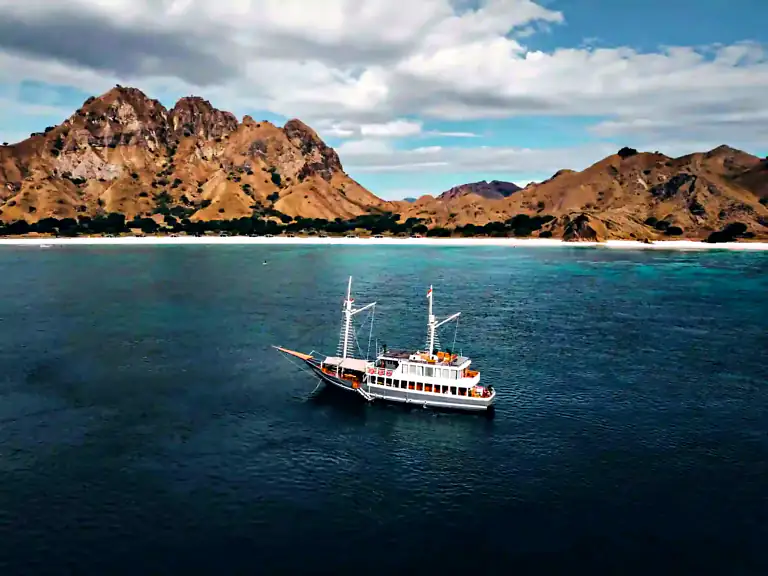
 Elbark Cruise
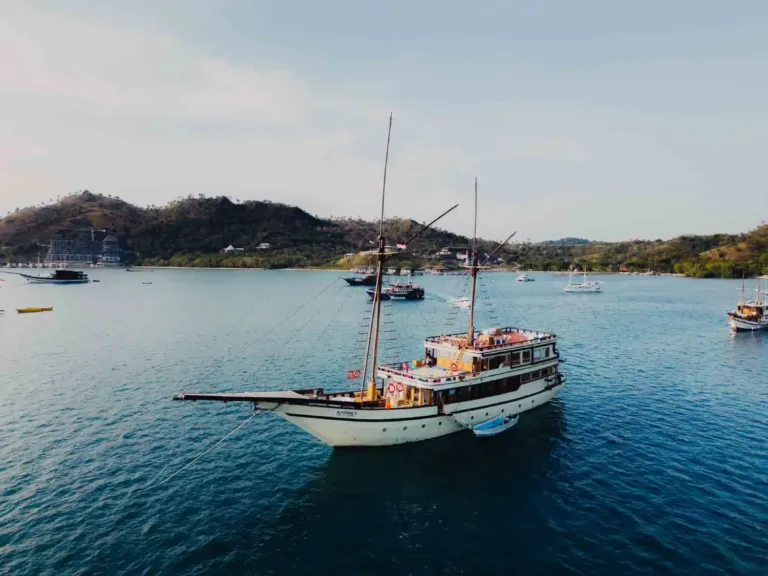
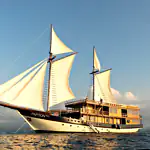 Papiton Allo
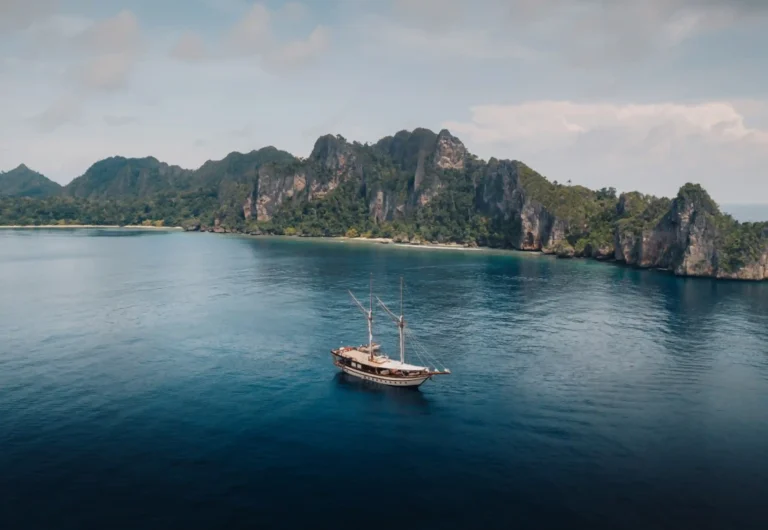
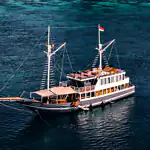 Semesta Voyages
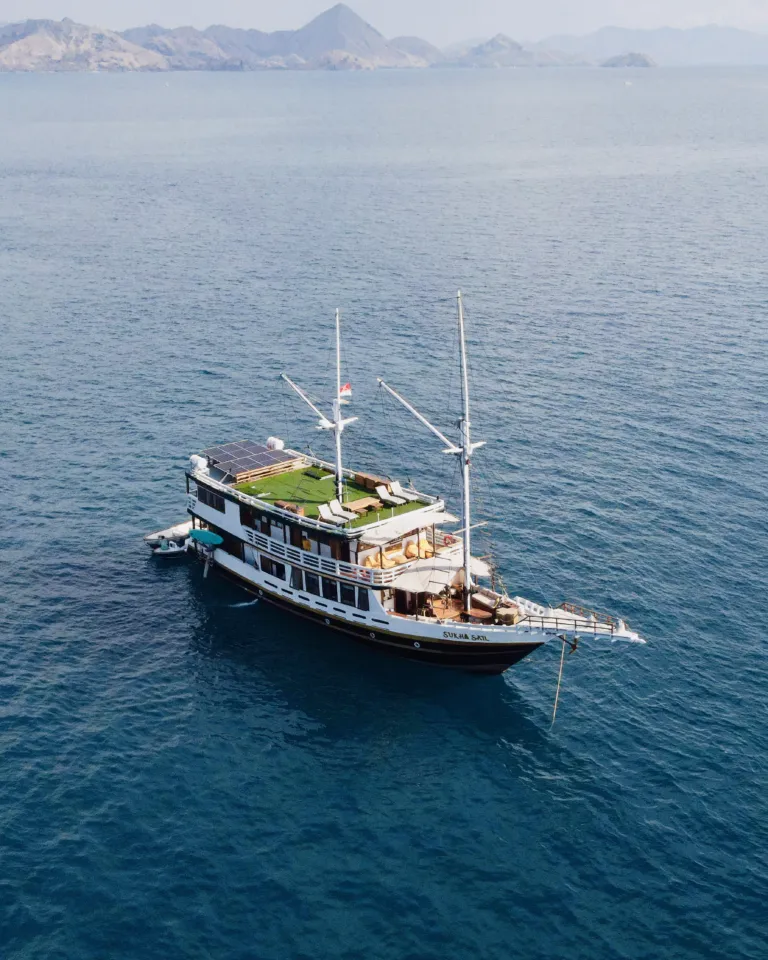
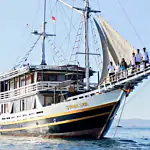 Sukha Sail 1