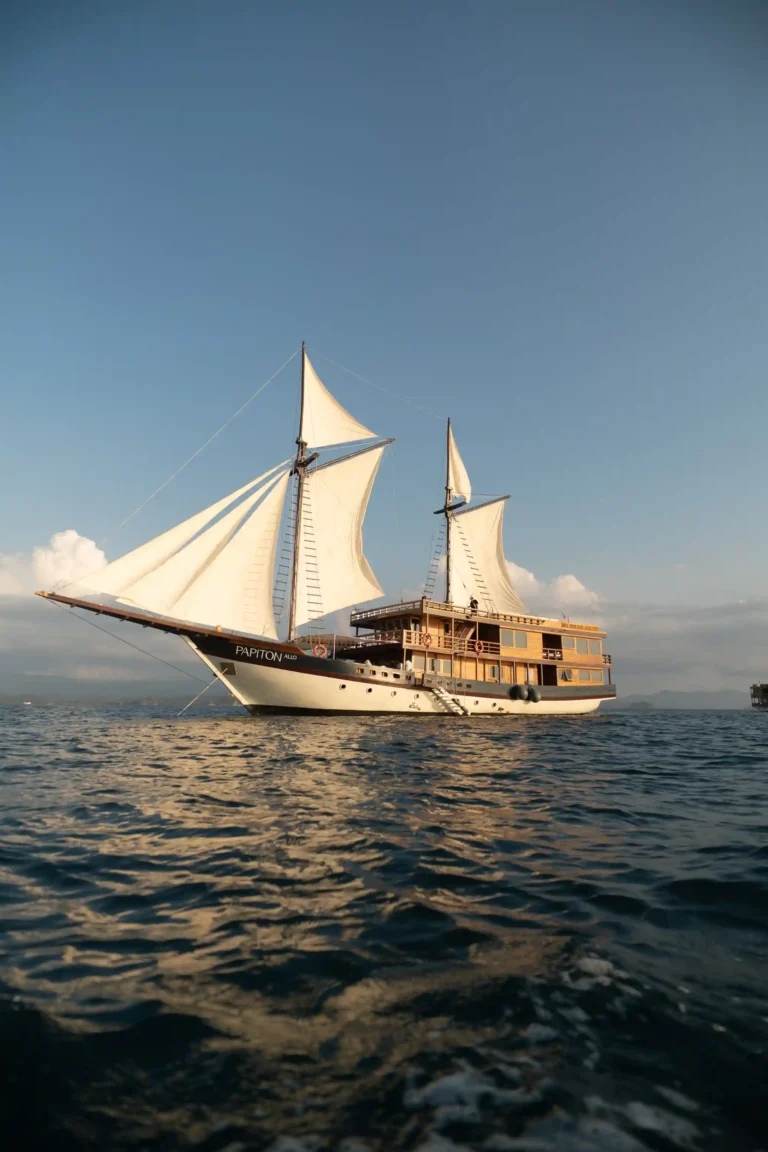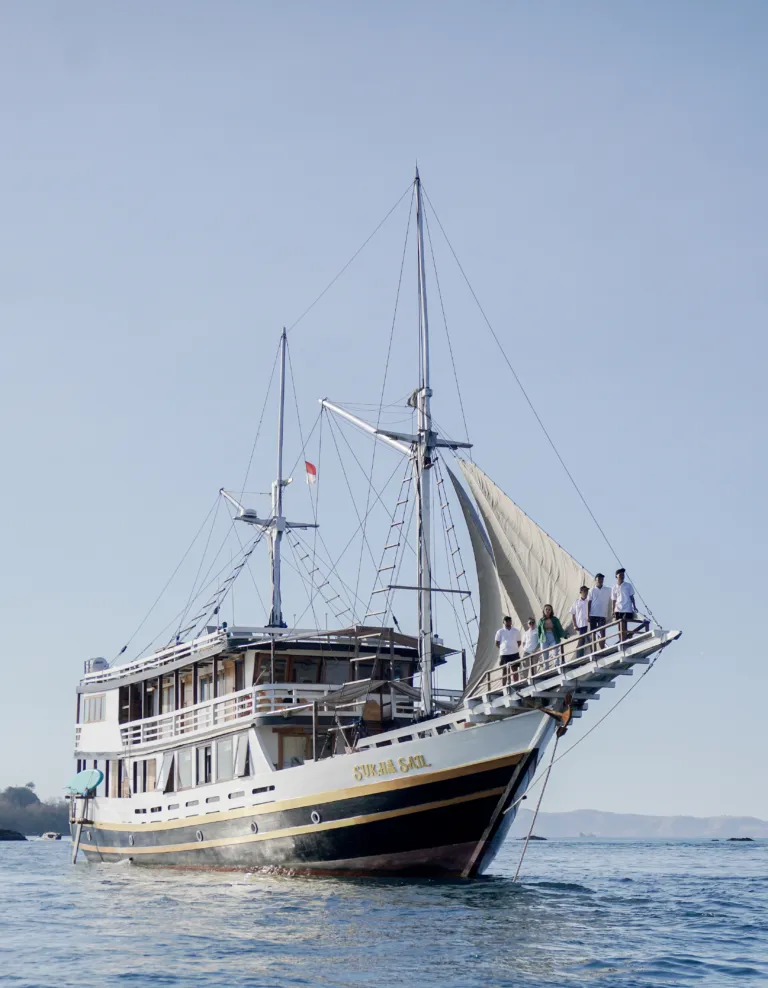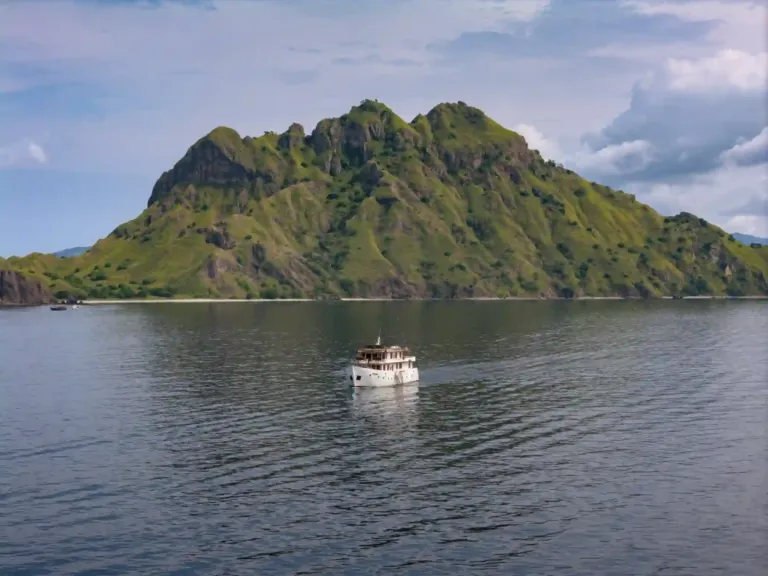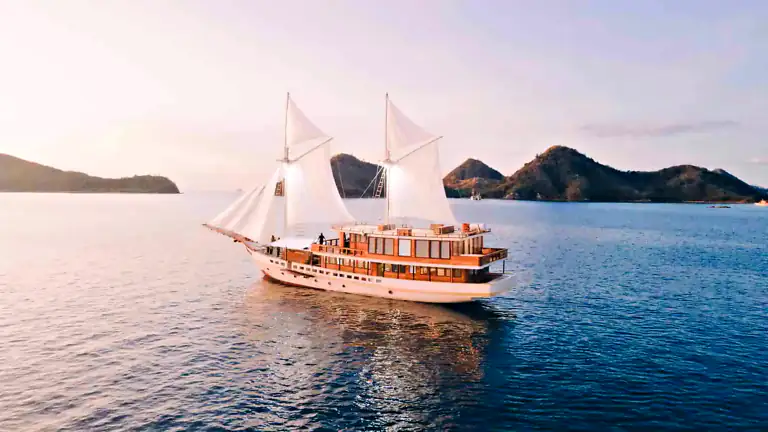

Flying a drone in Komodo is tempting: from above, the bays of Padar, the curve of Pink Beach and a wooden boat on a turquoise reef look even more unreal than they do from the deck. But Komodo National Park is a protected area, and drones are subject to a park fee, Indonesia’s aviation rules and some simple common sense around wildlife and other visitors. This guide explains what you need to know before you pack a drone, where not to fly, how to fly safely from a boat and why letting the crew take the aerial shots is often the easiest option.
Rules and fees change, so treat this as a starting point and check the current requirements with the park office, the Balai Taman Nasional Komodo, or your boat before you fly.
In short
- The park charges IDR 2 million per drone per day under the 2024 national tariff rules.
- Indonesia’s aviation rules limit height, keep drones away from airports and ask for a permit for commercial flights.
- Never fly over people or close to wildlife, including the dragons and the flying foxes.
- On most sharing trips on this site, photo and drone documentation by the crew is included.
Can you fly a drone in Komodo?
Yes, but not freely. Komodo National Park charges a fee for flying drones, the rangers decide where and when you may fly at their sites, and Indonesia’s national aviation rules apply as they do everywhere in the country. A drone in Komodo is welcome when it is flown legally, briefly and with respect for the animals and the people around it.
In practice, that means three steps: pay the park fee for each drone and each day you plan to fly, follow the national rules on height, airports and permits, and ask the guide or the ranger before every flight at a site. If in doubt, keep the drone in its bag: the views are spectacular from the ground too.
Plan ahead rather than deciding on the day. Before you travel, decide which days you really want to fly, because the fee is charged per drone per day, and tell us or your boat when you book. On a trip of three days, many pilots choose a single day, usually the second, when the boat visits the most spectacular places, and keep the drone packed on the other days. Flying a drone in Komodo on a plan, rather than at every stop, saves money and keeps everyone on board happier.
The park fee for drones
Since 30 October 2024, the fees in Komodo National Park follow Government Regulation 36 of 2024, the national tariff rules for protected areas, which replaced the older rules from 2014. When the park office presented the new tariffs in Labuan Bajo, it listed a fee of IDR 2 million per drone per day, as Antara reported. The same rules introduced fines for visitors who break them.
The drone fee is separate from the park entrance fee that is added to your booking. If you plan to fly your own drone, tell us or your boat when you book, so the crew knows to expect it, and ask how the fee is paid for your dates. Keep proof of payment with you, because the rangers may ask for it.
For a three-day trip, the fee adds up quickly, which is one reason why many guests leave their drone at home and rely on the crew’s photos instead. Our guide to Komodo National Park fees explains the other fees of a trip.
Indonesia’s rules for flying a drone
Drones in Indonesia are covered by a regulation of the Ministry of Transportation, PM 37 of 2020. In a summary of the rules, the state broadcaster RRI lists the main points: drones must be officially registered, may fly up to 150 metres above the ground, must stay at least five kilometres from airports and restricted airspace, and must keep out of military areas and no-fly zones. Commercial flights need a permit from the authorities first.
Komodo Airport is in Labuan Bajo itself, close to the town and the harbour, so do not fly in town or near the airport. Wait until you are out among the islands, well away from the flight paths. The requirements for visitors can change, so check them with the Indonesian authorities before you travel, especially if you plan anything beyond holiday photos.
Where not to fly
- Over people. Never fly over other visitors, on the trails, the viewpoints or the beaches.
- Near the dragons. Keep away from the ranger walks on Komodo and Rinca, unless the ranger says otherwise.
- Over the flying foxes at Kalong. Thousands of them leave the mangroves at dusk; a drone can disturb them.
- Near other boats. Ask before you fly close to another boat or its guests.
- In Labuan Bajo and near the airport. The national rules keep drones away from airports.
- Wherever a ranger or the guide says no. Their word is final at every site.
Think about the moment, too. At sunrise on Padar, many visitors have climbed in the dark for a quiet view, and the buzz of a drone overhead spoils it. Fly away from the crowd, keep your flights short and land as soon as you have the shot.
Drones and wildlife
Komodo National Park exists to protect its animals, and drones can stress them. Birds may treat a drone as a predator, flying foxes can be disturbed at their roost, and a drone hovering low over a reef or a beach can scare away the turtles and the rays you came to see. The closer and the lower you fly, the bigger the impact.
Keep a generous distance from any animal, never chase wildlife with a drone and never fly low over the water where people are snorkelling. Drones should stay high and brief near any colony of birds or bats, and turn away at the first sign that the animals are reacting. The best wildlife moments of the trip, the dragon walk and the manta rays, are best enjoyed with your own eyes, with the rangers and the guide beside you. Our guide to responsible travel in Komodo has more simple ways to protect the park.
Flying a drone from a boat
Taking off and landing on a liveaboard is harder than on land. The deck is crowded with masts, ropes, rigging and canopies, the boat moves, and the wind is often stronger over the water. Fly only when the boat is at anchor, choose an open part of the deck, and ask the crew for the best spot.
Set your home point before take-off and remember that the boat may swing on its anchor while you fly. Keep the drone in sight, watch the battery and come back early, because landing on a moving deck takes longer than you expect. Many pilots take off and land from a beach instead, where there is space and solid ground.
Never ask a crew member to catch your drone by hand unless they offer and know how to do it safely. A spinning propeller can cause serious cuts, and a drone in the sea is gone for good.
Drone etiquette on a sharing trip
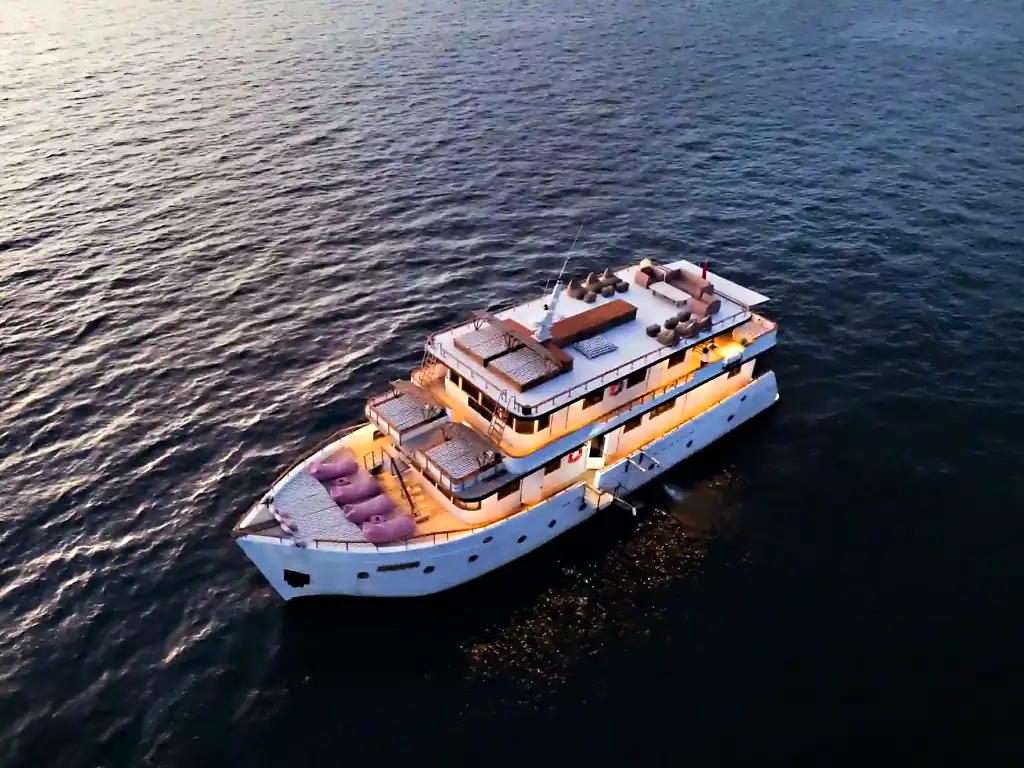
On a sharing trip, the boat is a shared space, and not everyone enjoys drones. Some guests find the noise annoying, others do not want to appear in videos, and the crew has work to do on deck. Ask the guide before each flight, tell the other guests when you are about to take off, and offer to share your best shots with the group afterwards. A drone in Komodo is far more welcome when everyone on board knows what is happening.
Keep flights short, fly away from people relaxing on the sun deck, and never fly over other guests while they swim or snorkel. If several guests on the same boat have drones, agree on turns, so the sky above the anchorage does not fill with propellers. Courtesy costs nothing, and it keeps drones from becoming the thing other guests remember about the trip.
Wind, weather and salt
Weather is the hidden challenge of flying a drone in Komodo. The wind is often stronger over the water and on the ridges than it feels on deck, and it can pick up quickly in the afternoon. Check the wind warning on your controller, fly into the wind first so you have an easier return, and land early if the drone starts to drift.
In the wet season, from December to March, sudden showers can arrive within minutes, and most drones are not waterproof. Keep an eye on the clouds, and never fly in rain or sea spray. Our guide to the Komodo wet season explains how the weather changes through the year.
The best drone shots in Komodo
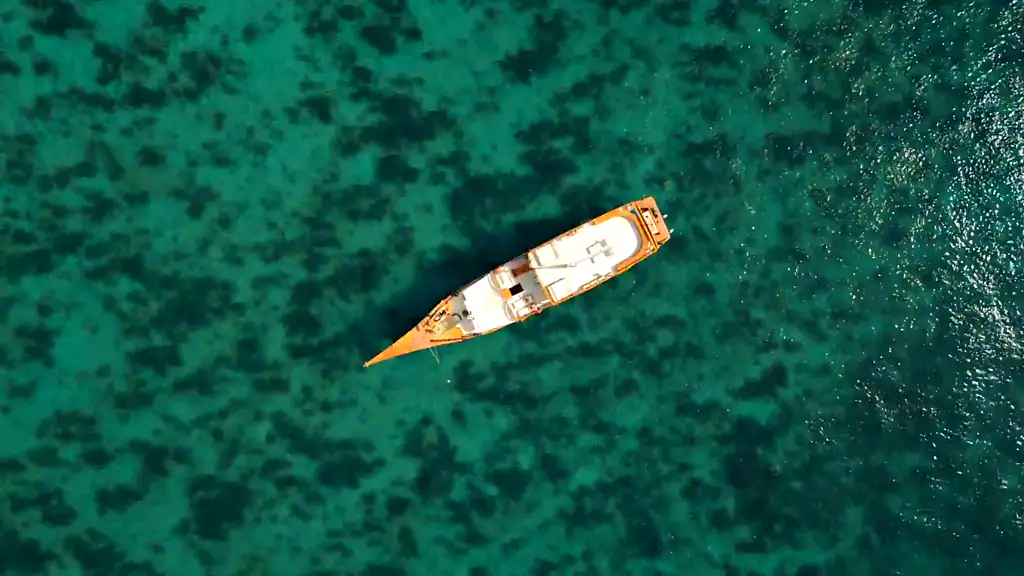
Some places in the park look their best from above. The curve of Pink Beach shows its colour against the turquoise water; Taka Makassar, a sandbank that appears at low tide, becomes a thin white line in the middle of the sea; and a boat at anchor over a coral reef, with the shadow of the reef beneath it, is the classic Komodo picture.
Light makes the difference. Around midday, the high sun shines straight into the shallow water and the reefs glow turquoise; in the early morning and late afternoon, the hills of the islands take on golden tones and long shadows. Our Komodo photography guide covers the best spots and times, from the ground and from above, and our guides to Pink Beach and Kelor Island describe two favourite views.
Batteries, salt and travel
Airlines usually require spare lithium batteries to travel in your hand luggage, not in the hold, so check the rules of each airline on your route, including the domestic flight to Labuan Bajo. Pack the drone in a padded case, and bring enough batteries for the day, because the chances to charge between stops are limited.
On this site, 13 boats list a charging station among their facilities, and many have charging points for phones and cameras; ask the crew where and when you can charge. Salt spray and sand are the enemies of any drone, so wipe it after each flight, keep it out of the spray on the tender and store it in a dry bag between stops.
Let the crew take the aerial shots
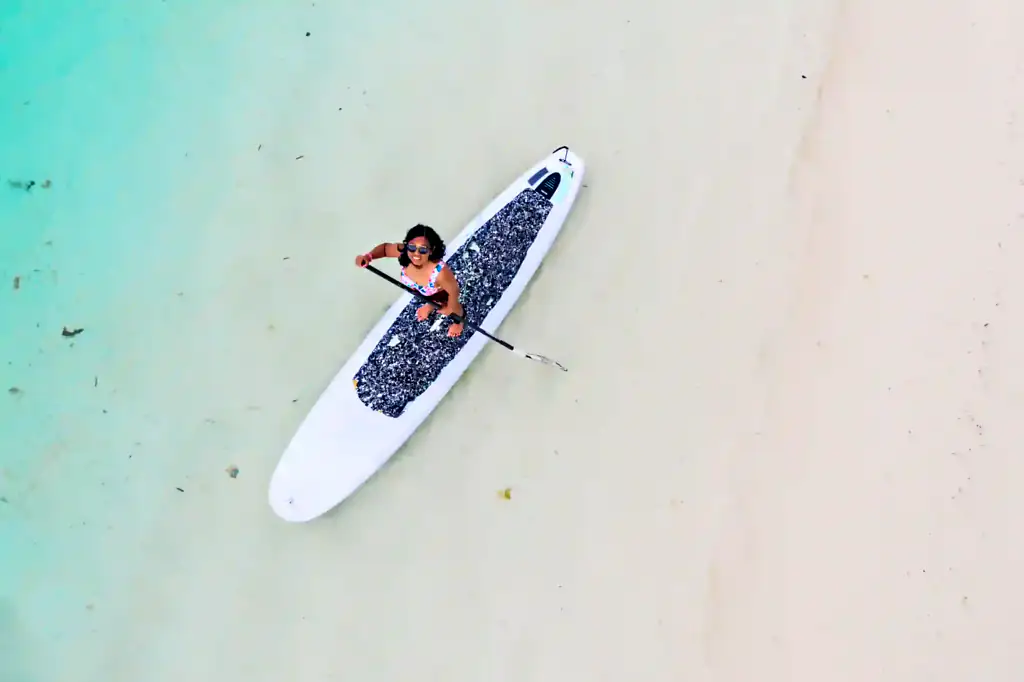
The simplest way to get drone photos of your trip is to leave it to the crew. On most sharing trips on this site, photo and drone documentation is included, so you get aerial shots of the boat, the bays and your group without packing a drone, paying the fee or worrying about the rules.
The crews know the best angles and the right moments, and you can spend your time enjoying the view instead of watching a screen. Ask about the photo and drone documentation when you book, so you know what to expect and how you will receive the pictures after the trip.
For most guests, this is the best way to get a drone in Komodo into their holiday photos without any of the work: no batteries to charge, no fee to pay and no worries about the wind or the rules. The crews fly at the places where drones are allowed, and you appear in the pictures instead of standing behind a controller.
Commercial filming and content creators
If you plan to film for a client, a brand or paid social media content, the rules are stricter. National aviation rules ask for a permit for commercial flights, and the park has its own fees for commercial photography and video; at the same presentation in 2024, the park listed a fee of IDR 3 million for pre-wedding photos and videos by foreign visitors.
Check your insurance as well. Many travel insurance policies do not cover drones, or cover them only up to a limited value, and some do not include liability if a drone injures someone or damages property. If you travel with expensive drones or camera gear, look for a policy that covers them abroad.
Your visa matters too. The British government’s travel advice notes that the visa on arrival is not suitable for influencer work or creating commercial online content, which may need a different visa. Arrange the right visa and permits well before the trip, and tell us your plans when you book.
Our view
Flying a drone in Komodo can give you unforgettable pictures, but it comes with a daily park fee, national rules and a responsibility towards the animals and the other visitors. If you fly, do it legally, briefly and far from people and wildlife. If you would rather simply enjoy the trip, let the crew take the aerial shots. Either way, you will take home images of a UNESCO World Heritage Site that look even better than you remember.
The best drone shot is the one that disturbs nobody: not the dragons, not the flying foxes and not the people on the hill.
Ready to plan your trip? Compare the sharing trips on this site, many with photo and drone documentation included, and ask us about flying your own drone before you book.
Questions
Can I fly a drone in Komodo National Park?
Yes, if you pay the park fee and follow the national rules and the rangers’ instructions at each site.
How much is the drone fee in Komodo?
IDR 2 million per drone per day, under the national tariff rules that took effect on 30 October 2024. Check the current fee before your trip.
Do I need to register my drone in Indonesia?
Indonesian rules require drones to be registered, and commercial flights need a permit. Check the current requirements for visitors before you travel.
Can I fly a drone in Labuan Bajo?
Avoid it. The airport is close to the town, and the national rules keep drones at least five kilometres from airports.
Can I fly my drone near the Komodo dragons?
Only if the ranger allows it. Keep well away from the ranger walks and from all wildlife.
Do the boats take drone photos?
On most sharing trips on this site, photo and drone documentation by the crew is included. Ask about it when you book.
Can I take my drone on the plane to Labuan Bajo?
Usually yes, with the spare batteries in your hand luggage. Check the rules of your airline before you fly.
Should I tell the boat that I am bringing a drone?
Yes. Tell us or the boat when you book, so the crew knows to expect it and can explain how the park fee is paid for your dates.
Can I fly my drone at Padar?
Only if the rangers allow it, and never over the crowd at sunrise. Fly away from people, keep the flight short and land as soon as you have the shot.
What is the best time of day for drone photos in Komodo?
Around midday for turquoise water and reefs, and early morning or late afternoon for golden hills. Check the wind before every flight.
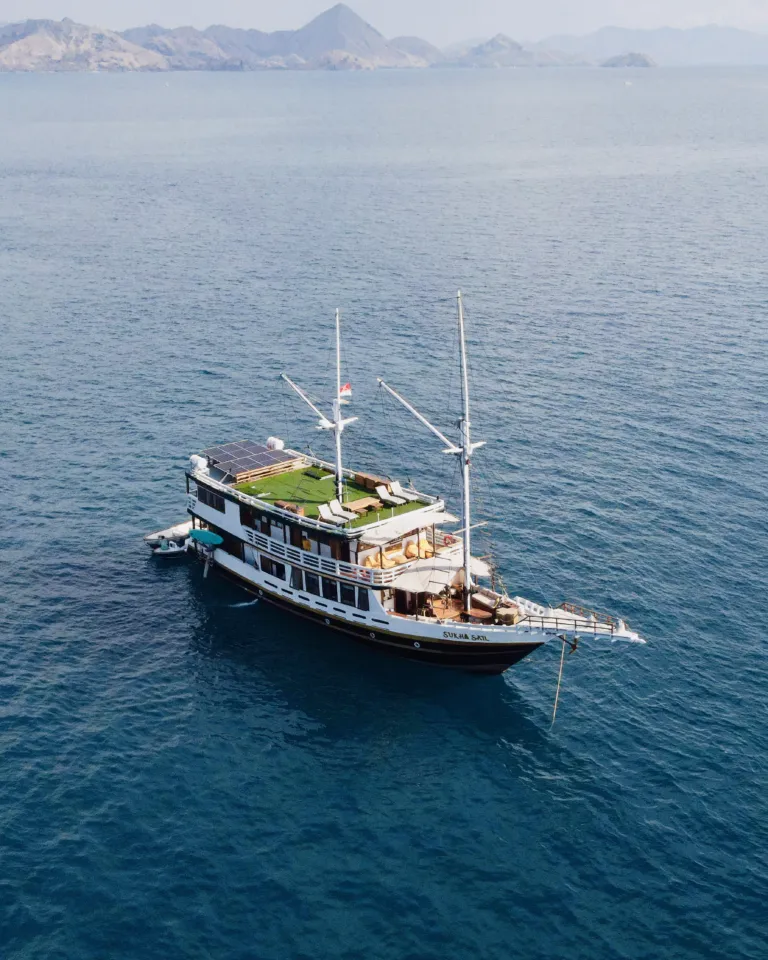
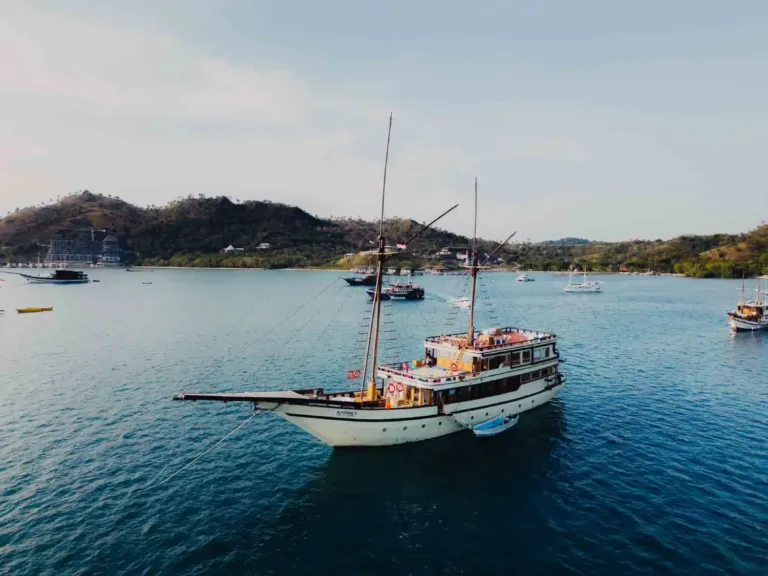
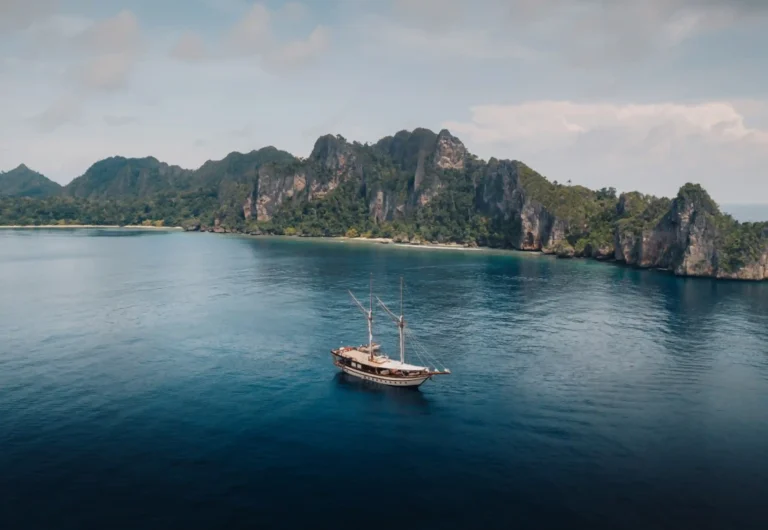
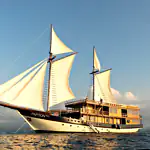
 Elbark Cruise
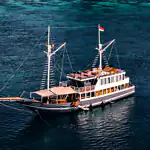
 Papiton Allo
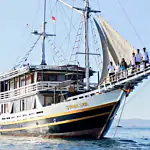
 Semesta Voyages
 Sukha Sail 1