Charging on a liveaboard is one of those small things that can shape a trip. Your phone is your camera, your map and your link to home, and a drone, a laptop or a camera with spare batteries all need power every day. On a phinisi in Komodo, the electricity comes from the boat’s own generators, not from a grid, and the sockets may be fewer than in a hotel room. This guide explains how power works on board, which plugs you need, how to charge safely and what to pack, including the rules for power banks on your flights.
Every boat is set up a little differently. Use this guide as a general picture, and check the boat page or ask us if you rely on power for something important, such as a medical device.
In short
- Power on board comes from the boat’s generators, sometimes helped by solar panels and batteries.
- Indonesia uses 230 V, 50 Hz and plugs of type C and F; bring an adapter.
- Pack a small multi-port USB charger, because sockets can be few.
- Power banks fly in your hand luggage only, up to 100 Wh without approval.
How does electricity work on a liveaboard?
A liveaboard is a small floating town with its own power station. The main engine moves the boat, and separate generators make the electricity for the lights, the kitchen, the water pumps, the air conditioning and the sockets. Most boats carry two generators, so one can rest while the other runs, and some keep an emergency generator in reserve.
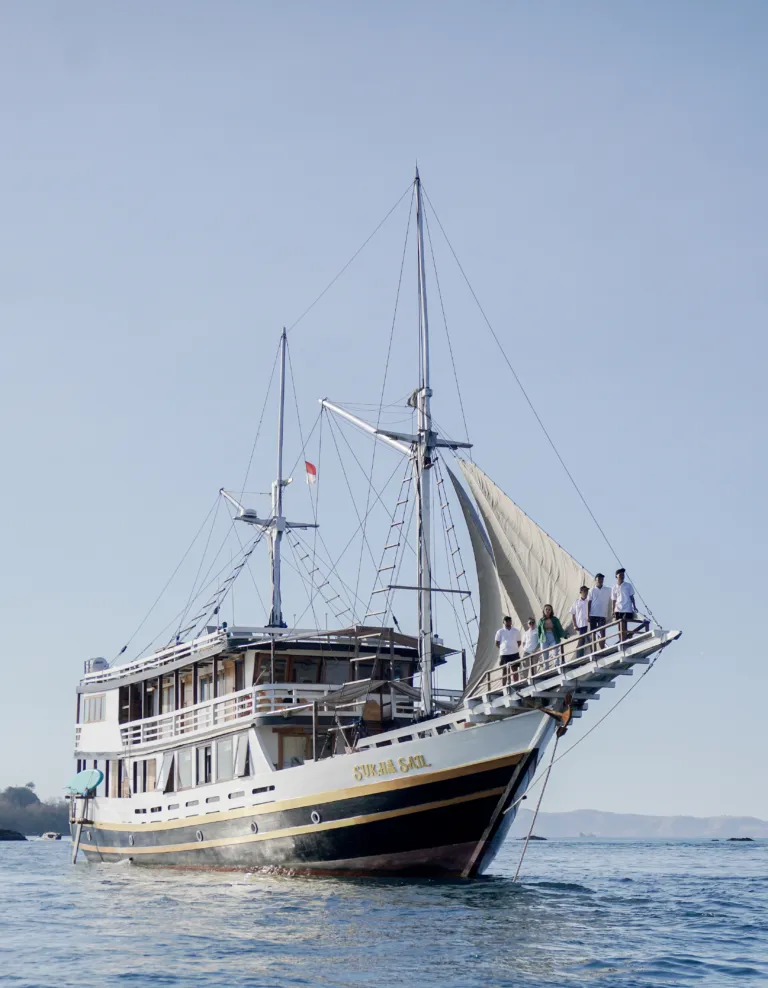
A few boats add newer technology. Sukha Sail 2, for example, combines two 50 kVA generators with a lithium battery bank and 6,000 watts of solar panels, and on Gammara solar panels help with the power on board. Batteries and solar can keep some systems running quietly when the generators are off.
For you, this means two things. First, power is available on every boat, but it is produced on board, so it is worth using it sensibly. Second, on some boats the sockets in the cabins may only work while a generator runs, so ask the crew on the first day when the power is on and plan your charging around it.
Sockets, voltage and plugs
According to Indonesia’s official tourism site, Indonesia Travel, the country uses 230 volts at 50 hertz, with plugs of type C and F, the round two-pin plugs used in much of Europe. If your devices have British, American or Australian plugs, you need an adapter, and it is easiest to buy one before you leave home.
Check the label on each charger before you plug it in. Most phone, camera and laptop chargers accept anything from 100 to 240 volts and only need an adapter for the plug. Some hair dryers, shavers and older appliances work on one voltage only, and plugging a 110-volt appliance into a 230-volt socket can destroy it. If in doubt, leave it at home or ask the crew first.
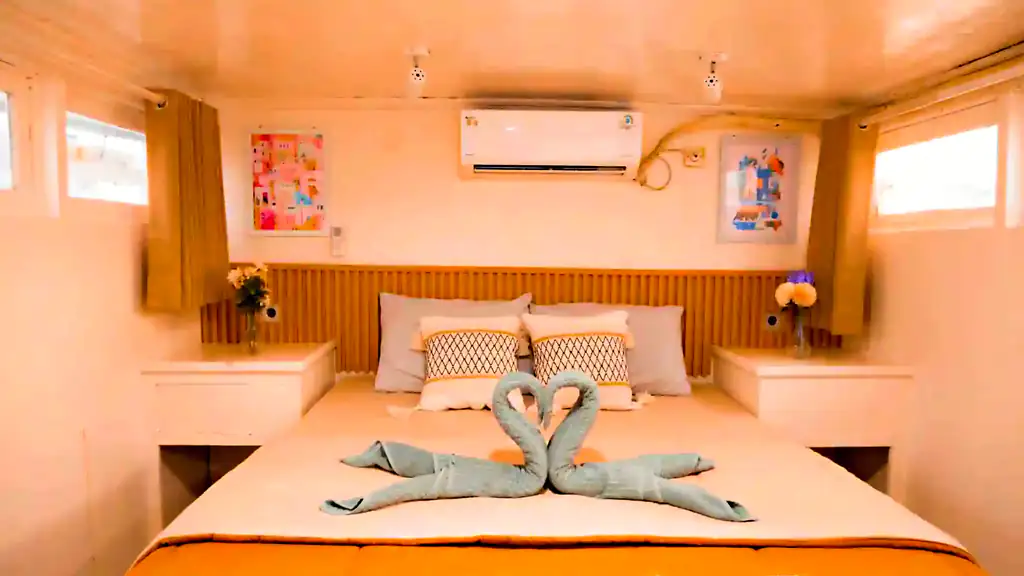
Sockets on the boats follow the same standard, but there may be only one or two in a cabin. A small charger with several USB ports turns one socket into charging for the whole family, and it takes far less space than a bag full of separate plugs.
A universal travel adapter with built-in USB ports is the simplest kit of all: one plug for the socket, several ports for your devices. Choose one that is solid rather than the cheapest you can find, because a loose adapter in a socket on a moving boat is both annoying and unsafe. If you travel as a family or a group, bring two, so nobody has to wait for a free socket.
Where to charge on board
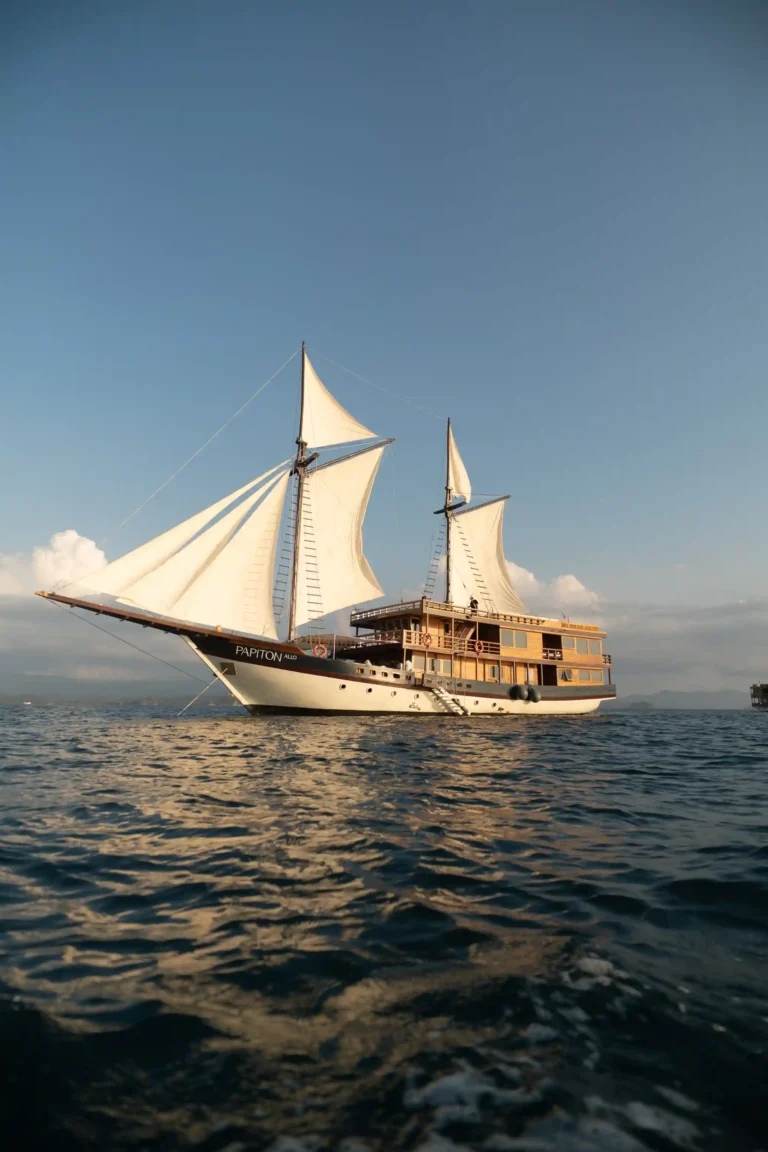
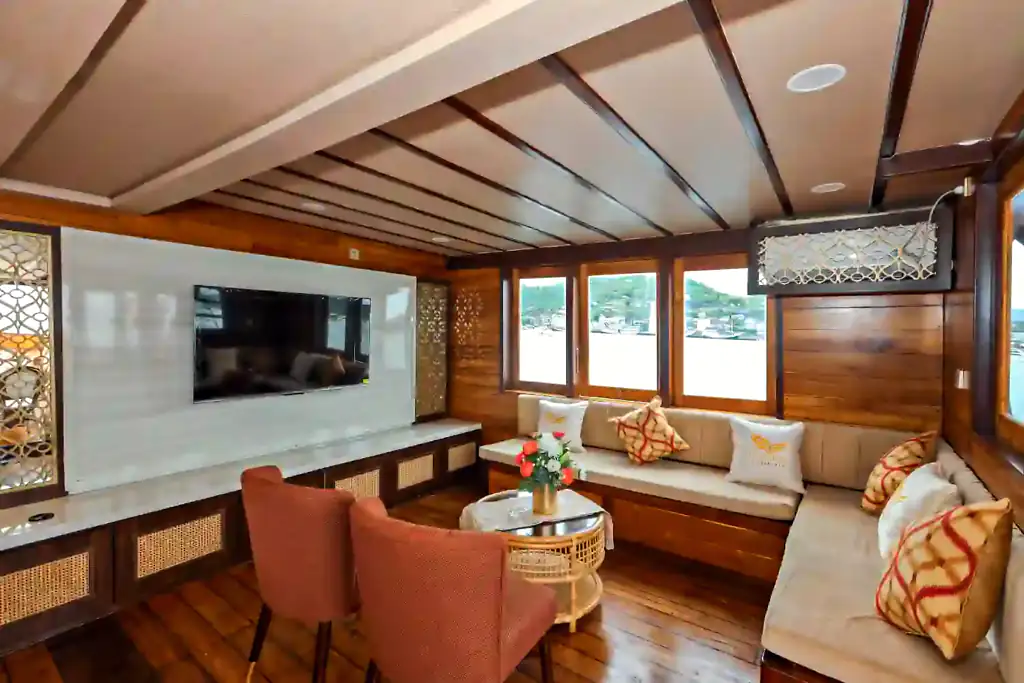
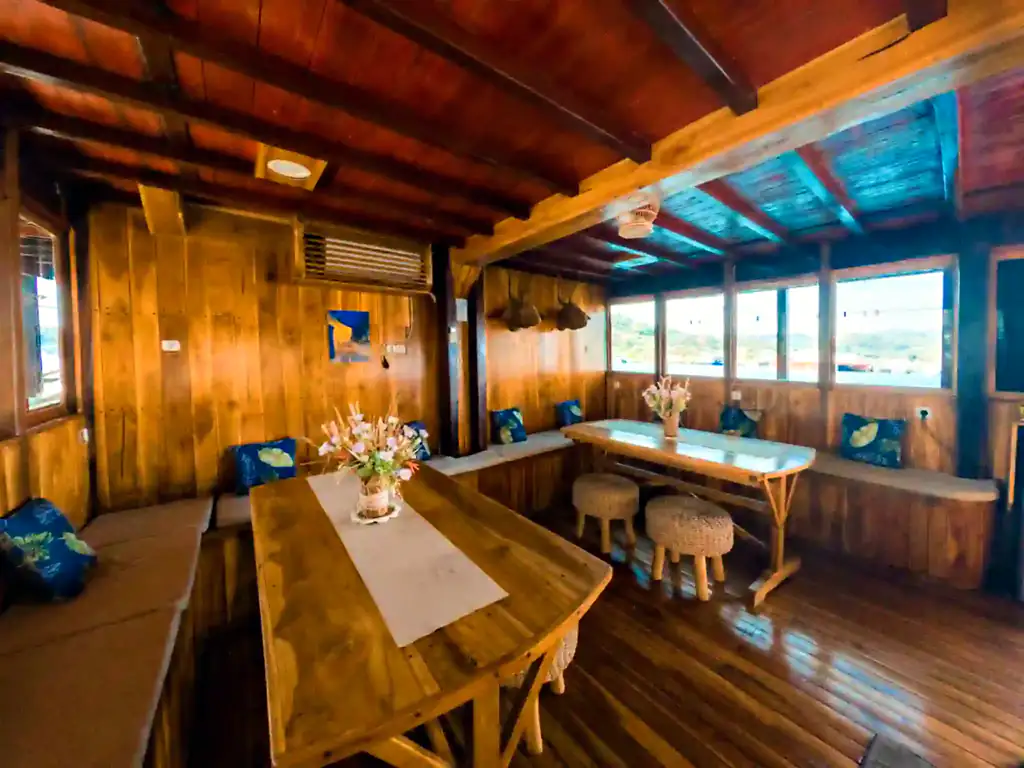
Most guests charge in their cabin overnight or during the long sailing stretches. Many boats on this site also list charging points for phones and cameras in the lounge or the dining area, including Papiton Allo, Gandiva, Carnaby 02, Sukha Sail 1, Lamain Voyage 1, Vinca Voyages, Raffles Cruise, Mosalaki and Neptune Cruise. The facilities on each boat page show what is available.
The table gives examples of the power systems that boats on this site describe. A bigger generator does not mean more sockets in your cabin, but it shows how each boat is equipped.
| Boat | Power on board |
|---|---|
| Papiton Allo | Two Mitsubishi generators of 40 and 60 kVA |
| Sukha Sail 2 | Two 50 kVA generators, an emergency generator, a lithium battery bank and 6,000 W of solar panels |
| Le Costa | Two 50 kVA generators and a portable generator |
| Marea | Two 40 kVA generators |
| Vinca Voyages | A 30 kVA generator with an emergency generator in reserve |
| Alfathran 3 | Two generators with an emergency generator in reserve |
| Derya Liveaboard | Two generators of 10 and 8 kVA |
| Arham Jaya II | An 11,000-watt generator |
Charging in shared spaces works well, but keep an eye on your things. Label your cables, take your phone with you when you go ashore and do not leave a camera charging in the lounge overnight.
Phones, cameras and drones
A typical day in Komodo drains a phone quickly: photos and videos at every stop, maps, messages when there is a signal and a torch on the way up Padar before sunrise. Charge it fully every night, and carry a small power bank in your day bag for the walks. Turning on flight mode when there is no signal saves a surprising amount of battery.
Download offline maps, music and anything you want to read before you leave Labuan Bajo, so your phone is not searching for a network all day. Lower the screen brightness on deck, close the apps you do not need and keep the phone out of the direct sun, which drains a battery and can make a phone too hot to charge.
Cameras and action cameras need spare batteries rather than constant charging. Bring at least two, charge them during the sailing stretches, and keep a full one in your bag for the dragons and the sunsets. Our Komodo photography guide covers the rest of your kit.
Drone batteries are larger and take longer to charge, so ask the crew where and when you can charge them, and never leave them charging unattended. Before you fly, read our guide to flying a drone in Komodo, which explains the park fee and the rules.
Charging on a liveaboard: a daily routine
The easiest way to handle charging on a liveaboard is to follow the rhythm of the trip. In the evening, after dinner, put your phone, your power bank and one camera battery on charge in the cabin. In the morning, everything is full for the walk up Padar or the dragons, and your power bank goes into your day bag.
The long sailing stretches in the middle of the day are the second charging window. While the boat moves between the islands, top up the cameras and the drone batteries, back up your photos and let the phone rest. By the time the boat reaches the next stop, you are ready again, and nothing needs to charge overnight in a pile on the bed.
On the last morning, charge everything before you pack, because the transfer, the airport and the flight home are long. A full power bank in your hand luggage, under 100 Wh, keeps your phone alive for the boarding pass and the journey.
How much power do you need?
Less than you might think. A phone needs one full charge a day, a camera one or two batteries, and an action camera a battery for every few hours of filming. A drone is the hungriest device most guests bring: each flight uses a battery, and recharging a set of drone batteries takes a few hours.
A power bank of 10,000 to 20,000 mAh covers a phone for a long day ashore, with room to spare. Bigger is not always better: anything above 100 Wh needs the airline’s approval, and a heavy power bank is one more thing to carry up Padar. Plan for a full charge each night and one top-up during the day, and charging on board will never get in the way of the trip.
Laptops and working on board
A laptop is welcome on board, and many guests use one in the evening to back up their photos. Charge it in your cabin or in the lounge, and keep it in a padded, water-resistant sleeve, because the sea air is salty and spray reaches further than you think on a windy crossing.
Working on board is possible on some boats, but plan for limited connections. A few boats on this site have Starlink, and on others the Wi-Fi depends on the mobile network, which comes and goes between the islands. Our guide to Wi-Fi on a liveaboard explains what to expect. If you must work, download your files before you leave Labuan Bajo and treat any connection on board as a bonus.
Power banks and your flights
Almost everyone flies to Labuan Bajo, so the airline rules for batteries matter before the boat does. The rules below come from the US Federal Aviation Administration’s PackSafe guidance, which follows the international standard; your airline may be stricter.
- Hand luggage only. Power banks and spare lithium batteries must never go in checked bags.
- Up to 100 Wh per battery is allowed without approval.
- From 101 to 160 Wh, you need the airline’s approval, and you may carry two spares at most.
- Protect the terminals with tape, a case or the original packaging.
- Damaged or swollen batteries are not allowed on board at all.
To work out the rating, multiply the voltage by the amp hours. A common 20,000 mAh power bank at 3.7 volts is 20 Ah times 3.7 V, or 74 Wh, well under the limit. Many airlines also limit how many power banks you can carry, or whether you can use them during the flight, so check with your airline before you pack. If your bag is taken at the gate, take the power banks out and keep them with you.
Medical devices
If you use a CPAP machine or another device that needs power at night, tell us when you book and ask about power in your cabin before you travel. Bring the right adapter and, if possible, a battery that can cover a night without mains power, so a pause of the generator does not interrupt your sleep.
For the flights, the CDC’s advice for travellers with chronic illnesses is to get your airline’s clearance for any medical device in your hand luggage. Keep medicines that must stay cool in mind too: ask the crew whether there is a fridge you can use, and bring a cool bag for the journey.
Charging safely
Lithium batteries are safe when they are treated well. The FAA notes that any lithium-ion battery can overheat, especially if it is damaged, exposed to water, overcharged or badly packed. On a wooden boat, a few habits keep everyone safe.
- Charge on a hard surface, never under a pillow or on the bed.
- Never charge a wet device. Rinse salt water off, dry it fully and wait.
- Stop using a battery that swells, gets very hot or smells, and tell the crew.
- Use good cables and chargers, not damaged or cheap ones.
- Unplug when full, especially large batteries such as drone packs.
Keep everything electronic in dry bags on the tender rides and at the beaches. Salt water and sand are the real enemies of electronics in Komodo, far more than the power on board.
Charging etiquette on a shared boat
On a sharing trip, the charging points in the lounge are shared by everyone on board. Take what you need and free the socket when your device is full, rather than leaving it plugged in all day. If you share a cabin, agree with your cabin mate on who charges what overnight, and keep your cables tidy so nobody trips over them in the dark.
Ask before you plug in anything large, such as a drone charger or a laptop with a big power brick, and avoid high-power appliances unless the crew agrees. Our guide to sleeping on deck has more on sharing the boat at night, and a little courtesy keeps the power, and the mood, flowing for everyone.
What to pack
- A plug adapter for type C and F sockets.
- A multi-port USB charger, ideally with a fast-charging port for your phone.
- A power bank of up to 100 Wh, in your hand luggage.
- Spare camera batteries and memory cards.
- Dry bags for the tender rides and the beaches.
- A headlamp or small torch with spare batteries or a charging cable.
- Cable labels or ties, so your cables come home with you.
Our Komodo packing list covers clothes, toiletries and everything else for the trip.
Our view
Charging on a liveaboard is easy when you plan for it: an adapter for type C and F sockets, a multi-port charger, a power bank in your hand luggage and a habit of charging overnight and during the long crossings. Treat the boat’s power with care, keep your electronics dry and safe, and the only thing you will need to worry about is having enough space for the photos, in a UNESCO World Heritage Site that has been protected since 1991.
Charge at night, shoot all day, and keep your phone in a dry bag on the tender.
Want to check the facilities on your boat? Compare the sharing trips on this site: every boat page lists its facilities, from charging points and Wi-Fi to air conditioning and hot water.
Questions
Is there electricity on a Komodo liveaboard?
Yes. Every boat makes its own power with generators, and some add solar panels and batteries.
What plug do I need for Indonesia?
Type C or F, the round two-pin plugs. Indonesia uses 230 V at 50 Hz, so bring an adapter if your plugs are different.
Can I charge my phone in my cabin?
On most boats, yes, although some cabins have only one or two sockets. Ask the crew when the power is on.
Does the power go off at night?
It depends on the boat. On some boats the cabin sockets work only while a generator runs, so ask the crew on the first day.
Should I bring a power strip?
A small multi-port USB charger is usually enough and safer than a long power strip. Bring two if you travel as a family.
Can I bring a power bank on the flight to Labuan Bajo?
Yes, in your hand luggage only. Up to 100 Wh is allowed without approval; check your airline’s own limits.
Can I charge drone batteries on board?
Usually, yes. Ask the crew where and when, and never leave large batteries charging unattended.
Can I use a hair dryer on the boat?
Ask the crew first. High-power appliances put a heavy load on the generator, and some only work on one voltage.
I use a CPAP machine. What should I do?
Tell us when you book, ask about power in your cabin and bring a battery that can cover a night, as well as the right adapter.
How do I keep my electronics safe from salt water?
Use dry bags on the tender and at the beaches, and never charge a device that is still wet.
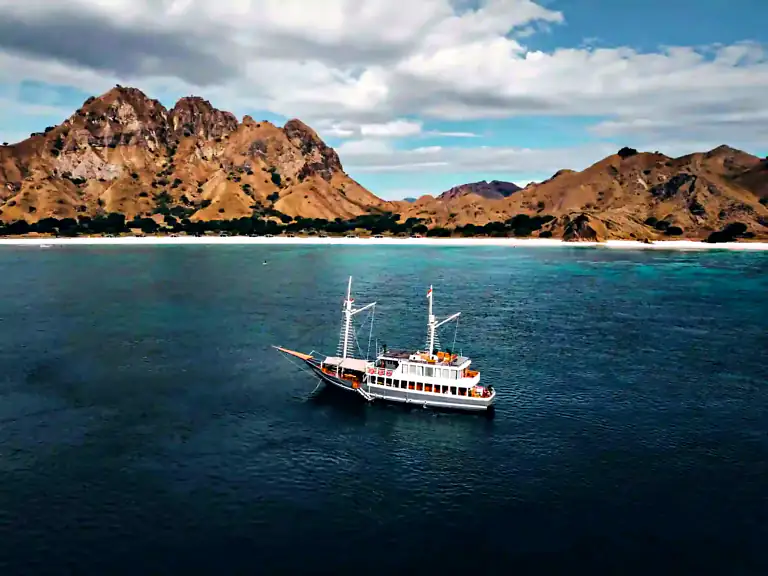
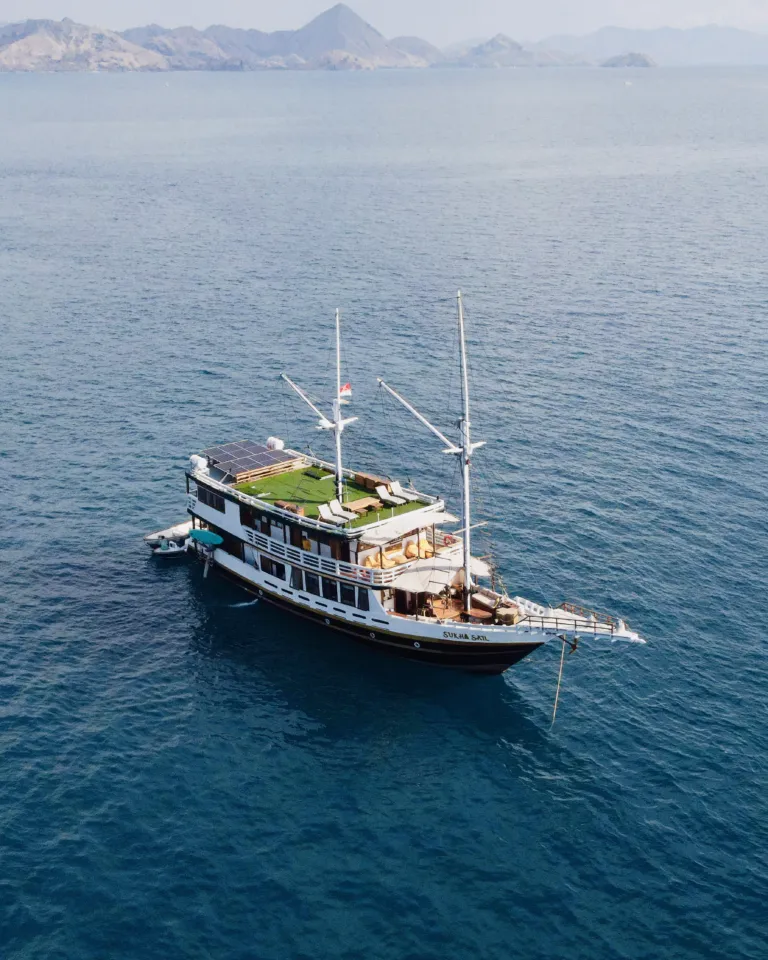
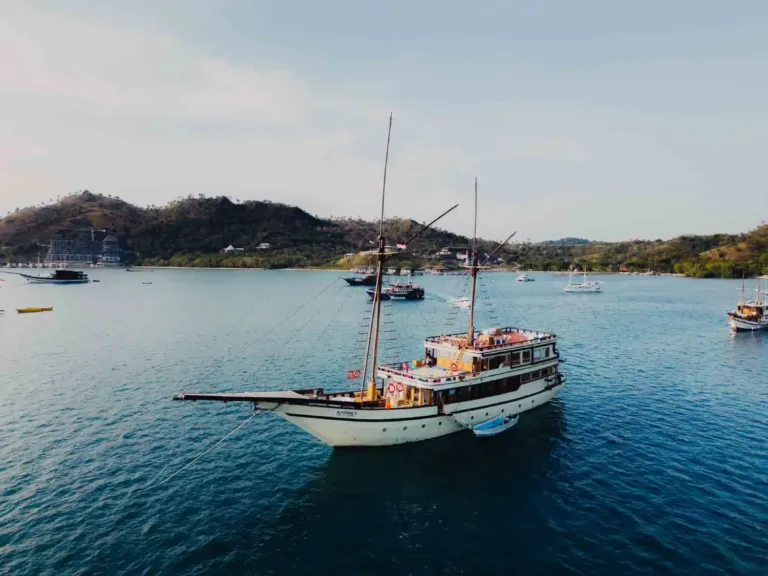

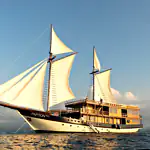
 Elbark Cruise
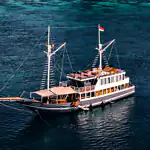
 Papiton Allo
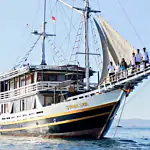
 Semesta Voyages
 Sukha Sail 1