Komodo vs Galapagos is a comparison that wildlife lovers make sooner or later. Both are volcanic island worlds protected as national parks and UNESCO World Heritage Sites, both are home to reptiles found nowhere else on Earth, and both are explored by boat, from one island to the next. Yet they could hardly be further apart: one lies in the Pacific off South America, the other in the heart of Indonesia, a short flight from Bali. This guide compares the two, from wildlife and landscapes to seasons, costs and how to travel, to help you decide which one suits you, or whether you want to see both.
We write about Komodo every day, so we know which side we know best. For the Galapagos, we rely on official sources such as UNESCO and the Galapagos Conservation Trust, and we keep the comparison to what those sources say.
In short
- Both are volcanic islands protected as national parks and UNESCO World Heritage Sites.
- Komodo is famous for Komodo dragons; the Galapagos for giant tortoises, iguanas and fearless wildlife.
- Komodo is a short flight from Bali; the Galapagos lie about 1,000 km off Ecuador.
- The Galapagos park fee is USD 200; Komodo’s is IDR 650.000 on most boats on this site.
Komodo vs Galapagos at a glance
The table puts the two side by side. The figures come from UNESCO’s descriptions of both sites, from the Galapagos Conservation Trust and from the boats on this site.
| Komodo National Park | Galapagos Islands | |
|---|---|---|
| Where | Eastern Indonesia, between Sumbawa and Flores | Pacific Ocean, about 1,000 km off Ecuador |
| UNESCO World Heritage | Since 1991 | Since 1978, one of the first sites |
| Islands | Three large islands and many smaller ones | 19 islands and a marine reserve |
| Star animals | Komodo dragons, manta rays, reef fish | Giant tortoises, marine and land iguanas, sea lions, finches |
| Landscape | Dry savanna hills, pink and white beaches, coral reefs | Lava fields, young volcanoes, cactus forests, rich seas |
| How you visit | Liveaboard boats or day trips from Labuan Bajo | Expedition cruises or land-based stays |
| Park fee | IDR 650.000 for foreign guests on most boats on this site | USD 200 for international adult visitors since August 2024 |
In short, Komodo vs Galapagos is a match between a dragon kingdom close to Bali and an evolution laboratory in the far Pacific. Both are extraordinary; they are simply extraordinary in different ways.
Two volcanic island worlds
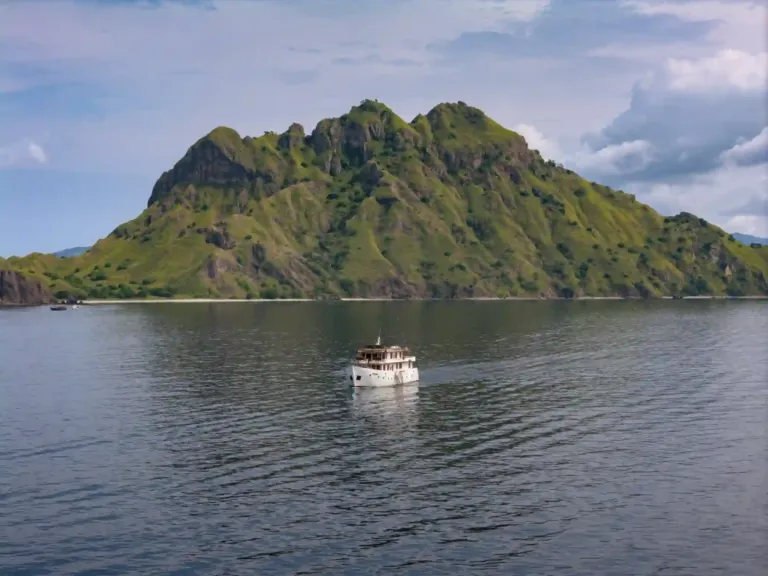
Both archipelagos were born from volcanoes, and both sit where great forces meet. According to UNESCO, Komodo National Park lies at the junction of two continental plates, in the Wallacea region between the Australian and Asian worlds. Its rugged hills of dry savanna, pockets of thorny vegetation and coral-rich seas form one of the most dramatic landscapes in Indonesia, across a protected area of more than 219,000 hectares of land and sea.
The Galapagos are younger and more remote. UNESCO describes 19 islands some 1,000 km from the coast of Ecuador, at the meeting point of three ocean currents and three tectonic plates. The largest and youngest islands, Isabela and Fernandina, are less than a million years old, while the oldest are three to five million years old, and volcanoes there are still active.
The result is two very different moods. Komodo is golden and green, warm and sheltered, with calm bays between steep islands. The Galapagos are black lava, grey-green scrub and cool, nutrient-rich waters, wilder and more open to the ocean.
Islands that explain evolution
Both archipelagos matter to science for the same reason: isolation. On the Galapagos, the finches, mockingbirds, land snails and giant tortoises of each island changed in their own way, and UNESCO calls the islands an almost unique example of how ecological and evolutionary processes shape life. Darwin’s visit in 1835 turned them into the most famous classroom of biology.
Komodo tells a different chapter of the same story. UNESCO notes that the dragons are of great scientific interest, especially for their evolutionary implications, as the last representatives of large lizards that once lived across Indonesia and Australia. Island populations differ too: the dragons of the small islands of the park, such as Gili Motang, are smaller than those on Komodo and Rinca. Our guide to Gili Motang explains why.
For a visitor, that history adds depth to every walk and every swim. In the Galapagos, you see evolution in the beak of a finch; in Komodo, you see it in a giant lizard that survived when its relatives disappeared.
Iconic wildlife on land
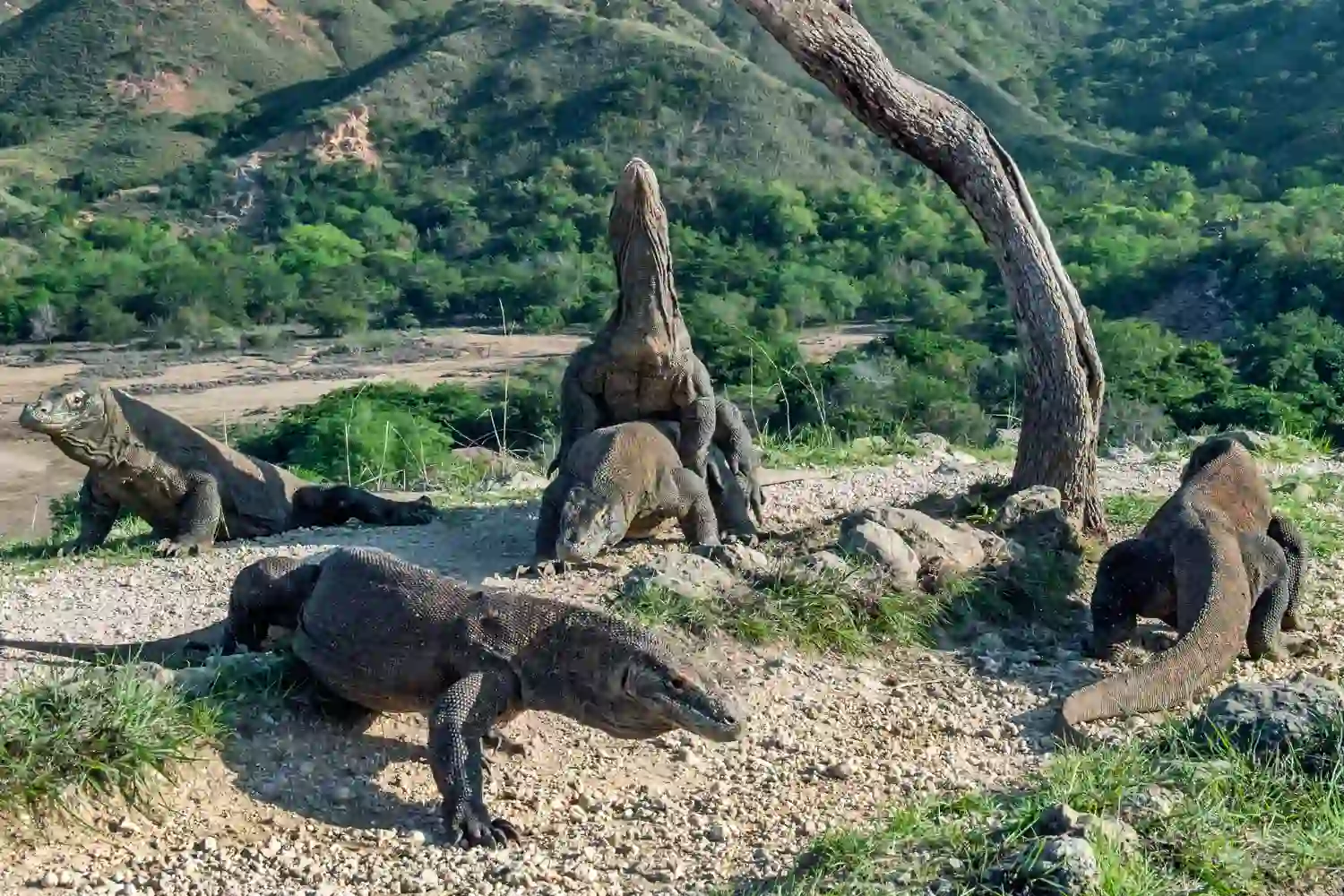
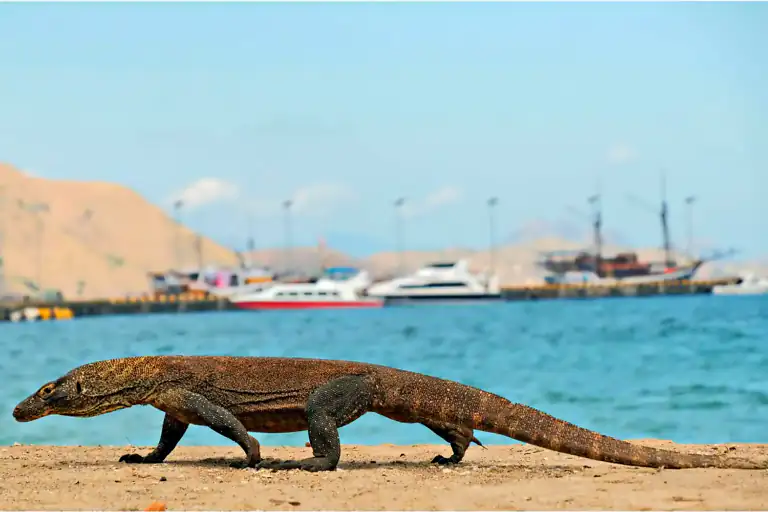
Komodo has one superstar. The Komodo dragon, the largest living lizard, grows to an average of two to three metres, according to UNESCO, and lives in the wild only in and around this park. It is the last of a lineage of giant lizards that once lived across Indonesia and Australia. The park also protects Timor deer, the orange-footed scrubfowl and an endemic rat, and the rare yellow-crested cockatoo can be seen in the hills. Our guide to Komodo dragons tells their story.
The Galapagos have a whole cast. UNESCO lists marine iguanas, flightless cormorants, giant tortoises, land iguanas, huge cacti and the many kinds of mockingbirds and finches that inspired Charles Darwin’s theory of evolution after his visit in 1835. Much of their fame comes from how close you can get: many animals in the Galapagos show little fear of people.
That is the biggest difference on land. In the Galapagos, wildlife often ignores you. In Komodo, the star animal is a wild predator, and you meet it on a walk led by park rangers, at a safe distance. Both experiences are unforgettable, but they feel very different: one is intimate and gentle, the other thrilling and humbling.
Life in the water
Both parks are as famous underwater as on land. UNESCO describes the coral reefs of Komodo as hosting a great diversity of species, with sea turtles, whales, dolphins and dugongs drawn by the strong currents. Manta rays are a highlight of most trips: a study published in 2022 identified more than 1,000 individual reef mantas in the park, present all year. Snorkelling over the reefs, at Pink Beach, Taka Makassar or Manta Point, is part of every trip on this site.
The Galapagos Marine Reserve is a different world. UNESCO calls it an underwater wildlife spectacle, from corals to sharks to penguins to marine mammals, and notes how familiar the animals are with people. The cooler water, shaped by three currents, brings sea lions, marine iguanas feeding on algae and large schools of fish.
For snorkellers, Komodo’s warm, clear water and colourful reefs are easier and more relaxing. For divers looking for big animals in cool, rich currents, the Galapagos are a legend. Komodo’s currents can be strong too, which is why the guide always chooses the sites and the times.
In both parks, the sea is protected as strictly as the land. Never touch the coral or the animals, keep a respectful distance from manta rays, turtles and sea lions, and use a reef-safe sunscreen or, better, a rash guard. Our guide to plastic-free travel has simple habits that help the reefs of Komodo.
How you see them
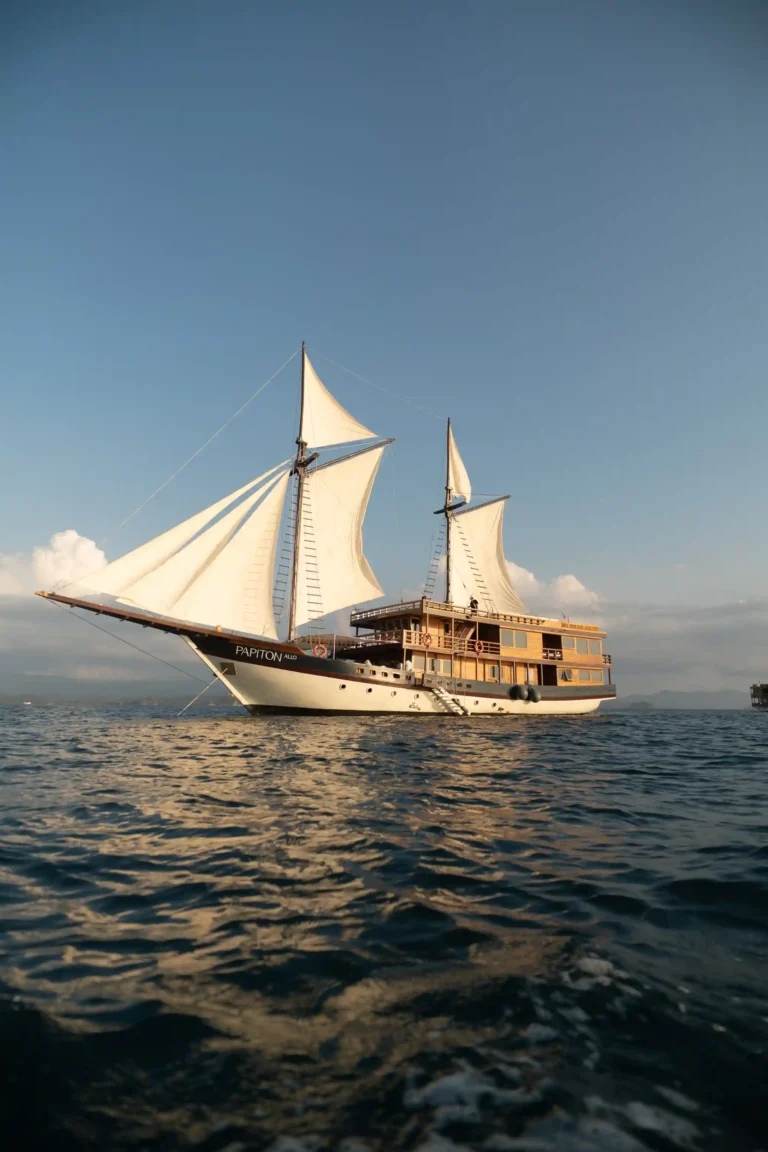
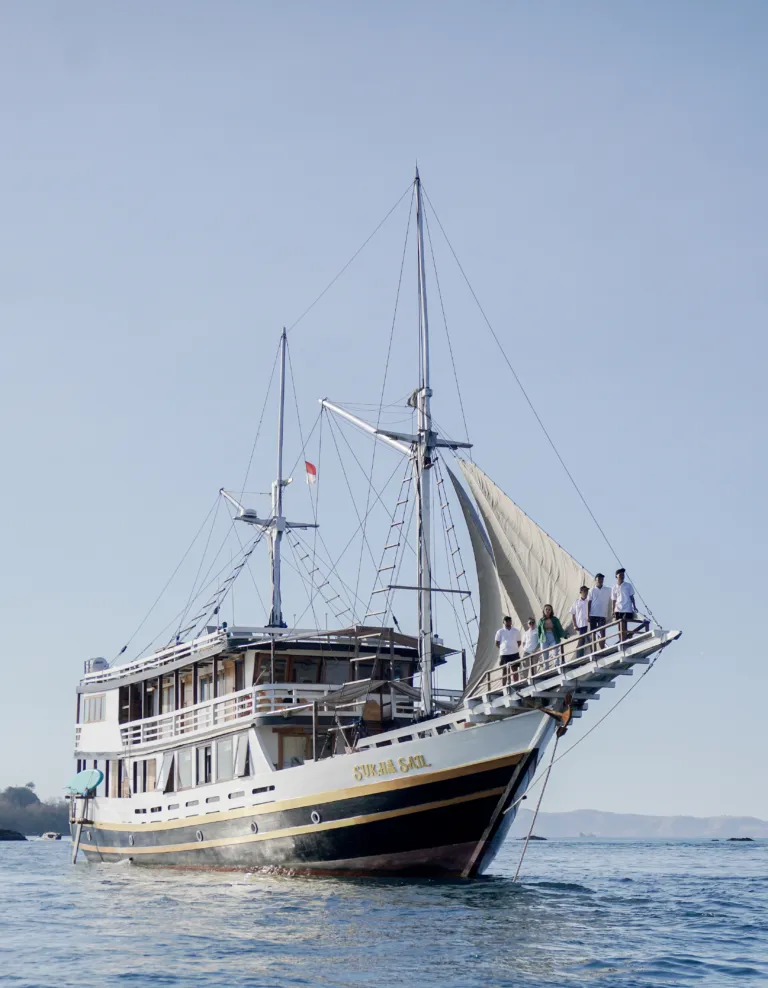
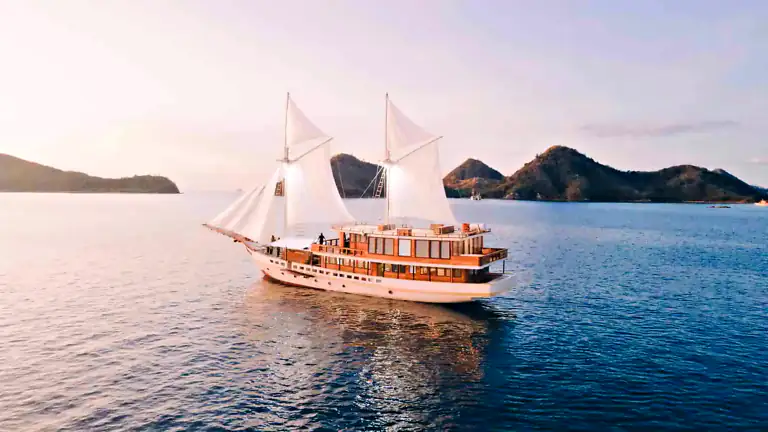
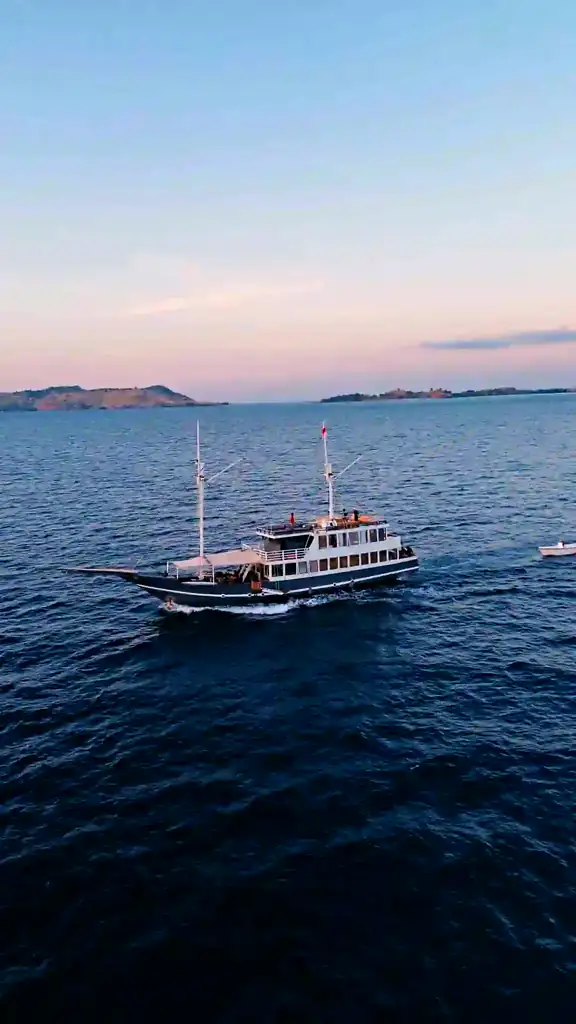
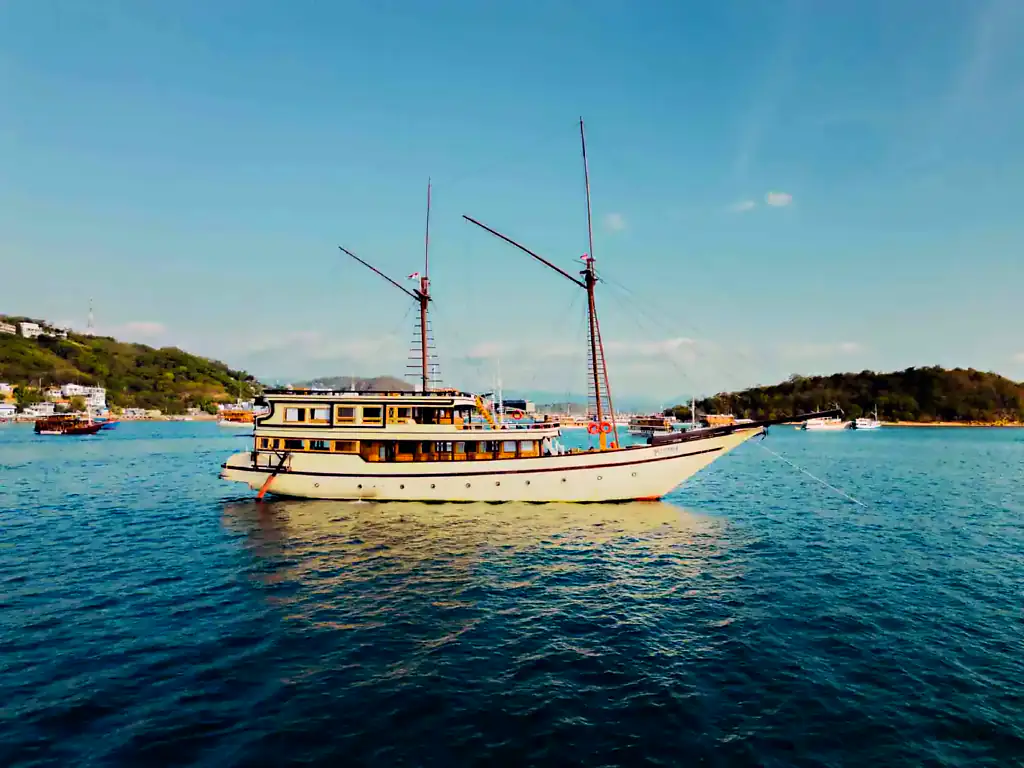
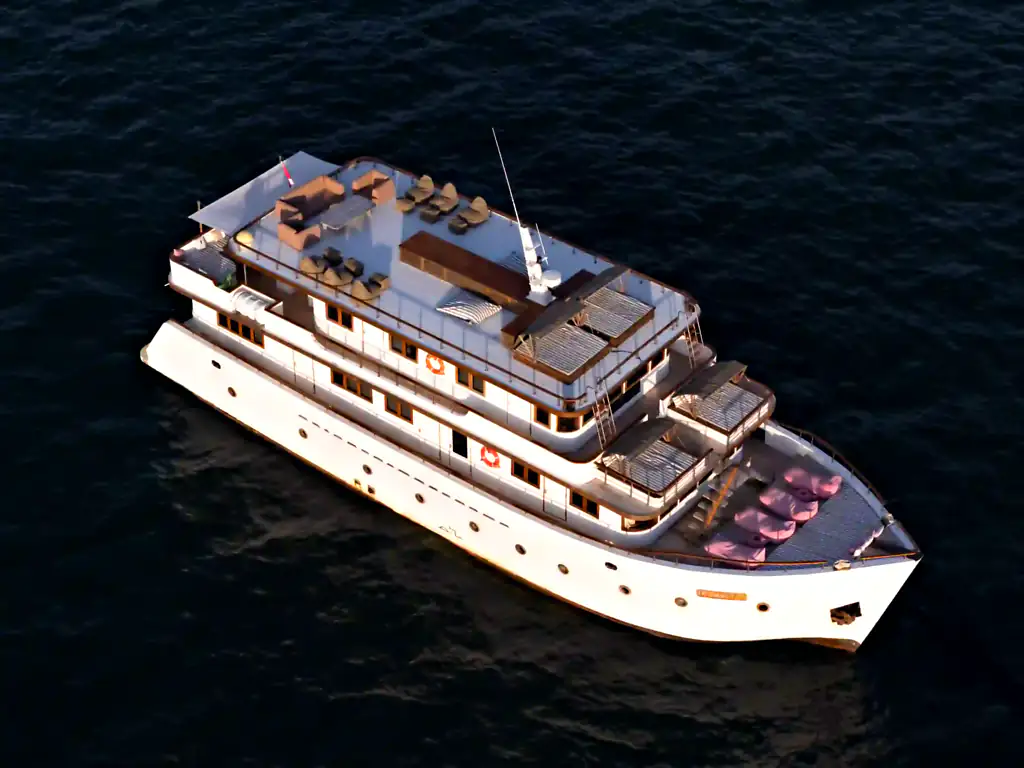
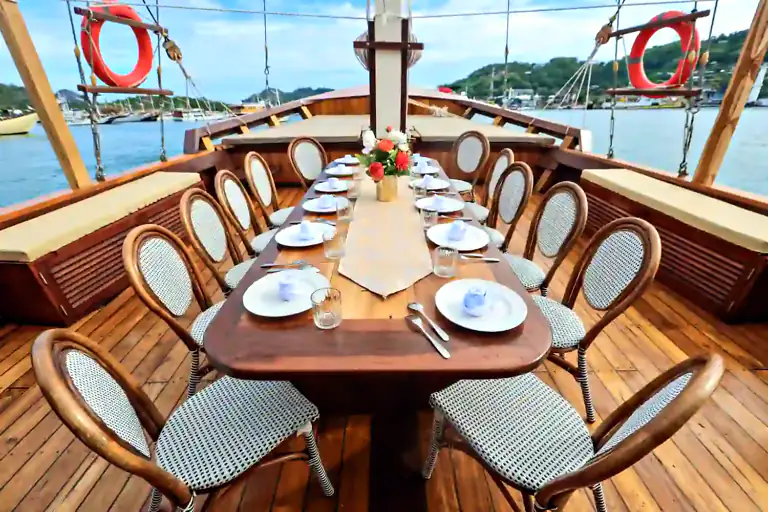
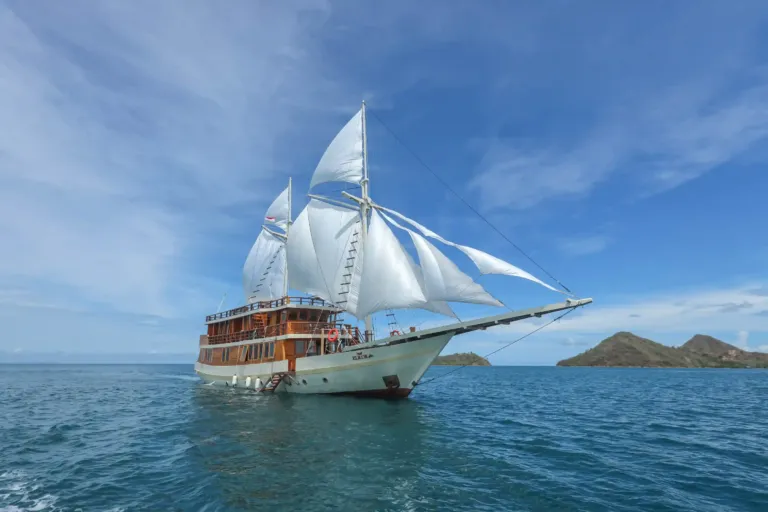
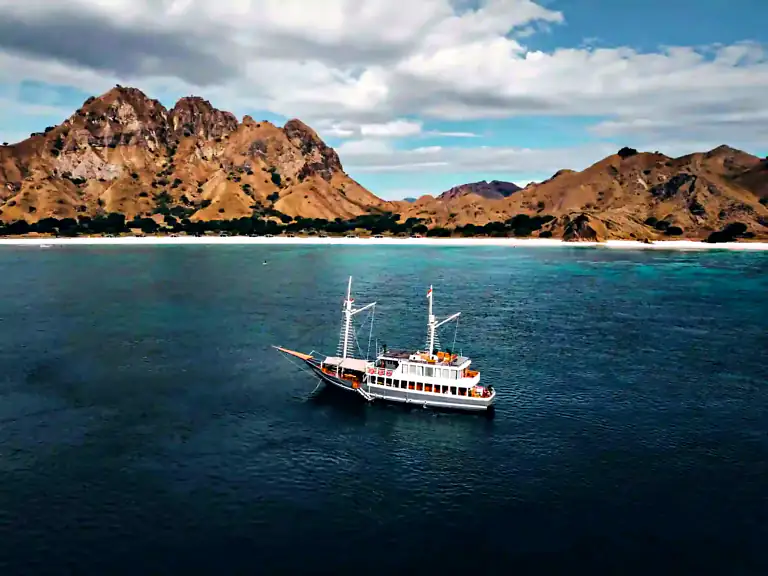
Both are best explored by boat. In Komodo, most visitors join a liveaboard, usually a traditional wooden phinisi, for two to four days, sleeping on board and waking up at a new island each morning. The boats leave from Labuan Bajo, and a sharing trip lets you book a single cabin; a private charter gives your group the whole boat. Our guide to what a liveaboard is explains how it works.
In the Galapagos, visitors choose between expedition cruises that move between the islands and land-based stays on the inhabited islands, with day trips by boat. In both parks, the most sensitive places are visited with official guides: rangers lead every walk to see the dragons in Komodo, and naturalist guides accompany visitors at many sites in the Galapagos.
The pace is similar: early starts, walks in the cool of the morning, swims in the middle of the day and quiet evenings at anchor. The difference is distance. Komodo’s islands are close together, so a three-day trip covers the main highlights, while the Galapagos spread over a much larger area.
Getting there
For most travellers, access is the deciding factor. Komodo is easy to combine with Bali: Labuan Bajo, the gateway town on Flores, has direct flights from Bali and Jakarta, and the flight from Bali takes a little over an hour. Many visitors spend a week in Bali and add three days on a boat. Our guide on travelling from Bali to Komodo explains the options.
The Galapagos are reached by flights from mainland Ecuador, which itself is a long journey from Europe, Asia or Australia. For travellers from the Americas, the Galapagos are closer; for travellers already in Asia or Australia, Komodo is far easier to reach. Either way, plan a buffer day before the boat, because a delayed flight should never cost you the start of an island trip.
Seasons and weather
Komodo has a dry season from April to November, with clear skies and calm seas, and a wet season from December to March, when the hills turn green and very few boats sail in January and February. It is warm all year, with daytime highs around 30 to 33°C. Our guide to the best time for a Komodo liveaboard goes month by month.
The Galapagos climate is shaped by ocean currents rather than a classic monsoon. In general, the first half of the year is warmer, with calmer seas, and the second half is cooler and breezier, with richer, colder water. Both parks can be visited much of the year, but each has its own rhythm, so check the season for the wildlife you most want to see.
Costs and park fees
Park fees show the difference clearly. According to the Galapagos Conservation Trust, the entry fee for international adult visitors rose from USD 100 to USD 200 on 1 August 2024, the first increase since 1998, to fund conservation and the local community. In Komodo, the park fee for foreign guests is IDR 650.000 on most boats on this site, and it is added to your invoice.
Boat prices follow the same pattern. On this site, a place on a three-day sharing trip in Komodo starts at around IDR 3.000.000 per person on simpler boats, and private cabins on the most comfortable boats cost several times more. Galapagos expedition cruises are generally a much larger investment, before the long-haul flights. Our guide to a Komodo trip budget breaks down the costs.
Protecting two fragile treasures
Both parks face the same challenge: how to welcome visitors without loving the islands to death. In the Galapagos, the fee increase came after a sharp rise in land-based tourism that put pressure on waste and water systems and raised the risk of invasive species, and UNESCO’s World Heritage Committee urged a model of zero growth in tourism.
Komodo has taken its own steps. Since 1 April 2026, Indonesia’s Ministry of Forestry has limited visits to Padar, Rinca, Komodo and 23 dive sites to 1,000 people a day, booked through the park’s reservation system. In 2021, the IUCN listed the Komodo dragon as Endangered. Our guide to responsible travel in Komodo explains how visitors can help.
For visitors, the rules are similar in both places: follow the guides, keep your distance from wildlife, never feed or touch animals, stay on the trails and take nothing but photos. They are small habits that keep both treasures alive for the next generation.
Which one is right for you?
- Choose Komodo if you want dragons, warm water, easy snorkelling, dramatic sunsets and a trip that fits into a holiday in Bali or Indonesia.
- Choose the Galapagos if you dream of tame wildlife, giant tortoises, the story of evolution and big animals in cool, rich seas.
- Choose Komodo for a shorter, more affordable trip with a choice of boats for every budget.
- Choose the Galapagos if you are already travelling in South America and can spend a week or more on the islands.
- Choose Komodo if you love hiking to viewpoints at sunrise and sleeping on the deck of a wooden sailing boat.
Families with children often find Komodo easier: short flights, warm water and three-day trips. Our guide to Komodo with kids covers the details.
Can you do both?
Many wildlife lovers do, but rarely on the same trip: the two parks are on opposite sides of the Pacific. A good approach is to see the one closest to your other travels first. If you are planning a trip to Indonesia, add Komodo to Bali or Java; if you are heading to Ecuador or Peru, add the Galapagos.
If you have seen one, the other will still surprise you. The Galapagos teach you how life adapts on remote islands; Komodo shows you a giant predator in a landscape that seems made for it. Together, they are two of the great island journeys on Earth. Our guide to Komodo vs the Maldives compares Komodo with another famous island destination.
Our view
Komodo vs Galapagos is not a contest with a loser. The Galapagos are the world’s great showcase of evolution, with wildlife that barely notices you; Komodo is the last kingdom of the giant lizards, with warm reefs and golden hills, a short flight from Bali. If you are in Asia, or want a shorter and more affordable trip, start with Komodo, a UNESCO World Heritage Site since 1991.
In the Galapagos, the animals ignore you. In Komodo, the dragons notice you, and that is part of the thrill.
Ready to see the dragons? Compare the sharing trips on this site, with their routes, cabins, live prices and departures.
Questions
Which is better, Komodo or the Galapagos?
Neither is better; they are different. Komodo offers dragons, warm reefs and easy access from Bali; the Galapagos offer tame wildlife and the story of evolution.
Is Komodo cheaper than the Galapagos?
Usually, yes. The park fee is much lower, and three-day sharing trips start at around IDR 3.000.000 per person on this site.
How much is the Galapagos park fee?
USD 200 for international adult visitors since 1 August 2024, according to the Galapagos Conservation Trust.
Are there Komodo dragons in the Galapagos?
No. Komodo dragons live in the wild only in Komodo National Park and parts of Flores, in Indonesia. The Galapagos are home to giant tortoises and iguanas.
Which is better for snorkelling?
Komodo is easier and warmer, with colourful reefs and manta rays. The Galapagos have cooler water with sea lions, sharks and marine iguanas.
Can I see manta rays in Komodo?
Yes, often. A 2022 study identified more than 1,000 individual reef mantas in Komodo National Park, present all year, although sightings are never guaranteed.
How many days do I need?
Three days and two nights cover Komodo’s highlights. The Galapagos usually need a week or more, because the islands are further apart.
Are both UNESCO World Heritage Sites?
Yes. The Galapagos were inscribed in 1978 and Komodo National Park in 1991.
When is the best time to visit Komodo?
The dry season, from April to November, brings clear skies and calm seas. Very few boats sail in January and February.
Is Komodo safe compared with the Galapagos?
Yes, when you follow the rangers. The dragons are wild predators, so every walk is guided and visitors keep a safe distance.
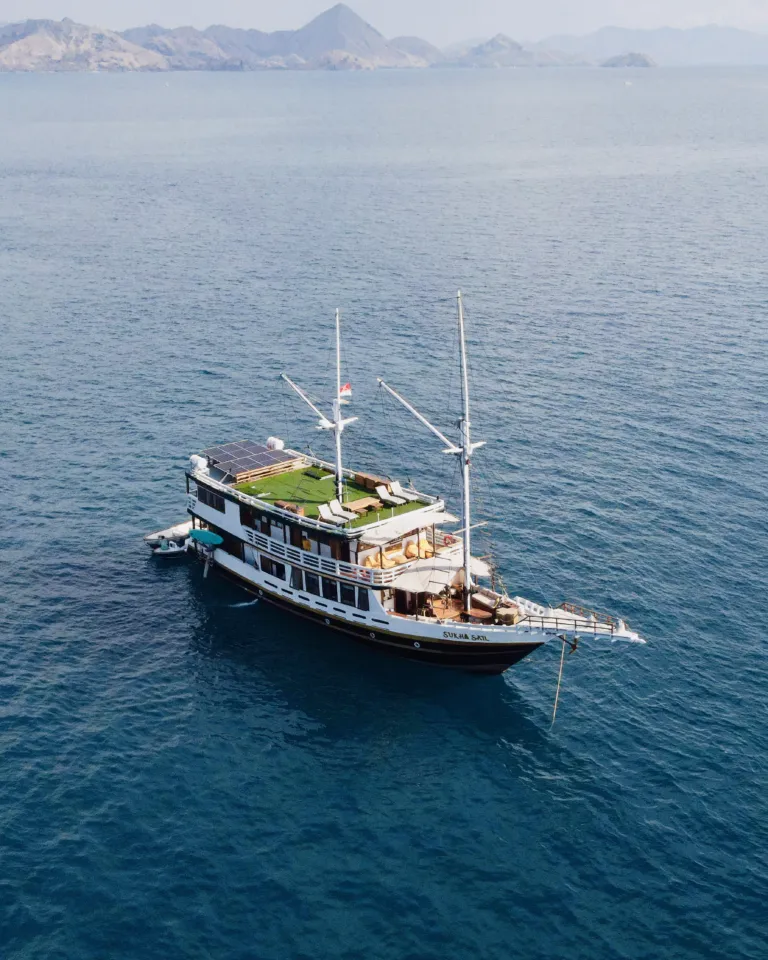
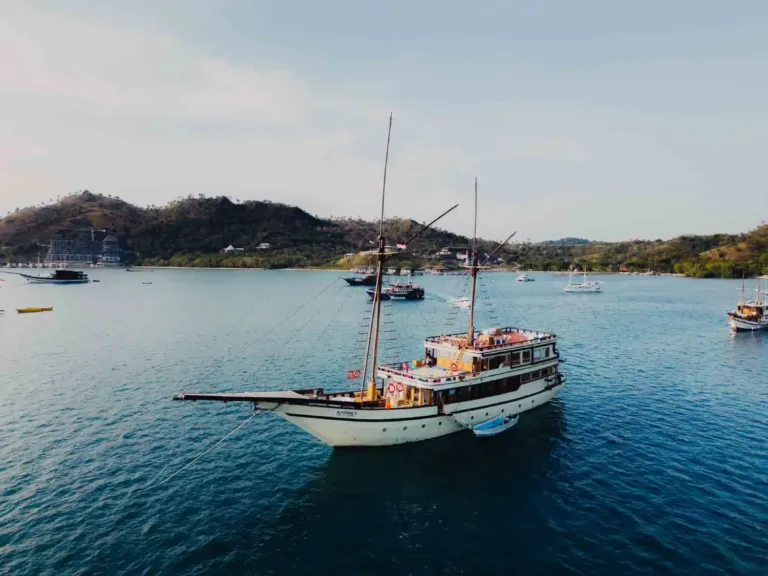
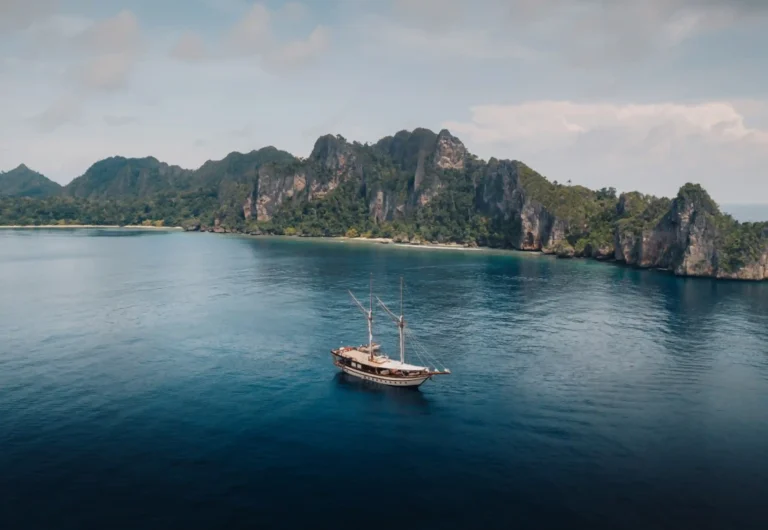
 Elbark Cruise
 Papiton Allo
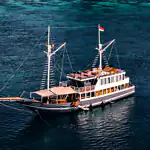 Semesta Voyages
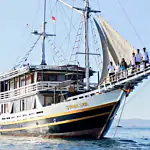 Sukha Sail 1