
Kelor Island is often the first stop of a Komodo boat trip, and it makes a memorable introduction: a small, steep island a short ride from Labuan Bajo, with a quick climb to a viewpoint over the bays, a white beach and calm water for a first snorkel. It takes less than an hour, yet many guests count the view from the top among the best of the whole trip. This guide explains where Kelor Island is, when the boats stop there, what the climb is like, what you see from the top and in the water, and how to make the most of your visit.
In short
- Kelor is a small, uninhabited island about half an hour by boat from Labuan Bajo.
- The climb to the top is short but steep, on loose ground, and takes most people 10 to 20 minutes.
- Most trips of three days stop here on the first afternoon; boats from Lombok stop on the last morning.
- Wear shoes with grip, bring water and go down slowly.
Where is Kelor Island?
Kelor lies among the islands just off Labuan Bajo, the harbour town on the western tip of Flores, in the regency of West Manggarai. It is tiny, about 28 hectares according to Good News From Indonesia, and nobody lives there. From the harbour, the boat ride takes around half an hour.
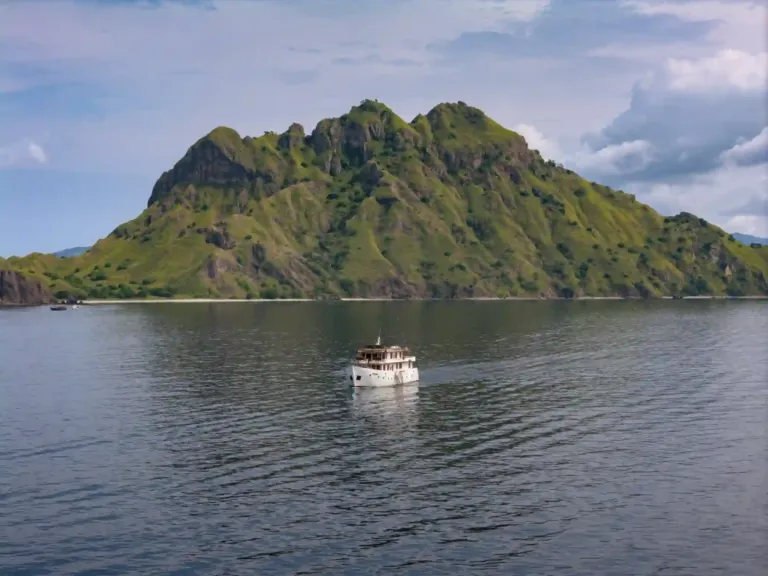
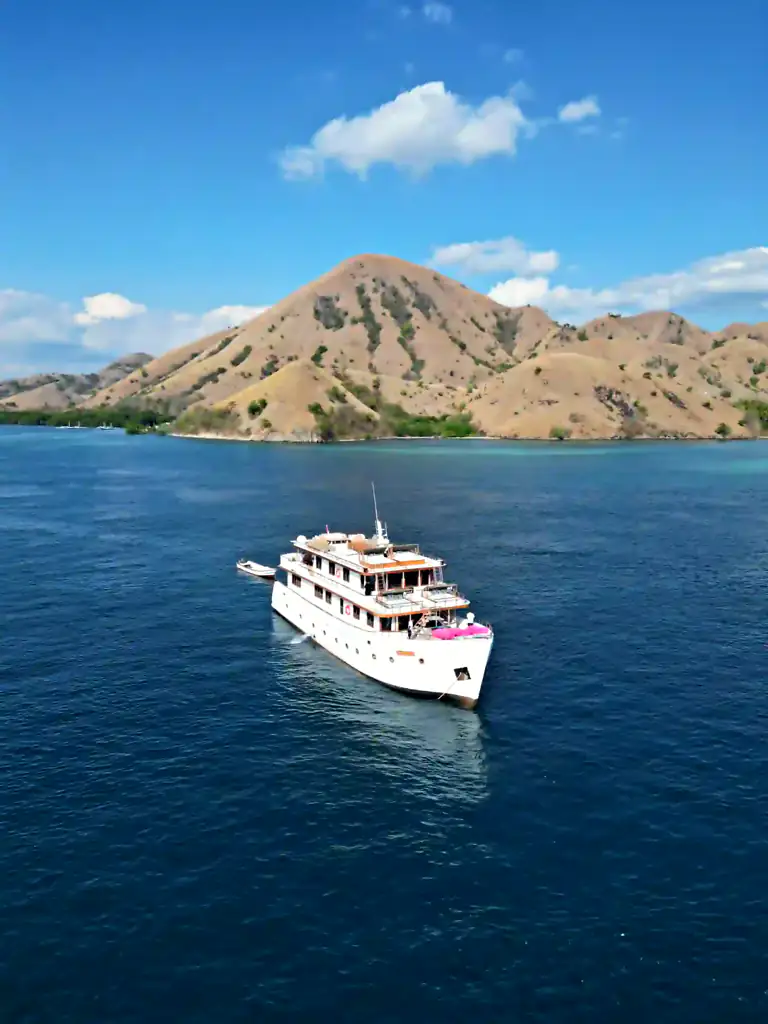
From the water, Kelor is easy to recognise: a steep, cone-shaped hill rising straight from a strip of white sand, green after the rains and golden-brown in the dry season. A shallow reef surrounds part of the island, and the water near the beach is often a clear turquoise.
Kelor is also the Indonesian word for the moringa tree, whose leaves are eaten as a vegetable across the country. Whatever the origin of the name, the island has become one of the classic first stops on the way into Komodo National Park.
When the boats stop at Kelor
On most sharing trips of three days and two nights from Labuan Bajo, Kelor is part of the first afternoon. A typical first day on the boats on this site runs like this: pick-up from the airport or your hotel in the morning, lunch on board, the walk up Kelor, a first snorkel at Manjarite and the sunset at Kalong Island, where thousands of flying foxes leave the mangroves at dusk.
On the route between Lombok and Labuan Bajo, Kelor comes at the end instead. Alfathran 3 stops for a snorkel at Manjarite and a walk up Kelor on the last morning, before reaching Labuan Bajo around noon, and Lady Grace visits Kelor and Manjarite on its last morning too, arriving in Labuan Bajo at about 13:00.
The exact time depends on the boat, the tides and the other boats at the island. On a private charter, you can ask the crew to visit Kelor at a quieter hour, such as late afternoon, when the light on the bays is softer.
The climb: short, steep and worth it
The boats on this site describe it simply: Kelor is a small island with a short, steep trek and a wide view of the bay. The path starts near the beach and goes almost straight up the hill. It is not long, but it is steep, and the ground is loose earth and small stones that can slip under your feet, especially on the way down.
Most people reach the top in 10 to 20 minutes, depending on their pace and how often they stop for photos. There is no need to rush: take small steps, use your hands on the steepest parts and let faster walkers pass. The way down usually feels harder than the way up, so go slowly, keep your weight low and place your feet carefully.
The climb on Kelor Island is a good warm-up for the bigger walk on Padar the next morning. If you manage Kelor comfortably, Padar will feel familiar, and if you find Kelor hard, you will know to take Padar slowly and start early.
The guide usually walks with the group and waits at the top, and nobody minds if you stop several times on the way up. Let the people behind you pass on a wider spot of the path rather than speeding up to keep ahead of them. On a busy afternoon, when several boats arrive at once, it can help to wait a few minutes on the beach and climb behind the first group, so you have more space on the path and at the summit.
The view from the top
From the summit, the view opens in every direction: the turquoise shallows around the island, the boats at anchor below, the scattered islands of the bay and, on a clear day, the hills of Flores behind Labuan Bajo. Good News From Indonesia describes a 360-degree panorama over the nearby islands and the Flores Sea.
The colours change with the time of day. In the early afternoon, the high sun makes the shallow water glow; later, the light turns golden and the shadows of the islands grow long. Take your photos, then simply sit for a few minutes and enjoy it: it is the first big view of the trip, and a taste of what is to come.
The top of Kelor is small, with little room to move around, so be careful where you stand and keep away from the steep edges. The ground can be loose even at the summit. Find a stable place to sit, put your bag down where it cannot slide, and leave space for the people still arriving.
Snorkelling and the beach
After the climb, the beach is the perfect place to cool off. The water off Kelor is usually calm, and Good News From Indonesia describes it as ideal for beginners, with visibility of around ten metres and a reef with colourful corals, clownfish and parrotfish. Snorkelling gear is on board the boats on this site, so you only need to bring your swimwear.
Stay in the areas the guide points out, keep clear of the boats coming and going, and never stand on the coral. If you are new to snorkelling, Kelor is a good place to try your mask and fins before the deeper water and the currents of the park.
Take a moment to adjust your mask on the beach, where you can stand in the shallows, rather than in deeper water. Spit or a drop of anti-fog on the inside of the glass stops it from misting up, and a long-sleeved swim shirt protects your back from the sun while you float face down. If you have never snorkelled before, ask the guide for a life jacket or a float; there is no shame in it, and it lets you relax and enjoy the fish.
Photo tips for Kelor
The summit of Kelor is one of the easiest places on the whole trip to take a memorable photo. Look for the boats at anchor below: a wooden phinisi on turquoise water, seen from above, is the classic picture of Komodo. Turn around for the wider view of the islands, and ask a friend to stand on the ridge to give the landscape a sense of scale.
Light changes everything. In the early afternoon, when most boats stop, the high sun makes the shallow water glow, which is ideal for the colours of the reef; later in the day, the light softens and the hills turn golden. A polarising filter, or simply sunglasses held in front of a phone lens, cuts the glare on the water.
Keep your camera or phone on a strap while you climb and while you take photos near the edge, and never step back to frame a picture on the steep slope. Our Komodo photography guide has more tips for the light and the best spots of the trip.
Tips for your visit
- Wear shoes with grip. Trainers or sturdy sandals are much safer than flip-flops on the loose path.
- Bring water and a hat. The hill has little shade, and the afternoon sun is strong.
- Keep your hands free with a small backpack or a phone strap.
- Go down slowly, sideways on the steepest parts if it helps.
- Leave your snorkelling gear on the beach or the boat while you climb.
- Turn back if you need to. The beach and the reef are lovely too.
- Put on sunscreen after your swim, and choose a reef-friendly one.
Our Komodo packing list covers the shoes and the rest of the gear for the walks, and our guide to the day on a Komodo liveaboard shows how Kelor fits into a full day on board.
Kelor Island vs Padar
Kelor and Padar are the two classic viewpoints of a Komodo trip, and they complement each other well:
| Kelor | Padar | |
|---|---|---|
| When | Usually the first afternoon | Usually the second morning, at sunrise |
| The walk | Short and steep, about 10 to 20 minutes | Longer, on a path with many steps |
| The view | Turquoise shallows and the islands near Labuan Bajo | Three bays with sand of different colours |
| The water | A beach and an easy reef for snorkelling | No swim at the viewpoint |
| Visitor limit | None mentioned on this site | Part of the park’s limit of 1,000 people a day since 1 April 2026, booked through SiOra |
Our guide to Padar Island covers the bigger climb, the quota and the best time to go.
Kelor in the wet and dry seasons
Kelor changes with the seasons. In the dry season, from about April to November, the hill turns golden-brown, the sky is usually clear and the path is dry and dusty. From December to March, the rains turn the slopes green, but the path can be muddy and slippery, so take extra care and wear shoes with good grip.
The heat is the main challenge in any season. In the early afternoon, the sun is strong and there is little shade on the climb, so drink before you start and take your time. Our guide to the Komodo wet season explains how the green months change the landscape.
Kelor for families and older travellers
The climb is short, but its steep, loose path is not for everyone. Older children who are used to walking usually enjoy it, with an adult close by on the way down. Young children, travellers with bad knees and anyone unsure on their feet can stay on the beach, swim and snorkel instead, and the guide is happy to arrange it.
There is no shame in skipping the summit: the beach and the reef are part of the visit too, and you will have plenty of views later in the trip. Our family guide to Komodo with kids has more tips for travelling with children.
After Kelor: Manjarite and Kalong
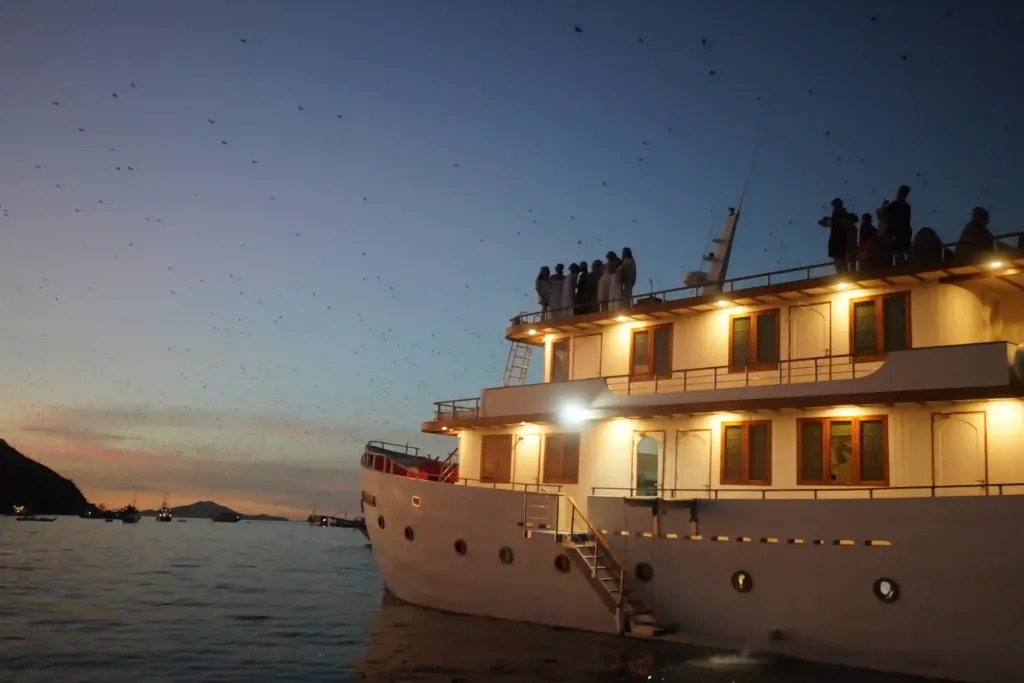
On most first days, the boat moves on from Kelor to Manjarite for a longer snorkel on a colourful reef, then to Kalong Island for the sunset. Kalong is the Indonesian word for flying fox, and at dusk thousands of them leave the mangroves and fly off over the water to feed.
Watching the sky fill with flying foxes from the deck, after a climb and two swims, is a perfect end to the first day. The boat then anchors nearby for the night, ready for the early start on Padar.
It is a well-balanced first day: a little exercise on Kelor, time in the water at Manjarite and a calm evening on deck. It gives everyone on board a chance to get to know each other, try their snorkelling gear and settle into the rhythm of the boat before the long second day. Our guide to sleeping on deck has ideas for the evening at anchor.
Looking after the island
Kelor is small, and many people visit it, so every footstep counts. Stay on the main path rather than cutting new ones down the slope, which loosens the soil and harms the plants. Take all your rubbish back to the boat, including small things like bottle caps and wrappers.
Good News From Indonesia reports that the island is a habitat for the endangered green turtle, which nests on its beach, mainly at night. Never disturb a turtle or its nest, and keep lights low if you are ever on the beach after dark. Our guide to responsible travel in Komodo has more simple ways to protect the park.
Our view
Kelor Island is small, but it punches far above its size: a short, steep climb, a wide view over the bays and a calm reef at the bottom of the hill. It sets the tone for everything that follows, from Padar at sunrise to the dragons of Komodo. Wear good shoes, take your time on the way down and enjoy your first look at one of the most beautiful corners of Indonesia, on the doorstep of a UNESCO World Heritage Site.
Fifteen minutes up a steep little hill, and the whole bay is yours.
Want to climb it? Kelor is on the first day of most trips of 3 days and 2 nights from Labuan Bajo. Compare the boats, their stops and their live prices, and choose your departure.
Questions
How long is the climb on Kelor Island?
Short but steep: most people reach the top in 10 to 20 minutes. The way down on the loose path needs the most care.
Is the Kelor climb difficult?
It is steep and slippery in places, but short. Anyone with reasonable fitness and good shoes can do it at their own pace.
Are there Komodo dragons on Kelor?
No. You see the dragons on the ranger walks on Komodo or Rinca, usually on the second day of the trip.
Can I snorkel at Kelor?
Yes. The water off the beach is usually calm and good for beginners, and snorkelling gear is on board the boats on this site.
How far is Kelor from Labuan Bajo?
About half an hour by boat, which is why it is often the first stop of a trip from Labuan Bajo.
What shoes should I wear on Kelor?
Trainers or sturdy sandals with a good grip. Flip-flops slip easily on the loose earth and small stones of the path.
Is Kelor worth visiting if I also climb Padar?
Yes. The views are different, the climb is shorter, and the beach and reef at the bottom make it a lovely first stop.
When is the best time to climb Kelor?
Most boats stop in the early afternoon of the first day. Later in the afternoon, the air is cooler and the light softer, which you can ask for on a private charter.
Can children climb Kelor?
Older children who are used to walking usually can, with an adult close by on the way down. Younger children can stay on the beach, swim and snorkel.
Is there shade on Kelor?
Very little on the climb. Bring a hat and water, put on sunscreen, and take your time in the afternoon heat.
 Elbark Cruise
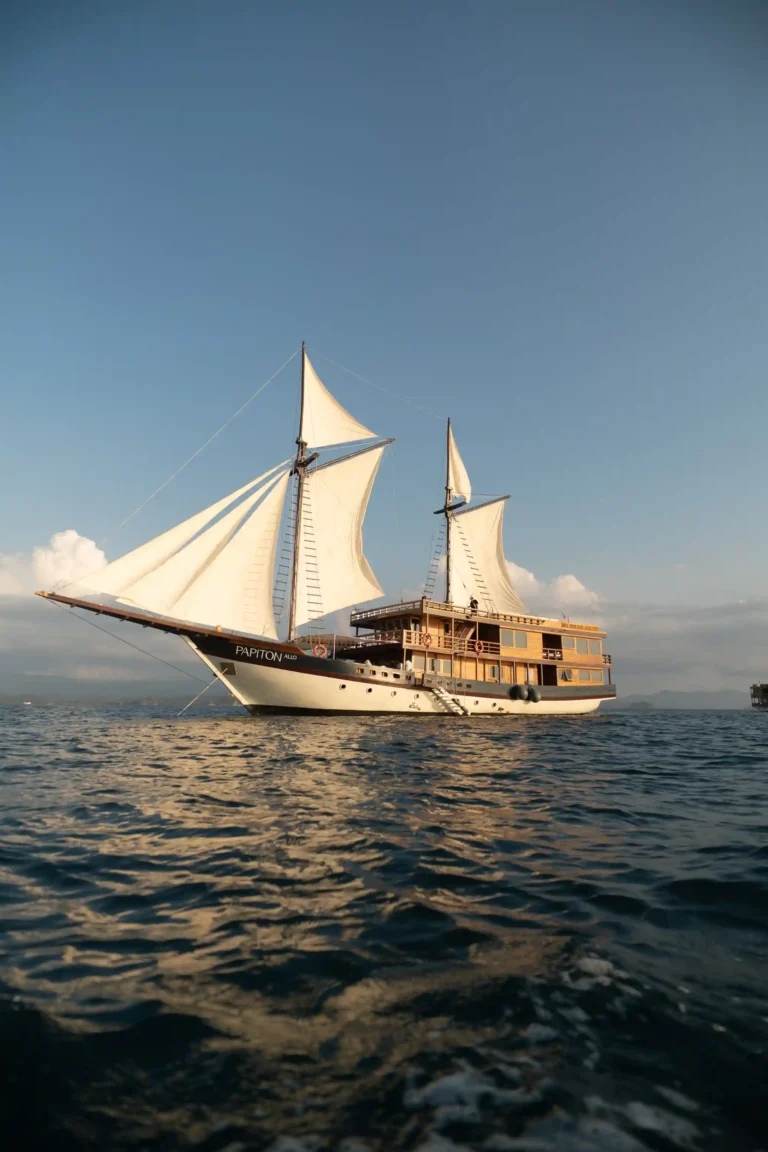
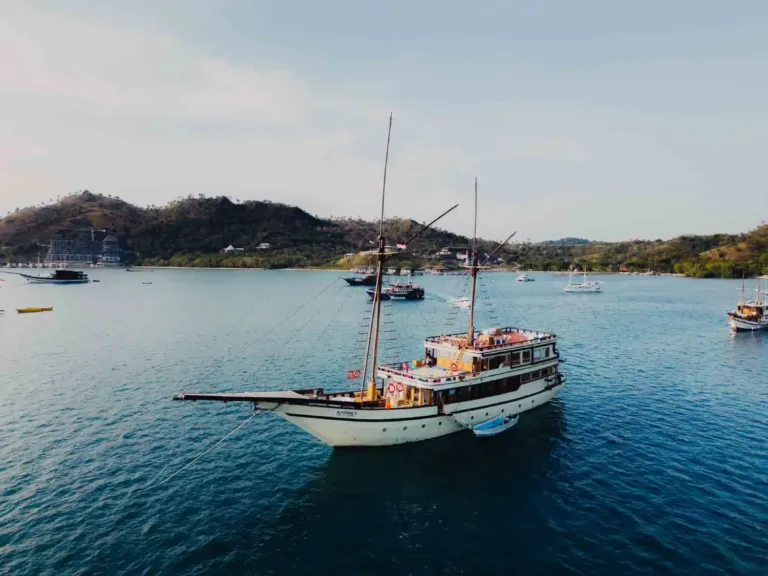
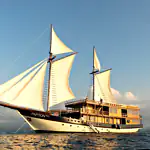 Papiton Allo
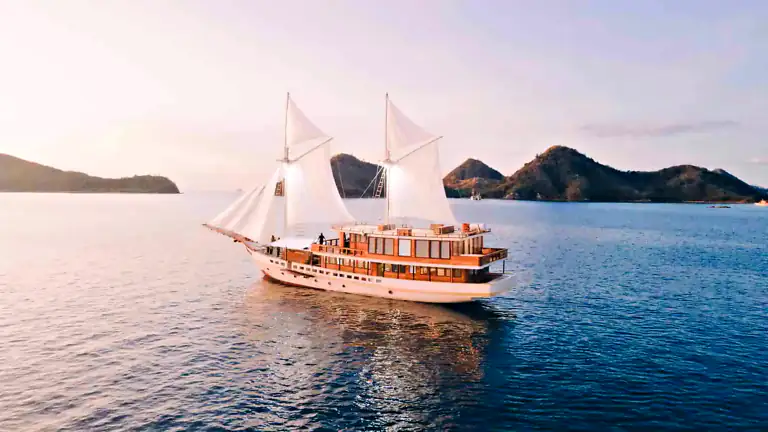
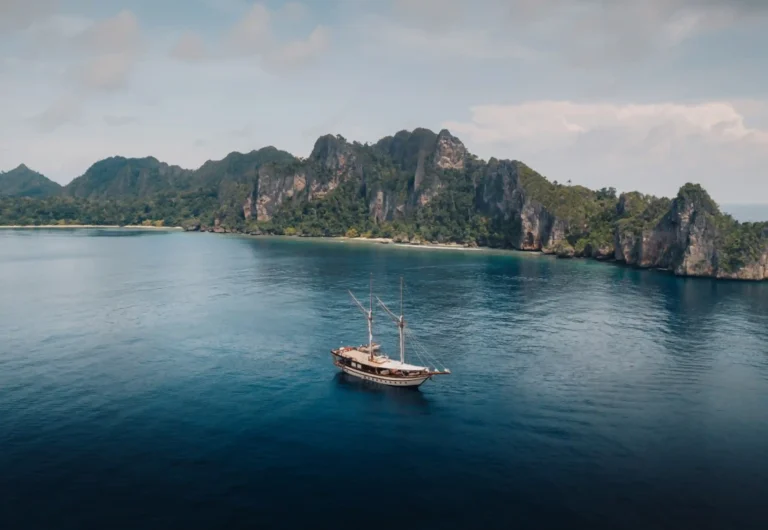
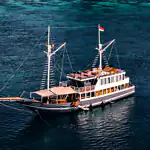 Semesta Voyages
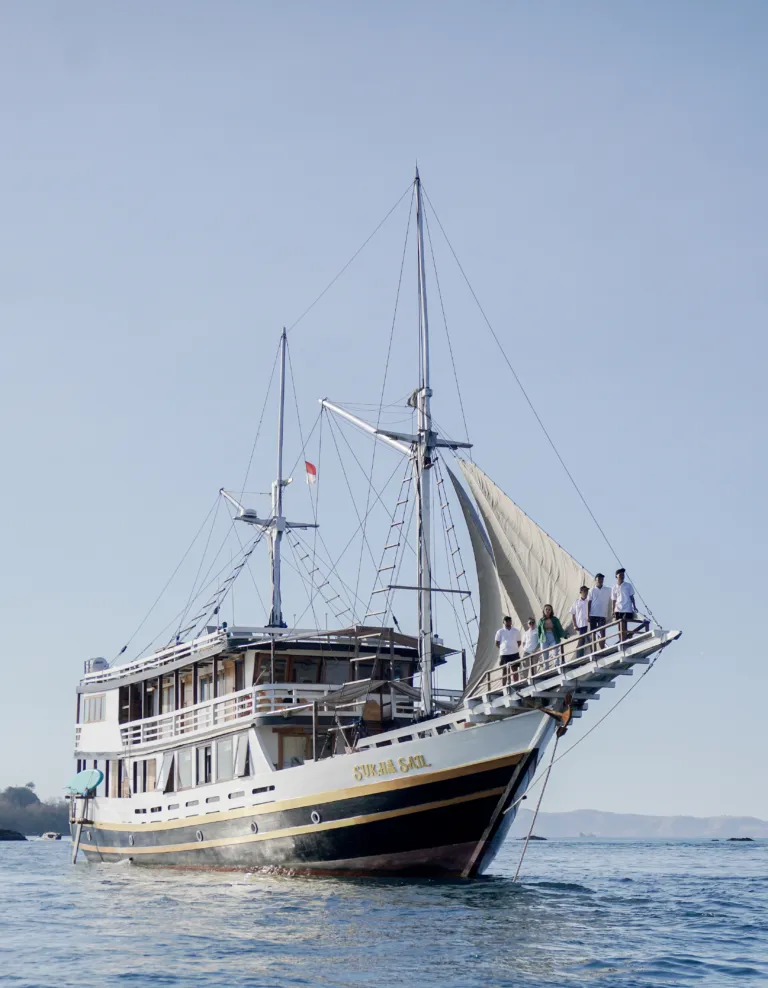
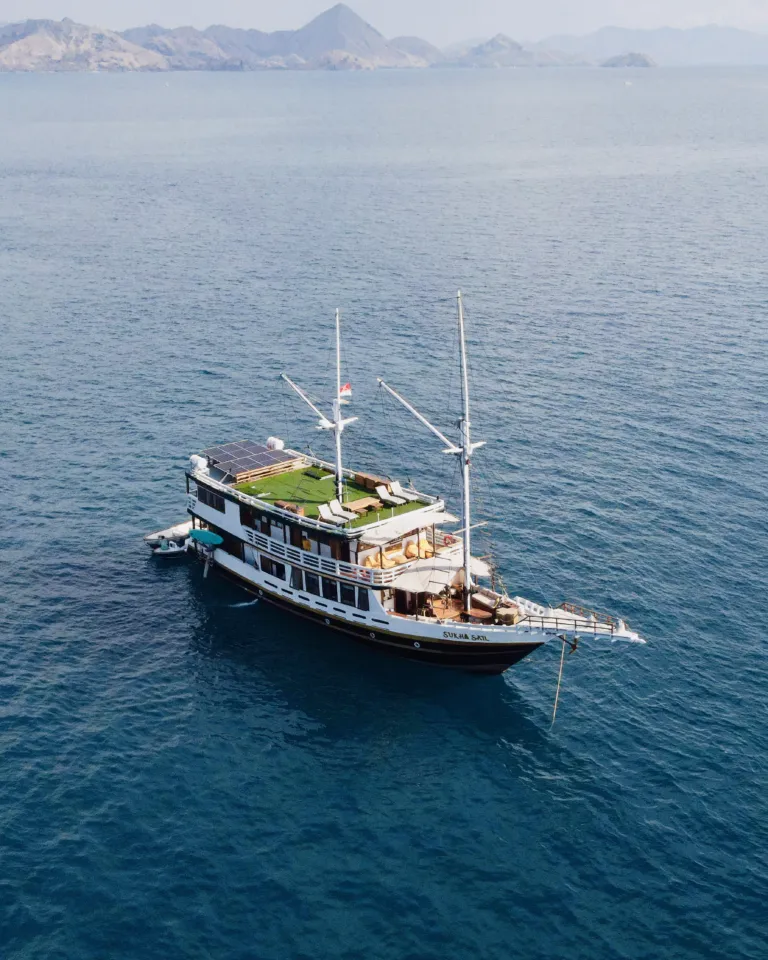
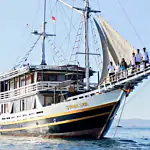 Sukha Sail 1