Seasickness on a liveaboard is the worry that stops many people from booking a boat trip at all, and it rarely needs to. In Komodo, the boats spend most of their time in sheltered bays, the nights are spent at anchor, and the open crossings between the islands are short. For most guests, a little preparation is all it takes. This guide explains what causes seasickness, when and where the sea is calmer or rougher, which boat and cabin move least, which medicines work according to health experts, and what to do on board if you feel unwell.
It is general information, not medical advice. Talk to a doctor or a pharmacist about the right medicine for you, especially if you take other medicines, are pregnant or are travelling with children.
In short
- The bays of Komodo are often calm, and the boats anchor in sheltered places for the night.
- Medicine works best taken before you sail, not once you feel sick.
- Stay in the middle of the boat, low down and in the fresh air, with your eyes on the horizon.
- Most people get used to the motion within the first day.
Seasickness on a liveaboard: the short answer
Most guests on a Komodo liveaboard never feel seasick, and those who do usually feel it on the first crossing and then get used to the motion. The water inside the bays is often flat, the boats anchor for the night in quiet places, and much of the day is spent on beaches, trails and reefs rather than at sea.
The bumpier moments come on the open crossings between the islands, on windy days and, more often, in the wet season. If you know you are prone to motion sickness, plan for those moments: take your medicine in time, stay on deck in the fresh air and keep your eyes on the horizon. With that, seasickness on a liveaboard is usually a short inconvenience rather than a ruined trip.
What causes seasickness?
Seasickness is a kind of motion sickness. Your inner ear feels the boat rolling, while your eyes, fixed on a cabin wall or a phone screen, tell your brain that everything is still. That mismatch causes the familiar symptoms: yawning, a cold sweat, a pale face, a headache, nausea and, if it goes on, vomiting.
Some people are more sensitive than others. According to the US Centers for Disease Control and Prevention (CDC), children under two rarely get motion sickness, sensitivity is highest between the ages of 7 and 12 and then declines, women are somewhat more susceptible than men, and people with migraines or balance problems are more prone to it. Genes play a large part too.
The good news is that the body adapts. The CDC calls repeated exposure the most effective countermeasure: the more time you spend on the water, the less the motion affects you. That is why the first afternoon is often the hardest, and the second and third days feel much easier.
Some guests are surprised to feel the boat moving after the trip, on land in Labuan Bajo or in their hotel bed. This rocking feeling after a few days at sea is common and usually fades within a day or so. It is not seasickness, and it is a sign that your body had already adapted to life on the water.
Is the sea rough in Komodo?
Usually not, but it depends on where you are, the season and the day. Komodo National Park is a maze of islands, and the bays between them are often sheltered and calm. At anchor, especially in the evening, the boat barely moves. The park is also known for strong tidal currents in its channels, and where the current meets the wind, the water can become choppy for a while.
The dry season, from April to November, generally brings calmer seas and steady weather. From December to March, the wet season brings more wind and rain, and the crossings can be rougher, which is one reason why some boats pause for part of those months. Our guide to the Komodo wet season explains what to expect.
The route matters too. A trip of three days and two nights from Labuan Bajo stays inside the park, with short hops between the stops. The trips between Lombok and Labuan Bajo spend longer at sea along the coast of Sumbawa, so if you are very sensitive to motion, the shorter route from Labuan Bajo is the gentler choice.
Choosing a boat and a cabin
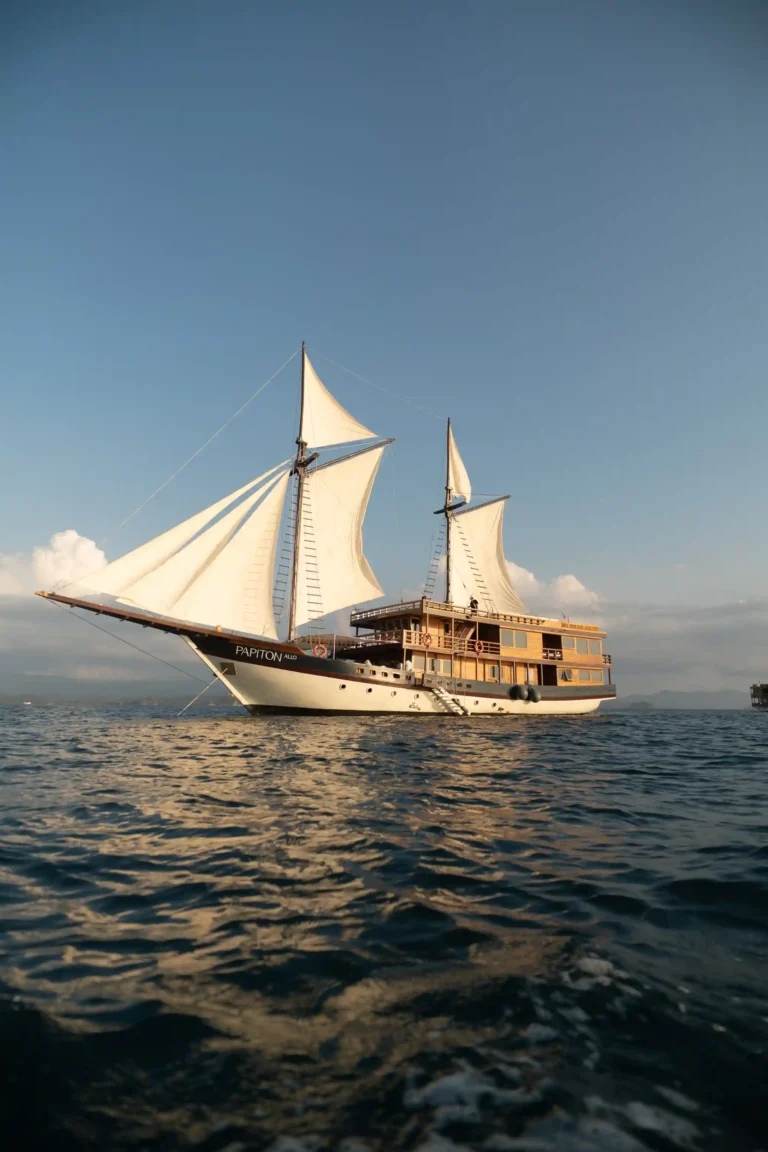
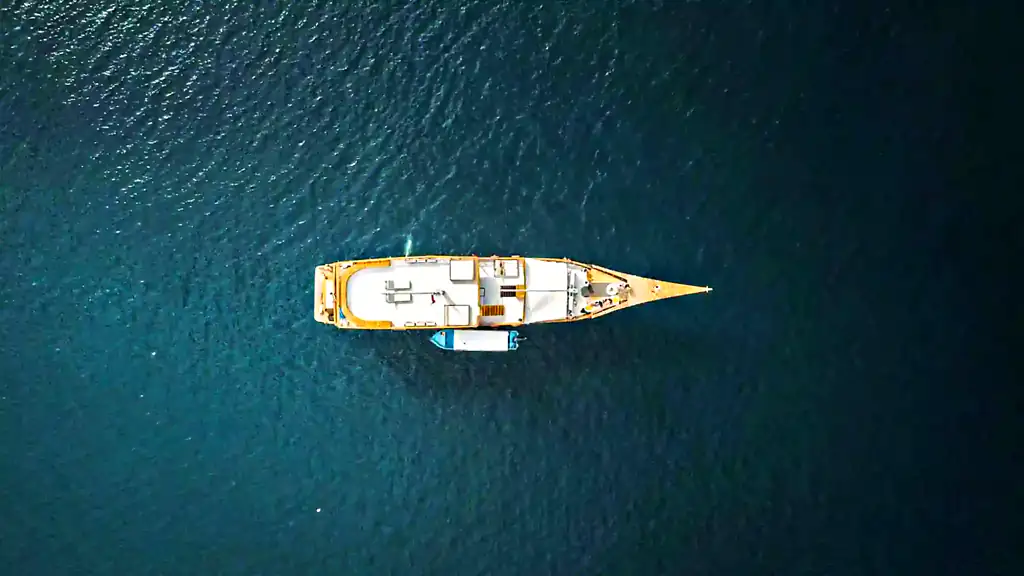
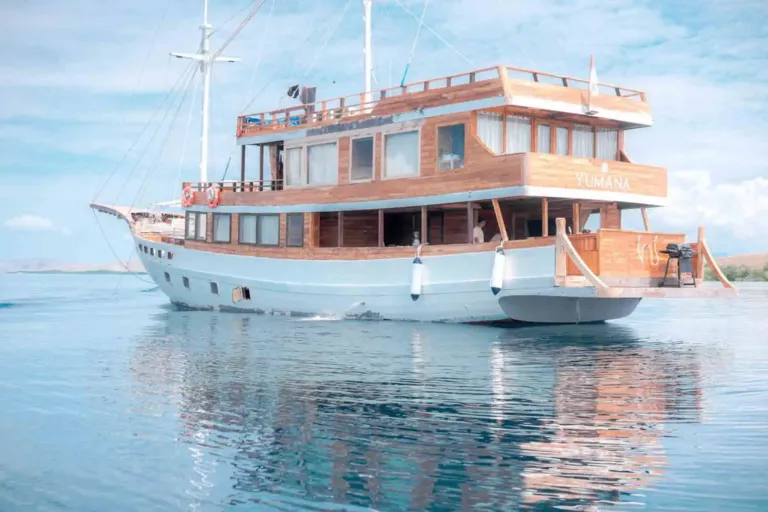
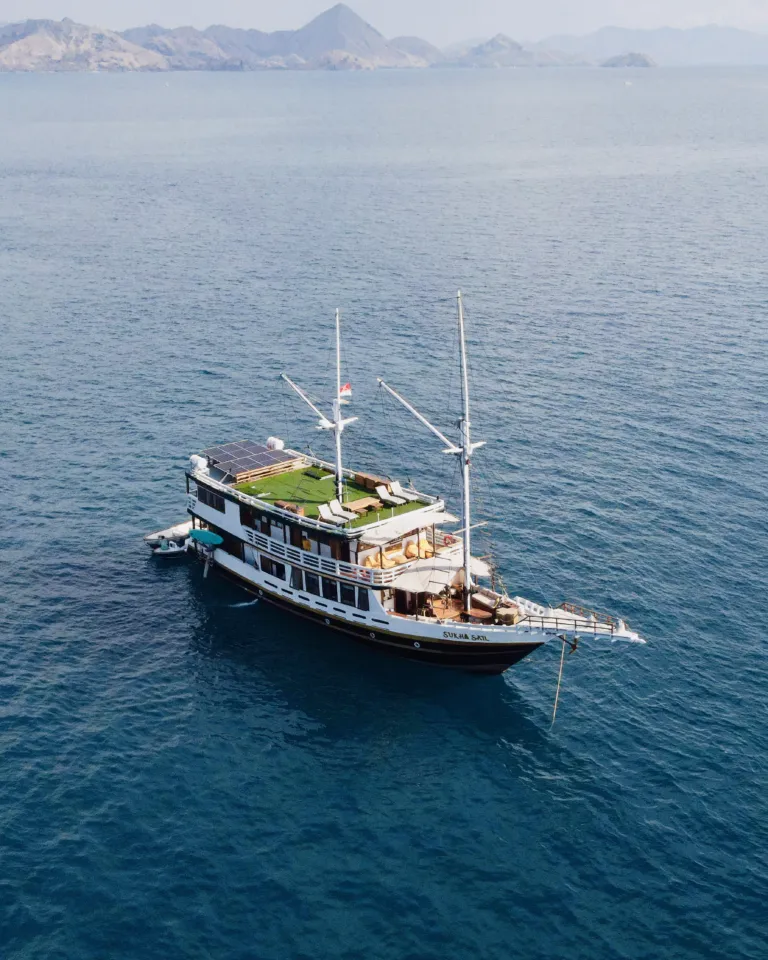
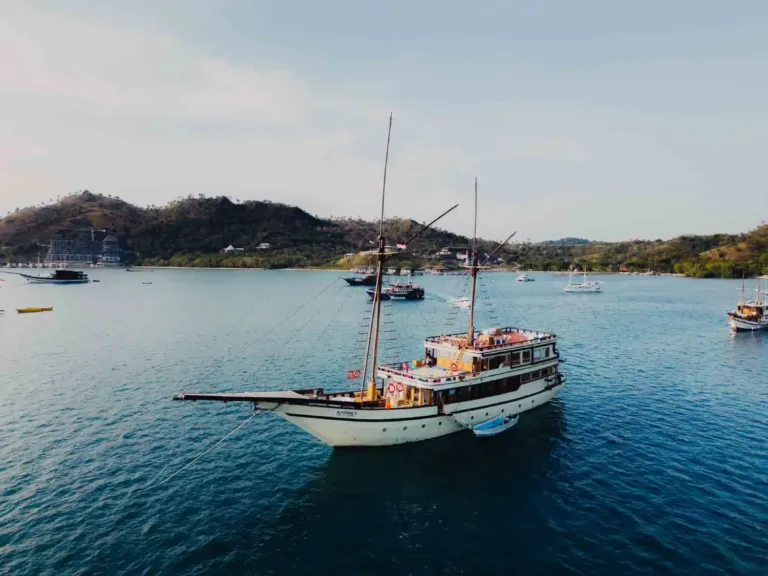
Every boat moves at sea, but some move less than others. A larger, wider boat usually rolls less than a small, narrow one. On this site, each boat page lists its length and beam, and some boats describe themselves as especially steady: Papiton Allo, for example, is a large boat with a length of 38 metres and a beam of 7.6 metres.
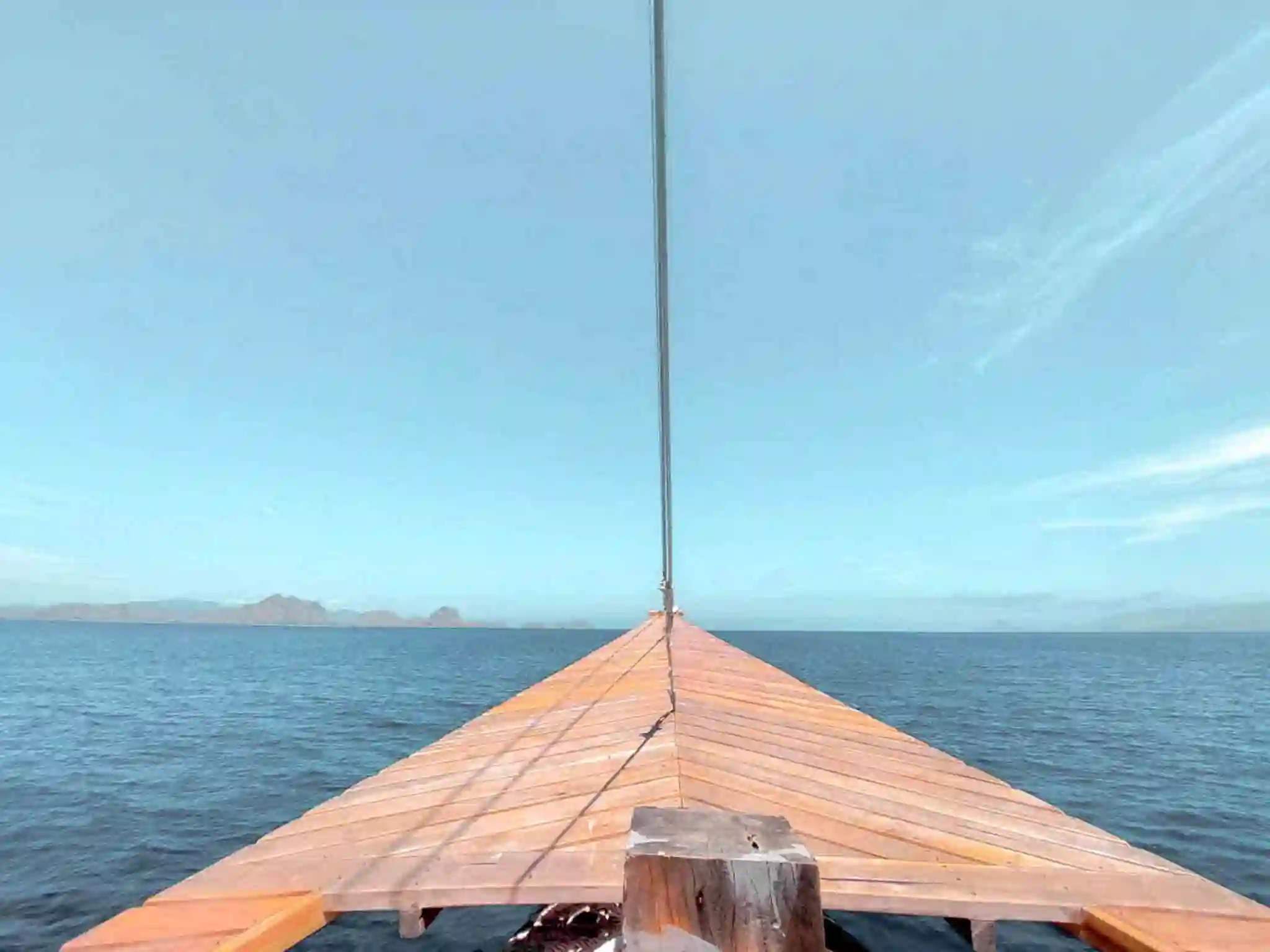
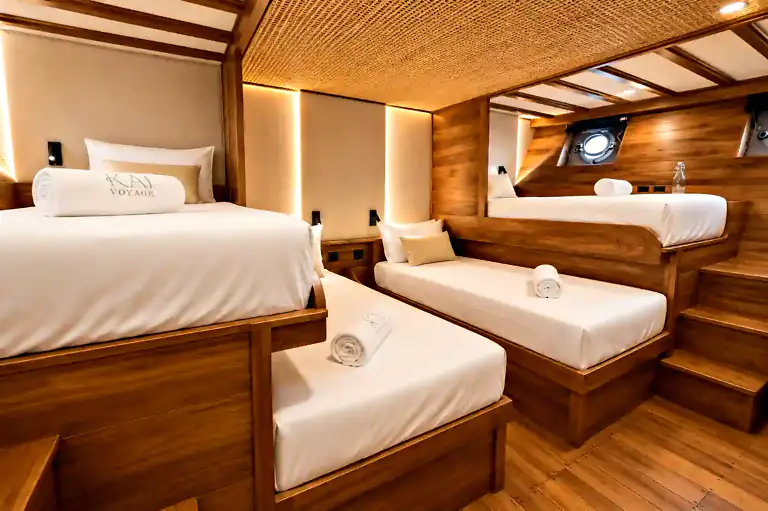
Inside the boat, the middle and the lower decks move least, while the bow and the upper decks move most. The CDC advises avoiding high-motion spots such as the bow of a ship. If you are prone to seasickness, a cabin low down and near the middle of the boat is the steadiest place to sleep, even if a cabin on the upper deck has the better view.
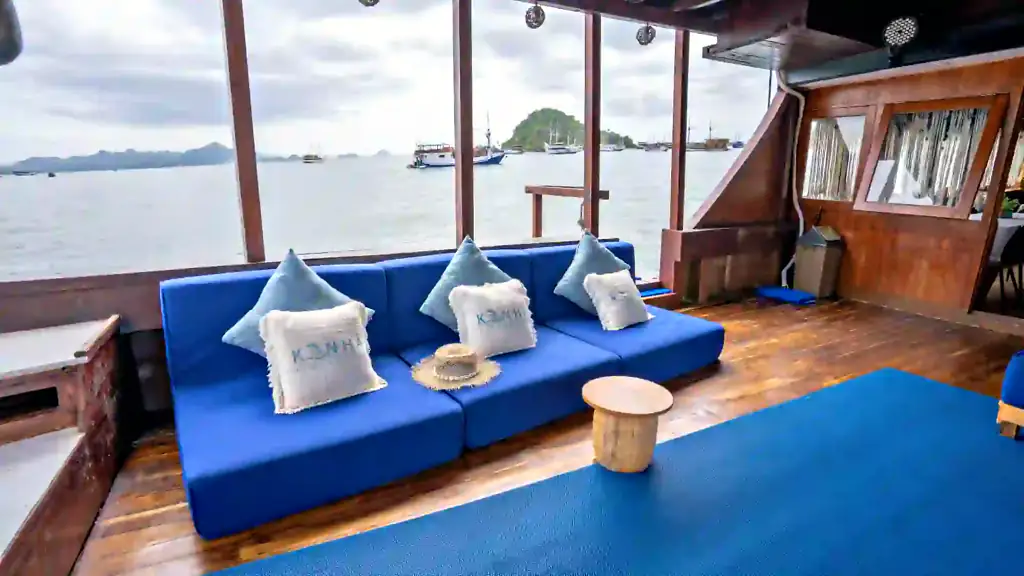
Balance that with fresh air. A lower-deck cabin is steady, but it can feel closed in when you are queasy, so spend the crossings on deck and use the cabin for sleeping at anchor. Our guide to liveaboard cabin types explains where each kind of cabin sits on the boat.

Seasickness medicine: what works
Several medicines prevent motion sickness, and the CDC reviews them in its Yellow Book for travel health. Here is a summary of what it says; your doctor or pharmacist can tell you which suits you:
| Option | What the CDC says |
|---|---|
| Older antihistamines (dimenhydrinate, meclizine, cyclizine) | Effective; take them before the trip; drowsiness is the most common side effect |
| Scopolamine patch | For longer trips with moderate to strong motion; apply hours in advance; not for people with glaucoma or certain prostate problems |
| Promethazine | For intense motion on shorter trips; the most sedating option |
| Newer, non-drowsy antihistamines | Not effective against motion sickness |
| Controlled breathing | About half as effective as medicine, with no side effects |
| Ginger and acupressure bands | Weak and contradictory evidence; bands no better than placebo in lab trials |
Timing is everything. The CDC notes that medicine is most effective when taken before exposure, and that tablets can take around two hours to work, while a patch takes six to eight hours. Once you feel sick, your stomach slows down and a tablet may not be absorbed, so take it in good time before the crossing, not when the boat starts to roll.
Before you sail
Preparation starts at home. If you know you are prone to seasickness, ask your doctor or pharmacist for advice a few weeks before the trip, and try a dose of the medicine on a day at home, so you know how drowsy it makes you. Pack it in your day bag, not in your main luggage, so it is at hand on the first morning.
Sleep well the night before you board, eat a light meal and go easy on alcohol, which the CDC lists, together with lack of sleep and smoking, as making motion sickness worse. Labuan Bajo has pharmacies, called apotek, if you need to buy anything after you arrive, but there are no shops among the islands. Our Komodo packing list covers the rest of the essentials.
Tell us when you book if you are worried about seasickness. We can suggest a larger, steadier boat, a cabin low in the hull and the dry-season dates when the sea is usually calmest. When you board, mention it to the guide too, so the crew knows to give you a good seat on deck before the longer crossings and to check on you if the sea picks up.
On board: what helps
- Look at the horizon. A steady reference point helps your eyes and your inner ear agree.
- Stay in the fresh air, in the middle of the boat, in the shade if it is hot.
- Avoid reading and screens while the boat is moving, including your phone.
- Keep your head still, lean back and let your body move with the boat.
- Breathe slowly and steadily, at your normal resting rate.
- Distract yourself with music, a conversation or the view of the islands.
Ask the crew when the longer crossings are planned, so you can take your medicine and find a good seat in advance. Inside the park, most crossings between the stops are short, and then you are back on a beach or in the water.
Food and drink at sea
An empty stomach can make seasickness worse, and so can a heavy, greasy meal. Eat small, simple meals and snacks, such as rice, bread, crackers and fruit, and sip water often, especially in the heat. Meals on a liveaboard are cooked fresh on board, and the crew is happy to give you something plain if you feel delicate.
Drinking water is included on most boats, so keep a bottle with you on deck. Coffee and fizzy drinks are fine for most people in moderation, but leave the beer and the cocktails for the evening at anchor, when the boat is still. Our guide to food on a liveaboard describes a typical day of meals.
Tenders, snorkelling and seasickness
The small tenders that take you from the boat to the beaches and reefs move more than the boat itself, but the rides are usually short. Sit low and in the middle, hold on, and look ahead rather than down at the water.
Snorkelling affects people in different ways. In calm water, being in the sea often feels better than being on deck, but in a swell, floating face down and watching the reef move can bring on nausea. If you start to feel unwell in the water, lift your head, look at the horizon and swim back to the tender calmly. Tell the guide, who can keep an eye on you.
Children and seasickness
Children aged roughly 7 to 12 are the most sensitive to motion, according to the CDC, so plan ahead on a family trip. Try the simple measures first: fresh air, the horizon, small snacks and no screens while the boat is moving. Games that keep their eyes on the islands, such as spotting turtles or other boats, work well.
Ask a doctor before giving a child any medicine. The CDC advises against scopolamine for children and warns that over-sedating young children with antihistamines can be dangerous. Our family guide to Komodo with kids has more tips for a trip with children.
Seasickness myths and facts
- “If I get seasick once, I will be sick all trip.” Not usually. The body adapts, and most people feel better after the first day on the water.
- “Lying in my cabin is the best cure.” Only at anchor. While the boat is moving, fresh air and a view of the horizon help more than a closed cabin.
- “Any antihistamine will do.” No. According to the CDC, the newer, non-drowsy antihistamines do not work against motion sickness.
- “An empty stomach prevents seasickness.” It often makes it worse. Small, plain meals are better than none.
- “Big boats never move.” Every boat moves at sea. A larger boat usually moves less, but it does not make anyone immune.
Knowing what really helps takes much of the worry away. Seasickness on a liveaboard is common enough that crews know exactly what to do, and rare enough in the calm bays of Komodo that most guests never need their tablets at all.
If you do get seasick
Tell the crew or the guide straight away; they have seen it many times and can help. Lie down with your eyes closed, in the fresh air or in your cabin if the boat is at anchor, and sip water in small amounts. Nibble something plain once the nausea passes, and rest until you feel better.
Seasickness usually passes as soon as the boat reaches calm water or the anchorage. If you are sick many times, cannot keep water down or feel faint, tell the crew, because dehydration in the heat needs attention. Our guide to what happens if you get sick on a liveaboard explains what the crew can do and when they take guests back to Labuan Bajo.

Our view
Seasickness on a liveaboard is far less common than most first-timers fear, and in Komodo the sheltered bays work in your favour. Choose the dry season if you are sensitive, take a steady cabin low in the boat, take your medicine in good time and spend the crossings on deck with your eyes on the horizon. Then the only thing left to think about is the view: Komodo National Park has been a UNESCO World Heritage Site since 1991.
Fresh air, the horizon and a tablet in good time: three simple habits that keep most guests smiling at sea.
Worried about the motion? Ask us which boats are the steadiest for your dates, and compare the trips of 3 days and 2 nights that stay inside the sheltered waters of the park.
Questions
Will I get seasick on a Komodo liveaboard?
Probably not. The bays are often calm and the nights are spent at anchor. If you are prone to motion sickness, take medicine before the crossings.
Which cabin is best if I get seasick?
A cabin low in the boat and near the middle, where the motion is smallest. Spend the crossings on deck in the fresh air.
When should I take seasickness tablets?
Before the boat moves. According to the CDC, tablets can take about two hours to work, and a patch six to eight hours.
Do ginger and wristbands help?
Some people like them, but the CDC describes the evidence for ginger as weak and found bands no better than a placebo in lab trials.
Is the sea rougher in the wet season?
Yes, from December to March the crossings can be rougher. The dry season, from April to November, is usually calmer.
Can I buy seasickness medicine in Labuan Bajo?
Yes, the town has pharmacies. Buy what you need before the boat leaves, because there are no shops among the islands.
Is the Lombok route rougher than trips from Labuan Bajo?
It spends more time at sea along the coast of Sumbawa, so very sensitive travellers may prefer a trip of three days from Labuan Bajo.
Do seasickness tablets make you drowsy?
Often, yes. Drowsiness is the most common side effect of the older antihistamines, according to the CDC. Try a dose at home first, and avoid alcohol while you take them.
Do children get seasick more easily than adults?
Children aged about 7 to 12 are the most sensitive, according to the CDC. Try fresh air and the horizon first, and ask a doctor before giving any medicine.



 Elbark Cruise
 Papiton Allo
 Semesta Voyages
 Sukha Sail 1