
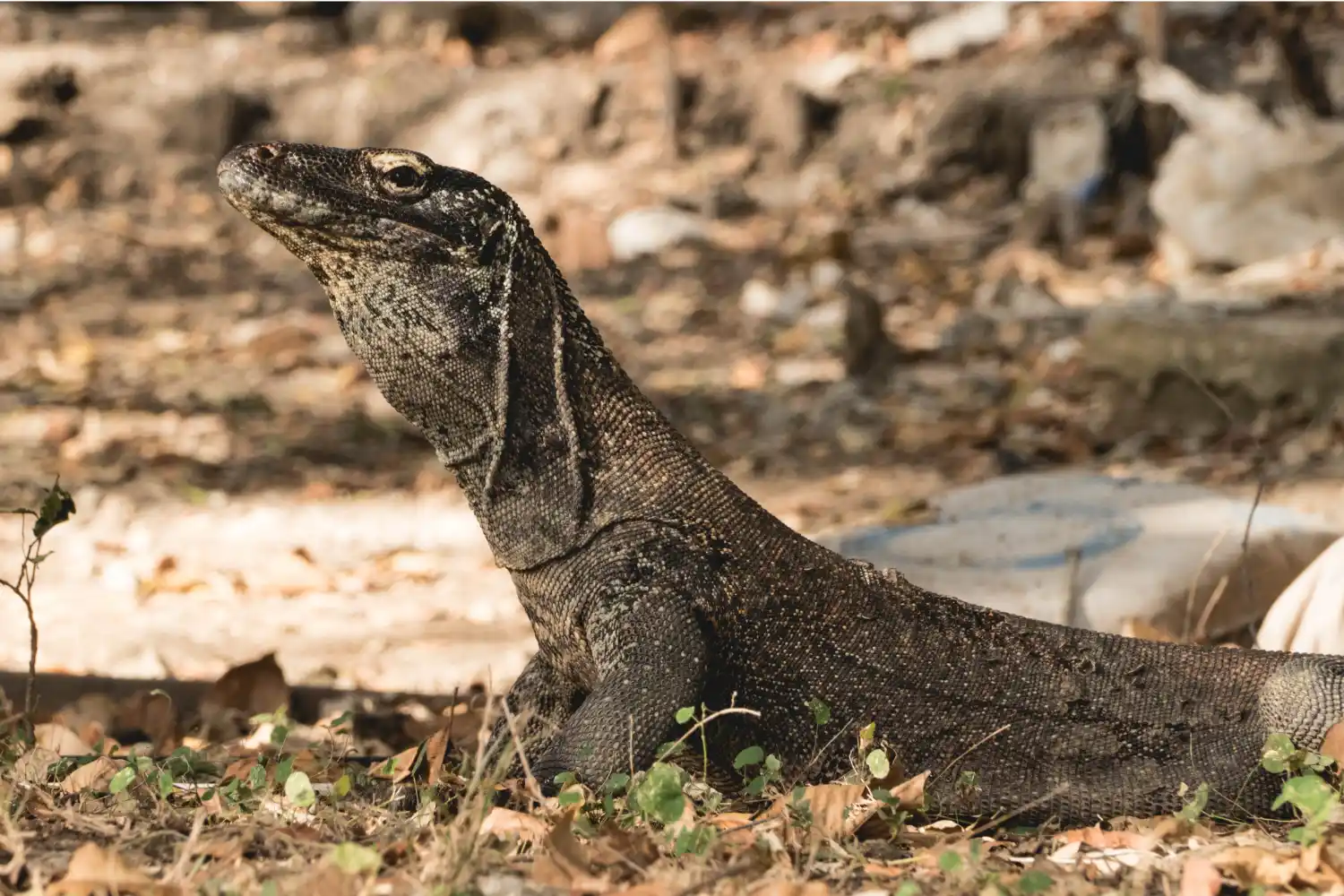
Are Komodo dragons venomous? Yes. For decades, people believed that the largest lizards on Earth killed their prey with deadly bacteria in their saliva. Then, in 2009, a team of scientists looked inside a dragon’s jaw and found something very different: venom glands. This guide explains what the research found, how the venom and the bite work together, what happened to the old bacteria story, the recent discovery of iron-tipped teeth, and what it all means for visitors.
In short
- Komodo dragons have venom glands in the lower jaw, found with scans in a study published in 2009.
- The venom stops blood from clotting and causes a dangerous drop in blood pressure in wounded prey.
- Their bite is weak for their size; they rely on serrated teeth and a pulling bite instead of crushing force.
- The old idea that bacteria alone kill their prey is no longer the main explanation.
Are Komodo dragons venomous? The short answer
Yes. A study led by Bryan Fry of the University of Melbourne, published in 2009 in the journal Proceedings of the National Academy of Sciences, showed that Komodo dragons have venom glands in their lower jaw. As National Geographic reported, the team used medical scans of a dragon’s head and analysed the venom itself.
The venom is not designed to kill in seconds, like the venom of some snakes. Instead, it works together with deep wounds from the dragon’s teeth to weaken large prey quickly. Understanding that combination is the key to how such a heavy, slow-looking lizard brings down animals far larger than itself.
Why did it take so long to find out? Komodo dragons live in a remote corner of Indonesia, they were only described by scientists in 1912, and studying the inside of a living predator’s head is not easy. The tools that settled the question, such as medical scanners and modern chemical analysis, became available to researchers only in recent decades.
What scientists found inside the jaw
Using magnetic resonance imaging on the head of a Komodo dragon, the researchers found two long glands running along the lower jaw. They are the most structurally complex venom glands described in any reptile, with six compartments each. Small ducts lead from the compartments to openings between the teeth.
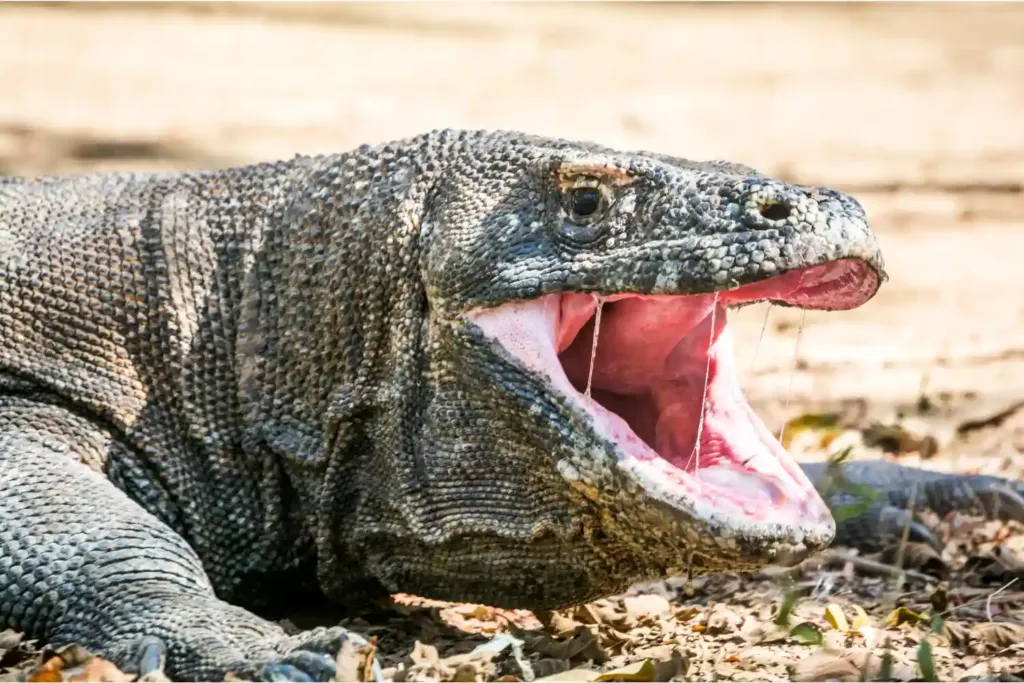
Unlike snakes, Komodo dragons have no hollow fangs and no grooves in their teeth to channel the venom. Instead, it seeps into the wounds as the dragon bites and pulls. That is why the venom works best combined with a deep, tearing bite rather than a quick strike.
The finding changed how scientists see the whole animal. Instead of a slow scavenger relying on luck and infection, the Komodo dragon emerged as a specialised predator, with a body, a skull and a set of weapons that work together. It also placed the dragon firmly among the reptiles that use chemistry, not only strength, to hunt.
How the venom works
The analysis of the venom found toxins that act on the blood. Some stop the blood from clotting, so wounds keep bleeding, and others widen the blood vessels and lower the blood pressure, which pushes a wounded animal towards shock. Some of the same types of ingredients are found in snake venom.
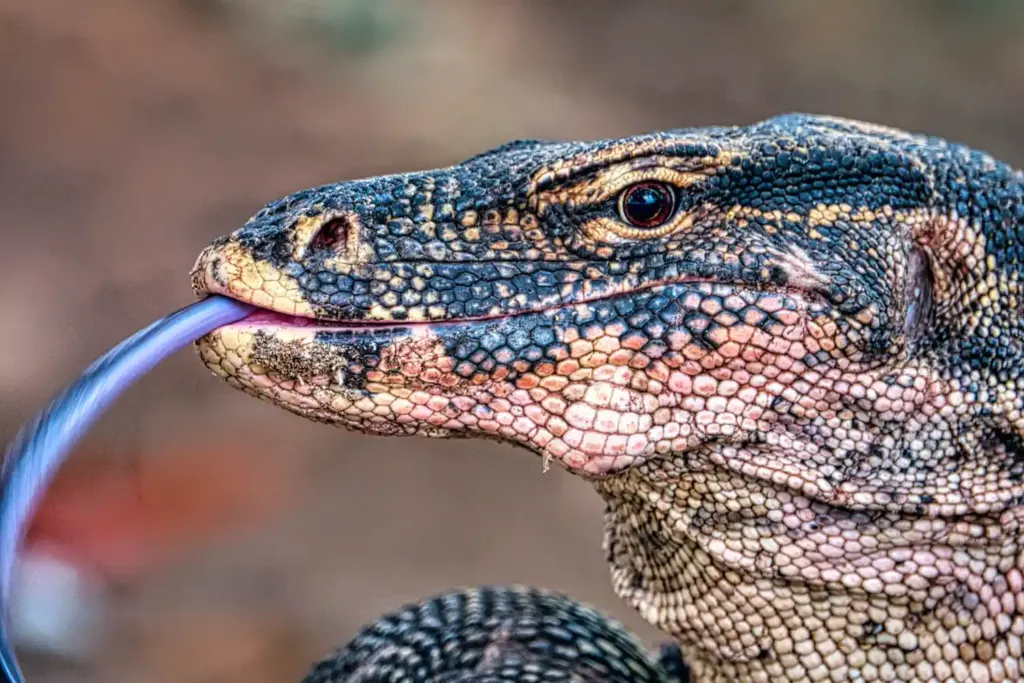
For a deer or a wild boar that escapes after a bite, the result is a fast loss of strength. The dragon does not need to hold on: it can follow the weakened animal, guided by its sense of smell, and wait until it can no longer get away. Dragons smell with their long forked tongue, which collects scents from the air and helps them find wounded prey or carrion from far away.
This patient strategy suits the islands well. The prey is large, the terrain is open, and an animal that has been bitten cannot hide its trail from a dragon that follows its scent. Several dragons may gather at a carcass, the largest feeding first, while the smaller ones wait their turn at a safe distance from the bigger animals.
A weak bite and a clever technique
One of the surprises of the research was how weak the bite of a Komodo dragon is for an animal of its size. The study measured a bite force of about 39 newtons for the dragon, compared with about 252 newtons for a saltwater crocodile in the same comparison. Their skull is strong against pulling forces but much less so against twisting and shaking.
So instead of crushing, the dragon uses what scientists describe as a grip and pull technique. It bites, then pulls back hard with the powerful muscles of its neck, and its curved, serrated teeth slice deep wounds into the prey. The wounds and the venom then do the rest. It is a strategy built for large prey, not for small, struggling animals.
The old bacteria myth
For many years, books and documentaries explained that Komodo dragons killed with bacteria. The story went that their saliva was full of harmful bacteria from rotting meat, and that a bitten animal died slowly from blood poisoning. It made for a memorable tale, and it is still repeated today.
It is easy to see how the idea took hold. Dragons do eat rotting carrion, their mouths are messy, and a bitten deer that escapes may die hours or even days later, far from where it was bitten. Without a way to look inside the jaw, an infection seemed the most likely explanation for the delay.
The 2009 research challenged that idea. The scientists found no single species of bacteria present in all the dragons studied, and they found no documented cases of blood poisoning caused by a dragon bite. Some bacteria found in a few dragons are more typical of mammals, and are likely to come from their prey. Venom and wounds, not a mouth full of germs, are now seen as the main weapons, although some researchers still think bacteria may play a smaller part.

Iron-tipped teeth: a newer discovery
Research has kept adding to the picture. In 2024, a team led by Aaron LeBlanc of King’s College London reported in the journal Nature Ecology and Evolution that the teeth of Komodo dragons have a thin coating of iron on their cutting edges and tips, which gives them an orange colour. The coating helps keep the serrated teeth sharp.
The researchers described this feature as never reported before in a carnivorous reptile. Together with the venom and the pulling bite, it completes the picture of a predator with a remarkable set of tools: teeth like saw blades, a bite built for tearing and venom that keeps the wounds bleeding.
The study looked at museum skulls and at the teeth of a dragon that lived at London Zoo, and it has a link to a much older world. Many meat-eating dinosaurs, such as Tyrannosaurus, had curved, serrated teeth very much like the dragon’s, and the researchers hope that clues in the iron coating may one day help them understand how those ancient predators kept their teeth sharp.
7 facts about the Komodo dragon’s bite
- The venom glands sit in the lower jaw, one on each side.
- Each gland has six compartments, the most complex venom glands described in any reptile.
- There are no fangs. The venom seeps into the wound between the teeth.
- The venom stops clotting and lowers blood pressure, weakening the prey.
- The bite is weak for its size, about 39 newtons in the 2009 study.
- The teeth are serrated and iron-tipped, built for slicing, not crushing.
- Bacteria are no longer the main explanation for how their prey dies.
Myths and facts at a glance
| Myth | What research shows |
|---|---|
| Dragons kill with deadly bacteria | Venom glands and deep wounds are now seen as the main weapons |
| Dragons have fangs like snakes | They have serrated teeth, with no fangs or grooves |
| Their bite is crushingly strong | Their bite is weak for their size; they slice and pull instead |
| Dragons are slow | They can reach about 16 to 20 km/h in a short burst |
| Their teeth are ordinary | Their cutting edges carry a thin coating of iron |
The speed figure comes from the Smithsonian’s National Zoo, and it is one more reason why the rangers keep every group at a distance. A dragon usually walks with a slow, swaying gait, but it can surprise anyone who gets too close.
How Komodo dragons hunt
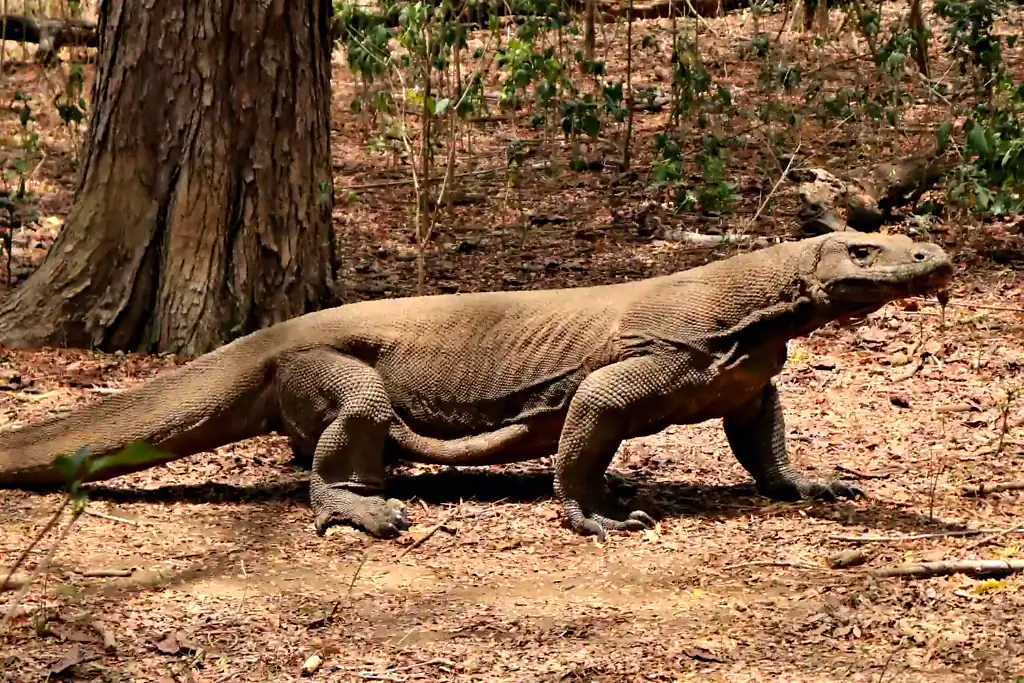
Komodo dragons hunt by ambush. An adult waits motionless along a trail, often for a long time, then strikes at deer, wild boar and even water buffalo. A single bite can be enough: if the animal escapes, the venom and the bleeding weaken it, and the dragon follows the scent until it can feed. Dragons also eat carrion, which they can smell from far away.
Their appetite matches their size. According to the Smithsonian’s National Zoo, a Komodo dragon can eat up to 80 percent of its own body weight in a single meal. After such a meal, it rests for a long time while it digests, which is why so many of the dragons visitors see are lying still in the shade.
Young dragons live very differently. Hatchlings climb into the trees almost at once and spend their first years there, safe from larger dragons, eating insects, geckos and other small animals. Only when they are large enough do they come down to the ground and start to hunt bigger prey.
How scientists study the dragons
Much of what we know about the bite of a Komodo dragon comes from careful work away from the islands. The 2009 study used scans of a preserved head and computer models of the skull to test how it copes with different forces. The 2024 study of the teeth used advanced imaging and chemical analysis on museum skulls and zoo animals.
In the park itself, rangers and researchers watch how the dragons live, hunt and breed, and count them to follow the health of the population. UNESCO’s description of the park estimates it at around 5,700 dragons. Each new study adds a piece to the puzzle, and the story is far from finished.
A venomous family: the dragon’s relatives
Komodo dragons belong to the monitor lizards, a family found across Asia, Africa and Australia. The 2009 study also looked at an extinct giant relative from Australia, often called Megalania, and concluded that venom probably played a central role in its hunting too. In the University of Melbourne’s words, it would have been the largest venomous animal to have lived.
Fossil research suggests that Komodo dragons themselves first evolved in Australia and later spread west to the islands of Indonesia. Today they live in the wild only on Komodo, Rinca, Gili Motang and parts of western Flores. Our guide on how big a Komodo dragon is covers their size and growth.
What it means for visitors
A venomous bite from a large predator is a serious medical emergency, and that is exactly why visits to the dragons are led by park rangers. Attacks on visitors are very rare. The rangers choose the route, keep the group at a safe distance and carry long forked sticks to keep a dragon away if it comes too close.
Follow the simple rules: stay with the group and behind the ranger, keep several metres away even from a dragon that looks asleep, never feed or touch one, and move calmly. Tell the ranger about any open wound before the walk, because dragons have a keen sense of smell. Our guide to Komodo dragons explains the walk in detail.
If you are lucky enough to see dragons feeding, watch from where the rangers tell you to stand. A feeding dragon is focused and can react quickly to anything that comes near its meal, and other dragons may arrive to join it. It is a rare and memorable sight, best enjoyed from a respectful distance.
Our view
The story of Komodo dragon venom is a good example of science changing a familiar tale. The truth is more interesting than the myth: a giant lizard with a weak bite, saw-like teeth tipped with iron and venom that works with its wounds. Knowing it makes a walk with the rangers even more fascinating, and gives you plenty to talk about on deck afterwards.
It is also a reminder of how much is still being learned about an animal that people have watched for more than a century. The dragons of Komodo National Park are endangered, and every visit that follows the rules, and every fee paid to the park, helps protect them for the scientists and travellers who come next.
The dragon does not need to win the fight on the spot. It only needs one good bite, and patience.
See them for yourself: every Komodo liveaboard on this site visits Komodo National Park. Browse the sharing trips with live cabin availability.
Questions
Are Komodo dragons venomous or poisonous?
Venomous. Venom is delivered through a bite, while a poisonous animal harms you if you eat or touch it. Komodo dragons have venom glands in their lower jaw.
Can a Komodo dragon bite kill a human?
A bite from such a large predator is a serious emergency that needs urgent medical care. Attacks on visitors are very rare, and every visit is led by park rangers to keep it that way.
Do Komodo dragons kill with bacteria?
That was the old explanation. Research published in 2009 found venom glands and no single species of bacteria in all the dragons studied, so venom and wounds are now seen as the main cause.
Do Komodo dragons have fangs?
No. They have curved, serrated teeth with iron-coated edges, and the venom seeps into the wound from openings between the teeth.
How strong is a Komodo dragon’s bite?
Weak for its size: about 39 newtons in the 2009 study, against about 252 newtons for a saltwater crocodile. The dragon relies on its teeth and a pulling bite instead.
Are baby Komodo dragons venomous?
The venom glands are part of the species, but the young live in the trees and hunt small animals such as insects and geckos, so their way of life is very different from the adults’.
Is it safe to see Komodo dragons?
Yes, on a walk with the park rangers and with the simple rules: keep your distance, stay with the group and never feed or touch a dragon.
Are other lizards venomous too?
Yes. The Gila monster and the beaded lizards of North and Central America are well-known venomous lizards. Unlike the Komodo dragon, they have grooved teeth that help channel their venom.
What do Komodo dragons eat?
Adults hunt deer, wild boar and water buffalo and also eat carrion. A dragon can eat up to 80 percent of its own body weight in one meal.
How fast can a Komodo dragon move?
In a short burst, about 16 to 20 kilometres per hour, according to the Smithsonian’s National Zoo. Most of the time, they walk slowly and save their energy.
When was the dragon’s venom discovered?
The key study was published in 2009, after scientists used medical scans to find the glands in the lower jaw and analysed the venom.
Where can I see Komodo dragons?
In the wild, only in and around Komodo National Park in Indonesia. Visitors see them on ranger-led walks on Komodo or Rinca, usually as part of a liveaboard trip from Labuan Bajo.







 Elbark Cruise
 Papiton Allo
 Semesta Voyages
 Sukha Sail 1