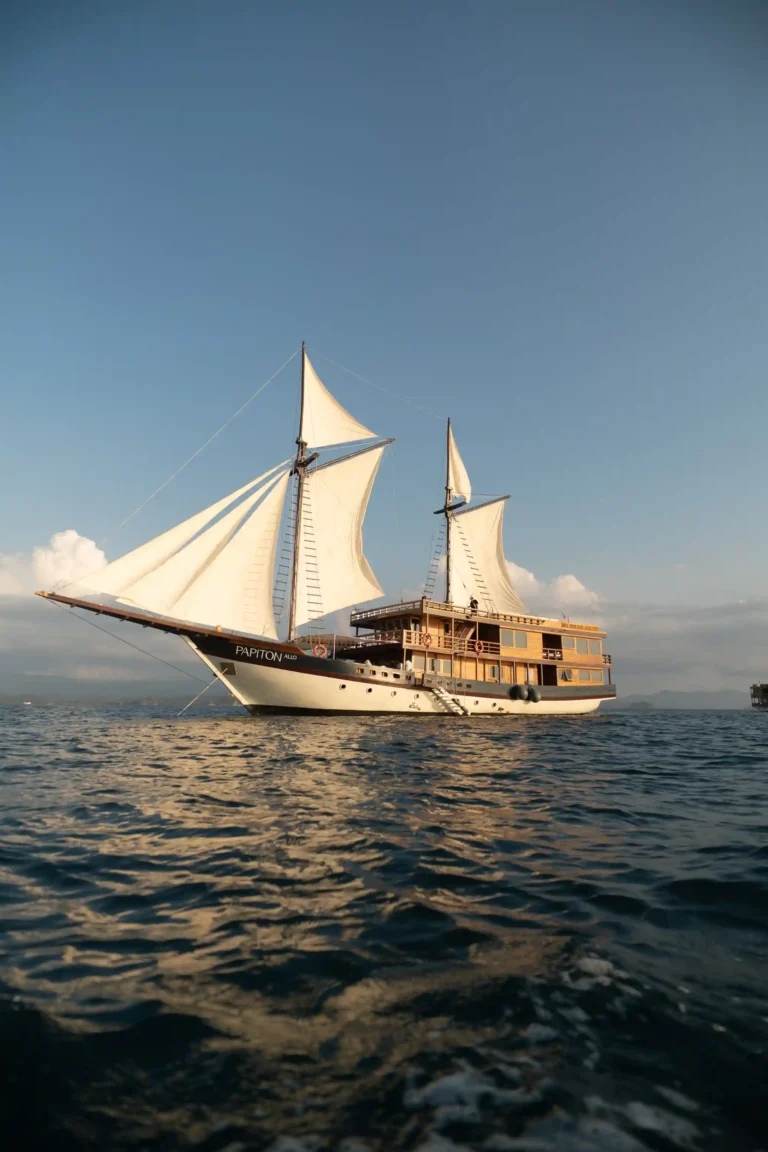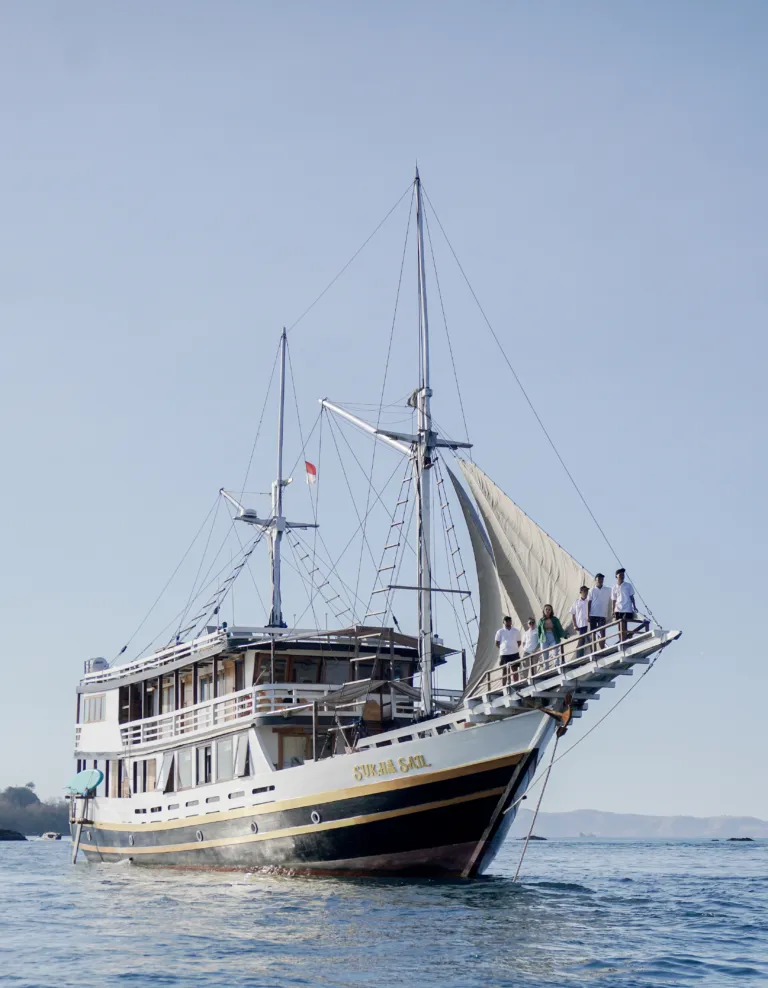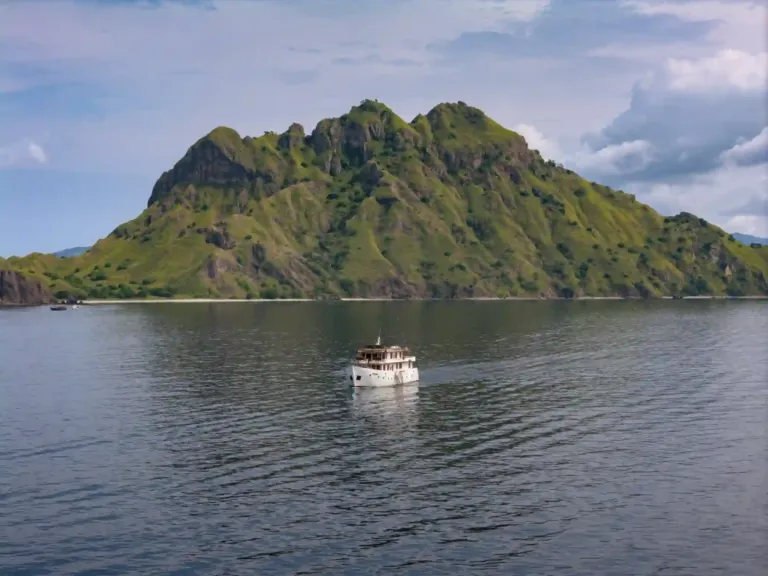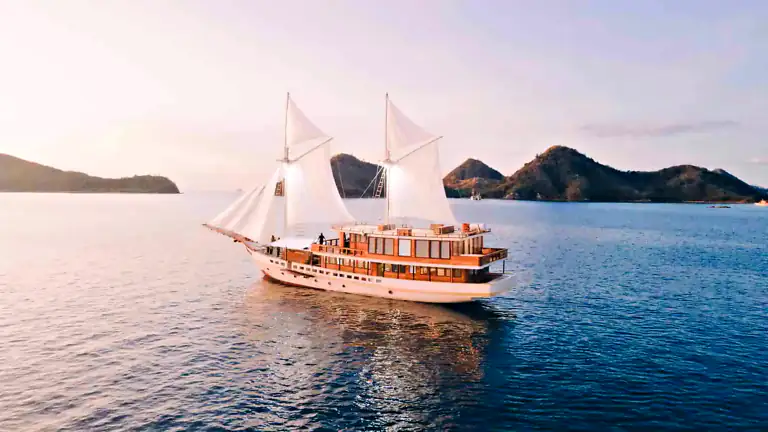
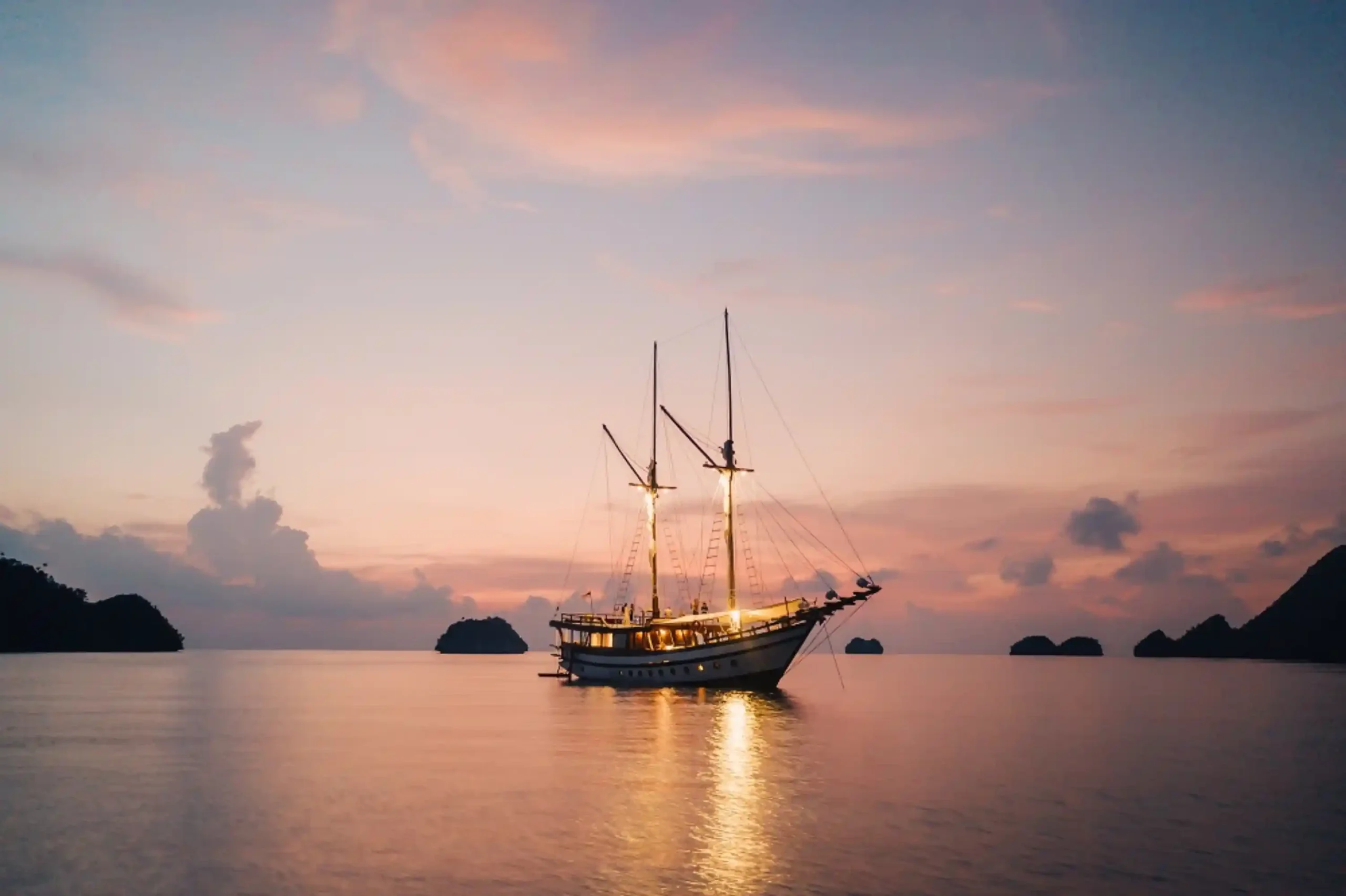
What does a day on a Komodo liveaboard actually look like? On the most common trip of 3 days and 2 nights, the second day is the longest and the fullest, and it shows life on board at its best: a climb before sunrise, breakfast at sea, pink sand, wild dragons, a sandbar, manta rays and dinner under the stars. Here it is hour by hour, with the times most boats on this site follow and what each moment feels like.
In short
- A day on a liveaboard follows the light: early starts, a rest in the heat and long evenings at anchor.
- The classic second day brings Padar, Pink Beach, the Komodo dragons, Taka Makassar and Manta Point.
- Three meals, an afternoon snack, drinking water, coffee and tea are included on most boats.
- Times are a guide: the captain adjusts the plan for the tides, the weather and the rules of the park.
The first day starts with a pick-up in Labuan Bajo between about 8:00 and 10:00, a short climb on Kelor Island, a first snorkel at Manjarite and the flying foxes of Kalong Island at dusk. The third day brings one last snorkel and the return to town around midday. The day in between, described below, is the one most guests remember. Our guide to what a liveaboard is covers the basics if this is your first trip.
In short, the three days of a typical trip look like this:
- Day 1: pick-up in Labuan Bajo, lunch on board, Kelor Island, Manjarite and the flying foxes of Kalong Island at dusk.
- Day 2: Padar at sunrise, Pink Beach, the dragons on Komodo Island, Taka Makassar and Manta Point.
- Day 3: breakfast, a last snorkel at Siaba or Sebayur, and the boat back in Labuan Bajo around midday.
Around 4:30: the wake-up call
The day begins in the dark. On some boats the wake-up call comes as early as 4:00, on others closer to 5:00, depending on the boat and the season. The liveaboard spent the night at anchor near Padar, so there is no long ride ahead, just coffee or tea, a quick change into walking clothes and shoes, and a torch for the steps.
Nobody is rushed, and the crew keeps it simple at this hour. If you are not an early riser, remember why you are up: this is the hour the famous view of Padar is at its softest, and the day trip boats from town usually arrive later in the morning.
Around 5:00: the climb on Padar
The tender takes you to the jetty while it is still dark, and the park staff check the tickets. Then the climb begins, on a trail of stone and wooden steps with steeper stretches of dusty path in between. Most people reach the main viewpoint in 20 to 45 minutes, depending on their pace and how often they stop.
There is no need to reach the top: the trail passes several viewpoints, and the first ones already show the bays. Go at your own pace and use the viewpoints as rest stops. Our Padar Island guide explains the hike and the visitor rules introduced in 2026.
Around 6:00: sunrise over the bays
The first light reaches the three bays of Padar, each with sand of a different colour, and the hills turn from grey to gold. This is the moment of a day on a Komodo liveaboard that ends up on most phones and in most memories. Sit down for a few minutes before you take your photos and watch the light change.
Then comes the walk back down, which is quicker but needs care, as the dust on the steps can be slippery. By the time you reach the jetty, the morning is warming up and breakfast is waiting on board.

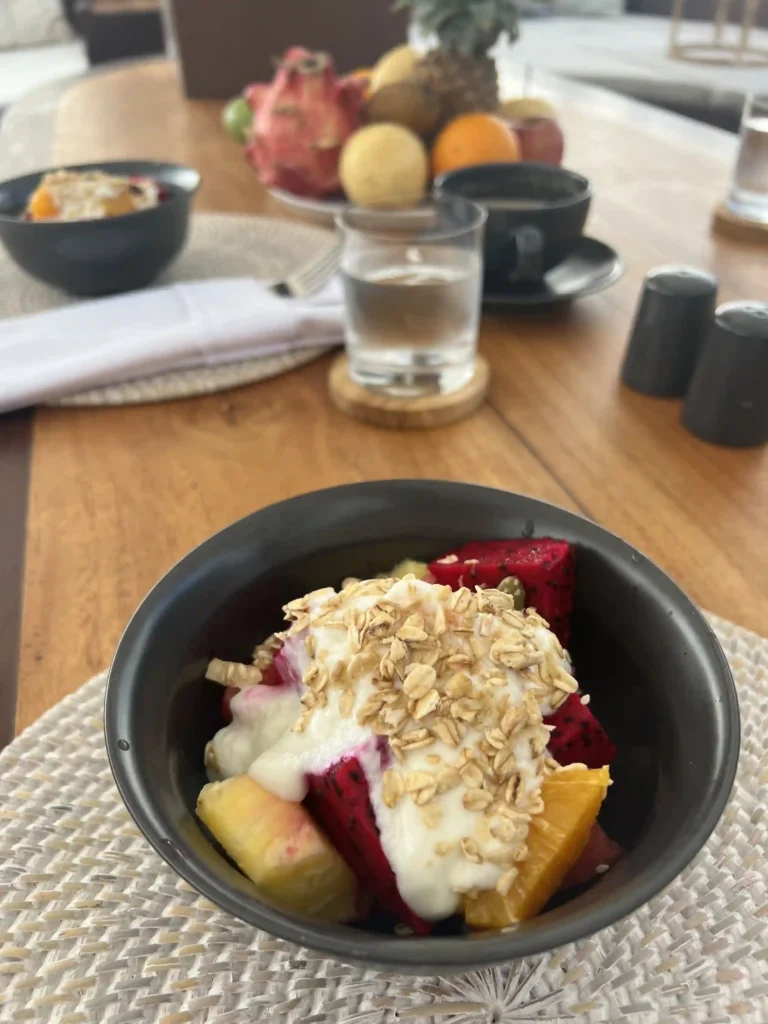
Around 7:30: breakfast on board
After an early climb, breakfast tastes better than ever. It is served on deck or in the dining room, usually with fruit, eggs, toast or pancakes and Indonesian dishes, and coffee and tea are always at hand. While you eat, the boat lifts anchor and sails to the next stop, so the morning moves on without any effort from you.
This is a good moment to change into swimwear, put on sunscreen and check your snorkelling gear, because the next stop is a swim. If you have a food allergy or a special diet, tell us when you book, so the crew can plan the meals for the whole trip.
Around 9:00: Pink Beach
Pink Beach takes its colour from tiny red organisms that live on the reef, mixed into the white sand. The water is clear and shallow, and the reef just off the beach is one of the easier snorkelling spots of the trip, with coral and colourful fish close to the surface. The guide joins the group in the water and picks the best area for the tide.
If snorkelling is not your thing, the beach is a lovely place to sit in the morning sun. Please leave the sand where it is: the colour is part of the park. Masks, snorkels, fins and life jackets are part of the snorkelling equipment on most boats.
Under the surface, look for corals of every shape, schools of small reef fish and, with luck, a turtle or a reef shark passing by. Keep your fins away from the coral and never stand on the reef. After the swim, the tender takes you back to the boat, where fresh water to rinse off and a towel are waiting.
Around 11:00: the walk with the dragons
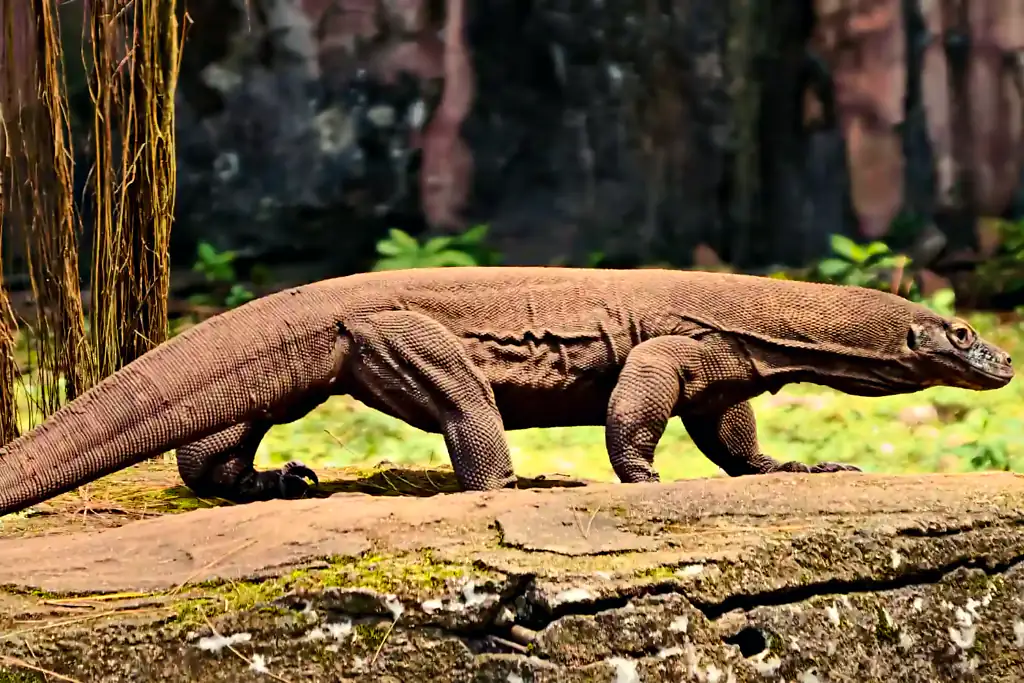
The next stop is Komodo Island, where park rangers lead the walk to see the Komodo dragons in the wild. After a short briefing on the rules, the group sets off with a ranger at the front, and many dragons rest near the ranger station, so the first sighting often comes within minutes. Most walks last around an hour, depending on the route and the heat.
Wear closed shoes and light clothes, bring water and a hat, stay behind the ranger and keep several metres away from the dragons. Some boats visit Rinca instead of Komodo Island, and the walk there works in the same way. Our guide to Komodo dragons has the facts to bring along.
Late morning is already hot on the islands, so the walk feels longer than it is. Carry a full bottle of water, keep your camera ready with a zoom if you have one, and listen to the rangers, who point out deer, wild boar, nests and birds along the way. Back at the jetty, the tender is waiting to take you to the boat and to lunch.
Around 13:00: lunch while the boat sails
Back on board, lunch is served as the boat moves on through the park. Rice, noodles, vegetables, fish and chicken are common, and many cooks mix Indonesian dishes with simpler international ones. The middle of the day is the hottest, so this is the time to rest in the shade on deck, read, nap in your cabin or simply watch the islands go by.
Keep drinking water, which is included and always available, and top up your sunscreen before the next swim. Charging points are shared on most boats, so this is also a good moment to charge your phone and camera.
Lunch is also when the guide often explains the afternoon plan: the tide at Taka Makassar, the current at Manta Point and the time the boat expects to reach its anchorage. It is a good moment to ask questions, from which fish you saw at Pink Beach to how the dragons hunt.
Around 14:30: Taka Makassar
Taka Makassar is a sandbar in the middle of the sea that appears at low tide, with turquoise water all around it. It is one of the most photographed places in the park, and walking on a strip of sand surrounded by open water is a strange and lovely feeling. The shallow water around it is good for a relaxed swim.
There is no shade on the sand, so bring a hat and sunglasses and keep the visit short if the sun is strong. Because the sandbar depends on the tide, the captain times the stop for the right water level.
For photos, walk to the far end of the sand and look back towards the boat at anchor, with the islands behind it. The colours of the water are strongest when the sun is high, which makes this the one stop where the middle of the day works in your favour.
Around 16:00: Manta Point
Manta Point lies close to Taka Makassar. It is a channel with a strong current where manta rays come to feed and to be cleaned by small fish. The crew decides when to go in, based on the tide and the current, and snorkellers usually drift with the current while the tender follows and picks them up at the end.
Sightings depend on the season, the tide and the current, so they are never guaranteed, but on a good day several mantas pass below the snorkellers. If you are not a confident swimmer, wear a life jacket or watch from the tender: seeing a manta from the surface is still a thrill.
Manta rays are gentle giants that feed on plankton carried by the current, and they visit spots on the reef where small fish clean their skin. Give them space, never chase or touch them, and let them come to you. The guide counts heads in the water, and the tender stays close to the group for the whole drift.
Around 17:00: snack time on the sun deck
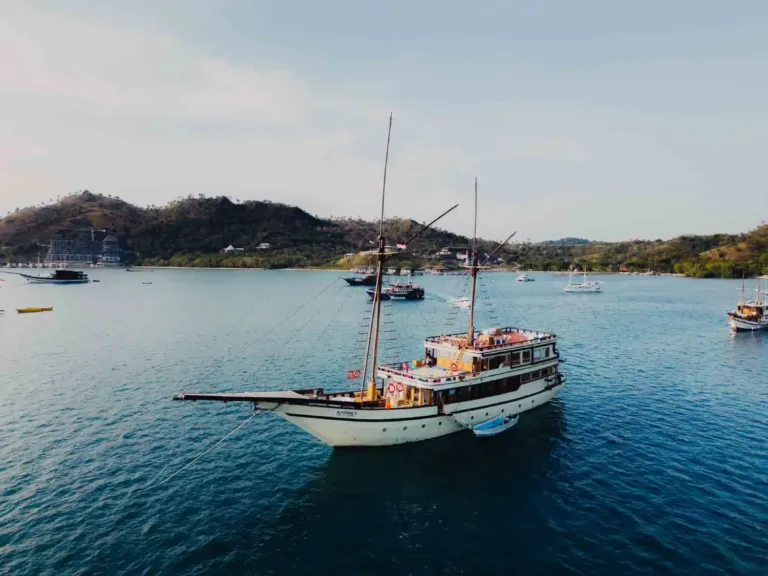
On most boats an afternoon snack is served after the last swim, often fried bananas, cake or fresh fruit with tea and coffee. The boat sails to its anchorage for the night, and the sun deck fills up with guests sharing photos, swapping stories and watching the light soften over the hills.
This is the quiet hour of a day on a Komodo liveaboard. Shower, change and find a spot on deck for the sunset. On the first evening of the trip, many boats anchor near Kalong Island at this hour, where thousands of flying foxes leave the mangroves at dusk.

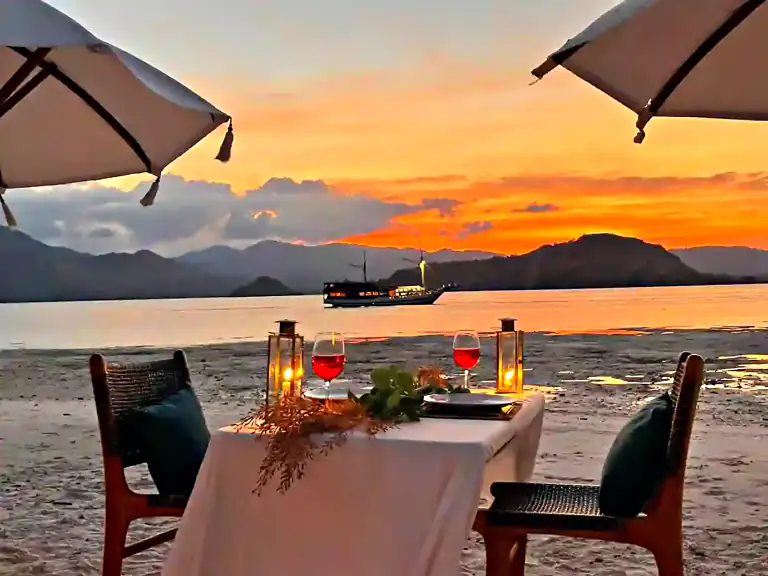
Around 18:00: sunset at anchor
The sun goes down quickly in the tropics, and the colours over the islands change minute by minute. With the boat at anchor, the sea goes still and the first stars appear soon after. It is the moment when most guests put their phones away and simply watch.
The anchorage is often a quiet bay shared with a few other boats, their lights coming on one by one across the water. A light jacket is useful now, because the evening breeze on deck can feel cool after a day in the sun.
Many guests say this is the hour that makes a liveaboard different from any hotel. There is nowhere to drive to and nothing to book, just the sea, the islands and the people you have spent the day with, and the smell of dinner coming from the galley.

Around 19:00: dinner and the stars
Dinner is served at anchor, usually at a shared table, and it is often the most relaxed meal of the day. Afterwards, some boats show a film, play music or bring out board games in the lounge, but on a clear night the best show is overhead: far from the lights of town, the stars over the park are bright.
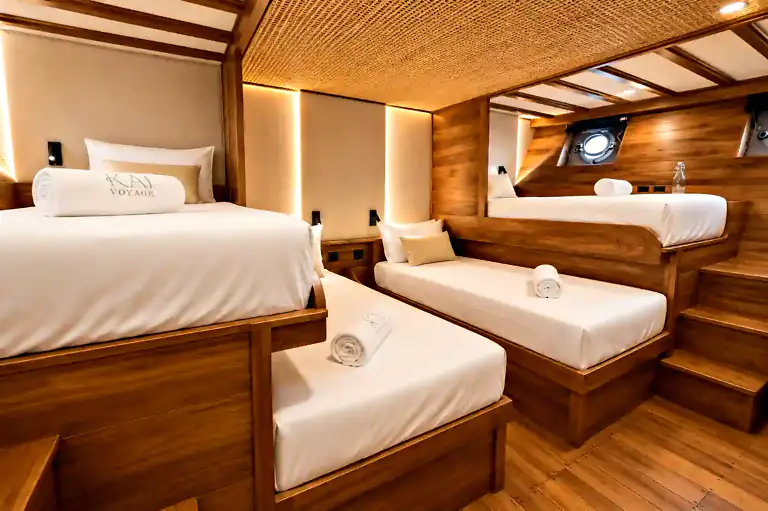
Most guests are in bed early, and the cabins have air conditioning on every boat on this site. Tomorrow brings one last snorkel and the return to Labuan Bajo around midday. Read about the full 3 days and 2 nights trip for the other two days.
On a longer trip, the next days follow the same rhythm but with more time at each stop and quieter places, such as Gili Lawa in the north of the park, Siaba and Kanawa on many boats. Whatever the length, the pattern stays the same: early light, warm water, slow afternoons and evenings at anchor.
Our view
A day on a Komodo liveaboard packs in more than many holidays manage in a week, yet it rarely feels rushed, because the boat does the travelling and the crew does the work. Early starts are the price, and the reward is having the best places at their best hours. Komodo National Park has been a UNESCO World Heritage Site since 1991, and seeing it from sunrise to starlight is the way to understand why.
Sunrise on a mountain, a pink beach, a wild dragon, a manta below you and stars over the deck: that is one ordinary day out here.
Ready to live it? Browse the sharing trips with live cabin availability, and check each boat page for its own itinerary.
Questions
What time do you wake up on a Komodo liveaboard?
On the day of the Padar climb, usually between about 4:00 and 5:00. On the other days, breakfast is often around 7:00.
How many stops are there in a day?
On the full second day of a 3 day trip, usually five: Padar, Pink Beach, Komodo Island, Taka Makassar and Manta Point.
Can I skip a stop?
Yes. You can stay on board or on the beach during any stop. Just tell the crew, so they know where everyone is.
Is there free time on board?
Plenty, especially in the middle of the day and in the evening, while the boat sails between stops or lies at anchor.
Do the times always stay the same?
No. The captain adjusts the plan for the tides, the weather and the rules of the park, and each boat follows its own itinerary.
What should I bring for a day of stops?
Closed shoes, a hat, sunscreen, water, swimwear and a dry bag for your phone. Our Komodo packing list has the full list.
Are meals at fixed times?
Meals follow the stops rather than the clock: breakfast after the early climb, lunch while the boat sails and dinner at anchor.
What do guests do in the evening?
Watch the sunset, eat dinner at anchor and look at the stars. Some boats show a film, play music or bring out board games in the lounge, and most guests are in bed early.
Can I swim off the boat at anchor?
Ask the crew first. In some bays a quick swim from the boat is possible in calm water, but the current can be strong, so the crew decides when and where it is safe.
Is there Wi-Fi on board?
Many boats list Wi-Fi, a few of them with Starlink, but the signal can drop in the remote parts of the park. Plan to be offline for part of the day.
Can I charge my phone and camera?
Yes, but the charging points are shared on most boats. Bring a power bank and charge in the middle of the day, when everyone is resting.
What happens on the last day?
One last snorkel after breakfast, often at Siaba or Sebayur, then the boat returns to Labuan Bajo around midday and the transfer reaches the airport at about 13:00.
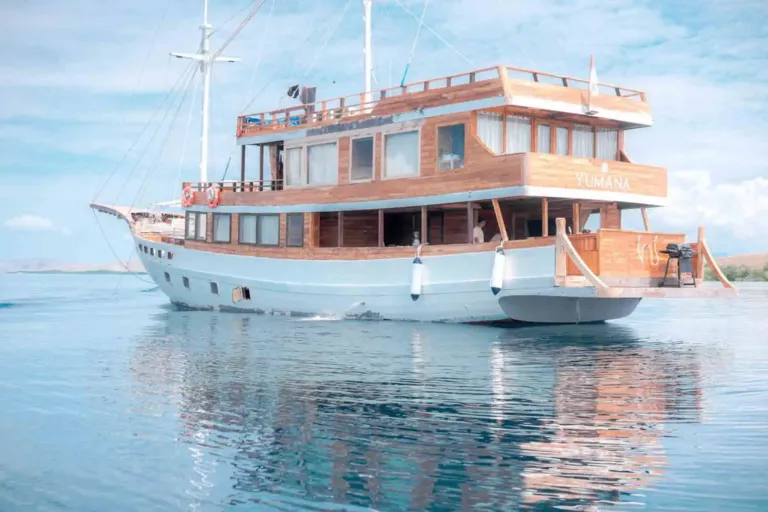
 Elbark Cruise
 Papiton Allo
 Semesta Voyages
 Sukha Sail 1