Labuan Bajo weather follows a simple rhythm: a long dry season from about April to November and a short, intense wet season from December to March. It is warm all year, with daytime highs of 30 to 33°C, a sea that stays between about 27 and 29°C and sunsets close to 18:00 in every month, but rain, wind and the colour of the hills change a great deal from one season to the next.
This guide goes through the year month by month, using long-term averages for Labuan Bajo, and adds what the averages do not show: the strong winds that can blow even in the dry season, the harbour closures of 2026, the forecast for the coming rainy season and what the weather means for a boat trip in Komodo National Park.
In short
- Dry season: April to November, with very little rain from June to October.
- Wet season: December to March, with about 175 to 225 mm of rain a month and rain on about half of the days.
- The sea stays between about 27 and 29°C all year, coolest in August and warmest from November to January.
- The harbour can close the sea in any season: in 2026, it did so in February, August and September.
Labuan Bajo weather at a glance
Labuan Bajo sits on the western tip of Flores, in the province of East Nusa Tenggara, where the dry season is long and the wet season short. According to Weather Spark’s year-round averages for Labuan Bajo, the temperature changes so little over the year that there is no real hot or cold season. The rain is a different story: it varies enormously, from about 225 mm in February to less than 10 mm in August.
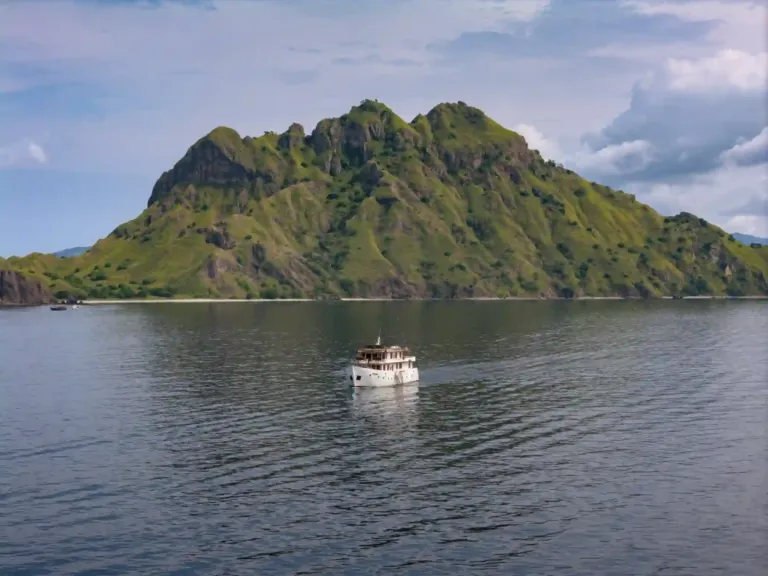
In practice, that gives two very different places. In the dry season, the hills of Komodo, Rinca and Padar turn golden-brown, the sky is clear and the evenings are cool on deck. In the wet season, the same hills turn green, big clouds often build up during the day and the showers can be heavy. Both seasons have their fans, and boats sail in both, but the wet months bring more changes to the plan.
The air is humid in every month. Weather Spark’s data shows muggy conditions at their most common in January and their least common in August, so the dry season also feels fresher, especially at night.
Labuan Bajo weather by month
The table gives the average daytime high and night-time low, the rainfall of each month, the number of days with at least 1 mm of rain and the average sea temperature. The figures are rounded long-term averages for Labuan Bajo from Weather Spark, converted to Celsius and millimetres.
| Month | Day / night | Rain | Wet days | Sea |
|---|---|---|---|---|
| January | 30°C / 24°C | About 220 mm | About 18 | 29°C |
| February | 30°C / 24°C | About 225 mm | About 17 | 28°C |
| March | 31°C / 24°C | About 175 mm | About 14 | 29°C |
| April | 32°C / 24°C | About 115 mm | About 10 | 29°C |
| May | 32°C / 23°C | About 55 mm | About 5 | 28°C |
| June | 31°C / 22°C | About 25 mm | About 3 | 28°C |
| July | 31°C / 22°C | About 15 mm | About 2 | 27°C |
| August | 31°C / 21°C | Under 10 mm | About 1 | 27°C |
| September | 32°C / 22°C | About 25 mm | About 3 | 27°C |
| October | 33°C / 23°C | About 50 mm | About 6 | 28°C |
| November | 32°C / 24°C | About 120 mm | About 11 | 29°C |
| December | 31°C / 24°C | About 210 mm | About 17 | 29°C |
Averages are a guide to the pattern, not a forecast. A wet day in these figures can mean a ten-minute shower, and a dry month can still bring a stormy afternoon. For the days of your trip, check the forecast of BMKG, Indonesia’s meteorological agency, a few days before you travel.
The dry season: April to November
Weather Spark places the drier part of the year between 18 April and 11 November, when the chance of a wet day stays below about one in three. The heart of it runs from June to October, with only one to six wet days a month and almost no rain in August, the driest month of the year with less than 10 mm.
This is the classic season for a Komodo liveaboard, with clear skies, golden hills and the most departures. The days are hot, with highs of 31 to 33°C, but the nights of July and August cool to about 21 to 22°C, the lowest of the year, so a light layer for the evenings on deck is welcome.
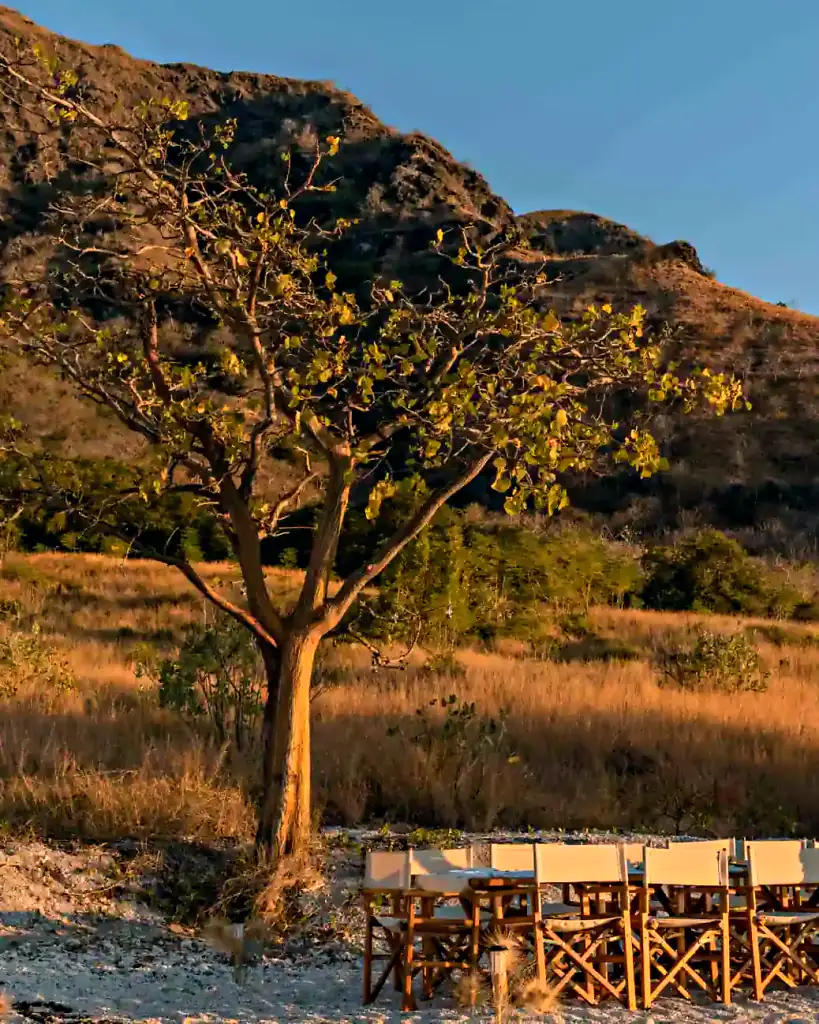
The dry season is not always calm at sea, though. The wind blows mostly from the east from April to early October, and in the middle of the year the open channels of the park can be rough, as the harbour closures of July, August and September 2026 showed. Our guide to the best time to visit Komodo compares the months for a boat trip.
The wet season: December to March
The wetter part of the year runs from 11 November to 18 April. December, January and February each bring about 210 to 225 mm of rain, with rain on about 17 or 18 days a month, and March is only a little drier. A wet day can still mean a single shower, though, and there are often bright, clear hours between the rain.
The reward is a green landscape. After the first rains, the bare hills of the park turn bright green within a few weeks, and the views from Padar and Komodo look completely different from the golden scenes of September. The air is at its most humid, and the nights stay warm, at about 24°C.

The wet season is also the windiest time of the year in Labuan Bajo, with the wind mostly from the west, and storms can close the harbour for a few days at a time. Many boats on this site do not run sharing trips in January and February, and the departures pick up again from March. Our guide to Christmas in Komodo covers a trip at the start of the wet season.
January to April
January is the heart of the wet season: about 220 mm of rain, rain on about 18 days and the windiest weather of the year, with the wind mostly from the west. It is also the month when muggy conditions are most common, and the latest sunsets of the year, around 18:28 at the end of the month, give long evenings.
February brings the most rain, about 225 mm, and it is one of the quietest months in the park. March is a little drier, with about 175 mm, and the calmer period begins in the second week of the month, when the average wind drops. The hills are at their greenest, and many boats restart their sharing trips.
April is the turning point. The rain falls to about 115 mm over the month, the wind turns from the west to the east in the first days, and the second half of the month already feels like the dry season, with green hills, a 29°C sea and fewer travellers than in mid-year.
May to August
May is one of the nicest months of the year: about 55 mm of rain, five wet days on average, highs of 32°C and a landscape that is still partly green. The earliest sunsets of the year come at the end of the month, around 17:47. June is drier still, with about 25 mm of rain and three wet days, and the nights start to cool.
July and August are the driest and coolest months, with almost no rain, nights of about 21 to 22°C and the coolest sea of the year, at about 27°C. They are also the busiest months of the year, with the summer holidays of many countries, and the steady easterly wind can make the open channels rough. In 2026, the harbour closed the routes to Komodo and Padar several times in July and again in early August.

September to December
September stays dry, with about 25 mm of rain, and the hills are at their most golden. October is the hottest month, with an average high of about 33°C, and also the calmest, with the lightest average wind of the year; the wind turns to the south in its first days. Both months are quieter than July and August, with fewer boats at the famous stops.
November is the bridge between the seasons. The first half usually feels like the dry season, while the second half brings more showers, and the wind turns to the west in the middle of the month. The sea is close to its warmest, at about 29°C, and the earliest sunrise of the year comes in mid-November, at about 05:30. Our guide to Komodo in November covers the month in detail.
December opens the wet season, with about 210 mm of rain and rain on about 17 days, and the windier period starts around the middle of the month. The year-end holidays still bring many travellers, so book early if you want to sail over Christmas or New Year.
Wind, waves and harbour closures
For a boat trip, the wind and the waves matter more than the rain. The averages for Labuan Bajo show a light wind all year, from about 6 km/h in October to about 10 km/h in January, but the open channels between the islands can be much rougher than the town suggests, and the harbour authority, KSOP Labuan Bajo, stops tourist boats from sailing when BMKG warns of strong winds and high waves.
That happened in both seasons in 2026. In February, boats were barred from Komodo and Padar from 23 to 25 February, and only speedboats to Rinca could sail, as detikBali reported. In August, in the middle of the dry season, a southeasterly wind of up to 24 knots and waves of up to 2.4 m closed the routes to Komodo and Padar until 8 August, leaving only Rinca open, according to detikBali.
In September, the harbour closed the sea to Komodo and Padar again, from 13 to 15 September, with waves of up to 1.9 m and gusts of up to 26 knots, and named 10 areas to avoid, including the waters of Kelor, the Molo Strait and the Padar Strait, as Metro TV News reported. Since January 2026, tourist boats have also been barred from sailing at night in the park, according to Kompas.
Closures usually last a few days. The crew adjusts the route, often to Rinca and the sheltered bays, and if a trip cannot sail at all, our cancellation policy lets you choose between a new date and a 70% refund.
The sea temperature
The sea off Labuan Bajo is warm all year. Weather Spark’s averages put the warmest water between 1 November and 13 January, at about 29°C, and the coolest between 7 July and 15 September, at about 27°C, with August the coolest month. Even then, most snorkellers are comfortable for an hour in a rash guard or a thin wetsuit top.
These figures describe the surface near Labuan Bajo. The south of the park can be noticeably cooler in the middle of the dry season, so if you are sensitive to the cold, pack a long-sleeved top for the swims. The currents follow the tide in every season, and the crew plans each stop around them.
Sunrise, sunset and daylight
Close to the equator, the length of the day hardly changes. The shortest day, on 21 June, has 11 hours and 38 minutes of daylight, and the longest, on 22 December, has 12 hours and 37 minutes. Sunrise comes between about 05:30, in mid-November, and 06:16, in mid-July, while sunset falls between about 17:47, at the end of May, and 18:28, at the end of January, all in Central Indonesia Time (WITA).

That timing shapes the days on a liveaboard. The climb on Padar starts in the dark to reach the viewpoint for sunrise, and since April 2026 the visits have run in timed sessions, as Antara reported. Our guide to Padar Island explains the climb. In the dry season, the clear evenings make the sunsets from the deck one of the highlights of the trip.
The 2026/2027 rainy season
For the coming wet season, BMKG expects the rains to arrive later than normal, with the start and the peak of the season close together, so heavy rain may come within a short time, as InfoPublik reported on 2 October 2026.
For East Nusa Tenggara, the province of Labuan Bajo, BMKG’s outlook shows only a small part of the province entering the rainy season in November 2026 and most of it in December 2026, with the peak for most areas in February 2027, according to iNews. If the outlook holds, November 2026 should still feel largely like the dry season.
Seasonal outlooks give the broad picture, not the weather on a given day. A few days before your trip, check the forecast on the BMKG website, and remember that every departure from Labuan Bajo needs a sailing approval from the harbour authority, which follows the BMKG forecasts.
What to pack for each season
- All year: a hat, sunglasses, reef-friendly sunscreen, a long-sleeved rash guard and light, quick-drying clothes.
- Dry season: a light jumper or windproof jacket for the cooler nights of July and August, and shoes with a good grip for the dusty trails.
- Wet season: a light rain jacket, a dry bag for your phone and camera, and sandals that can get wet.
- Windy months: seasickness tablets if you are prone to it, taken before the longer crossings.
Whatever the season, drink plenty of water and plan the walks for the early morning, when the heat is gentler. Our Komodo packing list covers everything else, and a buffer day before and after the boat protects you from a flight delayed by a storm, as our guide from Bali to Komodo explains.
Our view
Labuan Bajo weather is kinder than its wet season reputation suggests. From April to November, the rain is rare, the sea is warm and the hills shift from green to gold, while December to March brings dramatic skies, green islands and quieter bays, with more showers and more changes to the plan. The one thing that never changes is the sea’s power: in any month, the wind decides where the boats can go, so travel with a flexible mind, a buffer day and a good insurance policy.
Come for the dry season’s gold or the wet season’s green, but let the wind and the captain choose the route.
Ready to pick your month? Every departure on the sharing trips page shows the dates and the cabins still free, and our comparison of a Komodo liveaboard and a day trip helps you choose how to see the park.
Questions
What is the Labuan Bajo weather like in each season?
Dry and sunny from April to November, and wet and humid from December to March, with highs of 30 to 33°C all year.
What is the rainiest month in Labuan Bajo?
February, with about 225 mm of rain, closely followed by January and December.
What is the driest month?
August, with less than 10 mm of rain and about one wet day on average.
What is the hottest month?
October, with an average high of about 33°C.
How warm is the sea?
Between about 27°C in August and 29°C from November to January.
Can boats sail in the wet season?
Yes, but closures are more likely, and many boats on this site pause their sharing trips in January and February.
Is the dry season always calm?
No. Strong southeasterly winds can make the channels rough, and in 2026 the harbour closed some routes in July, August and September.
When does the rainy season start in 2026?
BMKG expects most of East Nusa Tenggara to enter the rainy season in December 2026, later than normal.
What time is sunset in Labuan Bajo?
Between about 17:47 at the end of May and 18:28 at the end of January.
What should I check before my trip?
The BMKG forecast a few days before you travel, and any harbour notices that your boat will share with you.




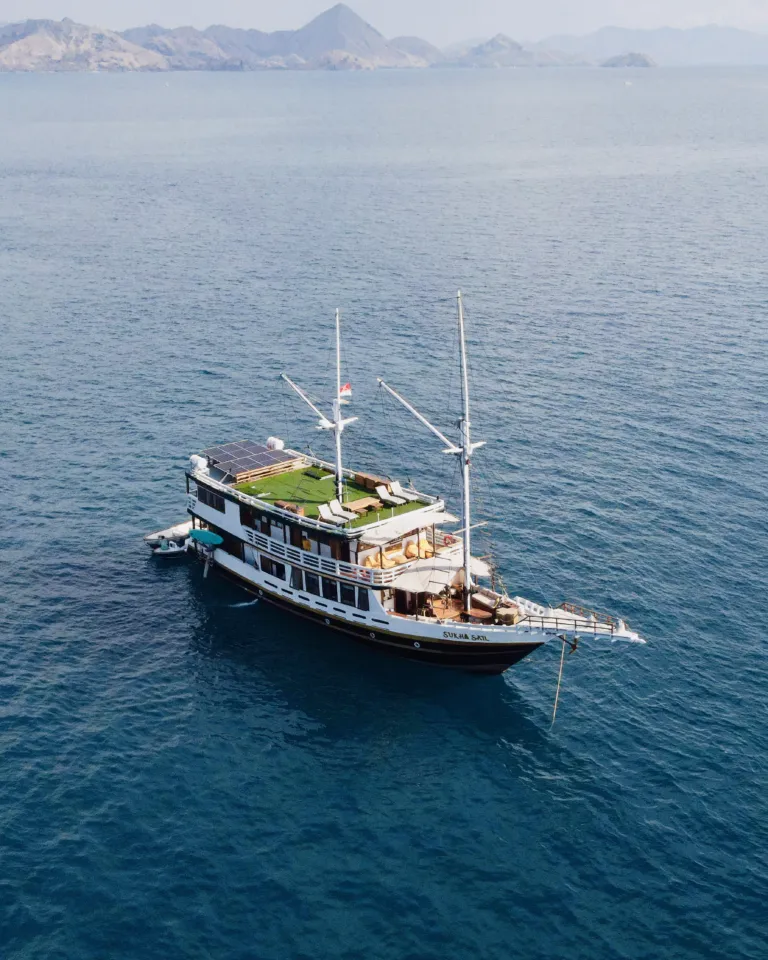


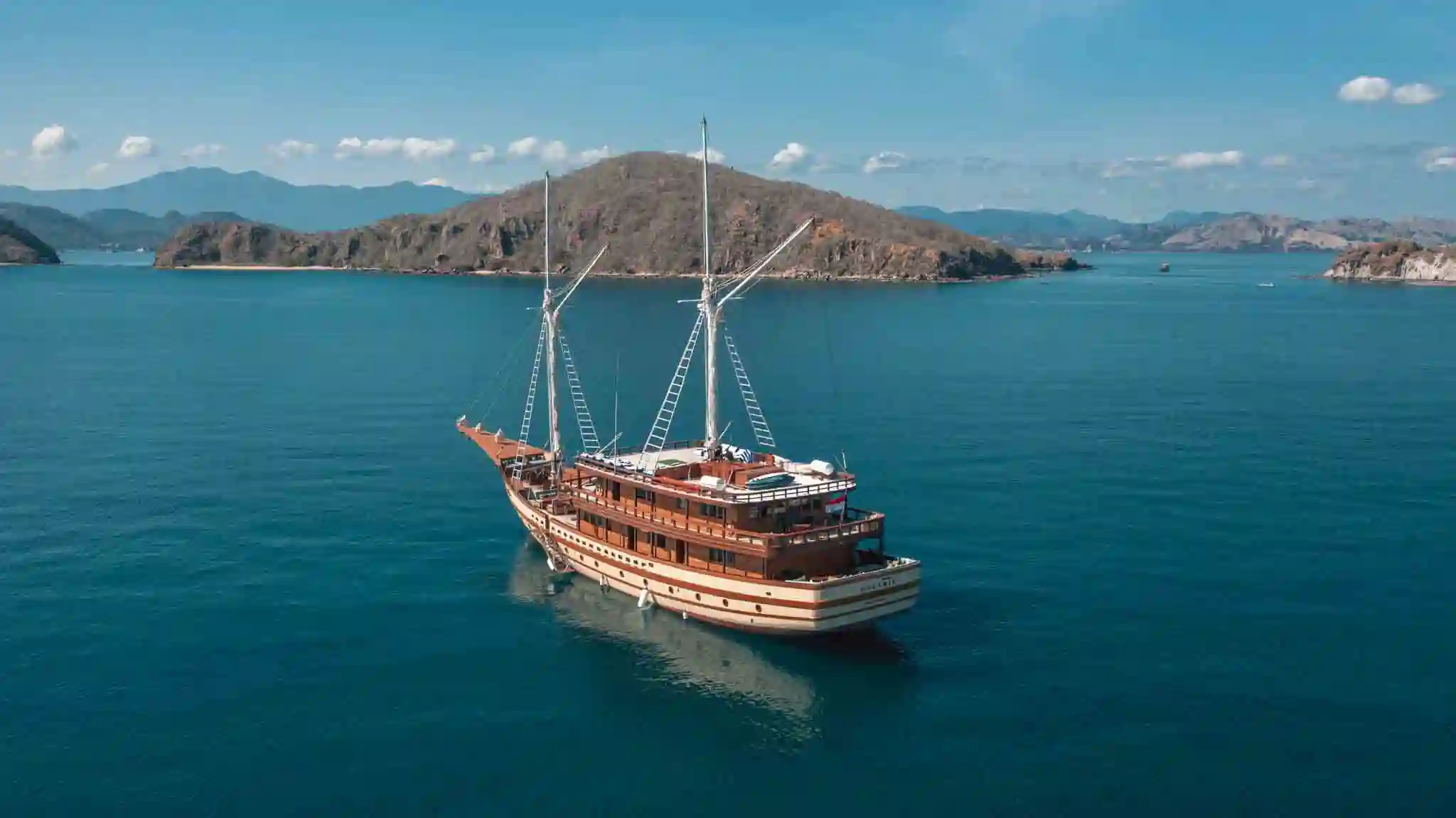
 Elbark Cruise
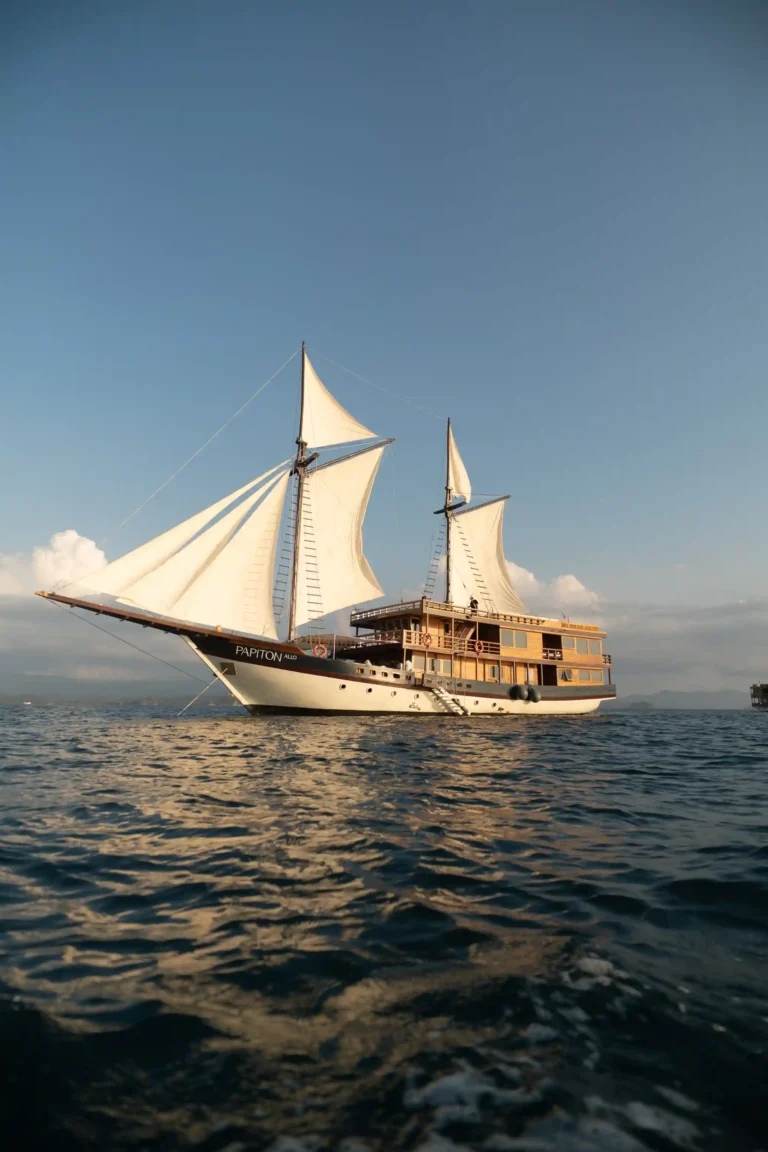
 Papiton Allo
 Semesta Voyages
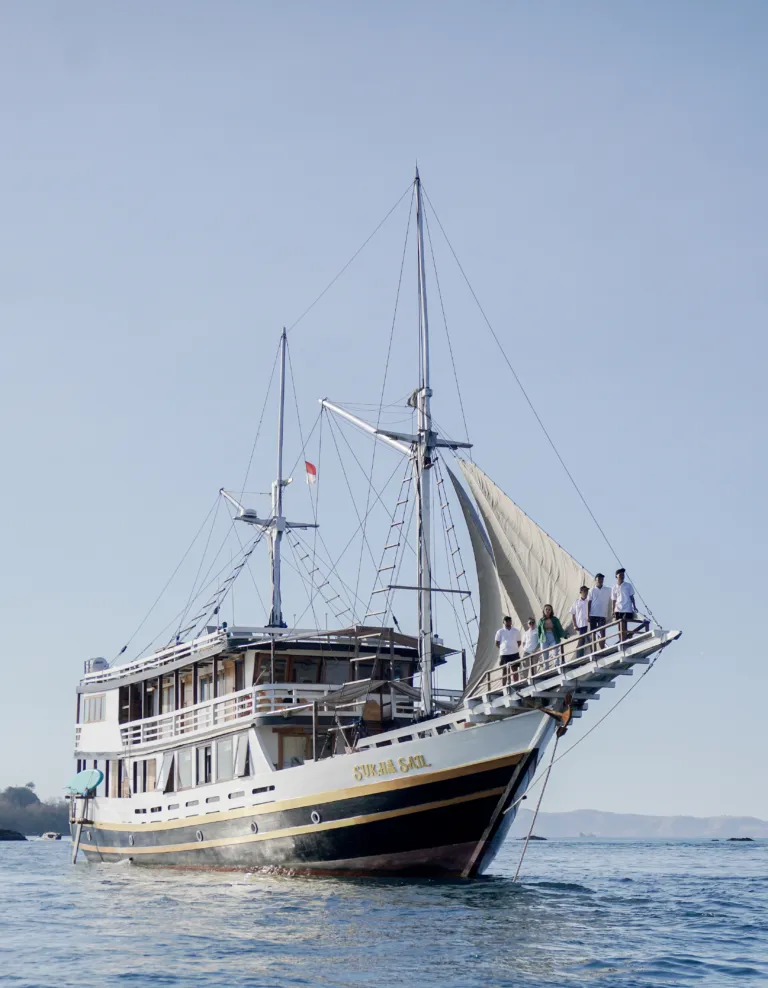
 Sukha Sail 1