Komodo in November is the park at the end of its long dry season. The hills are still golden, the sea is close to its warmest, the days are long and the first rains of the wet season arrive towards the end of the month, when the slopes soon start to turn green. It is a shoulder month between the busy summer and the festive weeks of December, with plenty of departures and a little more space at the famous stops.
This guide explains what the weather and the sea are like in November, how the month changes from its first week to its last, which boats on this site sail, what wildlife to expect and how to make the most of a November trip. The weather figures are long-term averages for Labuan Bajo, and the departures come from the live schedules of the boats on this site at the time of writing.
In short
- November is the last month of the dry season: mostly dry at the start, with more showers towards the end.
- The sea is about 29°C, and the wind turns from the south to the west in the middle of the month.
- On this site, 28 boats have 196 departures in November 2026, including the route between Lombok and Labuan Bajo.
- It falls between the summer peak of July and August and the year-end holidays, so the park is calmer.
What is the weather like in Komodo in November?
Hot, humid and changing. According to Weather Spark’s averages for Labuan Bajo, daily highs fall from about 33°C at the start of the month to about 32°C at the end, and nights stay around 24°C. The air feels muggy on practically every day, so light, loose clothes and plenty of water are essential.
The big change is the rain. At the start of November, the chance of a wet day is about 25%, and by the end of the month it has risen to about 49%. The rainfall over a 31-day window grows from about 80 mm to about 170 mm, and the share of time with an overcast or mostly cloudy sky rises from about 72% to about 87%. In other words, early November still feels like the dry season, while late November already brings the first taste of the wet season.
A wet day in these averages is any day with at least 1 mm of rain, so it can mean a short shower rather than rain from morning to night. Even at the end of the month, about half of the days stay dry. The sky, though, is more often cloudy, which softens the heat and can bring dramatic light at sunrise and sunset.
Komodo in November in numbers
The table compares the start and the end of the month, so you can see how quickly the season turns. The figures are rounded long-term averages for Labuan Bajo from Weather Spark, with times in Central Indonesia Time (WITA).
| Early November | Late November | |
|---|---|---|
| Daily high | About 33°C | About 32°C |
| Night low | About 24°C | About 24°C |
| Chance of a wet day | About 25% | About 49% |
| Rain over 31 days | About 80 mm | About 170 mm |
| Cloudy or overcast sky | About 72% of the time | About 87% of the time |
| Wind | Light, mostly from the south | Light, mostly from the west |
| Sea temperature | About 29°C | About 29°C |
| Sunrise | 05:31 | 05:31 |
| Sunset | 17:56 | 18:06 |
| Daylight | 12 h 25 min | 12 h 35 min |
For a trip in the first half of the month, you can expect conditions close to the dry season. For the last week of November, pack a light rain jacket and expect a few showers, as the wet season comes closer.
The sea and the wind
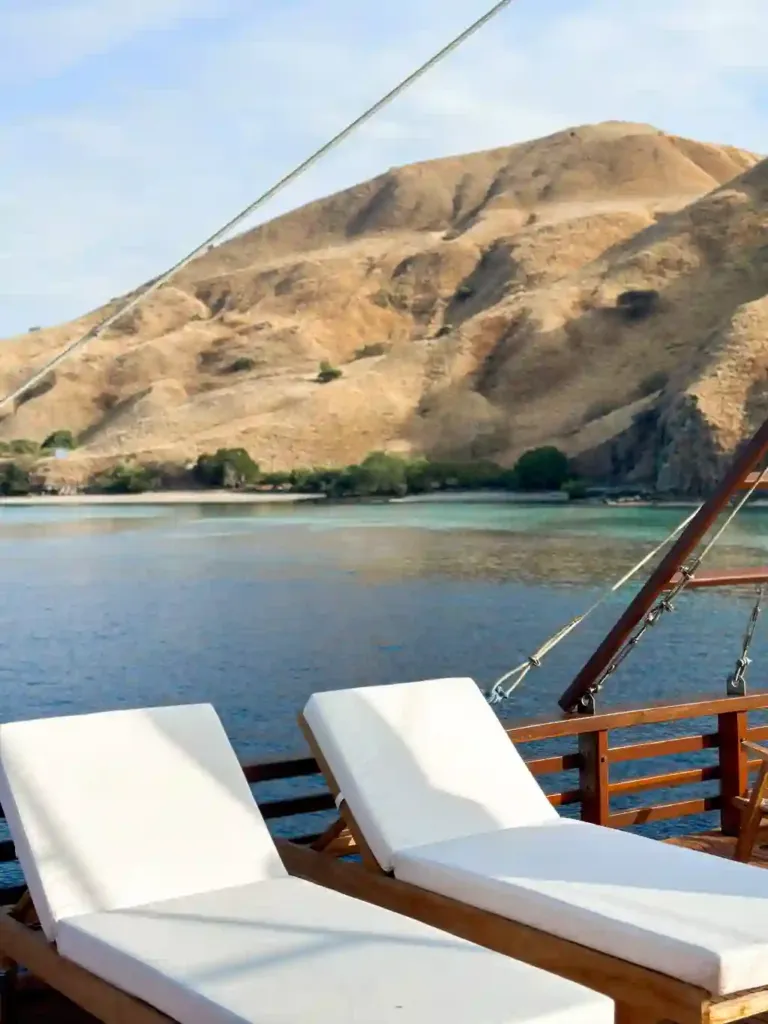
For a boat trip, the sea matters more than the rain. In November, the average winds in Labuan Bajo are light, about 6 to 7 km/h, and Weather Spark’s data shows them coming mostly from the south until the middle of the month and mostly from the west after it. That shift marks the slow arrival of the west monsoon, which brings the wet season in the following months.
Averages hide the passing squalls, and a storm can stir up the open channels for a few hours. The captains know the park well and plan the day around it, visiting exposed places in calm hours and sheltering in the bays when the wind picks up. Every departure from Labuan Bajo also needs a sailing approval from the harbour authority, which follows the forecasts of BMKG, Indonesia’s meteorological agency.
The water itself is a joy: at about 29°C, it is close to its warmest of the year, and long snorkelling sessions are comfortable without a wetsuit. If you are prone to seasickness, take tablets before the longer crossings and stay on deck in the fresh air.
Departures in November
November is a full sailing month on this site. At the time of writing, 28 of the 31 boats have departures in November 2026, 196 in total, from simple phinisi to more spacious boats. Most of them, 183 departures, are trips of three days and two nights from Labuan Bajo on the classic route, with Kelor, Kalong Island, Padar, Pink Beach, the dragons on Komodo Island, Taka Makassar and Manta Point.
- The Lombok route: Alfathran 3 and Lady Grace sail between Lombok and Labuan Bajo in November, along the coast of Sumbawa, on trips of four or five days. Lady Grace makes its last crossings of the year in the first half of the month.
- Not sailing in November: Le Costa, Sukha Sail 1 and Sukha Sail 2 have no November departures on this site.
- Last-minute trips: departures on this site can be booked online until the day before they leave, Central Indonesia Time.
The sharing trips page lists every November departure with the cabins still free, and the three-day trips page compares the boats on the classic route. If you prefer your own dates, the private charter page lists every boat that can be chartered.
Wildlife in November
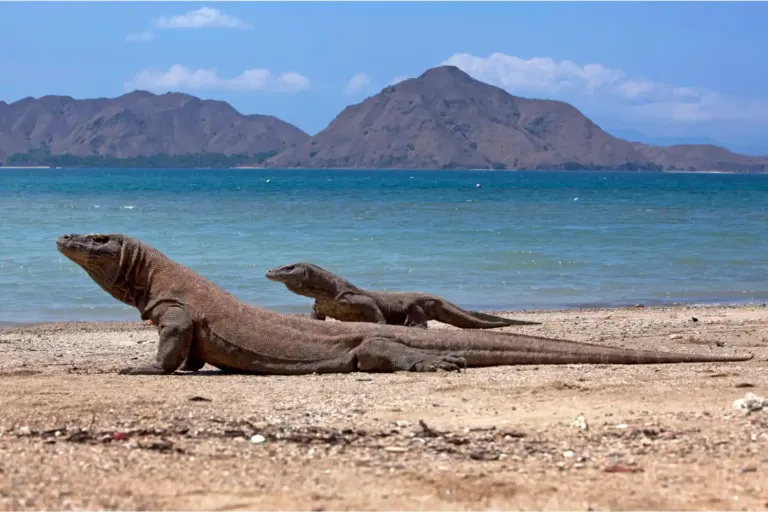
The Komodo dragons can be seen all year, and November is no exception. The breeding season is over: the eggs laid in the middle of the dry season are incubating underground, and the young will hatch between February and May. On the ranger walks, the dragons are most active in the cooler morning hours and rest in the shade by midday, so an early walk gives you the best chance to see them moving. Our guide to the Komodo dragons explains how they live.
At sea, November is a good month for manta rays at the central sites of the park. A study of Komodo’s mantas published in the journal PeerJ in 2022, which you can read on PubMed Central, found that visits to Karang Makassar, better known as Manta Point, and to the nearby cleaning station of Mawan rise during the north-west monsoon, from November to April. Sightings are never guaranteed, but the timing is on your side.
Every evening, the flying foxes of Kalong Island leave the mangroves at dusk, a highlight of the first night on most trips. On the Lombok route, the boats look for whale sharks early in the morning in Saleh Bay, although sightings are never guaranteed.
The last golden weeks
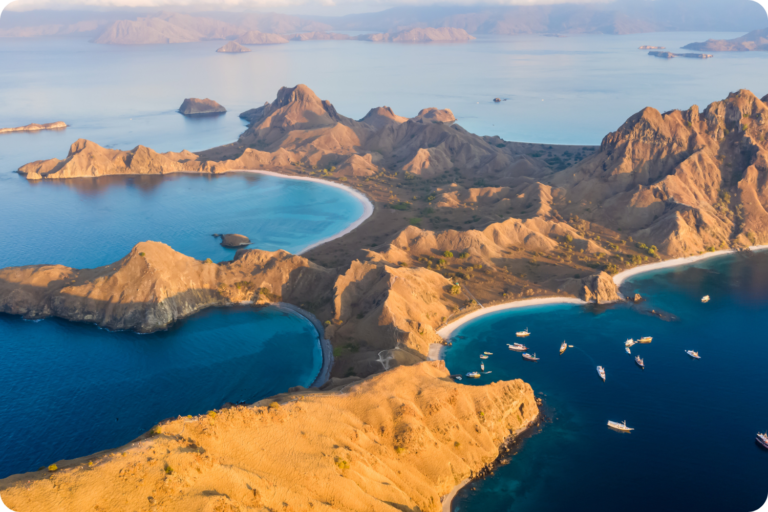
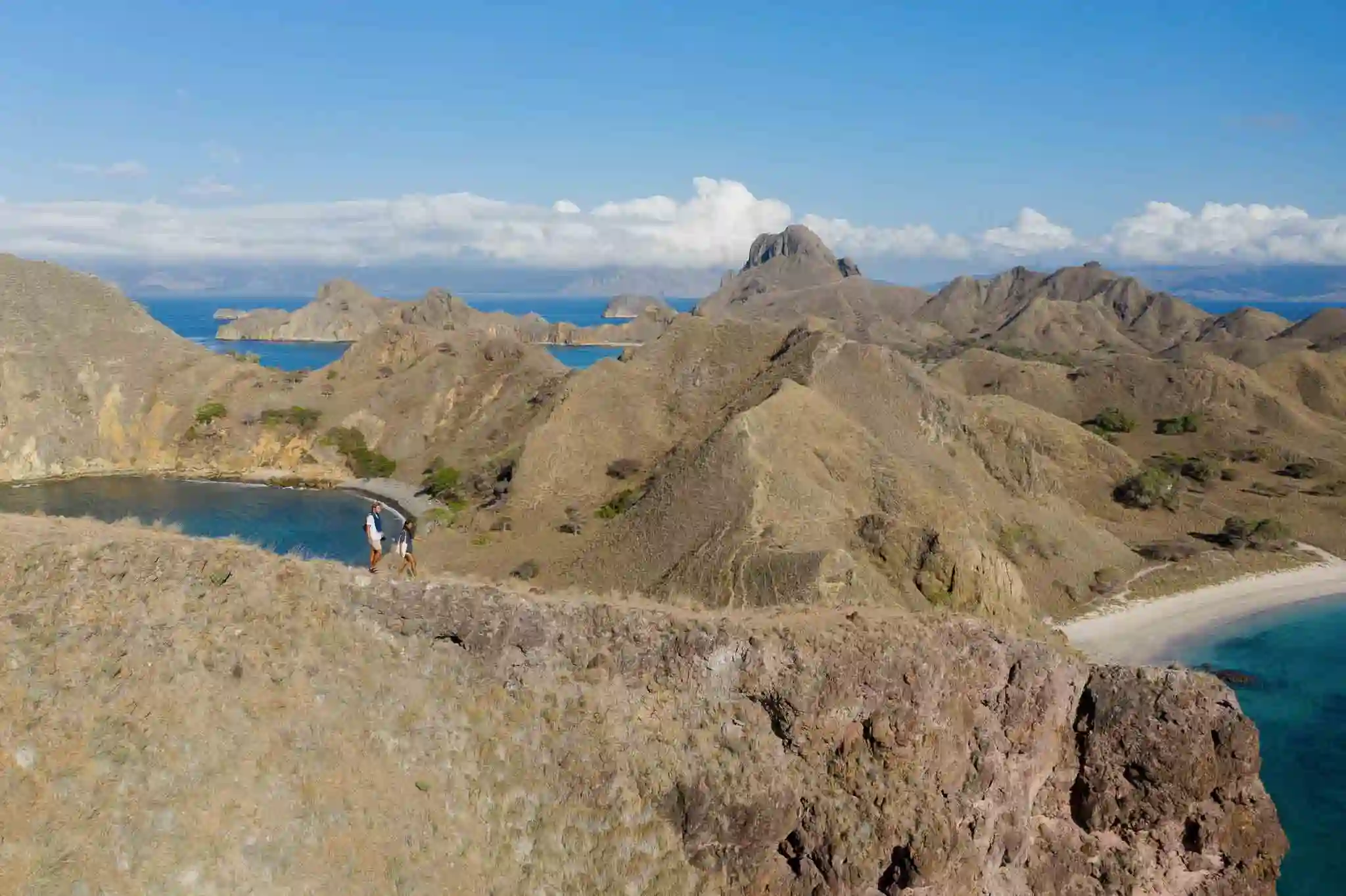
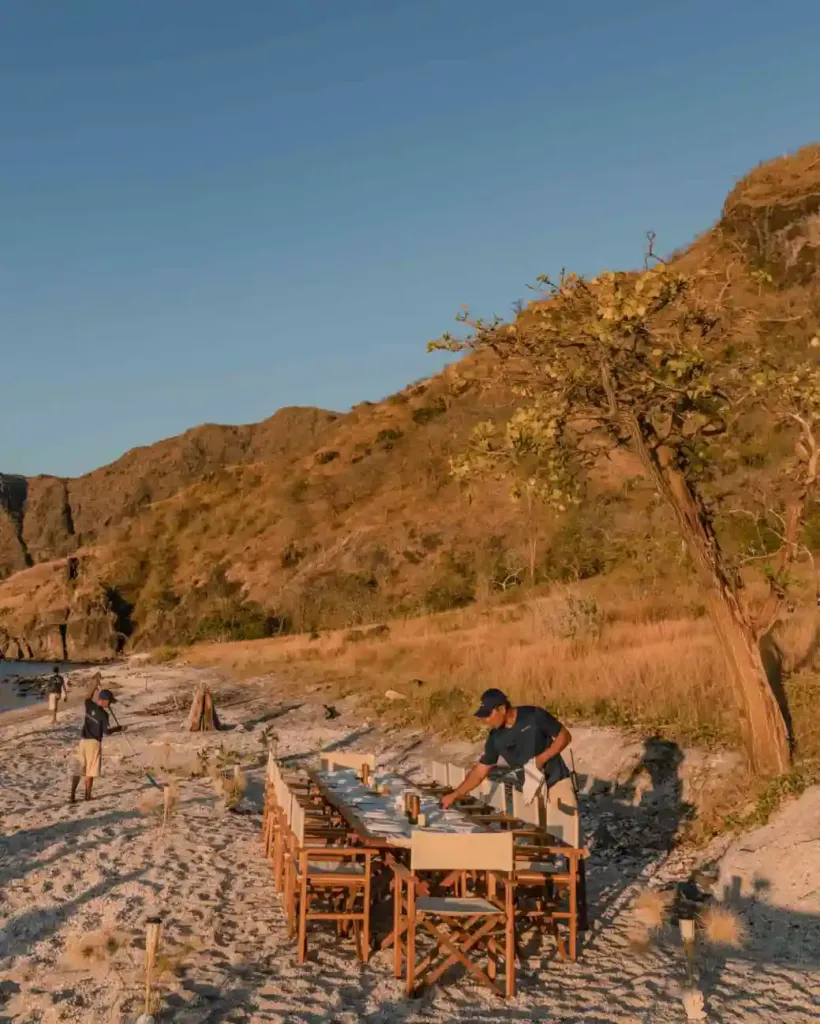
From about September, the grass on the hills of Komodo, Rinca and Padar turns golden-brown, and in November the landscape is at its driest and most dramatic: bare ridges, lone lontar palms and deep blue bays. Photographers love this light, especially in the hour after sunrise and before sunset, when the hills glow orange.
Then the rains arrive, usually in the second half of the month, and the park slowly changes colour. In a year when they come early, a late-November trip can already show the first green on the slopes. If you prefer the classic golden views, travel early in the month; if you love green, wait for the wet season, from December to March, when the hills turn green.
Sunrise, sunset and Padar in November
November has the earliest sunrises of the year in Komodo. According to Weather Spark, the sun rises at 05:31 on the first and the last day of the month and at 05:30 around the middle, with first light about 20 minutes earlier. Sunset moves from 17:56 to 18:06, and the days grow from 12 hours 25 minutes to 12 hours 35 minutes.
That timing matters on Padar. Since April 2026, visits to South Padar run in three timed sessions as part of the park’s daily visitor quota, and the first session, from 05:00 to 08:00 WITA, covers the sunrise with time to spare, as Antara reported.
In the afternoon session, from 15:00 to 18:00, the sun sets a few minutes before the end of the session in early November and a few minutes after it from the middle of the month, so later in November you enjoy the golden light of the late afternoon rather than the sunset itself. Our guide to Padar Island explains the climb.
A day on board in November
A day on a November trip follows the sun. On the morning of the Padar visit, the crew wakes you well before 05:00, and you go ashore in the dark to reach the viewpoint before sunrise. After breakfast on board, the day often continues with a ranger walk on Komodo Island and a swim at Pink Beach, ideally before the midday heat.
The middle of the day, when the sun is fiercest, is time for lunch and a rest in the shade of the deck while the boat sails on. Afternoons are for snorkelling at Taka Makassar or Manta Point and, later in the month, for watching the clouds build over the islands. If a shower comes, the crew waits it out or changes the order of the stops.
Evenings end with dinner on deck, under the stars early in the month and more often under a cloudy sky later on. The night stays warm, at about 24°C, so a light sheet is all you need, and a fan or a breeze on deck makes the heat easier to bear.
Crowds and prices
November sits between the busiest weeks of the year: the summer holidays of July and August, when travellers from Europe and many other countries arrive, and the year-end holidays at the end of December. In November, the park is calmer, the viewpoints are less crowded and it is easier to find the cabin you want, even a few weeks before departure.
Indonesia has no national public holidays in November 2026, according to the joint decree on holidays published by the Indonesian State Secretariat, so domestic travel is quieter than at Christmas, when 25 December falls on a Friday and 24 December is a day of joint leave.
Cabin prices on this site are set per boat and per year, not per month, so the advantage of November is choice rather than a lower price. The daily visitor quota of 1,000 people still applies across Padar, Rinca, Komodo and the main dive sites, but in a calmer month it is less likely to be reached. Our guide to the Komodo liveaboard price explains what changes the cost of a trip.
What to pack for November
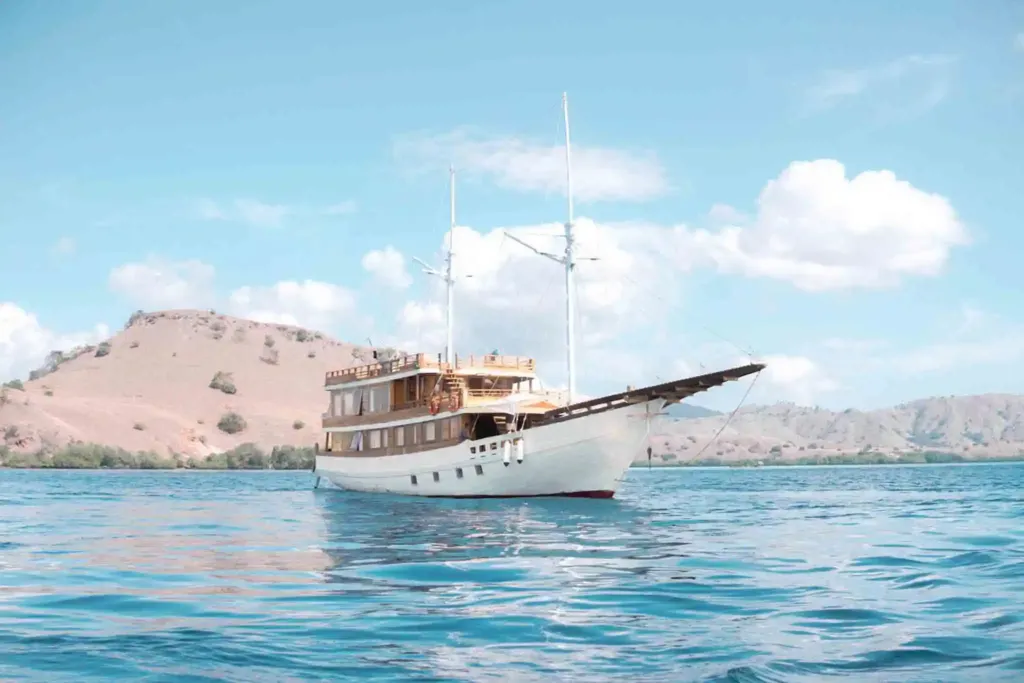
- Sun protection: a hat, sunglasses, a long-sleeved rash guard and reef-friendly sunscreen.
- Light clothes that dry quickly, as the air is humid.
- A light rain jacket for the second half of the month.
- Shoes with a good grip for the dusty steps of Padar and Kelor.
- A dry bag for your phone and camera on the tender rides.
- A headlamp for the climb before sunrise.
Drink regularly, especially on the walks, and rest in the shade in the middle of the day, when the sun is fiercest. Our Komodo packing list covers the rest.
Pros and cons of Komodo in November
- Pro: warm water, at about 29°C, perfect for snorkelling.
- Pro: plenty of departures, on 28 boats, with a wide choice of cabins.
- Pro: golden hills and the earliest sunrises of the year.
- Pro: good timing for mantas at the central sites.
- Con: heat and humidity, with highs of about 32 to 33°C.
- Con: more showers and cloud towards the end of the month.
November suits photographers, who get golden hills and the earliest sunrises of the year, snorkellers, who get some of the warmest water, and travellers who decide late, who get a wide choice of cabins. If the heat worries you, plan your walks for the early morning and spend the afternoons in the water.
Early or late November?
If you can choose, the first half of the month gives the most settled weather, with drier days, golden hills and the wind still from the south. The second half brings more showers, cloudier skies and perhaps the first green on the hills, but also dramatic light and a warm sea that is perfect for snorkelling. Our guide to the best time to visit Komodo compares the months of the year.
Whatever your dates, plan a buffer day before and after the boat, as a storm can delay a flight. Komodo Airport in Labuan Bajo has direct flights from Bali and Jakarta, and our guide on how to get from Bali to Komodo explains the journey. Our comparison of a Komodo liveaboard and a day trip helps you decide how long to stay in the park.
Our view
Komodo in November is a lovely shoulder month: warm water, golden hills, early sunrises and plenty of boats, with fewer crowds than in July, August or at the end of December. The first half of the month feels like the dry season, and the second half brings the first showers and perhaps the first green. Pack for the sun and a little rain, book a buffer day for your flights and enjoy the last golden weeks of the year in the park.
November is the park’s golden goodbye to the dry season. Catch it before the rains paint the hills green.
Ready to go? Compare the November departures on the sharing trips page, where every date shows the cabins still free.
Questions
Is November a good time to visit Komodo?
Yes. It is the end of the dry season, with warm water, golden hills, plenty of departures and fewer crowds than the peak weeks.
Is November the rainy season in Komodo?
Not yet. It is the last month of the dry season, but showers become more frequent in the second half, as the wet season approaches.
Does it rain in Komodo in November?
Sometimes. The chance of a wet day rises from about 25% at the start of the month to about 49% at the end.
Is it too hot in November?
It is hot and humid, with highs of about 32 to 33°C, so plan the walks for the morning and rest in the shade at midday.
How warm is the sea in November?
About 29°C, close to its warmest of the year.
Do the boats sail in November?
Yes. On this site, 28 boats have 196 departures in November 2026.
Can I see manta rays in November?
Often. Visits to the central manta sites rise from November to April, although sightings are never guaranteed.
What time is sunrise in November?
Around 05:30, the earliest of the year, with first light about 20 minutes earlier.
Is November busy in Komodo?
Less than July, August and the end of December, the busiest weeks of the year.
Can I book a November trip at the last minute?
Yes, departures on this site can be booked online until the day before they leave, if cabins are still free.