Responsible travel in Komodo is not complicated. It comes down to a handful of habits that protect the dragons, the reefs and the people who live here, and most of them cost nothing. Komodo National Park was created in 1980 to protect the Komodo dragon and its habitat, and today it also protects some of the richest reefs in Indonesia. This guide explains why the park needs careful visitors and gives you twelve simple ways to help, on land, in the water, on board and in town.
In short
- On land: stay behind the ranger, keep several metres from the dragons and stay on the trails.
- In the water: never touch or stand on coral, and give mantas and turtles space.
- On board: refuse single-use plastic, take your rubbish back and save fresh water.
- In town: buy local, dress modestly in villages and never buy coral or shells.
Why responsible travel in Komodo matters
Komodo National Park is small, and almost everything that makes it special is fragile. The Komodo dragon lives in the wild only on Komodo, Rinca and Gili Motang, and in some coastal areas of western Flores. The park’s reefs, sea grass and mangroves feed manta rays, turtles and countless fish, and they also feed the fishing families who live in the park’s villages. UNESCO listed the park as a World Heritage Site in 1991 for both its dragons and its landscapes.
The number of visitors has grown fast, and the most famous stops can be busy at peak times. Since 1 April 2026, the park has limited visits to 1,000 people a day across Padar, Rinca, Komodo and 23 dive sites, with tickets booked through its reservation system, SiOra. Rules like this protect the park for the future, but what each visitor does on the trail and in the water matters just as much.
What the park protects
The best-known resident is the Komodo dragon, the largest lizard on Earth. UNESCO’s description of the park estimates the population at around 5,700, spread over Komodo, Rinca, Gili Motang and parts of western Flores. The dragons depend on the deer, wild boar and water buffalo they hunt, and on the dry forest and savanna where those animals live, so protecting the dragons means protecting the whole island.
Much of the park is sea. Strong currents flow between the Flores Sea and the Indian Ocean through its straits, bringing nutrients that keep the water rich in life: coral reefs, sea grass, mangroves, manta rays, turtles, reef sharks and huge schools of fish. The same reefs feed the families in the park’s fishing villages, who have lived here for generations. When visitors damage a reef, it is not only the fish that lose out.
On land: the dragons and the trails
1. Stay behind the ranger and keep your distance
Every dragon walk is led by a park ranger, and the ranger’s word is final. Stay with the group and behind the ranger, keep several metres away even from a dragon that looks asleep, and move calmly. Keeping your distance protects you, but it also protects the dragons from stress and from changing their natural behaviour around people. Keep your voice low, do not throw anything to make a dragon move for a photo, and never try to get between a dragon and the water or the shade it is heading for.
2. Stay on the trails
The trails on Komodo, Rinca and Padar are there for a reason. Walking off the path wears away the thin soil on the dry hills, damages plants and can disturb the nest mounds of the orange-footed scrubfowl, which female dragons sometimes use to lay their eggs. On Padar, stay on the marked path and the steps, even when a shortcut looks tempting for a photo. Thousands of feet a day on the same steep slopes quickly cut new gullies into the hills, and every shortcut becomes the next scar on the most famous view in the park.
3. Never feed or touch the animals
Never feed or touch a dragon, and do not feed the deer, the monkeys or the fish either. Wild animals that learn to link people with food lose their natural fear, become a danger to visitors and can end up in trouble themselves. Food also brings rats and other pests to places where they do not belong.

In the water: reefs, mantas and turtles
4. Do not touch or stand on coral
Coral is a living animal, and a single kick of a fin can break a piece that took years to grow; some corals grow only a centimetre or so a year. Float on the surface, keep your fins up and away from the reef, and never stand on coral to rest. If you are not a strong swimmer, wear a life jacket or a float; it keeps you safely above the reef and makes snorkelling far more relaxing. Life jackets are on board on most boats.
5. Give mantas and turtles space
At Manta Point, manta rays often feed in the current, and turtles graze on the reefs across the park. Keep a few metres away, never chase, touch or ride them, and do not block their path. Let them come to you: a manta that feels safe will often pass close by on its own, and that is a far better moment than one you chased.
6. Choose a reef-friendly sunscreen
Some sunscreen ingredients, such as oxybenzone and octinoxate, have been banned in places like Hawaii because of concerns about their effect on coral. Choose a mineral sunscreen with zinc oxide or titanium dioxide, put it on at least a quarter of an hour before you swim, and cover up with a long-sleeved swim shirt instead of more cream. It protects your skin from the strong sun and the reef from what washes off you.
Take nothing from the water or the beach. Shells, coral and even sand are part of the reef and the coastline, and taking them from a national park is against the rules. A photo is the only souvenir the reef needs to give you.
On board: plastic, water and waste
7. Refuse single-use plastic
Plastic is one of the biggest threats to the sea around Komodo, because it drifts with the currents and ends up on beaches and reefs. Drinking water is included on most boats, so bring a reusable bottle and refill it instead of buying plastic bottles in town. Say no to straws and plastic bags, and pack a small reusable bag for shopping in Labuan Bajo. A plastic bottle takes hundreds of years to break down, and on a remote beach there is no one to collect it, so the only bottle that never pollutes the sea is the one that was never bought.
8. Take your rubbish back to the boat
There are no bins on most beaches and trails, so whatever you bring ashore, take back to the boat: wrappers, tissues, cigarette ends and sunscreen bottles. If you see a piece of plastic on the beach, pick it up and take it back too. It takes a second, and if every visitor did it, the beaches would be clean within a season.
9. Save fresh water and energy
On a boat, fresh water is carried or made on board, and every litre counts. Keep showers short, turn off the tap while you brush your teeth and rinse your snorkelling gear in the shared tub instead of under a running shower. Turn off the lights and the air conditioning when you leave your cabin; the generator works hard enough in the heat of the day.
In town and in the villages
10. Respect the local culture
Several fishing villages lie inside the park, including the village on Komodo Island, and Labuan Bajo is a growing town where most people are not in the tourism business. Flores is mostly Catholic, while many of the fishing villages on the coast and in the park are Muslim. Dress modestly when you visit a village, with shoulders and knees covered, and ask before you take a photo of someone. A smile and a few words of Indonesian, such as “terima kasih” for thank you, go a long way.
11. Buy local, but never coral, shells or turtle shell
Spending your money with local people is one of the best ways to help. Eat at a warung in Labuan Bajo, buy a carved wooden dragon or a woven cloth from the people who made it, and hire local guides. But never buy anything made from coral, shells or turtle shell. Trade in turtle shell is banned internationally, sea turtles are protected by law in Indonesia, and these souvenirs take something from the reef that cannot be put back.
12. Fly drones with care, and follow the rules
Drones need a permit and a fee in the park, and they can disturb wildlife and other visitors. If you fly one, follow the ranger’s instructions, keep away from animals and people, and keep your flights short. On most sharing trips on this site, photo and drone documentation is included, so you may not need to bring your own at all.
A responsible day on a liveaboard
What does all this look like in practice? Take the busiest day of a typical trip of 3 days and 2 nights. You climb Padar before sunrise on the marked path and leave the view as you found it. At Pink Beach, you snorkel with your fins up, admire the pink sand and leave every grain of it on the beach.
On the dragon walk, you stay behind the ranger and use the zoom on your camera instead of your feet. At Taka Makassar and Manta Point, you let the mantas come to you and take back the snack wrapper you brought ashore. In the evening, you refill your bottle from the boat’s water, take a short shower and turn off the air conditioning when you go up on deck to watch the stars.
None of it takes much effort. That is the point: responsible travel in Komodo is not a sacrifice, just a set of small habits that every guest can follow without missing a single highlight.
Teaching children the park rules
Children often become the best guardians of the park once they understand why the rules exist. Before the dragon walk, explain that the dragons are wild hunters and that the ranger is in charge; before the first snorkel, show them how to float with their fins up and why the coral is alive. Give them a small job, such as being the family’s rubbish collector on the beach.
Keep the rules simple and positive: watch, do not touch; take photos, not shells; stay with the group. Most children love the ranger walk and remember it for years, and learning to respect a wild place is one of the best things a family trip can teach.
How to choose a responsible boat
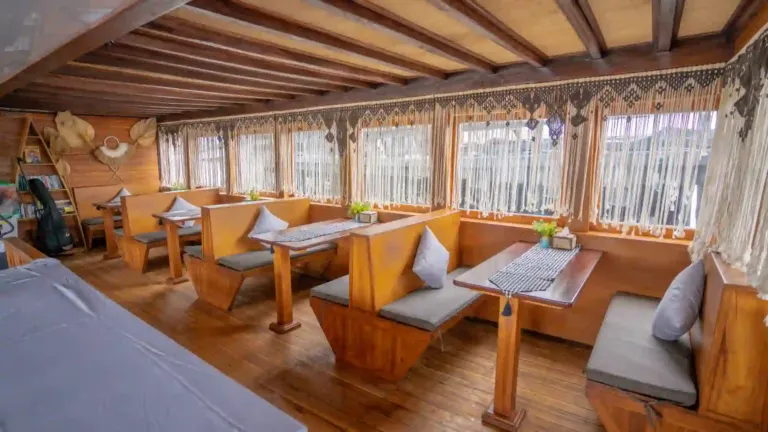
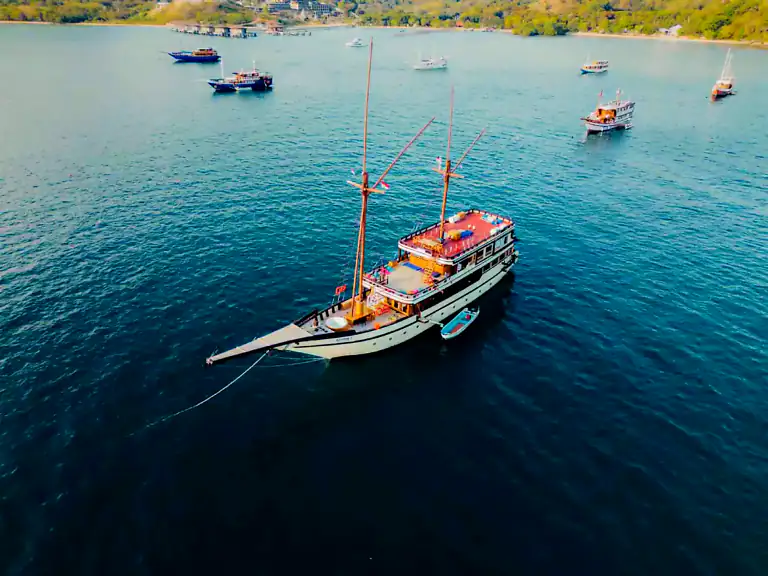
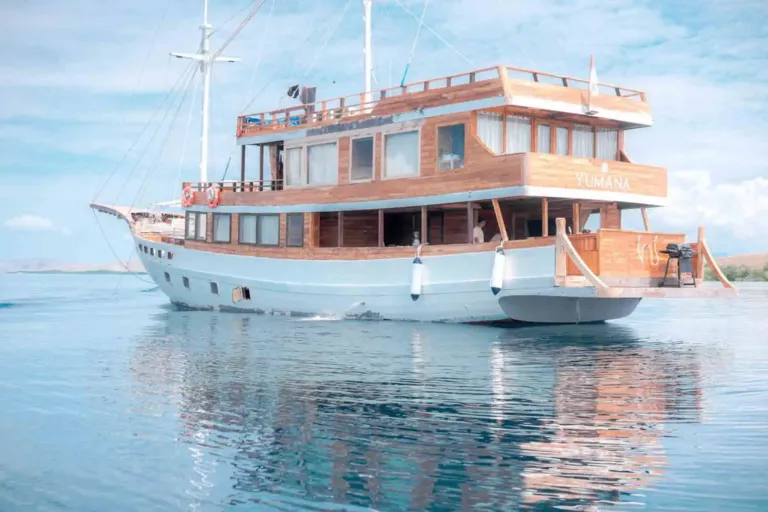
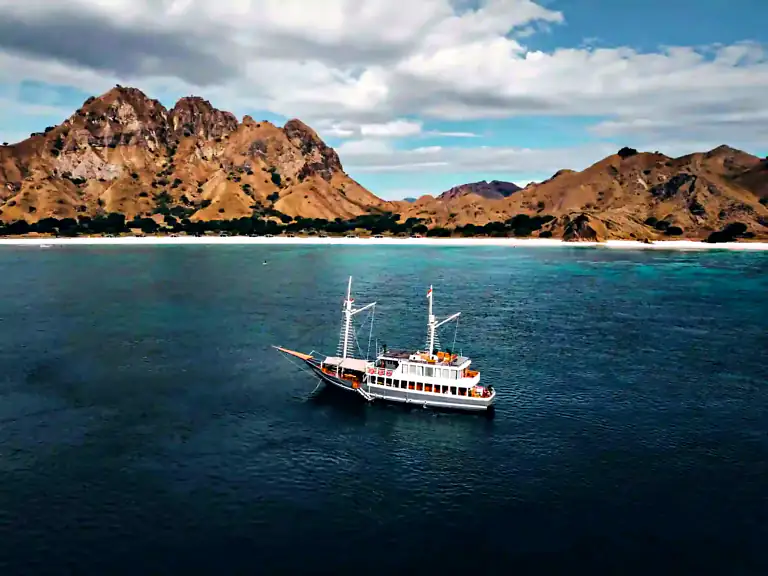
The boat you choose is part of your footprint. When you compare liveaboards, ask a few simple questions: how the crew handles rubbish and waste water, whether drinking water is refilled from large containers rather than small plastic bottles, and how the crew briefs guests before the first snorkel. A good crew will happily answer, and a briefing on the reef and the dragons is a good sign.
Look also at how the trip is run. A boat that follows the park rules, uses licensed guides, keeps to the quota and does not rush from stop to stop is better for the park and more relaxing for you. Our guide on how to choose a Komodo liveaboard covers the other things to compare, from the cabins to the route.
The quota, the tickets and the park fee
Every visitor to Komodo National Park pays the park entrance fee. When you book a liveaboard with us, it is added to your invoice, IDR 650.000 for foreign guests on most boats, so the fee is paid for every guest without you having to carry cash. Children under 2 do not pay. Our park fees guide lists the fee for every boat.
The quota on Padar is booked through SiOra in sessions through the day, and the park has asked tour operators to make sure that every visitor they bring has a ticket. If you plan a day trip on your own, check that your operator has tickets for your session. Respecting the quota is one of the simplest ways to help the park stay open and beautiful.
A quick checklist before you go
| Pack | Leave at home |
|---|---|
| A reusable water bottle | Single-use plastic bottles |
| Mineral sunscreen and a long-sleeved swim shirt | Sunscreen with oxybenzone or octinoxate |
| A small reusable bag | Plastic shopping bags |
| Clothes that cover shoulders and knees for villages | Anything you would not wear in a small village |
| A dry bag for rubbish on the beach | Food for the animals |
Our Komodo packing list has the full list of what to bring on a liveaboard.

Our view
Responsible travel in Komodo is mostly about respect: for the dragons, for the reef and for the people who live here. None of the twelve habits in this guide will spoil your trip; most of them make it better, because a calm walk, a gentle snorkel and a clean beach are what everyone comes for. The park has protected these islands since 1980, and every visitor who follows the rules helps it do so for decades to come.
Take only photos, leave only footprints, and take your rubbish back to the boat.
Ready to plan a trip that does the park justice? Read what to see in Komodo, then compare the boats on our Komodo liveaboard page.
Questions
What are the main rules in Komodo National Park?
Walk with a ranger on the dragon islands, keep your distance from the animals, stay on the trails, take nothing from the park, do not touch the coral and pay the park fee.
Can I take shells or sand home?
No. Shells, coral and sand are part of the park, and taking them is against the rules. Take photos instead.
Which sunscreen should I use?
A mineral sunscreen with zinc oxide or titanium dioxide, and a long-sleeved swim shirt to need less of it.
Is it OK to feed the fish?
No. Feeding fish changes their behaviour and harms the reef. Watch them instead.
Why is there a quota on Padar?
To protect the island from too many visitors at once. Since 1 April 2026, visits to Padar, Rinca, Komodo and 23 dive sites are limited to 1,000 people a day in total, booked through SiOra.
How can I help the local community?
Eat at local warungs, buy crafts from the people who make them, hire local guides and respect local customs when you visit a village.
Can I swim with the manta rays?
Yes, snorkelling at Manta Point is part of most trips. Stay with the group, keep a few metres away and never chase or touch a manta.
Is a liveaboard better for the park than a day trip?
Both can be done responsibly. A liveaboard moves at a slower pace, with fewer long crossings each day, which leaves more time at each stop and less pressure to rush.
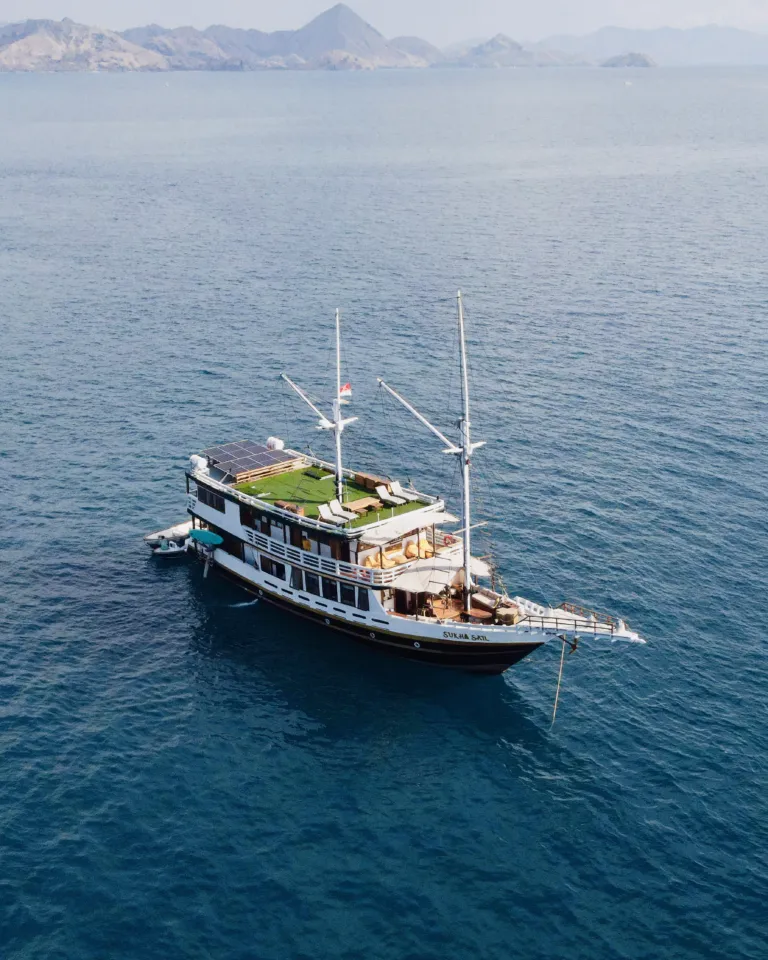
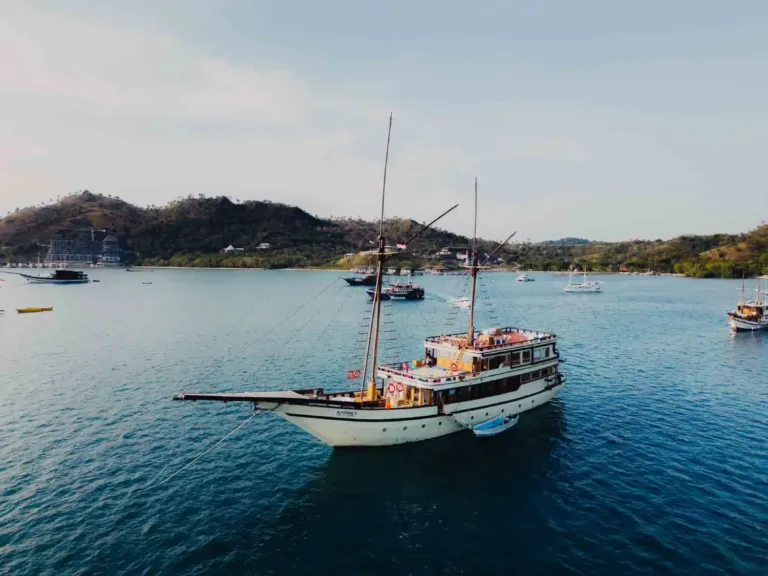
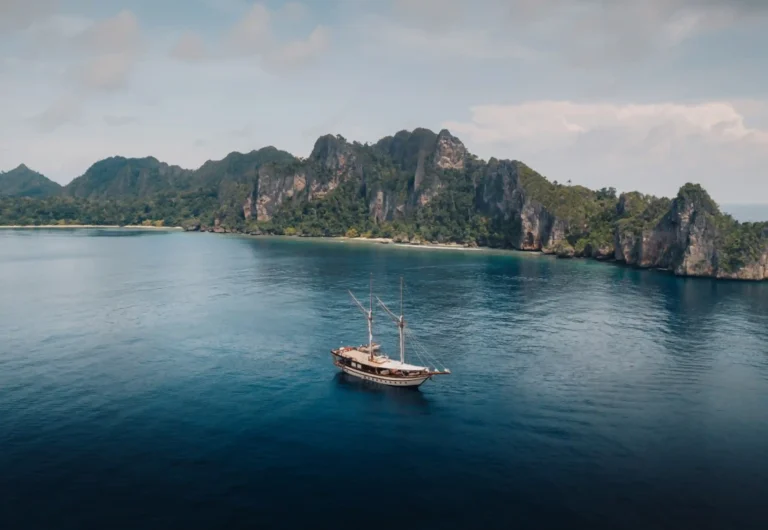
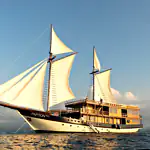
 Elbark Cruise
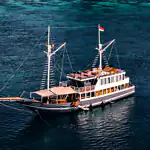
 Papiton Allo
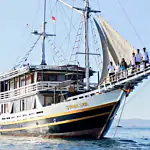
 Semesta Voyages
 Sukha Sail 1