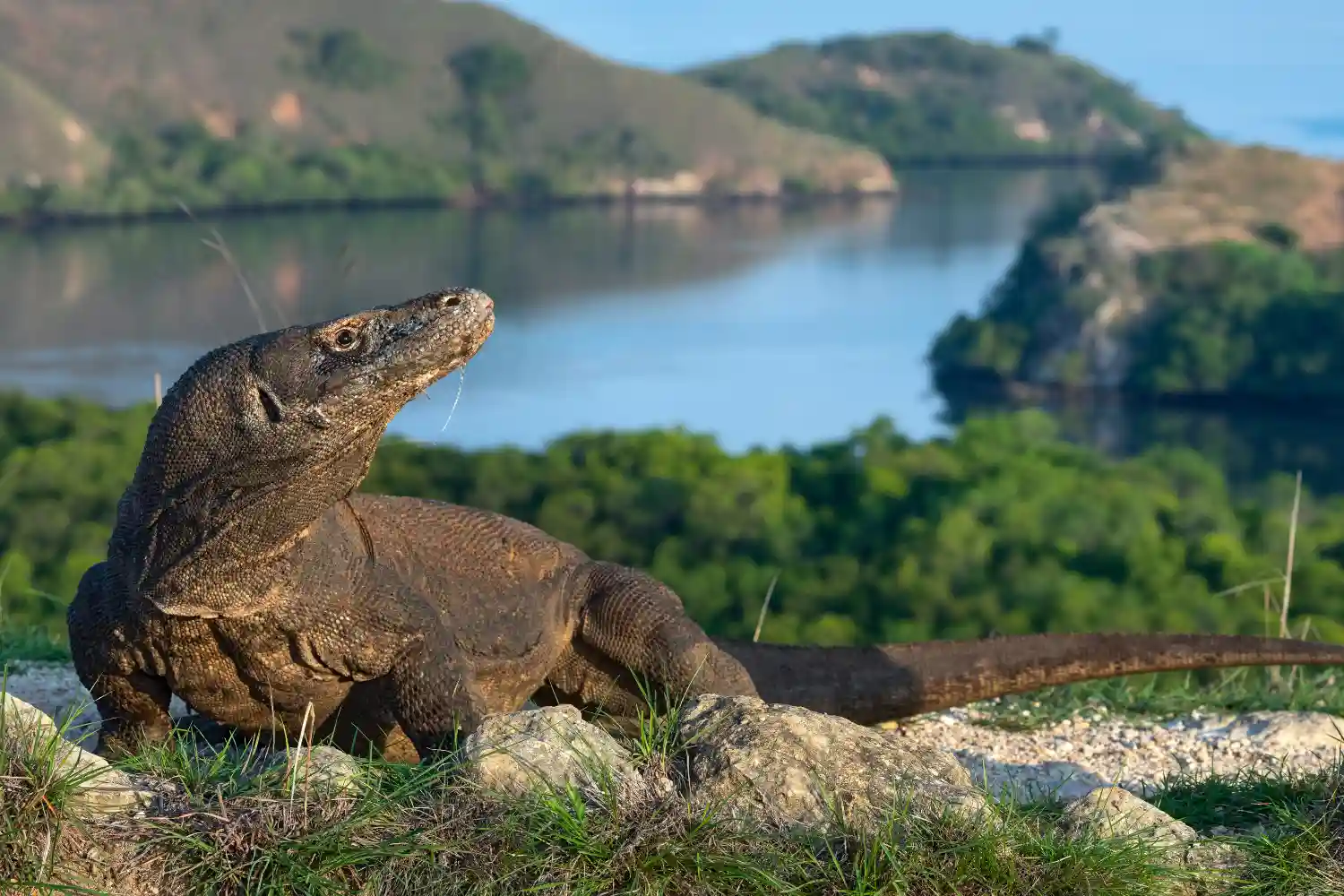
Komodo Island gave the Komodo dragon its name, and for many travellers it is the reason they come to this corner of Indonesia. It is the largest island in Komodo National Park: a rugged land of dry hills, tamarind forest and quiet bays, with a ranger station at Loh Liang where the dragon walks begin. This guide explains where Komodo Island is, how the ranger walks work, what else lives there, which beaches and reefs are nearby and how to visit on a liveaboard.
In short
- Komodo Island is the largest island in Komodo National Park, between Sumbawa and Flores.
- Dragon walks start at the Loh Liang ranger station and are always led by a park ranger.
- Walks range from a short loop of under an hour to longer treks of two hours or more.
- On a trip of 3 days and 2 nights, most boats visit on the second day, often with Pink Beach nearby.
Where is Komodo Island?
Komodo Island lies in the province of East Nusa Tenggara, between the larger islands of Sumbawa to the west and Flores to the east. It is the largest of the islands in Komodo National Park, which also includes Rinca, Padar and many smaller islands, and the sea around them. The park has been a UNESCO World Heritage Site since 1991.
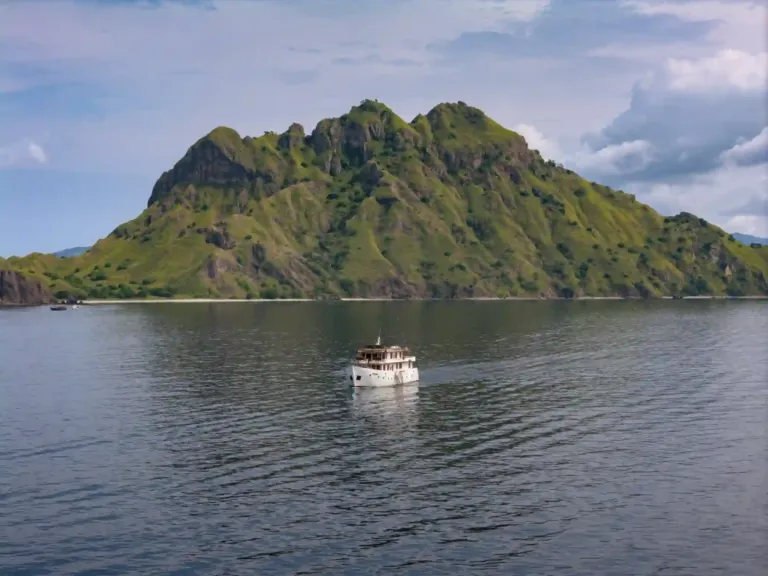
The island is rugged and dry for much of the year. Steep hills of savanna grass rise straight from the sea, dotted with lontar palms, while the valleys hold dry forest and the bays are fringed with white sand and, in places, mangroves. It is a landscape that feels far older and wilder than the busy harbour you left in the morning.
There is no airport and no road to the island. Visitors arrive by boat from Labuan Bajo, the harbour town on the western tip of Flores, either on a day trip by speedboat or on a liveaboard that spends a few days in the park. Komodo Airport in Labuan Bajo has direct flights from Bali and Jakarta, and our guide on how to get from Bali to Komodo explains the journey.
Komodo Island or Rinca: which is better?
Both islands are home to wild dragons, and both have a ranger station where the walks begin: Loh Liang on Komodo and Loh Buaya on Rinca. Rinca is closer to Labuan Bajo, so it is easier to reach on a short trip. Komodo Island is larger and further out, with longer trails and a wilder feel, and it is the island that gave the dragons their name.
Which one you visit depends on your boat and its route. Most liveaboards include one of the two, and some longer trips include both. Either way, you see the same species in the same kind of landscape, with a ranger beside you. Our guide to the Komodo dragons covers the animals themselves.
Arriving at Loh Liang
The boats anchor in the bay of Loh Liang, and a tender brings you to the jetty. From there, a short path leads to the ranger station, where visitors are registered and split into groups. Before the walk, a ranger explains the rules, and every group walks with at least one ranger, who carries a long forked stick to keep a curious dragon at a distance if needed.
The park entrance fee is added to your invoice when you book a liveaboard with us, so there is nothing to pay in cash for it at the station. On most boats, it is IDR 650.000 for foreign guests, and children under 2 do not pay. Our park fees guide lists the fee for every boat. Since 1 April 2026, visits to the main islands of the park, including Komodo, are managed with a daily quota.
The walks: short, medium and long
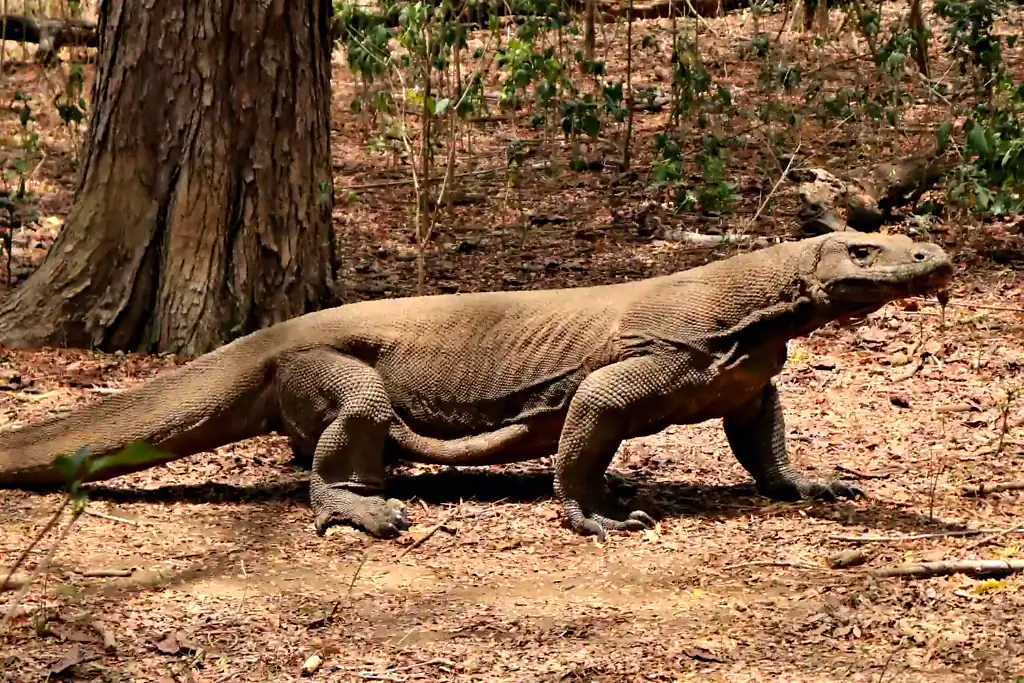
The rangers at Loh Liang offer walks of different lengths. The short walk is a loop of under an hour through the dry forest near the station, where tamarind trees give shade and dragons often rest. A medium walk of about an hour and a half climbs to a low hill, Sulphurea Hill, with a view over the bay and the islands. A long walk of about two and a half hours goes further into the island and suits visitors who are fit and do not mind the heat.
Longer treks into the hills, such as Gunung Ara, have been possible with a ranger by arrangement, but they are not part of a normal liveaboard visit. The routes and their rules can change, so the ranger decides on the day which walk your group can do, depending on the time, the weather and where the dragons are.
On a liveaboard, the visit fits into a full day, so most groups take one of the shorter walks. The trails are mostly flat or gently rising, on dirt and stones, and easy for anyone who can walk for an hour in warm weather. Wear closed shoes, bring water and a hat, and walk at the pace of the group.
Which walk should you choose?
With young children, or on a very hot day, the short walk is enough: dragons are often seen close to the station, and the shade of the forest keeps everyone comfortable. If you love a view and a photo, ask for the medium walk with the climb to the hill. If you are fit, keen on birds or simply want more time on the island, ask the ranger whether the long walk fits into your boat’s plan for the day.
Seeing the dragons safely
Komodo dragons are wild hunters, and the rules exist for good reasons. Stay with the group and behind the ranger, keep several metres away even from a dragon that looks asleep, never feed or touch one, and move calmly. Do not wander off on your own, and never walk on the island without a ranger.
The dragons have a very keen sense of smell. If you have an open wound, or if you are menstruating, tell the ranger discreetly before the walk; it is a normal question for them, and they will keep an eye out. Follow these simple rules and the walk is safe, calm and unforgettable.
The dragons are most active in the cooler morning hours. In the heat of the day, they rest in the shade or lie still on the open ground, which makes them easy to watch and photograph from a distance. Adults usually measure two to three metres from nose to tail, and seeing one close up, with the ranger beside you, is one of the great wildlife moments in Indonesia.
Other wildlife on Komodo Island
The dragons are not alone. The island is also home to Timor deer, wild boar and water buffalo, the animals the dragons hunt, and to birds such as the orange-footed scrubfowl, whose large nest mounds are sometimes used by female dragons to lay their eggs. The rangers often point out the mounds along the trail.
Look up, too. Sulphurea Hill takes its name from the yellow-crested cockatoo, whose scientific name is Cacatua sulphurea. It is a critically endangered bird, and the park is one of the places where it can still be seen in the wild. Early morning is the best time to hear and spot the birds before the heat sets in.
Even the trees tell a story. The tamarind trees near Loh Liang give the shade that dragons and visitors both seek in the heat, and the tall lontar palms on the hills are one of the signs of this dry corner of Indonesia. Ask the ranger about them; many rangers grew up in the villages of the park and know the island well.
The village and the legend of the dragon twin
Komodo Island is not only wild land. It also has a village, Kampung Komodo, home to a fishing community that has lived alongside the dragons for generations. Some trips stop there; if yours does, dress modestly, with shoulders and knees covered, and ask before you take photos of people.
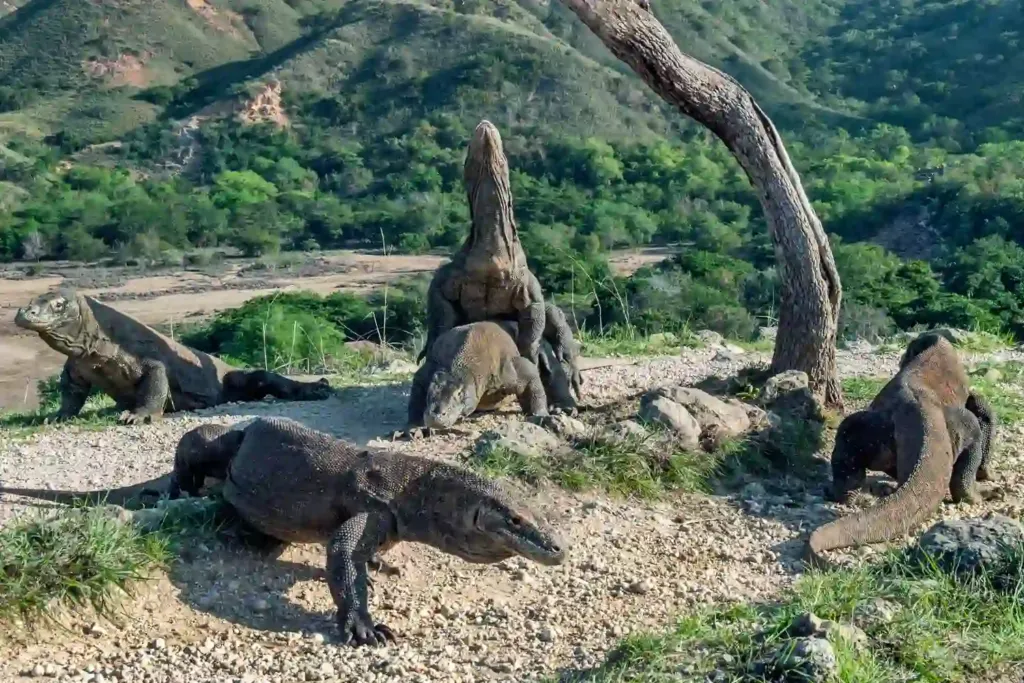
A local legend explains why the villagers respect the dragons. It tells of a dragon princess, Putri Naga, who gave birth to twins: a boy named Gerong, who grew up in the village, and a dragon named Ora, who grew up in the forest. Years later, Gerong met the dragon while hunting and was about to kill her, until his mother appeared and told him that the dragon was his twin sister. Since then, the story goes, the people of Komodo have treated the dragons as family. Ora is still a local name for the dragon today, and in the Komodo language the dragons are also called sebae, which means twins.
Most people in the village are fishermen, and some work as rangers in the national park. Besides their own Komodo language, many also speak Manggarai, Bima or Bugis, and Indonesian with visitors. Buying a small carving or a snack from the people who live here is a simple way to make sure your visit benefits the island’s community.
Pink Beach and the reefs nearby
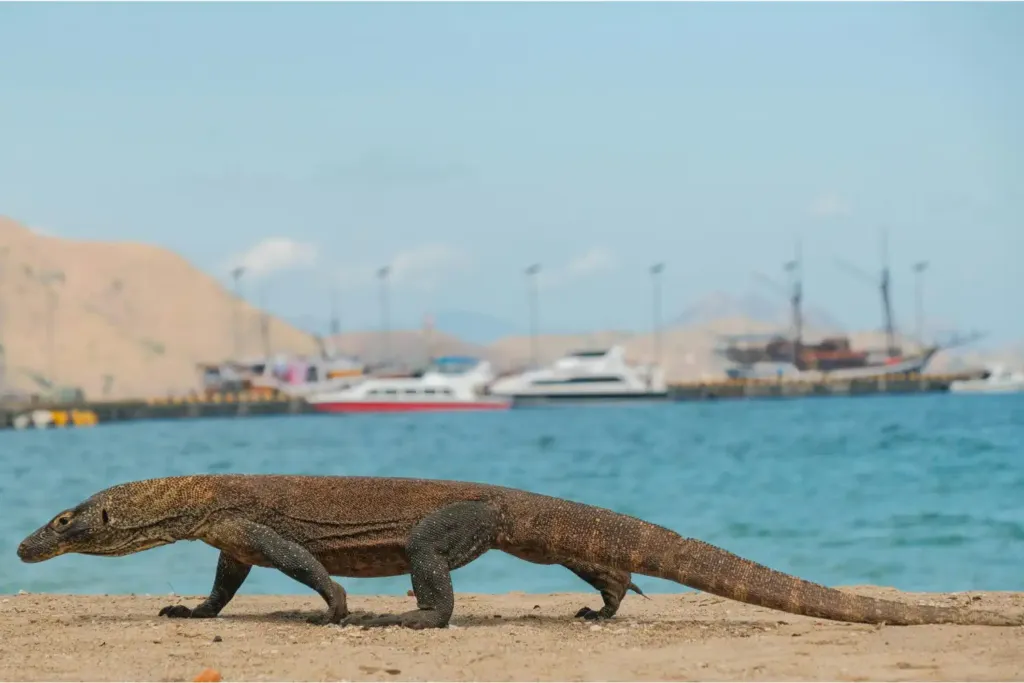
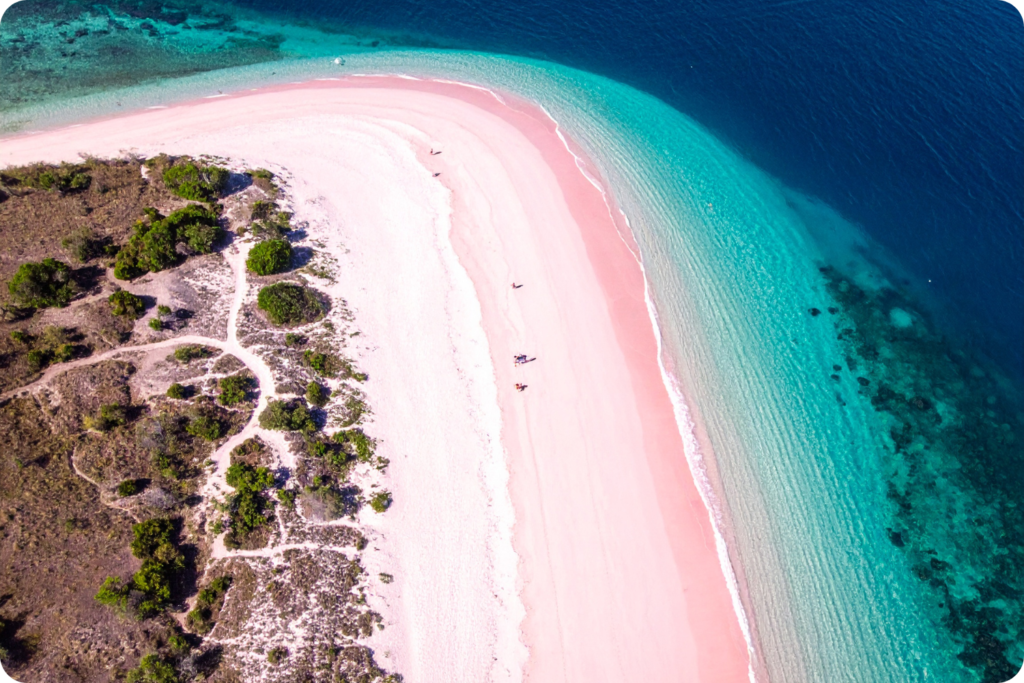
Close to Komodo Island lies Pink Beach, one of the most famous stops in the park. It takes its colour from tiny red organisms that live on the reef, mixed into the white sand, and the reef just offshore is excellent for snorkelling, with corals and schools of small fish in shallow water.
Many boats combine Komodo Island with Pink Beach on the same morning, and then sail on to Taka Makassar, a sandbar that appears at low tide, and Manta Point, where manta rays often feed in the current. Snorkelling equipment is on board on most boats, so you can swim at every stop. Our guide to what to see in Komodo covers the other stops in the park.
Best time to visit Komodo Island
The dry season, from April to November, is the most popular time, with clear skies, dry trails and generally calmer seas. The hills turn golden brown from about September. From December to March, the wet season brings more rain and green hills, the trails are quieter and fewer boats sail.
Whatever the month, go early. The morning is cooler for walking, the light is softer for photos and the dragons are more active. Most liveaboards plan the walk for the morning for exactly these reasons. Our guide to the best time for a Komodo liveaboard goes month by month.
How to visit on a liveaboard
On the most common trip, 3 days and 2 nights, the second day is the fullest: Padar at sunrise, Pink Beach, the dragon walk on Komodo Island, Taka Makassar and Manta Point. The boat anchors near the island, the tender takes you ashore, and you are back on board for lunch while the boat sails on.
A liveaboard is the easiest way to see Komodo Island, because the boat is already in the park and can reach Loh Liang in the cool of the morning, without a long speedboat ride from Labuan Bajo. Compare the trips of 3 days and 2 nights to see which boats stop at Komodo Island, and our comparison of a liveaboard and a day trip explains the difference.
On a day trip
A day trip by speedboat leaves Labuan Bajo early and packs Padar, the dragons, Pink Beach and Manta Point into one long day, back in town in the evening. It is possible, but the walk often comes later in the day, in the heat, and there is little time to linger. If you have the time, a night or two at anchor in the park makes the visit far more relaxed.
What to wear and bring
Wear closed shoes or sturdy sandals with a strap, light clothes that cover your shoulders, a hat and sunglasses. Bring a bottle of water, sunscreen and a small bag for your phone or camera. A zoom lens, or the zoom camera on your phone, helps you get good photos of the dragons from a safe distance.
Leave food in the boat, and take all your rubbish back with you. There is little shade on the open parts of the trail, so drink before you start. Our Komodo packing list has everything else you need for the trip.
10 things to know before you visit
- You always walk with a ranger. No one walks on the island alone.
- Keep several metres from the dragons, even when they look asleep.
- Go in the morning, when it is cooler and the dragons are more active.
- Choose your walk with the ranger, from a short loop to a long trek.
- Wear closed shoes and bring water and a hat.
- Tell the ranger discreetly about open wounds or menstruation.
- The park fee is on your invoice when you book a liveaboard with us.
- A daily quota applies to the main islands since 1 April 2026.
- Pink Beach is nearby, so bring your swimwear.
- Respect the village: dress modestly and ask before photos.
Our view
Komodo Island is the heart of the park: the place that gave the dragons their name, and still one of the best places on Earth to see them in the wild. Walk early, stay behind the ranger and take your time on the trail, and the island repays you with dragons in the shade of the tamarind trees, deer at the edge of the forest and the sound of cockatoos in the hills. Then cool off at Pink Beach, just a short boat ride away.
On Komodo Island, the dragons are not a show. You are a guest in their home, and that is what makes it special.
Ready to see it for yourself? Browse the Komodo liveaboard trips with live prices and cabin availability.
Questions
Can I visit Komodo Island without a guide?
No. Every walk on the island is led by a park ranger, and you must stay with your group.
How long is the walk on Komodo Island?
From a short loop of under an hour to longer treks of about two and a half hours. On a liveaboard, most groups take one of the shorter walks.
Will I see a Komodo dragon?
Very likely. Dragons often rest near the trails and the ranger station, although they are wild animals and sightings are never guaranteed.
Is Komodo Island safe?
Yes, when you follow the rules: stay behind the ranger, keep several metres from the dragons and never feed or touch one.
Do people live on Komodo Island?
Yes. Kampung Komodo is a fishing village on the island, whose people have lived alongside the dragons for generations.
Is Komodo Island the same as Komodo National Park?
No. Komodo Island is the largest island in the park, which also includes Rinca, Padar, many smaller islands and the sea around them.
Can I stay overnight near Komodo Island?
The easiest way is on a liveaboard, which spends the night at anchor in a quiet bay inside the park, so you can reach the island early in the morning.
What does the name Ora mean?
Ora is a local name for the Komodo dragon. In the legend of the island, Ora is the dragon twin of a village boy, Gerong.
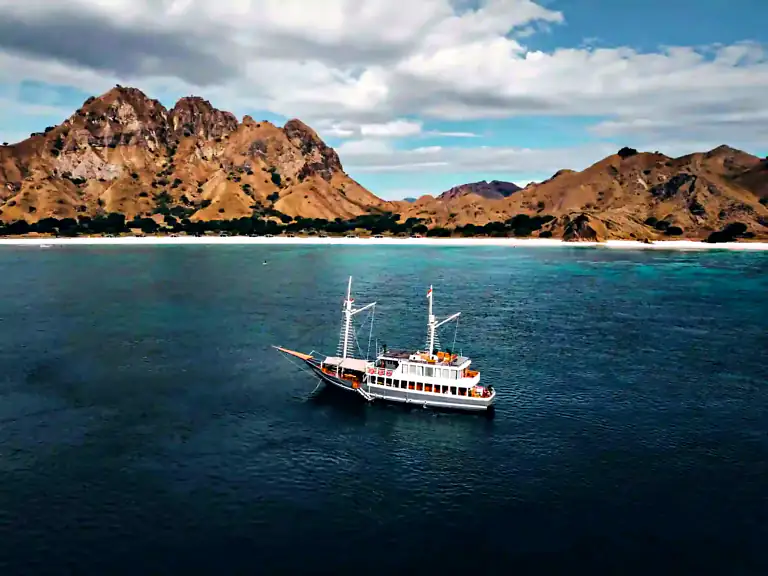
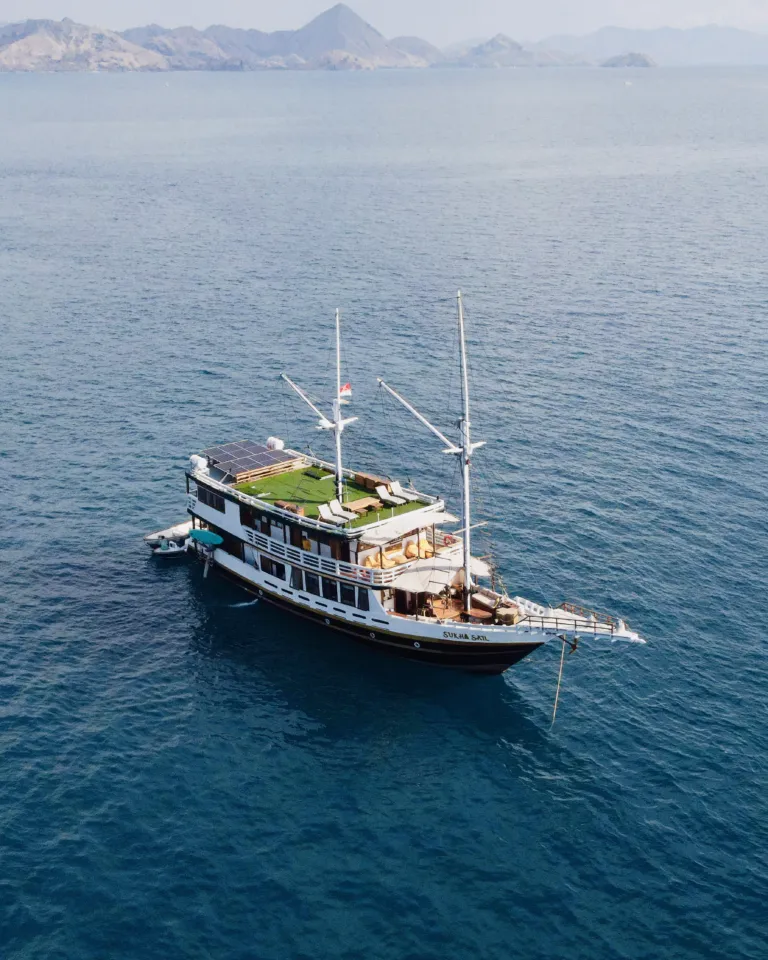
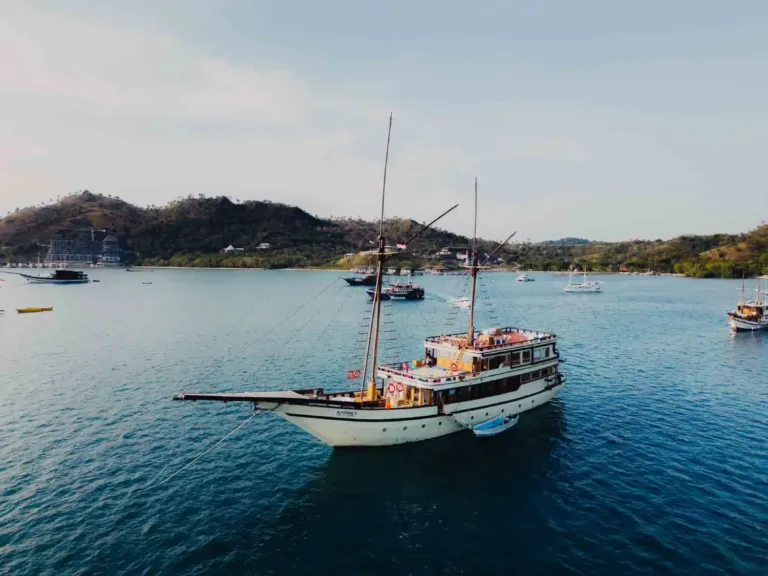
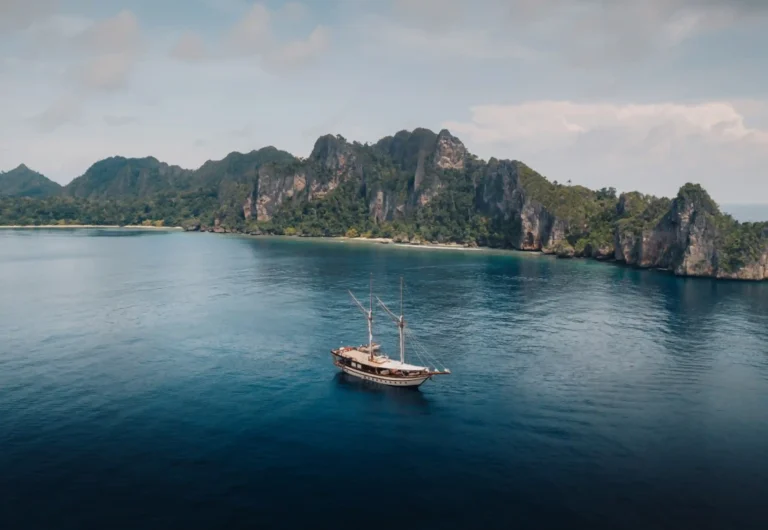
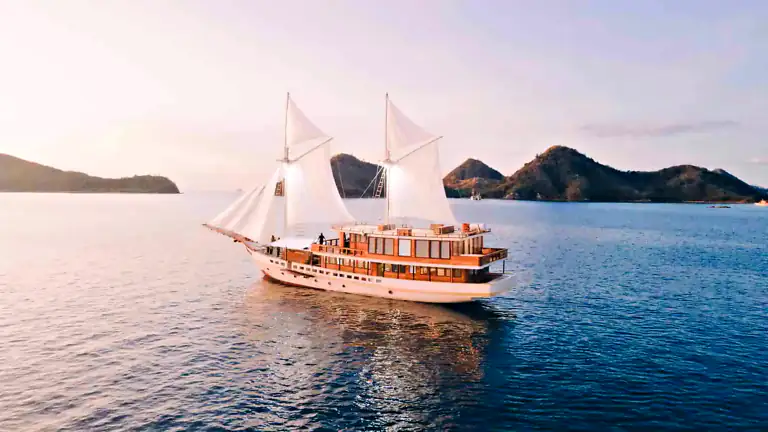
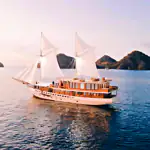 Elbark Cruise
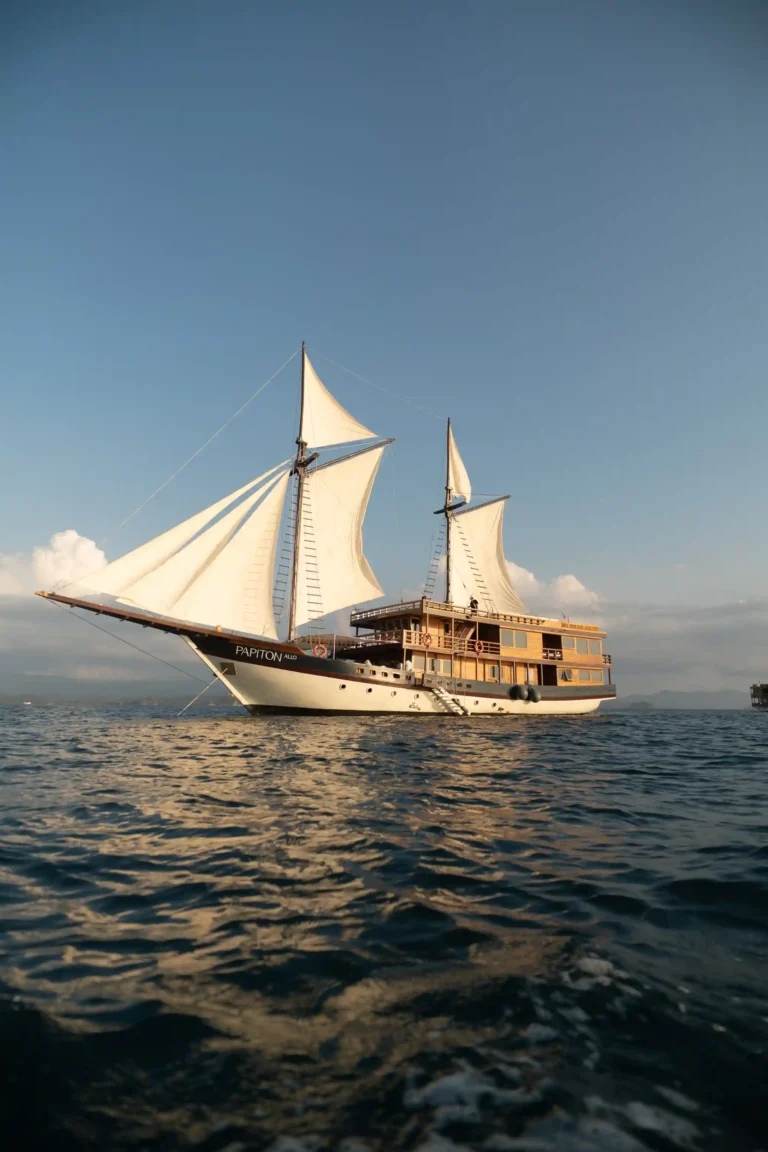
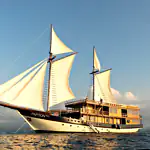 Papiton Allo
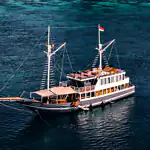 Semesta Voyages
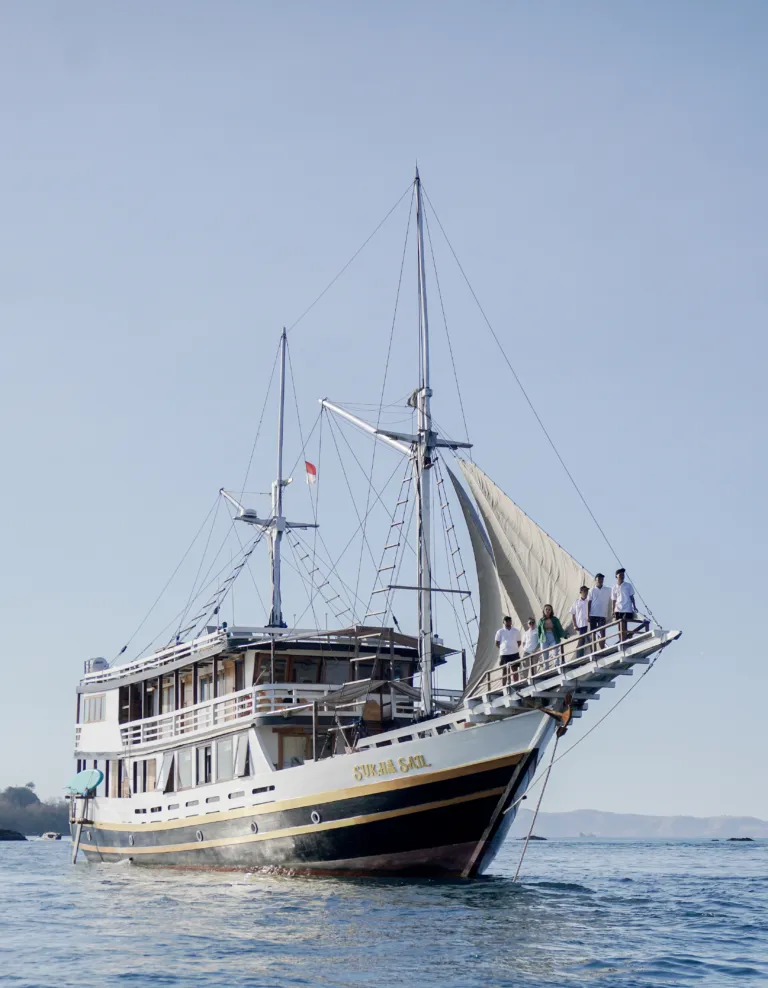
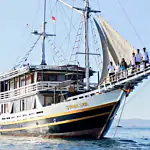 Sukha Sail 1